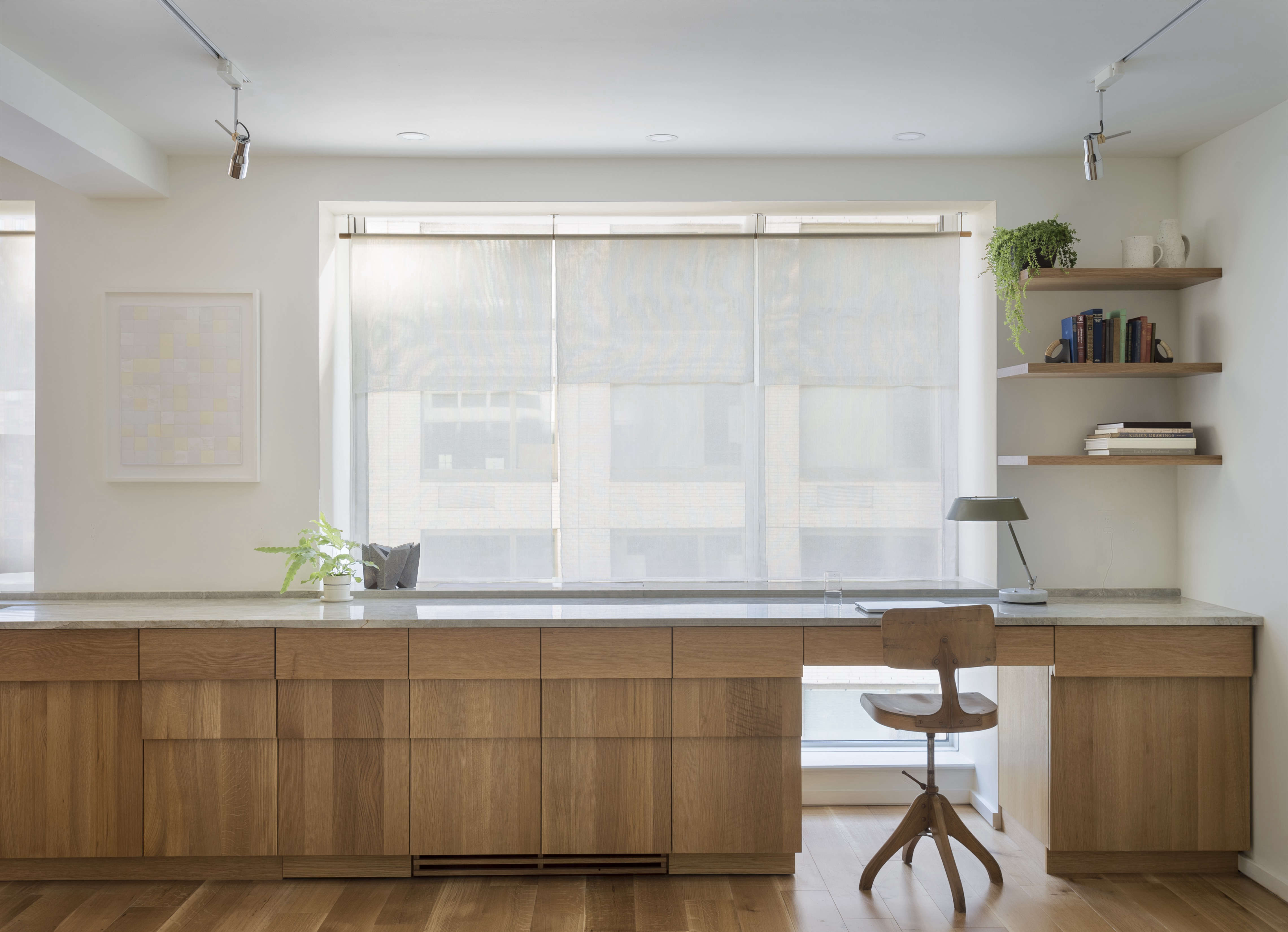

Some lighting fixtures want applause the moment they enter the room. They arrive like divas, demand attention, and practically yell, “Look at me, I’m luminous!” David Chipperfield’s DCA Binario track lighting takes the opposite route. It walks in quietly, adjusts itself with almost suspicious calm, and then makes the room look smarter than it did five minutes earlier. That is the trick. The fixture is restrained, but not timid. It is functional, but not bland. And in the strange, glamorous world of architectural lighting, that balance is harder to pull off than most people realize.
The DCA Binario sits at the intersection of architecture, product design, and pure lighting discipline. Designed by David Chipperfield for Viabizzuno, it is a track-mounted spotlight for indoor use that feels less like a decorative accessory and more like a precision tool dressed in very good tailoring. Its aluminum body, brass hinge detail, three-axis adjustability, and visual-comfort-minded light trap all point to a fixture that was conceived by people who understand that light is not just about brightness. It is about direction, atmosphere, texture, hierarchy, and yes, a little bit of drama when the room deserves it.
This is what makes the DCA Binario worth talking about. It is not merely a handsome spotlight. It is a small essay on how Chipperfield thinks. His architecture has long been admired for its rigor, restraint, and ability to strengthen a place without showing off. The DCA Binario follows that same logic. It does not try to become the star of the ceiling. Instead, it helps the space become the star. In a museum, a boutique, a gallery-like living room, or a quietly luxurious retail interior, that distinction matters.
What Exactly Is the DCA Binario?
At its core, the DCA Binario is a dry-location track light for interiors. The fixture is built around an aluminum spotlight mounted to a track, with a natural brass spherical hinge that gives the piece its signature touch of warmth and mechanical clarity. It is adjustable on three axes, rotates along a vertical axis, and includes a handle that makes aiming easier and more intuitive. In plain English, it is a spotlight that can be directed with real precision without looking like a clunky piece of backstage equipment.
That combination of technical flexibility and visual restraint is the whole game. Track lighting often gets boxed into one of two stereotypes. Either it is purely utilitarian and vaguely office-ish, or it is decorative enough to be interesting but too fussy to be truly useful. The DCA Binario dodges both traps. It behaves like a professional lighting instrument, yet it carries itself with the composure of a well-made object. The light trap at the bottom of the spotlight is especially important here, because it improves visual comfort and reduces the harshness that can make accent lighting feel aggressive instead of elegant.
Historically, the fixture has also been associated with multiple source configurations, including halogen, metal halide, and LED options with interchangeable diffusers. That matters because it places the design in a lineage of adaptable architectural lighting rather than in the narrow category of one-look, one-mood decorative fixtures. In other words, the DCA Binario was never just about being pretty. It was built to work.
Why It Feels So Chipperfield
To understand why the DCA Binario has such a distinct personality, it helps to understand David Chipperfield’s broader design language. He is celebrated for work that is contextual, materially disciplined, and allergic to empty spectacle. His best spaces feel calm, precise, and deeply considered. They rarely beg for attention, but they reward attention when you give it. That same attitude shows up in his product designs, which tend to value clarity, proportion, and purpose over unnecessary flourish.
The DCA Binario reflects that mindset almost line by line. The fixture’s silhouette is compact and geometric, but not cold. The brass detail does not read as luxury for luxury’s sake. It reads as a deliberate punctuation mark: a warm accent at the joint where movement happens. That little move is classic Chipperfield. He often works with restrained palettes and pure forms, then allows one material shift, one edge, or one proportion to do the emotional heavy lifting.
Minimalism With a Pulse
Minimalism is easy to get wrong. Done lazily, it becomes sterile. Done well, it becomes precise, tactile, and oddly comforting. The DCA Binario lands on the good side of that line because it never feels anonymous. The aluminum body gives it crispness. The brass hinge gives it character. The handle makes the fixture easier to adjust, but also lends it a human quality. You can tell where to touch it. You can understand how it moves. Good design often feels self-explanatory, and this piece absolutely does.
That is why the DCA Binario has aged well conceptually. It belongs to no trend in particular. It is not chasing the oversized sculptural-lighting craze, the industrial faux-raw craze, or the “let’s make everything matte black and call it timeless” craze. It simply solves the problem of directional light with unusual grace.
Why Track Lighting Still Matters
Track lighting is sometimes underestimated because it is so practical. But practical does not mean ordinary. In fact, the best architectural lighting systems are often the most flexible ones. Track lighting lets designers reposition heads, change focal points, and adapt a room as the art, merchandise, furniture, or use of the space evolves. That flexibility is a huge reason track systems remain relevant in galleries, museums, retail, and high-function residential interiors.
The DCA Binario embraces that flexibility without looking temporary or improvised. That is a big deal. Good track lighting should never make a room feel unfinished. It should make a room feel alive, able to respond to change. If you want to highlight a painting today, a sculptural chair next month, and a retail display after that, a well-designed track system gives you freedom without inviting chaos.
In Museums and Exhibition Spaces
This is where the DCA Binario’s architectural DNA becomes especially convincing. Exhibition lighting asks for precision, softness where needed, and strong accenting where appropriate. It also asks for restraint. Nobody goes to a museum hoping the spotlight steals the show from the art. In cultural spaces, lighting works best when it shapes perception quietly. It should reveal texture, control glare, support depth, and make details legible without turning the room into a theatrical overreaction.
The DCA family proved its value in exhibition contexts, including installations where the track system delivered flexibility and exact placement across large bays in historic spaces. That application makes perfect sense. A fixture like this can isolate a model, drawing, painting, or object with crisp direction, then be adjusted when the exhibition changes. It is lighting for curators, not just decorators, and that is a compliment.
In Retail and Residential Interiors
Retail design has increasingly borrowed the visual language of galleries, and Chipperfield has been part of that evolution. His interiors often use lighting as a quiet framing device rather than a loud sales trick. The DCA Binario fits neatly into that world. In boutiques, it can create clean pools of emphasis on clothing, shelving, or display tables. In residential settings, it works best in spaces where architecture and objects deserve focused attention: a hallway art wall, a kitchen with serious materials, a study with books and sculpture, or a living room where one beautiful chair has earned its own beam.
The key word is earned. This is not a fixture for random, everything-gets-a-spot clutter. It works when the room has hierarchy and the lighting reinforces it. If your space is visually noisy, the DCA Binario will not magically turn it into a monastery. But if the room already has discipline, this fixture will sharpen it beautifully.
Materials, Mechanics, and Visual Comfort
One reason the DCA Binario feels more refined than generic track heads is that its technical features are integrated into the form rather than pasted onto it. The spherical hinge is not hidden, but it is elegantly resolved. The handle is present, but not awkward. present, but not awkward. The body is compact, yet substantial enough to look intentional on the track. These are subtle achievements, but subtle achievements are often what separate design objects from mere equipment.
Visual comfort is another area where the fixture earns points. The inclusion of a light trap may sound like the kind of detail only lighting nerds would appreciate, but it affects the whole experience. Bad accent lighting often creates visible glare, making the source feel sharp and distracting. Good accent lighting keeps attention on the illuminated object, not the glowing hardware. The DCA Binario is designed with that priority in mind, which is exactly what you want from a serious architectural spotlight.
The brass detail also deserves praise for doing more than just looking expensive. Brass ages, warms, and humanizes. Against aluminum, it prevents the composition from becoming clinically cold. That small material contrast gives the DCA Binario a tactile richness that mirrors Chipperfield’s architectural work, where stone, concrete, metal, glass, and wood are often balanced with extraordinary care.
How to Use DCA Binario Well
If you are specifying or admiring a fixture like this, the real question is not “Is it beautiful?” It is “Can it make the room better?” The answer is yes, but only if it is aimed and spaced intelligently. Track lighting performs best when each head has a job. One head washes a textured wall. Another picks out artwork. Another draws the eye toward a display or architectural moment. When every head is trying to light everything, the result becomes flat and fussy. Precision is the whole point.
A thoughtful setup might use the DCA Binario to emphasize one painting, skim light across a stone wall, and quietly lift a shelving composition without flooding the entire room. In an art-focused interior, angling the light correctly helps reduce glare and reveals color and surface detail more convincingly. In a retail environment, the beam can create rhythm along a product wall while keeping the overall mood clean and calm. In both cases, the track becomes a framework for visual editing.
That word matters: editing. Chipperfield’s design language has always been strong at removing noise. The DCA Binario continues that approach by giving designers a tool that supports selective emphasis rather than indiscriminate brightness. It is less about lighting the room like a grocery store and more about composing attention. Frankly, more interiors could use that attitude.
Why It Still Feels Relevant
Some lighting designs feel frozen in the moment they were launched. The DCA Binario does not. Its relevance comes from three enduring strengths: flexibility, restraint, and material intelligence. Flexible systems remain useful because spaces keep changing. Restrained forms remain attractive because trends keep overreaching. Material intelligence remains important because people can sense when something has been designed with care rather than merely styled for a catalog.
There is also a broader cultural reason the fixture still resonates. We are living through an era of visual overload. Interiors are often asked to perform for photos before they perform for people. Against that backdrop, the DCA Binario feels refreshingly adult. It is not desperate to go viral. It just wants to light the room properly and look excellent while doing it. Honestly, that kind of self-respect is attractive.
And because Chipperfield’s work is so rooted in context, the fixture never feels like a random luxury object detached from architectural thinking. It belongs to a worldview in which light supports rituals, materials, circulation, and use. That is why the DCA Binario feels at home in serious interiors. It respects the room first.
The Experience of Living With David Chipperfield’s DCA Binario Track Lighting
Now let’s move from design analysis to lived experience, because this is where the DCA Binario becomes more than a beautifully resolved object. Imagine walking into a room lit by it in the late afternoon. The ceiling does not scream for attention. The track is present, yes, but calm. What you actually notice first is the room itself. A painting looks somehow richer. A wood shelf suddenly has depth. The grain on a dining table becomes more interesting than it had any right to be. Nothing feels overlit. Nothing feels gloomy either. The atmosphere is edited, not flattened. That is a subtle pleasure, and subtle pleasures have a way of becoming addictive.
There is also something deeply satisfying about the fixture’s physical intelligence. If you need to redirect the beam, the movement feels purposeful rather than awkward. You are not wrestling with a flimsy decorative head that seems one twist away from regret. You are making an adjustment that feels engineered. That matters more than people think. A well-designed spotlight gives confidence. You point it, step back, and the room responds. It is a tiny act of control, but in a home or studio, those tiny acts accumulate into comfort.
The DCA Binario also changes how you relate to objects. Under generic overhead lighting, many interiors become visually democratic in the least flattering way possible. The sofa, the books, the art, the sideboard, the lonely bowl of lemonsthey all receive the same bureaucratic brightness. Under directional architectural lighting, hierarchy returns. The room starts telling a story. The art matters. The reading corner matters. The stone niche, the ceramic piece, the stack of oversized monographs you absolutely plan to finish one daythey all gain intention.
That experience is especially powerful for people who collect things carefully, whether that means art, books, fashion, or simply furniture with personality. The DCA Binario rewards selection. It makes the space feel curated without becoming precious. You do not need to live in a museum to appreciate that. You just need to enjoy rooms that feel considered rather than accidental.
There is also an emotional benefit to lighting that behaves this way. Because the fixture is so good at creating focus, it can make a room feel calmer. The eye knows where to go. Visual clutter softens. Surfaces gain depth instead of glare. Evening becomes more atmospheric, less clinical. It is the difference between a room that merely functions after sunset and a room that becomes itself after sunset.
And perhaps that is the best compliment you can give any lighting design. The DCA Binario does not impose a personality on the space so much as reveal the one already there. If the architecture is strong, it sharpens it. If the materials are beautiful, it lets them breathe. If the room is meant for art, thought, conversation, or quiet retail theater, it supports those rituals without turning into scenery. You feel guided, not manipulated.
In practical daily life, that means the fixture can be both useful and strangely reassuring. Morning light might make the track almost disappear. Evening light brings it back into service. A dinner party feels warmer. Reading feels easier. Artwork feels more alive. Even cleaning feels slightly more dignified, which is about as close to a lighting miracle as most of us are going to get.
Ultimately, living with David Chipperfield’s DCA Binario track lighting would feel a lot like living with any well-made architectural object: the better it does its job, the less it needs to brag about it. And yet, over time, you notice that the room feels more legible, more composed, more intentional. The light is doing the work quietly. The space feels better. You feel better in it. That is not flashy design. That is lasting design.
Final Thoughts
David Chipperfield’s DCA Binario track lighting is compelling because it treats light as part of architecture, not as an afterthought. It combines a disciplined form, a warm material accent, strong adjustability, and genuine visual comfort into a fixture that feels both elegant and useful. In museums, retail interiors, and carefully designed homes, it offers exactly what good lighting should offer: focus, flexibility, atmosphere, and restraint.
In a marketplace crowded with fixtures trying very hard to be memorable, the DCA Binario stands out by being thoughtful. It is minimal, but not lifeless. Technical, but not cold. Distinctive, but never theatrical for the sake of theatrics. That is why it continues to matter. It is not just a track light. It is a lesson in how serious design can stay quiet and still leave a lasting impression.
{ "meta_title": "David Chipperfield’s DCA Binario Track Lighting", "meta_description": "Explore David Chipperfield’s DCA Binario track lighting, from its minimalist design and brass detail to its role in elegant architectural interiors.", "sapo": "David Chipperfield’s DCA Binario track lighting proves that the best fixtures do not steal attentionthey shape it. This in-depth article explores the minimalist design, brass hinge detail, three-axis flexibility, visual comfort, and architectural intelligence behind the Viabizzuno spotlight. From museums and boutiques to high-end homes, discover why this track light still feels refined, relevant, and quietly brilliant.", "keywords": [ "David Chipperfield’s DCA Binario Track Lighting", "DCA Binario", "David Chipperfield lighting", "architectural track lighting", "Viabizzuno track light", "minimalist lighting design", "museum and gallery lighting" ]}</pre: