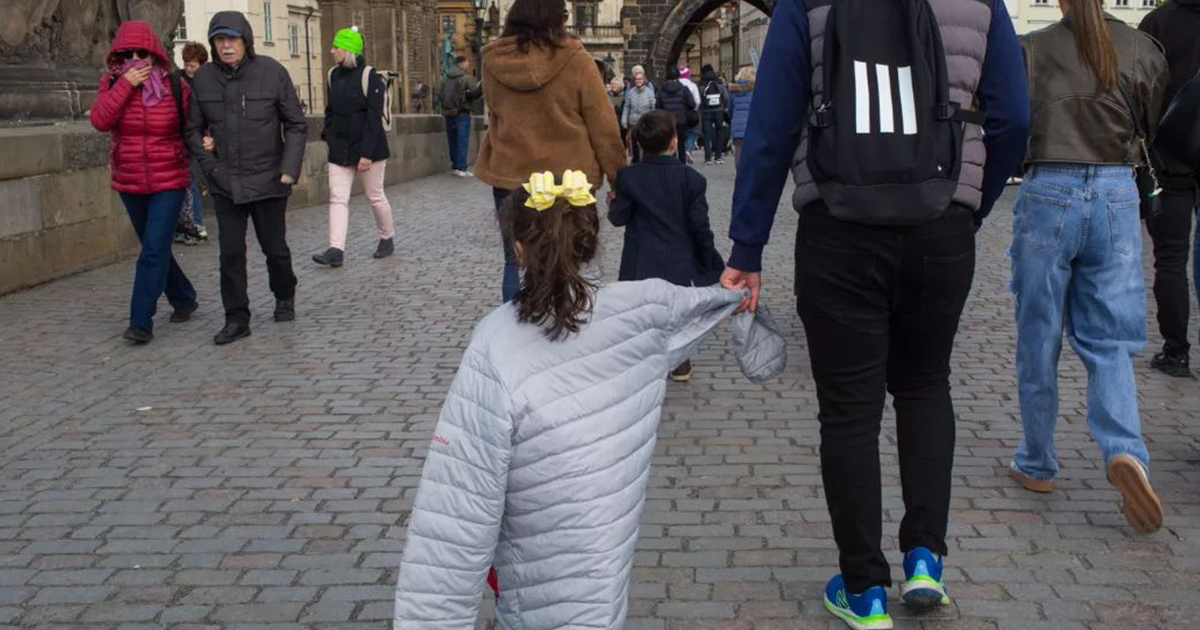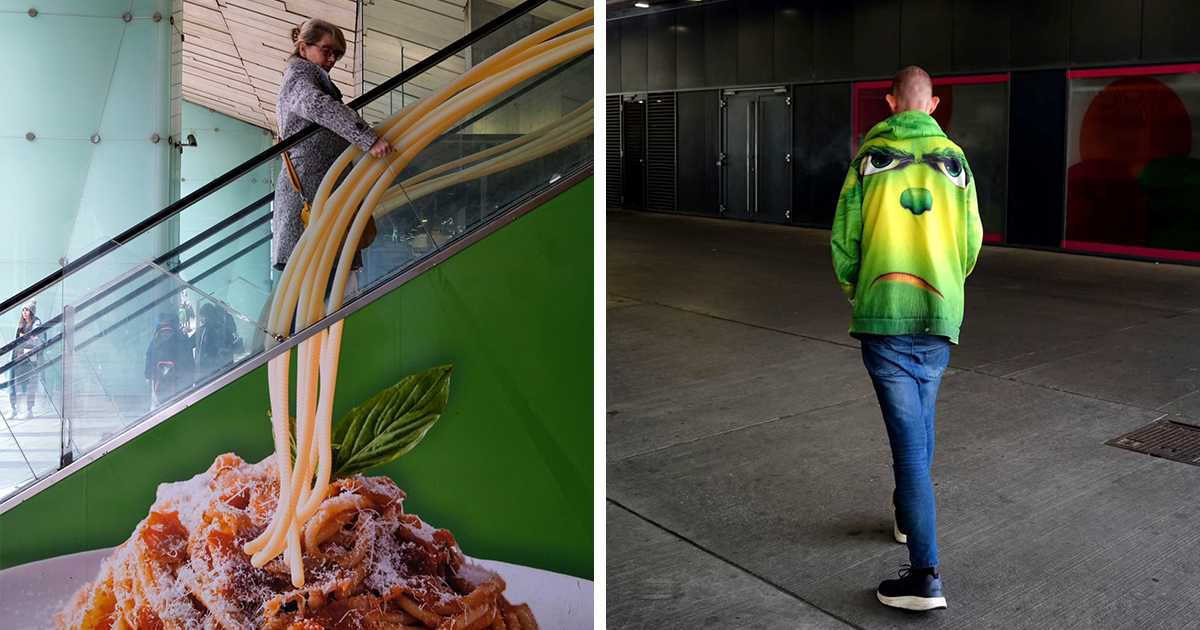

Some photographers chase volcanoes, celebrities, or sunsets dramatic enough to make your phone screen look underqualified. Gerhard Wagner goes in the opposite direction. He points his camera at the ordinary rhythm of public life and somehow makes it feel electric. That is the magic of strong street photography: it does not need fireworks when it has sidewalks, strangers, and split-second timing.
In this collection of 50 images, the appeal is not just that everyday life is being documented. It is that everyday life is being transformed. A passerby becomes the center of a visual joke. A shadow becomes a supporting actor. A patch of light turns into stage design. The ordinary does not merely look nicer in Wagner’s work; it looks more revealing, more alive, and occasionally more hilarious. These photos suggest that the street is not background scenery. It is a live theater production with no rehearsal, no repeat takes, and no patience for slow autofocus.
That is why this gallery lands so well. It reminds viewers that the most interesting things in a city are not always the landmarks. Sometimes they are the tiny collisions of color, gesture, mood, and coincidence happening between one crosswalk and the next. Street photography, at its best, makes us look twice at the kind of moment we usually dismiss after half a glance. Wagner’s work thrives in that exact territory.
Meet the Photographer Behind the Moments
Gerhard Wagner has the kind of biography that makes his work even more charming. By day, he works in quality management. Outside that routine, he is devoted to photographing fleeting, candid moments in public life. That detail matters because it explains part of his visual sensitivity. There is a patience in this kind of street photography, a willingness to observe without forcing the scene. Wagner does not approach the world like someone trying to conquer it with a camera. He approaches it like someone paying close attention to details other people miss.
That mindset is a huge reason why his images feel human rather than performative. Plenty of modern photography is loud. It begs for attention, slaps on a dramatic preset, and hopes nobody notices that the picture itself has the emotional depth of a microwaved pancake. Wagner’s images work differently. They rely on timing, framing, and visual instinct. The result is a style that feels sharp without being showy.
There is also something refreshingly democratic about street photography like this. It treats public life as worthy subject matter. Not just special events. Not just polished people in polished places. Real life. Busy life. Awkward life. Funny life. The kind of life that wears practical shoes and misses the bus by six seconds.
Why Everyday Life Works So Well in Street Photography
The reason street photography remains so compelling is simple: people recognize themselves in it. Not literally, hopefully, unless they are in the photo. But emotionally. These images draw power from familiar situations. Waiting. Walking. Watching. Hurrying. Daydreaming. Street photography takes those routine actions and freezes them at the exact instant they become expressive.
That transformation depends on one big idea: the scene is unposed, but the photograph is not accidental. Great street photographers are not just wandering around hoping the universe hands them gold. They are actively reading the environment. They notice the shape of a shadow on a wall, the way one bright jacket changes a gray scene, or how two strangers briefly echo each other in posture without ever knowing it. The artistry lies in recognizing that visual tension before it disappears.
Wagner’s gallery appears to understand that deeply. His photos feel like they were made by someone who enjoys watching the choreography of public space. The city is full of micro-events: a hand lifted at the right time, a face emerging from a reflection, a silhouette crossing a burst of sunlight, a gesture that turns a normal scene into a visual punchline. Everyday life is not boring when it is seen with this level of curiosity. It is wildly layered.
What Makes These 50 Photos So Addictive to Scroll Through
Let’s be honest: not every photo collection earns the right to keep you scrolling. Some galleries feel like 50 versions of the same thing wearing different jackets. This one works because the images likely deliver variety within a consistent vision. That is a huge difference. A strong street photography set gives you new surprises while staying loyal to the photographer’s eye.
1. Timing does the heavy lifting
Street photography lives or dies by timing. A second too early and the scene is just a setup. A second too late and the moment has already gone home. The best images hit that sweet spot where gesture, space, and expression click into alignment. That is what gives viewers the feeling that they are looking at something both spontaneous and strangely perfect.
2. Composition turns chaos into order
Public spaces are messy. Signs compete with faces. Cars interrupt lines. Random limbs appear where no limb should reasonably appear. Yet the strongest street photographers can impose order on that mess through framing. They use doorways, windows, reflections, shadows, sidewalks, or color blocks to organize the scene. When that works, even a cluttered moment feels crisp and intentional.
3. Humor sneaks in without asking permission
One of the most lovable things about street photography is its accidental comedy. A visual mismatch, a perfectly timed expression, a near-surreal coincidence in the backgroundthese are the details that make viewers pause and grin. Humor in street photography is rarely about mockery when handled well. It is about the weird poetry of public life. Cities are funny places, mostly because humans are funny creatures trying to act normal in public.
4. The familiar suddenly feels cinematic
A good street photo can make a bus stop feel like a film still. Not because the scene is grand, but because the frame gives it emotional charge. Light falls in the right place. The subject appears isolated for a split second. A plain wall becomes dramatic. A crossing becomes a stage. That is the real trick: not inventing drama, but noticing where it already exists.
The Real Achievement: Making Ordinary People Feel Important
One of the best things about this kind of photography is that it restores dignity to passing moments. The people in these images are not props in a cityscape. They are the cityscape. Street photography can reveal just how much personality exists in anonymous public life. A glance, a posture, a pause at a curbthose details tell stories even when we do not know the names of the people involved.
That is also why good street photography often feels more intimate than highly produced portrait work. Studio images can be beautiful, of course, but they are designed. Street images carry the thrill of discovery. They show us the texture of the real world: the unpredictability, the tension, the humor, the emotional weirdness of sharing space with strangers. Wagner’s gallery succeeds because it seems to value those unscripted fragments rather than smoothing them into something overly polished.
And that matters in a culture where so much visual content is carefully staged. We are constantly fed images that feel optimized rather than observed. Street photography pushes back against that. It says real life is already visually rich if you are awake enough to notice it. That is a refreshing message, and frankly, one that your camera roll could probably use.
Lessons Aspiring Photographers Can Steal From This Gallery
Yes, “steal” is a strong word. Let us call it “borrow artistically and with good manners.” Wagner’s work offers several useful reminders for anyone interested in candid photography.
Look longer before pressing the shutter
Beginners often react too fast. They see something mildly interesting and click immediately, like the camera might expire if they hesitate. But great street work usually comes from anticipation. You notice the scene, study its potential, and wait for the human element to complete the composition. The frame often becomes stronger not because you moved much, but because you waited smarter.
Use the environment as part of the story
The street is not just where the subject happens to be standing. It is a tool. Reflections can double the visual interest. Storefront colors can create contrast. Repeating shapes can give rhythm. A plain wall can make a subject pop. When photographers treat the environment as active rather than incidental, the image gets richer immediately.
Respect matters more than bravado
There has long been a macho mythology around street photography, as if the goal is to be the loudest person with the fastest shutter and the least concern for everyone else’s comfort. That approach is exhausting. It also often produces images that feel aggressive without being insightful. Better street photography is grounded in attention, empathy, and sensitivity. The goal is not to dominate the scene. It is to understand it.
Develop an eye for visual relationships
Sometimes the best street photos are not about one subject at all. They are about relationships inside the frame: one color echoing another, one shape rhyming with a gesture, one person’s movement balancing a static background. This is where the everyday becomes visually intelligent. Suddenly, a routine corner looks like a tiny masterpiece of coincidence.
Why Viewers Love Street Photography More Than They Realize
People often say they like street photography because it feels “real,” and that is true, but incomplete. The deeper reason is that it reassures us that the world is still full of small discoveries. A great street image suggests that beauty is not scarce. Meaning is not scarce. Weirdness is definitely not scarce. You do not have to travel to a remote mountain or hang from a helicopter to find something worth photographing. Sometimes all you need is a city block, good light, and an alert brain.
This is especially true now, when attention is fragmented and public life is often treated as noise. Street photography trains us to notice again. It gives significance to overlooked details. It makes us curious about strangers in a humane way. It reminds us that a city is not just infrastructure. It is a collection of fleeting human performances happening in shared space.
That is exactly why a gallery like this feels so satisfying. It does not ask viewers to admire technical difficulty for its own sake. It invites them to recognize the visual drama already embedded in normal life. In other words, it takes the phrase “nothing special” and completely destroys it.
Beyond the Gallery: The Experience of Seeing Everyday Life Differently
What lingers after viewing a strong street photography set is not just admiration for the photographer. It is a subtle shift in how you look at your own surroundings. After enough images like these, a routine walk stops feeling routine. You start noticing slashes of light on buildings, color combinations in passing clothes, funny alignments in windows, and tiny moments of expression that usually vanish before your brain bothers to label them. The photographs do not just entertain you. They recalibrate you.
That is part of what makes Wagner’s work feel bigger than a single 50-photo collection. It participates in a long tradition of street photographers who show that ordinary life is not visually empty. It is overflowing. Most of us just move too fast to catch it. The photographer is the one who slows down without literally stopping traffic, which is probably for the best.
There is also a particular emotional pleasure in seeing public life treated with curiosity rather than cynicism. Street photography can be sharp, funny, and visually bold without turning cruel. The best examples make viewers feel more connected to the human circus around them. Not because they suddenly understand every stranger, but because they become more aware that every stranger contains a scene, a mood, a private narrative crossing briefly through public space.
Extended Reflections: What This Kind of Photography Feels Like in Real Life
Looking at a gallery like this can be a strangely personal experience, even if you have never been to the streets Wagner photographs. That is because strong street photography does something sneaky: it makes your own memory start cooperating. A picture of a random commuter can remind you of waiting for a train on a tired Tuesday. A scene involving bright storefront color and quick movement can pull you back to a summer afternoon when everything felt busy and oddly cinematic. The photos do not only show you someone else’s city. They activate the visual archive you already carry around inside your head.
That is why everyday-life photography often hits harder than obviously “important” images. A dramatic event announces itself. You know right away that it is supposed to matter. Ordinary life does not arrive with that kind of warning label. It slips by quietly. You only realize its emotional weight later, when a photograph preserves it. Suddenly, the act of walking home, waiting at a light, staring into a shop window, or standing under an umbrella feels like something worth remembering. And honestly, it is.
There is also something deeply comforting about the visual honesty of street photography. These scenes are not airbrushed into perfection. They contain clutter, interruptions, imperfect timing around the edges, and the beautiful inconvenience of reality. That roughness is part of the pleasure. It feels trustworthy. In a world overloaded with polished content and algorithm-friendly sameness, candid public-life photography still has the ability to surprise us because it has not been fully domesticated. It remains a little wild.
Personally, the best street photos always leave me with the same thought: how many incredible moments do we fail to notice every day? Not because we are careless, exactly, but because daily life trains us to filter aggressively. We sort the world into useful and useless, urgent and irrelevant, ours and not ours. Street photographers challenge that system. They treat the supposedly irrelevant as visually meaningful. They insist that a stranger’s posture, a passing shadow, or a quick burst of laughter in public can carry real artistic charge.
That shift in perspective is valuable even for people who never plan to pick up a camera. It encourages a more alert way of moving through the world. It makes a lunch break walk more interesting. It makes a rainy sidewalk less annoying and more textured. It even makes boring errands feel slightly less tragic. Once you start noticing light, gesture, and coincidence, daily life becomes harder to dismiss. The world starts offering tiny visual rewards everywhere.
And maybe that is the biggest reason a gallery like this resonates so strongly. It does not merely showcase a photographer’s technical skill. It offers a philosophy of attention. It suggests that life is fuller than we think, funnier than we admit, and more visually dramatic than most of us realize while checking notifications and pretending we are multitasking. Street photography says: look up. Something interesting is probably happening right now. Wagner’s 50 images make that argument persuasively, and with style.
Conclusion
This Photographer Turns Everyday Life Into Striking Street Photography (50 Pics) is the kind of title that could easily overpromise. In this case, the concept delivers because the strength of the work lies in observation rather than gimmick. Gerhard Wagner proves that ordinary public life still contains enough surprise, wit, geometry, and emotion to stop viewers in their tracks. His images turn the street into a place of visual discovery, where the smallest moment can suddenly look unforgettable.
That is the enduring power of street photography. It does not need spectacle to hold attention. It needs awareness. It needs patience. It needs the nerve to believe that a passing second can carry an entire story. Wagner’s work makes that belief look convincing, and that is exactly why these 50 pictures feel so striking.