
Note: This article is for general home-improvement education only. Electrical work should follow local code, manufacturer instructions, and, when in doubt, the steady hand of a licensed electriciannot your cousin who “fixed a lamp once.”
What Is a Rotating Duplex Outlet?
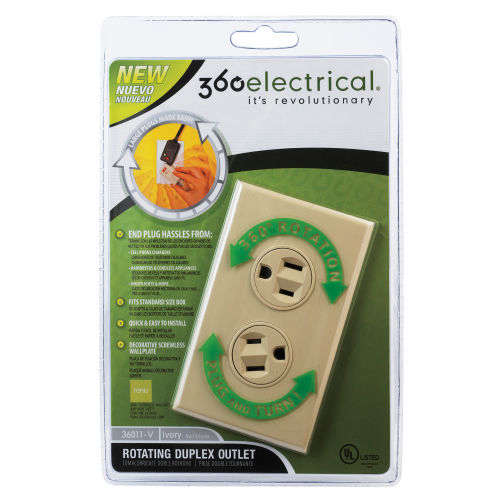
A rotating duplex outlet is a wall receptacle with two plug-in sockets that can turn, usually up to 360 degrees, so bulky plugs, adapters, chargers, and transformer blocks do not fight each other for space. It looks like a familiar duplex receptacle, but instead of forcing every cord to exit in the same direction, each outlet can rotate into a more convenient position.
Think of it as the yoga instructor of electrical outlets. A standard receptacle sits there stiffly, judging your oversized laptop charger. A rotating duplex outlet says, “Let’s make room for everyone.” That small twist can solve a surprisingly annoying everyday problem: two devices, one wall outlet, and one plug shaped like a tiny plastic refrigerator.
These outlets became popular because modern homes are full of awkward plugs. Phone chargers, Wi-Fi extenders, baby monitors, smart speakers, rechargeable tool batteries, and power adapters often have shapes that block the second socket on a regular outlet. A rotating receptacle helps restore the promise of a duplex outlet: two usable plug-in points, not one outlet and one decorative slot you cannot reach.
Why the Rotating Duplex Outlet Exists
The classic duplex outlet was designed for a simpler era. Lamps had skinny plugs. Radios had skinny plugs. Nobody was trying to plug in a laptop charger, a smart-home hub, and a countertop appliance while also negotiating with a phone cable that bends like a rebellious garden hose.
Today, the plug itself can be the problem. Many low-voltage electronics use wall-wart adapters, which convert household power into the voltage required by the device. These adapters are useful, but they are often wide, tall, or oddly shaped. Plug one into a traditional receptacle and it may cover the neighboring outlet like a parking truck across two compact-car spaces.
A rotating duplex outlet solves that layout issue by letting each socket turn independently. Instead of unplugging one device to make room for another, you rotate the receptacle face until the plugs fit. The result is cleaner cord management, better access, and less muttering under your breath while crouched behind furniture.
How a Rotating Duplex Outlet Works
Most rotating duplex outlets use a circular internal contact design that allows the receptacle face to rotate while maintaining electrical contact. The user plugs in a device, turns the outlet to the preferred angle, and routes the cord up, down, left, right, or somewhere between “reasonable” and “modern art.”
On many models, the two receptacles rotate independently. That matters because one plug may need to point upward while another needs to point sideways. For example, a night-light may work best facing down in a hallway, while a charger block may fit better turned sideways. Independent rotation gives each plug its own lane.
Some rotating receptacles fit a standard wall box and use familiar wiring methods such as side wiring or back wiring, depending on the product design. Many come with a screwless or snap-on wall plate for a cleaner look. The goal is not to reinvent electricity; the goal is to make the outlet face less stubborn.
Benefits of a Rotating Duplex Outlet
1. Better Use of Both Sockets
The biggest benefit is simple: you can often use both outlets at the same time. A traditional duplex receptacle can be defeated by one oversized adapter. A rotating duplex outlet gives you more flexibility to fit two plugs without adding an outlet extender or power strip.
2. Cleaner Cord Direction
Rotating the outlet lets you guide cords in a more natural direction. Behind a desk, cords can point down toward a cable tray. Behind a mounted TV, plugs can turn sideways to reduce strain. Near a nightstand, chargers can angle away from furniture instead of being mashed against it like a sandwich in a backpack.
3. Helpful for Tight Spaces
Rotating outlets are especially useful behind beds, sofas, cabinets, media consoles, and appliances. These are the places where plug clearance matters most. When furniture sits close to the wall, a straight-out plug can bend sharply or prevent the furniture from sitting flush. A rotating receptacle can reduce that awkward pressure.
4. More Attractive Than a Bulky Adapter
Outlet extenders and power strips have their place, but they can look messy. A rotating duplex outlet keeps the solution in the wall, preserving a cleaner appearance. In visible areas like kitchens, offices, guest rooms, and living rooms, that matters. Nobody remodels a room just to crown it with a dangling plastic octopus of adapters.
5. Simple Convenience
Some home upgrades are dramatic. Others are quietly satisfying. A rotating outlet belongs to the second group. It will not make your neighbors gasp from the sidewalk, but it may make daily charging, plugging, and unplugging easier. Sometimes comfort is not a marble countertop; sometimes it is being able to charge your phone without unplugging the lamp.
Where Rotating Duplex Outlets Make the Most Sense
Home Offices
A home office is prime territory for a rotating duplex outlet. Laptops, monitors, printers, speakers, routers, and phone chargers often crowd the same wall area. A rotating receptacle can help bulky plugs coexist without forcing you to use a power strip for every tiny device.
Bedrooms and Nightstands
Nightstands are charger magnets. Phones, watches, lamps, white-noise machines, humidifiers, and alarm clocks all want power. A rotating duplex outlet can help route cords neatly behind a table or bed frame. It is especially helpful when furniture is close to the wall and plug clearance is limited.
Living Rooms and Media Walls
Behind entertainment centers, plug direction matters. Streaming devices, soundbars, game consoles, smart speakers, and TV accessories often use large adapters. A rotating outlet can make it easier to organize cords and reduce plug crowding behind furniture.
Kitchens
Kitchen countertops often host coffee makers, phone chargers, smart displays, mixers, and small appliances. A rotating duplex outlet may help with plug angles, but kitchens also have stricter electrical requirements. Countertop receptacles commonly need GFCI protection, and many modern installations also require tamper-resistant receptacles. In kitchens, convenience should never outrun code compliance.
Garages and Workshops
Garages and workshops use chargers for tools, battery packs, lights, and small equipment. A rotating receptacle can make plug placement easier, especially near workbenches. However, garages often require GFCI protection and durable devices appropriate for the environment. If the outlet is near moisture, dust, or heavy use, choose safety and rating first, rotation second.
Important Safety Features to Look For
Not all outlets are created equal. A rotating duplex outlet may be convenient, but it still needs to be an electrical device first and a clever gadget second. Before buying one, check the specifications carefully.
UL or ETL Listing
Look for a receptacle that is listed by a recognized testing laboratory, such as UL or ETL. Listing indicates that the product has been evaluated to relevant safety standards. With electrical devices, “probably fine” is not a feature. It is a red flag wearing a tiny hard hat.
Correct Amperage and Voltage
Most standard household duplex receptacles in the United States are rated for 15 amps or 20 amps at 125 volts, depending on the circuit and installation. The replacement outlet must match the circuit requirements and local code. A 20-amp receptacle should not be installed casually on a circuit that does not support it.
Tamper-Resistant Design
Modern residential outlets in many areas are required to be tamper-resistant. Tamper-resistant receptacles use internal shutters that help block foreign objects from being inserted into the slots. This is especially important in homes with children, rental properties, schools, guest rooms, and many other locations covered by current electrical rules.
GFCI Protection Where Required
A rotating duplex outlet is not automatically a GFCI outlet. Ground-fault circuit-interrupter protection is commonly required in bathrooms, kitchens, garages, outdoor areas, laundry areas, basements, and other locations where shock risk is higher. GFCI protection may come from a GFCI receptacle, a GFCI breaker, or upstream protection. The key is that the location must be protected properly.
AFCI Protection Where Required
Arc-fault circuit-interrupter protection is also required in many modern residential circuits. AFCI devices help reduce fire risk from certain types of arcing faults. Like GFCI protection, AFCI may be provided at the breaker or through other approved methods. A rotating outlet should be part of a compliant system, not a loophole with a pretty faceplate.
Rotating Duplex Outlet vs. Outlet Extender
A rotating duplex outlet is a replacement receptacle installed in the wall. An outlet extender is an accessory that plugs into an existing outlet and adds more outlets or changes plug orientation. Both can solve plug-crowding problems, but they are not the same solution.
An outlet extender is easy to install because it usually plugs in without wiring. It can add more receptacles, USB ports, surge protection, or a swivel plug. However, it can also stick out from the wall and may be easier to bump loose. In high-traffic areas, that can be annoying.
A rotating duplex outlet is cleaner and more permanent. It does not add extra outlet capacity beyond the two receptacles, but it may make those two receptacles more usable. It is best for people who want a built-in solution rather than another adapter. The trade-off is installation: replacing a receptacle involves electrical work and should be done safely.
Rotating Duplex Outlet vs. Standard Duplex Outlet
A standard duplex outlet is inexpensive, widely available, and perfectly adequate for many rooms. It works well for ordinary plugs that do not block each other. If you mostly plug in lamps and simple cords, a standard receptacle may be all you need.
A rotating duplex outlet earns its keep when plug shape becomes a regular frustration. It is not necessarily about more power; it is about better geometry. Electricity may be invisible, but plug design is extremely visible when your charger blocks half the wall.
For a high-use location, the upgrade can feel surprisingly practical. For a rarely used hallway outlet, it may be unnecessary. The best use case is a spot where bulky plugs repeatedly compete for room.
Installation Considerations
Replacing a receptacle is a common electrical task, but common does not mean risk-free. Power must be shut off at the breaker, the circuit must be verified as de-energized, wiring must be connected correctly, and the device must fit properly in the electrical box. Loose connections can create heat. Incorrect wiring can create shock hazards. Overcrowded boxes can violate code.
Before installing a rotating duplex outlet, confirm the following:
- The product is listed for the intended use.
- The amperage and voltage rating match the circuit.
- The electrical box has enough room for the device and wires.
- The location does not require a special outlet type, such as weather-resistant or GFCI.
- The circuit protection meets current local requirements.
- The wall plate fits securely without forcing the device.
If any of that sounds uncertain, call a licensed electrician. A professional can check the circuit, verify code requirements, and install the receptacle correctly. That costs more than guessing, but it is cheaper than repairing a mistake that announces itself with sparks.
Design and Style Considerations
Rotating duplex outlets are usually available in common colors such as white, ivory, almond, or light almond. Some models use screwless plates for a cleaner, modern look. If you are replacing several outlets in one room, match the color and faceplate style so the result looks intentional rather than like the outlet aisle exploded in your living room.
For visible areas, a screwless cover can make the outlet blend more smoothly into the wall. For workshops, garages, or utility rooms, durability and rating may matter more than style. The best outlet is not always the prettiest one; sometimes it is the one that survives real life.
Common Mistakes to Avoid
Buying Only for the Rotation Feature
The rotating feature is useful, but it should not distract from electrical basics. Always check listing, rating, tamper resistance, installation requirements, and location suitability. A cool outlet that is wrong for the circuit is not an upgrade. It is a tiny wall-mounted problem.
Using It to Overload a Circuit
A rotating duplex outlet helps plugs fit. It does not increase the safe capacity of the circuit. Two large devices can still draw too much current if used together. Space is not the same as amperage. Just because two plugs fit does not mean the circuit wants to host a toaster, heater, and espresso machine party.
Ignoring GFCI Requirements
If the outlet is in a kitchen, bathroom, garage, laundry room, basement, outdoor area, or other protected location, make sure GFCI requirements are met. A rotating receptacle may be acceptable if GFCI protection is provided upstream, but that must be verified.
Forcing Furniture Against Plugs
Rotating the outlet can improve cord direction, but plugs still need room. Do not crush cords behind furniture. Damaged cords can become heat or shock hazards. Use low-profile plugs, proper cord management, or furniture spacing when needed.
Best Uses for a Rotating Duplex Outlet
The best applications are places where plug orientation causes repeated inconvenience. These include:
- Behind desks and computer stations
- Behind nightstands and beds
- Behind TVs and media cabinets
- Near charging stations
- Near smart-home hubs and Wi-Fi accessories
- Workbenches with battery chargers
- Hallways using directional night-lights
In each case, the rotating outlet improves access and cord routing without adding a large external accessory. It is a small upgrade, but in the right spot it can make the outlet feel much more modern.
When a Rotating Duplex Outlet May Not Be the Right Choice
A rotating duplex outlet is not always the best solution. If you need more plug-in points, a properly rated power strip or additional receptacle may be more useful. If you need surge protection for electronics, choose a surge protective device rather than assuming the receptacle provides that feature. If the location requires weather resistance, GFCI, hospital grade, or other special ratings, prioritize those requirements first.
Also, some users may prefer modern USB receptacles, recessed outlets, pop-up countertop outlets, or smart outlets depending on the room. A rotating outlet is excellent for plug orientation, but it is not a universal answer to every electrical layout problem. It is a screwdriver, not a whole toolbox.
Buying Checklist
Before purchasing a rotating duplex outlet, use this quick checklist:
- Is it UL listed, ETL listed, or listed by another recognized testing lab?
- Is it rated for the circuit amperage and voltage?
- Does it fit a standard wall box?
- Does it support the wiring method required for your installation?
- Is it tamper-resistant if required?
- Is the location already GFCI or AFCI protected if required?
- Does the color match your wall plates and other devices?
- Does the outlet rotate independently on both sockets?
- Is the wall plate included?
- Are installation instructions clear and complete?
Real-World Experience: Living With a Rotating Duplex Outlet
After using a rotating duplex outlet in everyday spaces, the first thing you notice is not the technology. It is the absence of irritation. That sounds small, but home convenience is often built from tiny victories. The charger fits. The lamp stays plugged in. The night-light points where it should. The desk cords do not look like they are auditioning for a disaster movie.
One of the most useful places for this outlet is behind a nightstand. A typical bedroom outlet often has to serve a lamp, phone charger, smartwatch charger, humidifier, or sound machine. With a standard duplex outlet, a large charging adapter may block the second socket. With a rotating duplex outlet, the charger can turn sideways while the lamp plug stays vertical. The result is not glamorous, but it is deeply satisfying in the same way as finding the exact lid for a food container.
A home office is another strong example. Laptop chargers are notorious space thieves. They are large, heavy, and shaped as if designed by someone who has never met another plug. A rotating outlet helps angle the charger so the second receptacle remains accessible. It also makes cord routing easier behind a desk. Instead of pushing the desk against a plug until the cord bends sharply, you can rotate the outlet and guide the cord downward toward a cable tray or power management channel.
In a media area, the benefit is mostly about organization. Streaming devices, soundbars, TV accessories, and small speakers often rely on bulky adapters. A rotating duplex outlet can reduce the need for extra splitters in simple setups. It will not replace a proper surge protector for expensive electronics, but it can make the wall connection cleaner and easier to manage.
The rotating feature also helps with directional accessories. For example, some LED night-lights, air fresheners, and plug-in sensors are designed to face a specific direction. In a standard outlet, they may point sideways or upward when you want them facing down a hallway. A rotating receptacle lets the accessory face the right direction without using a separate swivel adapter. This is a small thing until you need it; then it becomes the most reasonable invention since the cup holder.
There are a few practical lessons, too. First, rotation should feel smooth but secure. If a plug feels loose, wobbly, or unreliable, stop using the outlet and have it checked. Second, the device should not be treated as a solution for overloaded circuits. If multiple appliances draw heavy power, rotating the sockets will not magically make the circuit stronger. Third, always think about the room. A rotating outlet in a dry bedroom is a different decision from an outlet near a kitchen sink or garage workbench.
The best experience comes from installing rotating duplex outlets selectively. You probably do not need them everywhere. Put them where plug conflict happens often: behind the desk, beside the bed, near the media console, or at a charging station. In low-use areas, standard tamper-resistant receptacles may be simpler and cheaper.
Once installed properly, the rotating duplex outlet becomes one of those upgrades you stop noticing because it works. That is the highest compliment for a practical home product. It does not demand attention. It does not beep. It does not need an app, a password, or a firmware update at 2 a.m. It simply lets two plugs share one duplex outlet without starting a plastic elbow fight.
Conclusion
A rotating duplex outlet is a smart, practical upgrade for homes where bulky plugs and awkward cord angles cause daily frustration. It does not create more electrical capacity, and it does not replace required GFCI, AFCI, tamper-resistant, or weather-resistant protection. What it does is make a standard two-socket wall outlet more flexible and easier to use.
For home offices, bedrooms, media rooms, charging stations, and tight spaces behind furniture, the rotating design can make both receptacles usable again. Choose a listed product, match it to the circuit, follow local electrical code, and use a licensed electrician when needed. Done correctly, this small wall upgrade can bring a surprising amount of order to the modern jungle of chargers, cords, and power adapters.