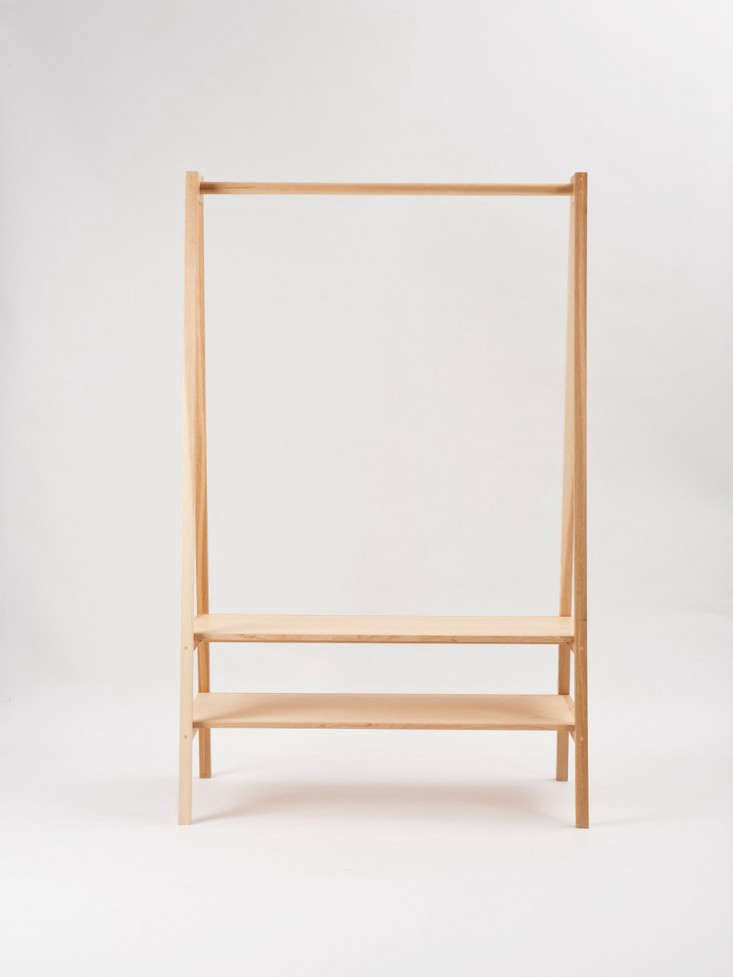

Some furniture whispers. Some furniture shouts. Douglas and Bec’s Garment Rack does something far more charming: it quietly persuades your clothes to behave. Designed as a refined open wardrobe, this made-to-order garment rack became a favorite among design lovers because it solved a very ordinary problemwhere do all these jackets, shoes, sweaters, and “I swear I’m going to wear this someday” pieces go?with unusual grace.
Originally created by New Zealand design studio Douglas & Bec in collaboration with Auckland furniture maker Sam Orme-Gee, the rack was crafted from blonde American ash and built with shelving for folded knitwear, shoes, bags, and accessories. Archived product details list the two-shelf version at approximately 1170 mm wide, 1855 mm high, and 650 mm deep, with pricing starting around $1,190. The piece has since been marked discontinued in public product archives, but its influence remains very much alive in the world of modern clothing racks, open closet ideas, and beautifully made storage furniture.
In other words, Douglas and Bec’s Garment Rack is not just a place to hang shirts. It is a gentle reminder that even storage can have a personalityand preferably not the personality of a plastic rolling rack wobbling in the corner like it has seen too much.
What Made Douglas and Bec’s Garment Rack Special?
The appeal of Douglas and Bec’s Garment Rack starts with its balance of practicality and poetry. It was made to hold clothing, yes, but it was also designed to look intentional in a bedroom, dressing area, boutique, studio apartment, or entry space. Many garment racks are treated like temporary solutions. This one felt permanent, architectural, and calm.
Douglas & Bec built its reputation around furniture and lighting that combined clean lines, honest materials, and traditional craftsmanship. The studio, originally established by father-and-daughter team Douglas and Bec Snelling, became known for warm timber, elegant proportions, brass, leather, glass, and other natural materials. Their work often feels simple at first glance, but the details reward slower looking. The garment rack fits neatly into that design language: understated, useful, and quietly luxurious.
A Collaboration with Sam Orme-Gee
The rack was also notable because it involved Sam Orme-Gee, a furniture maker associated with subtle, finely resolved pieces. Rather than producing a generic utility rail, Douglas & Bec and Orme-Gee created a garment rack that looked like it belonged in a considered interior. The phrase “ultimate garment rack” appeared in archived descriptions, and while that sounds like the sort of thing a product page would say after one too many espressos, the design did earn the compliment.
The rack’s construction used blonde American ash, a pale hardwood valued for its clean grain and light visual presence. In a room, that matters. Heavy dark furniture can make a small space feel crowded, while pale wood visually relaxes the room. American ash gives structure without making the rack look like a storage punishment.
Design Analysis: Why the Rack Still Feels Modern
One reason Douglas and Bec’s Garment Rack still feels relevant is that it anticipated a broader shift in home design: storage no longer has to hide. Open wardrobes, boutique-style rails, freestanding clothing racks, and minimalist bedroom storage have become common in apartments and small homes. People want organization, but they also want their rooms to look good on the days when the laundry basket is not trying to start a rebellion.
The rack works because it does not pretend clothes are invisible. Instead, it frames them. A good garment rack turns daily items into a curated display. Jackets, linen shirts, wool coats, boots, handbags, and folded sweaters become part of the room’s texture. That can be dangerous if your wardrobe is 87% mystery hoodies, but with a little editing, the effect is elegant.
Open Storage with Built-In Discipline
Open storage has one powerful advantage: it keeps you honest. A closed closet can hide chaos for years. A garment rack politely exposes your habits by Tuesday. Douglas and Bec’s Garment Rack used that visibility as a feature. Because the rack was beautiful, it encouraged the owner to treat clothing with care. Matching hangers, a limited color palette, folded knits, and neatly placed shoes all became part of the design.
The shelves were especially useful. Many clothing racks offer a hanging rail and then leave shoes to form a tiny leather landslide underneath. This rack gave folded garments and footwear a proper home. Sweaters could sit on one shelf, shoes on another, and bags could be displayed rather than crushed into a closet corner like forgotten gym equipment.
Proportions That Make Sense
The archived dimensions suggest a piece large enough to function as a real wardrobe supplement but not so massive that it would dominate a bedroom. At roughly 46 inches wide, 73 inches high, and 25.5 inches deep, the two-shelf version could hold a capsule wardrobe, guest coats, seasonal pieces, or boutique merchandise. Its height gave long garments breathing room, while the depth allowed shelves to be genuinely useful.
That is the difference between a design object and a cute inconvenience. A rack can look beautiful in a photograph and still fail if hangers bump the wall, dresses drag on the floor, or shoes slide off a shelf every time you sneeze. Douglas and Bec’s Garment Rack seemed designed for actual use, not just for standing in a sunlit corner beside a ceramic vase and an unread art book.
How to Use Douglas and Bec’s Garment Rack in a Real Home
Because the original rack is discontinued, many readers will encounter it as inspiration rather than as a current shopping option. That does not make it less useful. In fact, studying this piece can help you choose or style any high-quality modern clothing rack.
Use It as an Open Wardrobe
For small apartments or bedrooms without generous closets, a rack like this can serve as a compact open wardrobe. The best approach is to treat it like a capsule closet. Keep everyday pieces on the rail: a blazer, a denim jacket, a few shirts, two pairs of trousers, and maybe a dress or coat. Use the shelves for shoes, sweaters, or storage boxes. The goal is not to display every item you own. The goal is to display the items you actually wear.
If you overload the rack, even the most elegant design will start looking like a clearance sale lost its manager. Leave space between hangers. Group similar pieces together. Keep heavier coats toward the sides for visual balance. Fold sweaters instead of hanging them so they keep their shape.
Place It in an Entryway
Douglas and Bec’s Garment Rack also makes sense as an elevated entryway piece. In a home without a coat closet, it could hold guest coats, scarves, hats, umbrellas, and shoes. Because the design is warmer and more furniture-like than a metal coat stand, it would make the entry feel styled rather than improvised.
For this use, keep the top rail limited to outerwear and the shelves reserved for shoes or baskets. A small tray for keys and sunglasses could sit on a shelf, provided it does not turn into a black hole for receipts, coins, dog bags, and one mysterious screw from 2019.
Use It in a Boutique or Studio
The garment rack’s refined look also suits retail and creative spaces. A boutique could use it to display a small collection of garments without making the shop feel crowded. A stylist could use it to stage outfits for photo shoots. A designer could use it in a studio to hold samples. The rack’s pale wood would pair well with linen, wool, leather, denim, and neutral interiors.
Because it looks handcrafted rather than industrial, it is especially effective for brands that want to communicate quality, slowness, and material honesty. It says, “These clothes were selected with care,” not “We found this rack in the storage room behind the mop bucket.”
Styling Tips for a Designer Garment Rack
The secret to making any open clothing rack look good is editing. The rack itself can be gorgeous, but it cannot save you from visual clutter. Think of it as a small stage. Every item on it is part of the performance.
Choose Matching Hangers
Uniform hangers make an immediate difference. Wood hangers create a warm, classic look. Slim velvet hangers save space and stop slippery garments from sliding off. Metal hangers can feel modern, but they should be high quality. Mismatched hangers, meanwhile, make even expensive clothing look like it is waiting outside a fitting room.
Organize by Color or Category
Arrange clothing from light to dark, or group by type: shirts, jackets, pants, dresses, coats. Color organization creates a calm visual rhythm. Category organization makes mornings easier. The best method is the one you will actually maintain after the first enthusiastic weekend of “new me, new closet” energy fades.
Keep the Shelves Beautiful and Useful
The shelves are not a dumping zone. Use them for folded knits, polished shoes, woven baskets, or structured bags. Avoid stuffing them with random objects. If you need to store smaller items, use boxes or bins in natural materials that complement the ash wood. Canvas, leather, rattan, and neutral fabric work well.
Leave Breathing Room
Negative space is not wasted space. On a garment rack, it is luxury. Leaving room between garments makes each item easier to see and access. It also prevents the rack from becoming visually heavy. A few carefully chosen pieces will always look better than a crowded rail begging for mercy.
What to Look for in a Similar Garment Rack Today
Since Douglas and Bec’s Garment Rack is no longer widely available, shoppers looking for a similar feel should focus on materials, proportions, and craftsmanship rather than chasing an exact duplicate. The best modern clothing racks share several qualities.
Solid Wood or High-Quality Metal
Look for solid wood, powder-coated steel, brass, or well-finished aluminum. Avoid flimsy frames that wobble when loaded. A clothing rack has to support weight, especially if it will hold coats, denim, or multiple pairs of shoes. Beauty is wonderful, but gravity remains undefeated.
Integrated Shelving
A rack with shelves is far more useful than a simple rail. Shelving allows the piece to function as a mini wardrobe, not just a temporary hanging bar. If you live in a small space, shelves can hold shoes, folded jeans, sweaters, baskets, or seasonal accessories.
Appropriate Scale
Measure before buying. A garment rack needs enough depth for hangers, enough height for longer garments, and enough width to hold your daily wardrobe without crowding. Also measure the walkway around it. A rack that blocks a door, heater, or closet is not storageit is furniture with an attitude problem.
A Design That Matches Your Room
Douglas and Bec’s version worked because it had a clear design identity. If your room is minimalist, choose pale wood or slim metal. If your home leans industrial, black steel or pipe-style racks may fit. If your style is Scandinavian, look for ash, oak, beech, and simple lines. The rack should feel like part of the room, not an apology for not having enough closet space.
Care and Maintenance for an Ash Wood Garment Rack
If you own an ash wood garment rackor a similar wood storage piececare is simple but important. Dust regularly with a soft cloth. Avoid placing damp clothing directly against wood, especially after rain. Use felt pads under shoes if soles are dirty or gritty. Keep the rack away from extreme humidity and direct heat sources.
For unfinished or lightly finished wood, occasional conditioning may help preserve the surface, depending on the maker’s instructions. Do not use harsh cleaners. Wood furniture appreciates gentle treatment. It is not a kitchen counter, a step ladder, or a place to test whether your suitcase can “probably fit up there.”
Why This Garment Rack Still Matters
Douglas and Bec’s Garment Rack matters because it represents a smarter way to think about storage. Instead of treating organization as a purely functional chore, it turns storage into part of the interior design experience. It makes the everyday visible and gives it dignity.
That idea feels even more relevant today. Many people live in smaller homes, rent apartments with limited closets, or want flexible furniture that can move with them. A well-designed garment rack can serve as a closet, display rail, guest storage area, laundry staging zone, or dressing-room feature. It can also encourage better wardrobe habits: buy less, choose better, care for what you own, and stop pretending the chair in the corner is a legitimate closet system.
Experience Section: Living with a Garment Rack Inspired by Douglas and Bec
Using a garment rack inspired by Douglas and Bec’s design changes the rhythm of a room. The first thing you notice is visibility. Everything is right there. Your favorite jacket is no longer buried behind three formal shirts and a Halloween costume you keep “just in case.” Your shoes have a place to land. Your sweaters stop living in a stack that slowly becomes modern sculpture. The room feels more honest.
The second thing you notice is that the rack asks you to edit. A closed closet lets you keep too much. An open garment rack has boundaries, and those boundaries are surprisingly helpful. You begin asking better questions: Do I wear this? Does it fit? Does it deserve prime real estate? If the answer is no, the piece goes somewhere elseor leaves your life entirely. That sounds dramatic, but closet organization is basically therapy with hangers.
In daily use, a rack with shelves is far more practical than a rail-only design. The rail handles shirts, jackets, dresses, and coats, while the shelves become landing zones for folded knitwear, boots, bags, or storage baskets. This matters in the morning, when you are not in the mood to conduct an archaeological dig through your closet. You can see outfit combinations quickly. A blazer, jeans, shoes, and bag can be staged together. Getting dressed becomes less frantic and more intentional.
The visual impact is also real. A pale wood garment rack softens a bedroom. It brings warmth without bulk, especially when paired with neutral bedding, a simple mirror, and natural textures. If the clothing palette is controlledwhite shirts, denim, camel coats, black trousers, soft knitsthe rack can look almost boutique-like. Add one chaotic neon hoodie and the effect becomes more “laundry day documentary,” but that is part of the fun.
There are challenges. Dust is more noticeable on open storage, so garments that sit unused may need brushing or laundering. Sunlight can fade fabrics if the rack sits near a bright window. Overloading the rail can make even a sturdy piece look messy. And because everything is visible, you cannot rely on the old strategy of closing the door and pretending the closet is fine. The rack is polite, but it does not lie.
Still, the experience is rewarding. A beautiful garment rack encourages better habits because it turns organization into something you actually want to maintain. It works especially well for capsule wardrobes, guest rooms, studio apartments, creative workspaces, and anyone who enjoys seeing their favorite pieces instead of hiding them. Douglas and Bec’s Garment Rack remains inspiring because it proves that storage can be graceful, useful, and emotionally satisfying. That is a lot for a clothing rack to accomplish, but when design is done well, even your sweaters seem to stand a little taller.
Conclusion
Douglas and Bec’s Garment Rack is more than a discontinued design object. It is a lesson in how thoughtful furniture can improve everyday life. With blonde American ash, custom craftsmanship, practical shelving, and clean proportions, the rack turned open storage into something elegant enough to display proudly. Its collaboration between Douglas & Bec and Sam Orme-Gee produced a piece that still feels relevant in today’s conversations about small-space living, open wardrobes, and intentional interiors.
For anyone seeking a similar solution, the takeaway is simple: choose quality materials, respect proportion, avoid clutter, and let your storage support the way you actually live. A great garment rack should not merely hold clothes. It should make getting dressed easier, keep favorite pieces visible, and bring calm to the room. If it also makes your shoes look like they belong in a design magazine, consider that a very stylish bonus.