
If you told someone ten years ago that the future of clean energy might involve an onion skin, they would’ve assumed you were describing a sad salad. And yet, here we are: scientists have been experimenting with a bio-based UV-protection film for solar cells that uses dye extracted from red onion skins. It’s weird in exactly the way “great science” often isequal parts practical, surprising, and “wait, that works?”
The big idea is simple: sunlight powers solar panels, but sunlight also contains ultraviolet (UV) radiation that can degrade certain solar technologies and the materials around them. So researchers asked a very modern question: can we replace petroleum-based UV-protection plastics with something more sustainablewithout sacrificing performance? Their answer included nanocellulose (plant-based fibers) and a purple-tinted helper you’ve probably cried over in your kitchen.
Why UV Light Is a Problem for Solar Panels (and Especially Some Solar Cells)
Solar panels live outside, which means they’re constantly taking hits from heat, moisture, oxygen, mechanical stress, and light. Visible light is the star of the showit’s what most solar technologies convert into electricity. UV light, meanwhile, is like the guest who shows up early, eats all the chips, and quietly damages the furniture.
UV radiation can break down materials over time
Many polymers (plastics) degrade under UV exposure. That can mean discoloration, brittleness, cracking, and changes in how well a material blocks moisture or insulates electrically. In solar modules, those protective layers matter because the solar cells are laminated inside a stack of materials designed to keep the outside world out.
Some solar technologies are extra UV-sensitive
Conventional crystalline silicon modules are tough, but they still experience a variety of degradation modes over decades. Meanwhile, emerging solar technologieslike dye-sensitized solar cells (DSSCs), organic photovoltaics, and many perovskite-based devicescan be more sensitive to UV-driven chemical reactions. In those systems, UV can accelerate breakdown of interfaces, transport layers, dyes, and encapsulants.
The “UV sensitivity” headline isn’t saying solar panels melt the moment the sun shows up. It’s about long-term durability and how certain materials behave after thousands of hours in real sunlight. If a solar technology is efficient but degrades quickly outdoors, it’s like buying a sports car that runs great… as long as you never drive it.
What’s the Usual Fix? Petroleum-Based UV Filters
The solar industry already uses UV-protective materials. Many modules incorporate components that reduce UV transmission and slow UV-driven aging. But here’s the sustainability snag: some of the protective films and plastics used in solar modules are derived from petroleum, and end-of-life handling can be complicated. Some backsheets use fluorinated polymers (great for durability, not great for easy recycling).
Researchers looking at bio-based solar materials face a challenge: if you want a solar device that’s more sustainable overall, swapping in a non-biodegradable, petroleum-based UV filter is like packing an organic lunch in a plastic bag and then congratulating yourself on the kale.
The Onion Solution: A Bio-Based Film That Blocks UV Without Blocking the Good Stuff
The “onions” headline refers to a study testing nanocellulose films treated with different UV-blocking additives. Nanocellulose is derived from cellulose (the stuff plant cell walls are made of). It can be processed into strong, transparent filmsuseful if you want a protective layer that doesn’t hog the light your solar cell needs.
Researchers compared several bio-based approaches and found that a nanocellulose film dyed with red onion skin extract was extremely effective at UV blockingwhile still allowing high transmission of the wavelengths solar devices actually want to absorb.
What makes onion skins special?
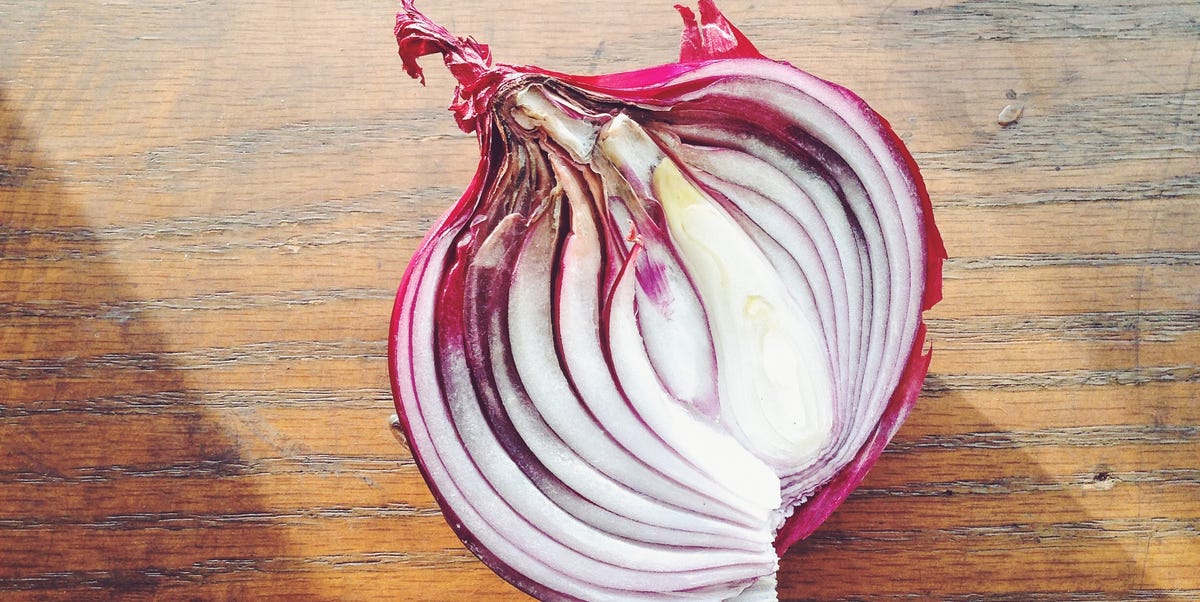
Red onion skins are rich in plant pigments and polyphenols (including flavonoids such as quercetin and other compounds). Many of these molecules absorb strongly in the UV range. In other words: they’re naturally good at drinking up UV photons before those photons can trigger damage elsewhere.
Think of it like sunscreen, but for solar tech: you don’t want the UV reaching sensitive layers, but you still want the rest of the spectrum to pass through.
How the “Onion Film” Actually Works (No, You Don’t Rub Produce on Your Rooftop)
Let’s clear up the mental image: this is not a call for homeowners to duct-tape onion slices to their panels. (Please don’t. Your neighbors will have questions. And birds will have opinions.) The research involves extracting dye from onion skins and incorporating it into a nanocellulose-based film that can be used as a UV filter layer.
Key performance claims from the research
- Very high UV blocking: The onion-extract-treated nanocellulose film reportedly blocked nearly all UV radiation up to around 400 nm (which covers UVA/UVB ranges relevant to many materials).
- High transmission where it matters: The film maintained strong transmission in wavelengths important for many photovoltaic devices (notably in parts of the visible and near-infrared, depending on the solar tech).
- Durability testing: The film was tested under extended artificial light exposure meant to simulate long-term sunlight, with performance holding up in the test setup.
The study used dye-sensitized solar cells (DSSCs) as a practical testbed because DSSCs are particularly prone to UV-related performance loss. If a UV filter helps a very UV-sensitive device keep functioning, that’s a strong signal the filter is doing its job.
So… Does UV Filtering Hurt Solar Efficiency?
Great questionand it’s the kind engineers argue about politely, while tightening bolts. UV makes up a smaller slice of total solar energy compared with visible and near-infrared light. Many solar devices don’t harvest UV very efficiently anyway, and some materials are damaged by it.
That means filtering UV can be a smart trade: you might lose a tiny bit of potential energy input, but gain a lot in stability and lifetime. In real-world solar economics, lifetime energy produced often matters more than peak efficiency on day one.
A filter also has to be optically “clean” in the rest of the spectrum. A bad UV filter is like putting sunglasses on your solar cell. A good UV filter is like installing a screen door that keeps the bugs out but doesn’t stop the breeze.
Why This Onion Trick Matters Beyond the Laugh Factor
1) It targets the hidden sustainability problem in solar
Solar energy is low-carbon during operation, but manufacturing materials still come with environmental costs. Improvements that replace fossil-derived plastics with bio-based, potentially more recyclable or biodegradable alternatives can help reduce the footprintespecially for niche applications where full biodegradability is a design goal.
2) It could help emerging solar tech survive the real world
Perovskite solar cells and organic photovoltaics are exciting because they can be lightweight, flexible, and potentially cheaper to manufacture. But stability under UV and other stressors remains a key barrier to broad commercialization. UV filters are one piece of the durability puzzle, alongside better encapsulation, improved interfaces, and more stable transport layers.
3) It supports bio-based electronics and specialty applications
The onion-dyed nanocellulose film isn’t only about rooftop panels. Bio-based UV filters can matter in devices like disposable sensors, packaging-integrated electronics, agricultural applications, and other settings where you want performance without long-lived plastic waste.
What This Doesn’t Solve (Yet): The Practical Reality Check
Science headlines love a quirky ingredient, but scaling materials into real products is its own endurance sport. Before an onion-derived UV film becomes common, it has to clear several hurdles:
- Long-term outdoor reliability: Accelerated tests are helpful, but real weather includes heat cycles, humidity swings, pollution, hail, sand, and mechanical stress.
- Manufacturability at scale: Can the film be produced consistently, at large volumes, with stable optical properties batch-to-batch?
- Compatibility with existing module stacks: Adhesion, lamination temperatures, chemical interactions, and aging behavior all matter.
- Cost and supply chain: Onion skins are abundant waste in food systems, but extraction, purification, and processing still need to be economical.
- Standards and certification: Solar components must meet strict reliability standards. “It worked in a study” is the beginning of the story, not the ending.
Still, the broader direction is clear: researchers are treating solar not just as an energy technology, but as a materials and sustainability ecosystem. If a humble agricultural byproduct can replace a petroleum-derived component without sacrificing performance, that’s a win worth exploring.
How to Explain This to a Friend in One Minute
Here’s your party-ready summary: UV light can degrade some solar materials. Solar devices often use plastic UV filters made from petroleum-based polymers. Scientists tested a bio-based alternativea nanocellulose film dyed with red onion skin extractthat blocks UV extremely well while still letting useful sunlight through. It’s promising for improving durability and sustainability, especially for more UV-sensitive solar technologies.
FAQ
Does this mean solar panels are “UV sensitive” in general?
Solar modules are designed to survive outdoors for decades, but UV can still contribute to material aging and certain degradation mechanisms. Some emerging solar technologies are more sensitive than conventional silicon.
Will onion-based UV filters make solar panels smell like onions?
No. The “onion” part is a dye extracted from onion skins incorporated into a processed film. It’s not a salad garnish. Your roof is safe from onion breath.
Could this improve perovskite solar cell durability?
UV filtering is commonly discussed as a strategy to reduce UV-driven degradation in perovskite and other sensitive photovoltaics. A highly effective bio-based UV filter could be a helpful componentif it integrates well with encapsulation and survives real-world conditions.
Is this meant to replace every plastic in solar panels?
Not overnight. This research focuses on UV-filtering films, one part of a larger materials stack. But swapping even one petroleum-derived component for a bio-based alternative can move the sustainability needle.
of “Real-Life” Experiences Around the Onion-and-Solar Idea
You don’t have to be a lab researcher to understand why UV protection becomes an obsession the moment something is supposed to live outside. If you’ve ever left a cheap plastic chair in the sun and watched it fade, crack, or get that “crispy” texture that screams this will snap if you look at it wrong, you’ve witnessed a low-budget version of the same problem solar engineers fight in high resolution.
Picture a homeowner who installs solar and, a few years later, starts noticing subtle changesmaybe the backsheet looks a little more yellow than it used to, or the materials around the edges seem less “new” and more “seasoned.” It’s not dramatic like a movie explosion; it’s the slow-motion reality of weathering. In solar, slow-motion matters, because the whole promise is decades of steady performance. Nobody signs up for “renewable energy, now with surprise aging.”
Now zoom in to the world of emerging solar cellsespecially the kinds that excite researchers because they can be lightweight, flexible, and made with less energy than traditional silicon. In demos, these devices can look almost magical: thin films that turn light into electricity, sometimes even in indoor conditions. But then someone asks the question that turns enthusiasm into engineering: “How does it behave after months of real sunlight?” That’s where UV shows up like an uninvited auditor.
In a lab setting, UV testing can feel like speed-running time. A device that looks perfect at breakfast can look noticeably worse after a long session under harsh light. Engineers and materials scientists learn quickly that durability isn’t a single trickit’s a layered defense: better interfaces, better encapsulation, better protective films, fewer weak links. The UV filter becomes one of those deceptively small components that can have outsized impact, like a good phone case that saves a $1,000 device from a two-foot fall.
The onion angle adds a very human kind of delight to the storybecause it’s a reminder that “advanced materials” don’t always start in a cleanroom. Sometimes they start in agricultural waste, in food processing leftovers, in things we throw away without thinking. If you’ve ever cooked with red onions and noticed how stubborn that purple stain can be, you already know the dye has staying power. Scientists are basically channeling that stubbornness into a useful job: absorb UV, protect the delicate stuff, and do it with a bio-based material instead of another fossil-derived film.
And if you’re the kind of person who likes a practical takeaway: this isn’t a DIY onion hack, but it is a peek into how solar tech keeps getting better. Not just more efficientmore durable, more sustainable, and sometimes… more deliciously weird.
Conclusion
The onion-based UV filter idea is funny at first glance, but it points to a serious challenge: protecting solar materials from UV damage while making the overall technology cleaner and easier to live with at end-of-life. Nanocellulose films dyed with red onion skin extract show how bio-based materials can compete with traditional plastics on performance, not just good intentions. The next steps are the unglamorous (and essential) onesscaling, durability validation, and integration into real products. Still, if the future of solar includes fewer petroleum-based components and more clever use of renewable byproducts, that’s a future worth rooting forpun fully intended.