
Tree branches are among the few decorating materials that can look expensive, sculptural, and completely at home while costing almost nothing. The trick is restraint. One thoughtfully chosen branch can soften a modern room, add texture to a neutral space, or solve a small storage problem without making your living room resemble an enchanted forest gift shop.
DIY tree branch decor also works with nearly every interior style. Pale birch complements Scandinavian rooms. Dark, twisting hardwood looks dramatic against white walls. Smooth driftwood suits coastal interiors, while delicate flowering branches bring spring indoors before the weather receives the memo.
Before grabbing the first stick beside the driveway, however, take time to choose, clean, dry, and mount it properly. Natural wood may contain insects, moisture, loose bark, sap, or hidden decay. A little preparation separates charming organic decor from an unexpected indoor beetle convention.
How to Prepare Tree Branches for Indoor Decor
Source branches responsibly
The safest sources are your own yard, a neighbor who has given permission, storm-fallen limbs on private property, or branches supplied by a florist, garden center, or craft retailer. Do not cut living branches from parks, protected land, street trees, or forests without checking local rules. Collection requirements vary, and some public lands require permits even for dead wood. Moving untreated wood long distances can also transport invasive insects and tree diseases.
Choose sound wood without soft spots, crumbling sections, heavy fungal growth, extensive insect holes, or a sour smell. Avoid branches wrapped in unidentified vines because poison ivy can remain irritating even after it has dried. Skip wood treated with preservatives, pesticides, creosote, or unknown chemicals.
Clean and inspect the wood
Work outdoors. Shake the branch, brush away dirt, remove loose bark, and examine every fork and crevice. Wood-boring insects are commonly associated with weakened, dying, or recently dead branches, so inspection matters even when the branch looks innocent enough to request its own vase.
Wipe the surface with warm water and a small amount of mild dish soap. Avoid saturating the wood. Rinse it lightly, then leave it in a dry, ventilated, protected location until all moisture has evaporated. Thick branches may require several weeks to stabilize. A moisture meter is helpful for larger projects, but patience and good airflow are the essential tools.
Do not spray decorative branches with household insecticide unless the product label specifically permits that use. Do not put large branches in a kitchen oven. Direct heating can create odors, cracking, scorching, resin problems, and a needless fire risk. Kiln-dried branches from a reputable supplier are a practical alternative when pest control is a major concern.
Sand, seal, and test
Sand cut ends, sharp nubs, and rough sections with medium-grit paper followed by finer sandpaper. Leave some bark intact when it is firmly attached and visually appealing. Remove it when it flakes easily or hides damaged wood.
A clear water-based polyurethane or matte acrylic sealer can reduce shedding and make dusting easier. Apply thin coats outdoors or in a well-ventilated workspace and allow the finish to cure completely. Wood-finishing projects typically perform best when coatings dry fully between applications.
Before mounting anything, press on the branch, twist it gently, and check every junction. Decorative branches should never support people, pets, climbing children, heavy cookware, valuable electronics, or anything else whose fall would create a memorable insurance claim.
11 Subtle DIY Ways to Use Tree Branches Indoors
1. Create a Sculptural Branch Arrangement
The simplest idea is often the most sophisticated. Place one tall, asymmetrical branch in a heavy ceramic vase, glass floor vessel, or vintage stoneware crock. Choose a branch that occupies vertical space without spreading into a walkway.
For a modern arrangement, remove the leaves and let the silhouette do the work. For a softer seasonal display, use budding or flowering branches in water. Apple, crabapple, forsythia, quince, and magnolia branches can make a dramatic spring arrangement. Fresh stems generally last longer when cleanly cut and kept away from direct sun and heat.
Add clean stones to the bottom of a lightweight vase for stability. The goal is graceful woodland sculpture, not a branch that tips over whenever someone walks past carrying groceries.
2. Make a Minimal Entryway Hook Rail
Short branch forks can become natural hooks for keys, hats, scarves, or empty tote bags. Cut several sturdy Y-shaped twigs to a similar depth, sand them, and screw them to a painted or stained wood board. Mount the board into wall studs or use anchors appropriate for the wall.
Painting the twigs the same color as the board creates a subtle architectural effect. Leaving them natural gives the project more contrast. Twig hooks are an established scrap-wood idea because their branching shape naturally performs the job of a hook.
Keep the load light. A winter coat soaked with rain belongs on proper hardware, not on a twig that once considered supporting three leaves an ambitious career.
3. Display Jewelry on a Small Branch Stand
A compact branch with several upward-facing twigs can organize necklaces, bracelets, and lightweight earrings. Stand it in a small container filled with plaster, quick-setting cement, or decorative stones. Protect the tabletop with felt beneath the base.
Use a branch no taller than about 18 inches so the organizer remains stable. Sand every contact point carefully to prevent snagging delicate chains. A whitewashed finish feels airy, matte black looks graphic, and clear sealer preserves the natural grain.
This is particularly useful on a dresser because it turns accessories into part of the room’s decor instead of allowing them to evolve into one legendary, inseparable knot.
4. Build a Branch Photo or Postcard Display
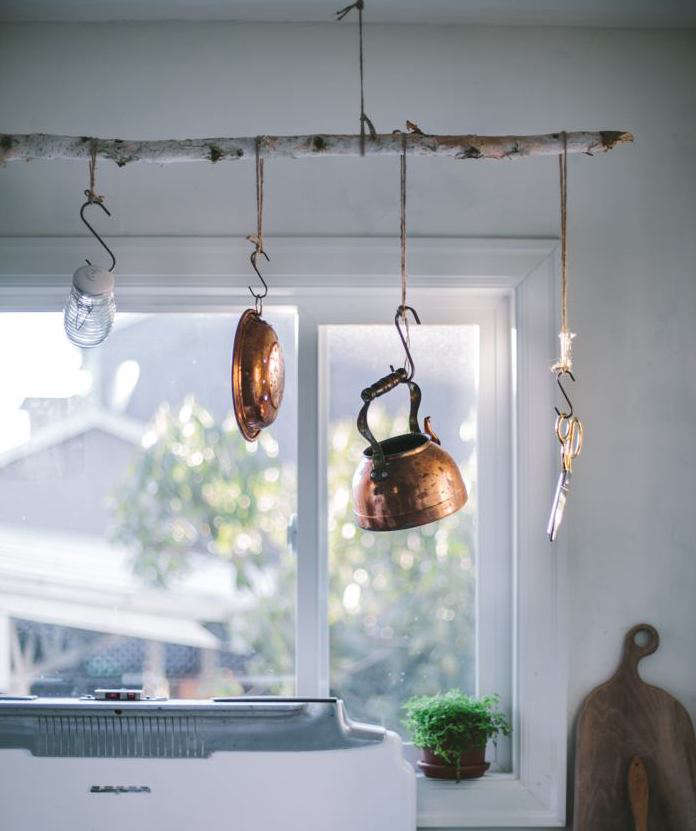
Mount a slim horizontal branch above a desk, console, or reading nook. Tie thin cotton cord, leather strips, or transparent line at uneven intervals, then attach photos, postcards, pressed leaves, or children’s artwork with miniature clips.
Keep the branch visually light and the arrangement loosely edited. Five meaningful photographs usually look better than 47 images competing for custody of the wall. Change the display seasonally without drilling new holes or buying new frames.
For rental-friendly decor, place the branch on two properly rated removable hooks, provided the combined weight remains within the manufacturer’s limit.
5. Use a Branch as a Lightweight Textile Rail
A straight, dry branch can hold a small tapestry, tea towel, decorative scarf, or piece of woven fiber art. Suspend it from two ceiling hooks or wall-mounted brackets using matching cord.
This project works especially well above a bed, beside an entry bench, or in a quiet corner that needs texture. Select a textile much narrower than the branch so a few inches of wood remain visible at both ends.
Treat this as a display rail, not a full curtain rod. Everyday curtains generate repeated pulling forces and require reliable, purpose-built hardware. A branch carrying a decorative textile can be charming; a branch crashing down with blackout drapes at 2 a.m. is performance art.
6. Design a Delicate Hanging Mobile
Create a balanced mobile from one small branch, lightweight paper shapes, dried seedpods, felt ornaments, origami birds, or air-dry clay pieces. Tie each element with thread and test the balance before hanging the mobile.
Use a secure ceiling hook and position the mobile away from cribs, ceiling fans, candles, cooking surfaces, and high-traffic paths. For a nursery, keep every string and suspended item completely beyond a child’s reach.
A restrained palette makes this DIY branch decoration feel polished. Natural linen, cream, muted blue, or soft terracotta lets movement and shadow provide the visual interest.
7. Add a Natural Rail for Dried Flowers
Mount a slender branch horizontally in a kitchen dining area, craft room, or enclosed porch, then suspend small bundles of dried lavender, statice, eucalyptus, wheat, or herbs. Air-dried plant material is inexpensive, long-lasting, and well suited to indoor arrangements when collected free of insects, disease, rain, and dew.
Keep dried materials away from stoves, fireplaces, radiators, and direct sunlight. Avoid placing them above food-preparation surfaces, where dust and plant fragments may fall.
Three or five small bundles generally appear calmer than a densely packed row. Negative space is doing real design work here, despite receiving no applause.
8. Make a Bare-Branch Seasonal Tree
Place a branching limb in a weighted floor container and use it as a reusable seasonal tree. Hang paper eggs in spring, tiny stars in winter, felt leaves in fall, or family notes during birthdays and holidays.
Wood-slice ornaments are another inexpensive option: cut thin discs from a small branch, sand both faces, drill a hole, and add twine. They may be left natural, labeled with names, or decorated with simple painted patterns.
Use lightweight, shatter-resistant ornaments and cool-running, certified LED lights only. Keep wiring visible enough to inspect, follow the light manufacturer’s directions, and never wrap damaged cords around dry wood.
9. Form a Simple Botanical Centerpiece
Lay a clean, sculptural branch along the center of a dining table and surround it with a few low objects: bud vases, unscented LED candles, smooth stones, small ceramic pieces, or seasonal fruit.
The branch should be shorter than the table and low enough that guests can see one another. No one should have to negotiate with a tree limb before asking for the potatoes.
For a formal table, paint the branch a single matte color. For everyday decor, keep the natural finish and use washable placemats beneath it. Felt dots on the underside prevent scratching.
10. Construct a Narrow Decorative Room Divider
Several tall, slender branches can create a light visual boundary between an entryway and living room or between a bed and workspace. Anchor them vertically inside a sturdy wood base, a long planter filled with stones, or a custom frame secured to the floor or wall.
Keep generous space between the branches so light passes through. This preserves openness while suggesting separate zones. Branch dividers are often used precisely because their irregular lines provide an organic alternative to solid partitions.
Stability is essential. A freestanding divider should have a wide, weighted base and should not be used where children or pets may pull, climb, or collide with it.
11. Create a Decorative Blanket Ladder
Two straight branches and several shorter crosspieces can become a rustic ladder for displaying lightweight throws. Drill pilot holes, join the rungs with screws, and reinforce the connections with wood glue formulated for the project. Sand the entire structure and seal it before bringing it indoors.
Lean the ladder at a shallow angle, add nonslip pads, and secure the top to the wall with discreet straps or brackets. Display one or two lightweight blankets rather than overloading every rung.
This is decorative furniture, not a climbing ladder. Make that distinction clear to children, guests, and the one adult relative who believes every object in a house is secretly gym equipment.
How to Make Branch Decor Look Intentional
Natural materials already contain visual complexity, so the surrounding styling should stay simple. Repeat one element from the room: match the branch finish to a wood table, echo the wall color with painted twigs, or select cord that coordinates with nearby textiles.
Scale matters. A large twisting limb can command an empty corner, while a tiny branch is better suited to a desk or shelf. Avoid scattering branch projects throughout every room. One or two strong pieces create cohesion; twelve may suggest that the house is slowly being reclaimed by woodland.
Dust branches with a soft brush, microfiber cloth, or vacuum fitted with a low-suction brush attachment. Check mounted projects occasionally for cracking, loose fasteners, shedding bark, moisture, or insect activity. Remove deteriorating wood instead of attempting to preserve it forever.
Conclusion
Using tree branches indoors does not require a log cabin, an enormous craft budget, or a suspiciously close relationship with a hot-glue gun. The most successful DIY branch decor emphasizes shape, texture, and function without overwhelming the room.
Start with clean, sound, legally sourced wood. Let it dry fully, smooth dangerous edges, and choose mounting hardware according to the actual load. Then use the branch as a sculptural arrangement, jewelry stand, photo rail, textile hanger, centerpiece, seasonal tree, room divider, or another quiet accent that complements the space.
A branch already possesses details that manufactured decor tries hard to imitate: irregular curves, subtle color changes, knots, scars, and asymmetry. Your job is not to improve nature. It is merely to prevent nature from bringing beetles, splinters, and structural surprises into the guest room.
Practical Experience Addendum: Lessons from Real DIY Outcomes
The following is a composite of recurring lessons reported across home-decor projects and common DIY outcomes, rather than a claim of personal home ownership or firsthand workshop experience.
The first lesson is that the branch chosen outdoors will look much larger indoors. A limb that seems delicate beside a mature tree can suddenly occupy half a dining room once it passes through the front door. Before cleaning or finishing a branch, carry it into the intended room briefly and view it from several angles. Check door clearance, ceiling height, walking space, and nearby furniture. Trimming the branch gradually is far easier than trying to glue back the perfect fork removed during an enthusiastic five-minute pruning session.
The second lesson concerns stability. Many attractive projects fail not because the branch is ugly, but because the base is too light. Tall arrangements need substantial weight below their center of gravity. Small stones, plaster, cement, or a broad ceramic vessel can prevent tipping. Felt pads beneath the container also reduce vibration and protect furniture. For wall-mounted decor, the most successful installations place screws into studs or use anchors rated for the wall material and total load. Decorative cord should not be asked to compensate for unreliable hardware.
Another recurring discovery is that branches continue changing after they come indoors. Slight cracking may occur as remaining moisture escapes. Bark that initially appears secure may loosen after several weeks. Sap can emerge from resinous species, particularly when the wood is placed near a sunny window or heating vent. Allowing branches to dry in a garage, shed, or covered porch before final finishing prevents many of these surprises. It also creates an observation period in which hidden insects, mold, or odors can reveal themselves somewhere other than above the sofa.
Finish choice makes a larger visual difference than expected. Glossy coatings can make rugged wood look artificial, while an ultra-flat finish may collect dust and prove difficult to wipe clean. A satin or matte water-based sealer is usually the quiet middle ground. It preserves color, limits shedding, and does not transform the branch into something resembling plastic antlers. Testing the finish on a trimmed offcut is worthwhile because pale wood may darken noticeably.
Styling also improves when the branch is given breathing room. A jewelry tree overloaded with every necklace becomes visual clutter. A photo branch holding dozens of snapshots loses its sculptural quality. A floor arrangement surrounded by baskets, plants, lamps, and framed art may simply disappear. The strongest results use fewer accessories and allow the branch’s outline to cast shadows against a relatively plain background.
Finally, successful branch decor is flexible rather than permanent. Photographs can change, dried flowers can be replaced, seasonal ornaments can be removed, and a centerpiece can move when the table is needed. Natural wood ages, and some branches eventually deserve retirement. Treating the project as an evolving accent removes pressure to preserve every twig indefinitely. The best outcome is not a branch that lasts forever; it is an inexpensive, personal object that makes a room feel warmer, calmer, and slightly more connected to the outdoors.
Note: Use only legally collected, pest-free, fully dried wood. Keep branches and dried plant material away from open flames, hot appliances, heating equipment, children’s sleeping areas, and any location where falling decor could cause injury.