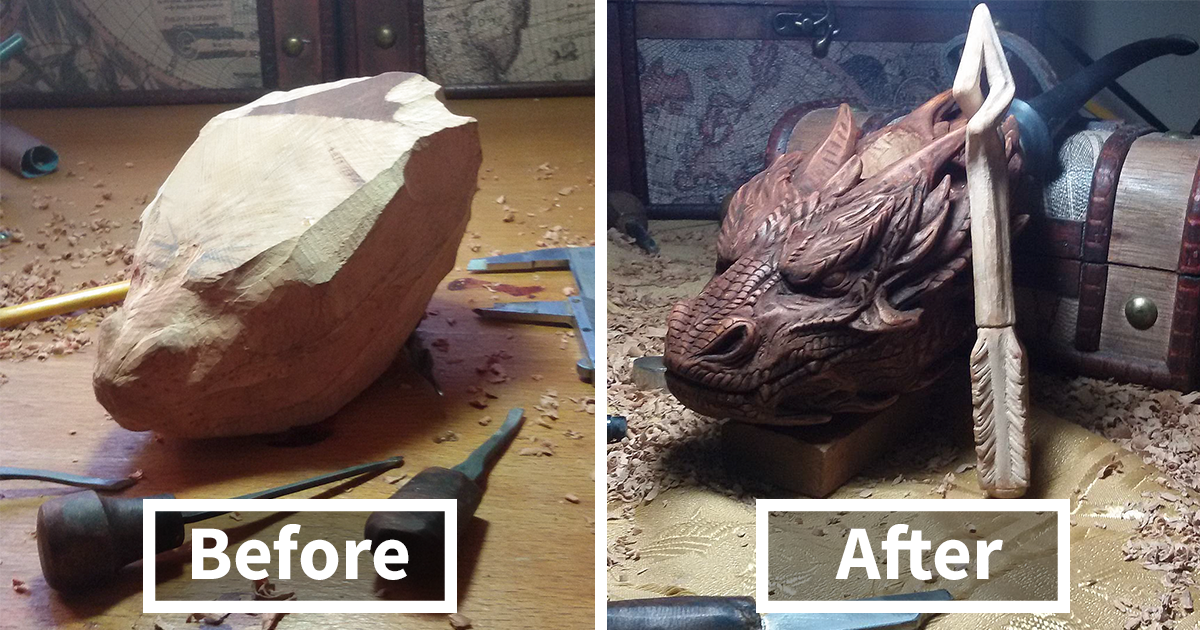
I Spend Up To 250 Hours Hand-Carving Pipes Inspired By My Favorite Movie Characters

There are hobbies, there are obsessions, and then there is spending the better part of a small geological era turning a block of wood into a pipe that looks like it wandered out of The Lord of the Rings, Star Wars, or Pirates of the Caribbean. That last category belongs to the strange, wonderful world of hand-carved character pipes, where craftsmanship, fandom, sculpture, and patience all decide to move in together and never leave.
The headline might sound dramatic, but it is not. In the artisan pipe world, putting 150, 200, or even 250 hours into one elaborate design is entirely believable when the project is less “make a pipe” and more “build a tiny hand-held sculpture that also has to function.” That is what makes movie-inspired carved pipes so fascinating. They are not just smoking accessories. They are collectible objects, woodworking showcases, and little monuments to the characters that live rent-free in our heads.
And yes, if that character happens to be Gandalf, Smaug, Darth Maul, or Davy Jones, the carving job gets complicated in a hurry. Beards, scales, horns, armor, wrinkles, cloaks, dramatic cheekbones, and expression lines do not politely carve themselves.
Why Character Pipes Grab Attention So Fast
A standard pipe can be elegant in a quiet way. A character pipe is not interested in being quiet. It wants to be noticed from across the room, preferably by someone who gasps and says, “Wait, is that Smaug?”
That instant reaction is part of the appeal. Movie characters already carry built-in emotional weight. Gandalf suggests wisdom, calm, and the kind of slow-burn confidence most of us would love to borrow on Monday mornings. Smaug brings menace, theatrical swagger, and enough dragon energy to make an ordinary shelf look underqualified. Darth Maul is all angles and attitude. Davy Jones looks like he lost a fight with the ocean and somehow came out cooler for it.
When an artisan translates those traits into a hand-carved pipe, the result becomes more than fan merchandise. It becomes character design in three dimensions. Every cut has to do two jobs at once: preserve the recognizable face or silhouette and still respect the engineering of the pipe itself. That means the maker is thinking like a sculptor, a woodworker, and a designer all at once. In other words, the coffee had better be strong.
Why 250 Hours Is Not As Wild As It Sounds
To people outside the craft world, 250 hours can sound like a typo. To people who work with wood by hand, it sounds more like, “Yes, that tracks.” Fine detail takes time. Surface refinement takes time. Correcting tiny mistakes takes even more time because wood has the rude habit of being very honest when you mess up.
Think about what a movie-character pipe asks of the maker. The face has to be expressive. The proportions have to read correctly from multiple angles. The bowl and chamber must still work. The stem has to fit. The airflow has to make sense. The surface must be sanded and finished without erasing crisp details. If the design includes scales, hair, wrinkles, armor, robes, or ornamental elements, congratulations: you have officially volunteered for a long-term relationship with tiny tools.
That is why the labor adds up so quickly. There is concept work, sketching, material selection, drilling, rough shaping, carving, refining, sanding, finishing, fitting, polishing, and the quiet staring phase where the maker looks at the piece from six angles and decides whether one eyebrow is somehow emotionally incorrect.
In handmade work, time is not just labor. It is decision-making. It is restraint. It is knowing when to stop cutting and when a shape needs one more pass. That is the difference between a pipe that merely resembles a character and one that feels alive.
The Wood Matters More Than Most People Realize
If you are going to spend weeks or months carving one pipe, you do not start with random wood from the garage. In the artisan pipe world, briar is the gold standard for a reason. It is dense, durable, naturally attractive, and well suited to the heat and moisture demands of a functional pipe. It also has beautiful grain, which means the material can contribute to the drama of the finished piece instead of just politely sitting there.
That matters a lot in character carving. A dragon, wizard, or battle-hardened villain looks better when the wood already has visual personality. Grain can suggest movement. Color can add warmth. Natural variation can make a face look more alive. Great makers do not just carve into the wood. They collaborate with it.
Briar also comes with its own backstory. Good briar is not instant-gratification material. It must be harvested, cut, cured, and prepared properly. That slow preparation is part of why high-end artisan pipes are never bargain-bin objects. The raw material has already spent years getting ready before the carver even picks up a knife.
Some makers experiment with other materials, too, especially when they want a different texture or visual mood. But briar remains the classic choice because it balances function, strength, and beauty so well. In plain English: it works hard and photographs well. A rare combo.
From Block to Character: How the Process Usually Unfolds
1. The idea comes first
Movie-inspired pipe carving usually begins with obsession. A maker sees a character and immediately notices what would translate into wood: Gandalf’s beard, Smaug’s scales, a helmet profile, a grim expression, a curling cloak, a crown, a weapon, a gesture. Some characters practically beg to become pipes. Others fight the idea like they are unionizing.
2. The pipe still has to be a pipe
This is where fantasy meets physics. The chamber, draft hole, bowl shape, balance, and stem placement have to work. You cannot simply carve a beautiful dragon head and call it done if the final object feels awkward in the hand or performs poorly. The best artisans hide the engineering inside the art so well that viewers barely notice how much technical planning went into the piece.
3. Rough shaping sets the stage
Once the maker maps out the major masses, the project becomes a careful exercise in subtraction. Large forms come first. Then the medium details. Then the small details. Then the microscopic details that ruin weekends. A horn turns sharper. A beard becomes layered. An eyelid gets tension. The mouth gains expression. Slowly, a block stops being a block and starts becoming someone.
4. Sanding and finishing do the sneaky heavy lifting
People love to talk about carving, but sanding deserves a medal. The final look of a handmade pipe depends heavily on surface control. Too much smoothing and the details die. Too little and the piece looks unfinished. The finish has to protect the wood, bring out the grain, and preserve the sculptural crispness. This is where many good pieces become great ones.
Why Gandalf Keeps Winning the Casting Call
If there were an Academy Award for “Most Likely Character to Become a Handmade Pipe,” Gandalf would have cleared the field years ago. It is almost unfair. He already has the pipe association. He already has the long silhouette. He already carries the sort of mythic, old-world energy that feels perfectly at home in carved wood.
That is also why churchwarden-style pipes are so often pulled into fantasy-inspired designs. Their long stems feel theatrical, relaxed, and unmistakably literary. They have an old-storybook elegance that works beautifully with wizard-inspired or medieval-adjacent themes. One look at a long-stem pipe and your brain starts hearing distant footsteps in a stone hallway. Or maybe that is just the soundtrack kicking in.
Smaug, meanwhile, offers the opposite kind of challenge. Instead of long, flowing calm, the carver gets aggressive texture, layered scales, sharp teeth, curved anatomy, and lots of opportunities to ruin everything with one wrong cut. Which is, admittedly, part of the thrill.
Collectible Art, Functional Object, or Both?
Here is where the conversation gets interesting. A movie-inspired hand-carved pipe can be functional, but many of these pieces also live comfortably in the art-object category. That is not a contradiction. Handmade craft has always blurred the line between utility and expression.
A beautifully carved pipe can sit on a stand and work as display art just as easily as it can serve as a pipe. For many collectors, that hybrid identity is the point. They are buying craftsmanship, storytelling, sculptural skill, and fandom in one object. In a world stuffed with mass-produced merchandise, that kind of handmade specificity feels refreshing.
There is also something delightfully rebellious about a carved pipe refusing to stay in one box. It is too artistic to be “just an accessory,” too functional to be “just sculpture,” and too nerdy to pretend it does not know exactly which fantasy franchise made it famous. Frankly, that range deserves respect.
The Price Tag Makes Sense Once You Respect the Labor
Handmade character pipes can surprise buyers with their price, but only if the buyer ignores the math. A one-of-one carved piece made from quality material, designed by hand, shaped by hand, detailed by hand, finished by hand, and refined over dozens or hundreds of hours is not competing with factory output. It is competing with other forms of skilled studio craft.
That includes custom furniture, carved sculpture, boutique collectibles, and other labor-heavy objects where the maker’s time is the main ingredient. Not the only ingredient, but the one you cannot fake. Anyone can buy tools. Not everyone can turn a chunk of briar into a face that looks ready to deliver a monologue.
Buyers are not just paying for wood. They are paying for trained hands, practiced judgment, tool control, design fluency, finishing skill, and the years it took the artisan to make hard work look suspiciously easy.
The Legal Side Nobody Should Ignore
There is one more wrinkle in the movie-character pipe world: inspiration is fun, but intellectual property is real. Original carving work can be protected as visual art, but recognizable movie characters often belong to somebody else. That means artisans selling character-inspired work need to think carefully about copyright, trademark, licensing, and how closely their designs track protected characters or branded imagery.
In plain terms, “inspired by” is not a magical shield that makes every commercial use safe. Serious makers understand that good craftsmanship should be matched by good judgment. It is one thing to celebrate fandom; it is another to wander into a legal swamp wearing wooden clogs.
Why This Niche Keeps Growing
The popularity of hand-carved pipes inspired by movie characters makes perfect sense if you look at the larger culture. People want objects with personality. They want handmade things that do not feel anonymous. They want fandom pieces that look like art instead of plastic shelf fillers. They want stories they can hold.
That is exactly what these pipes offer. They combine traditional woodworking with modern pop-culture devotion. They let old materials tell new stories. They prove that craft is not frozen in the past. It can be reverent and playful at the same time, disciplined and weird, old-school and deeply online.
And maybe that is the real magic. A carved character pipe says that making something by hand still matters. It says fandom can mature into craft. It says a single object can carry patience, humor, technical skill, and cinematic love all at once. Not bad for a block of wood that used to mind its own business underground.
What Those 250 Hours Actually Feel Like: The Experience Behind the Bench
Spend enough time around meticulous makers and you learn something fast: the clock behaves strangely in a carving studio. A five-minute adjustment can take an hour. An hour can disappear while you refine one eye socket, one strand of beard, one scale, or one fold of a cloak. Then there are those glorious moments when everything clicks and the work moves so smoothly that three hours pass before you realize your coffee has gone cold, your shoulders are stiff, and you have been holding your breath like the wood might bolt if you relax.
That is what a 250-hour piece really means. It means living with an object long enough to know its moods. It means starting the day confident and ending it humbled because the left side of a dragon’s face still looks slightly more “annoyed lizard” than “ancient fire-breathing terror.” It means learning that detail is never just detail. It is structure, rhythm, and emotion. Remove too much and the face loses life. Leave too much and the form looks muddy. There is no shortcut around that judgment. You earn it by staring, carving, checking, sanding, staring again, and occasionally muttering to yourself like a wizard who misplaced his spellbook.
There is also a strange intimacy in carving a favorite movie character by hand. You begin by admiring the character as a fan, but somewhere in the middle of the process you start understanding the design more deeply. You notice what makes Gandalf feel wise rather than merely old. You understand why Smaug’s features read as arrogant instead of generic monster. You see how a character’s silhouette carries half the storytelling load before the face even comes into focus. That sort of close study changes the way you watch films, read books, and look at props or costumes. After enough hours at the bench, no beard is just a beard and no horn is just a horn.
Then comes the emotional roller coaster. One day the piece feels destined for greatness. The next day it looks like an expensive piece of kindling with ambitions. That swing is normal. Every serious hand-made project has a phase where it seems to get uglier before it gets better. Inexperienced makers panic there. Experienced makers keep going, because they know the awkward stage is not failure. It is simply the tax you pay for making something original.
And when the carving finally turns the corner, the reward is ridiculous. Suddenly the character shows up. The expression locks in. The grain starts cooperating. The finish wakes up the wood. What looked stubborn yesterday looks inevitable today. That is the kind of moment that keeps people carving, sanding, shaping, and obsessing over tiny surfaces for years. Not because it is easy, and definitely not because it is fast, but because few things feel better than bringing a favorite fictional presence into the real world with your own hands.
So yes, 250 hours is a lot. It is also exactly the kind of number that makes sense when love of craft meets love of character. Some people binge-watch their favorite films. Some quote them. Some buy posters. And some spend months hand-carving a pipe until a wizard, dragon, or villain finally stares back from the grain as if it was there all along, just waiting for somebody patient enough to set it free.
Conclusion
“I spend up to 250 hours hand-carving pipes inspired by my favorite movie characters” sounds like the kind of line someone blurts out after too much caffeine and not enough sleep. But in the world of artisan pipe carving, it is actually a perfect summary of what handmade work demands. Time, patience, better tools than most of us own, and an almost heroic tolerance for detail.
These carved pipes matter because they sit at the crossroads of function, sculpture, and fandom. They prove that old materials like briar still have new stories to tell. They show how a skilled artisan can turn movie love into something tactile, lasting, and unexpectedly elegant. And they remind us that in an age of copy-paste products, the weird handmade object still wins.
Especially when it looks like Gandalf could have left it on the table five minutes ago.