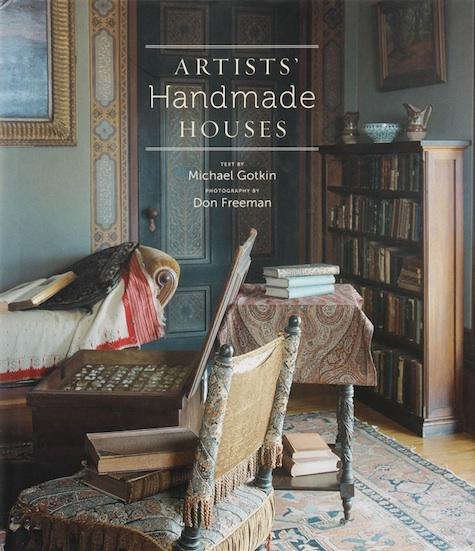

Some people buy a house and then spend years asking it not to embarrass them. Artists tend to do the opposite. They look at a wall, a doorway, a window ledge, or a gloriously weird chunk of stone and think, “Yes, that can be part of the composition.” That is the magic of artists’ handmade houses. These homes are not just places to sleep, snack, and wonder why there are so many chargers in one drawer. They are living self-portraits built in wood, plaster, glass, clay, paint, and stubborn imagination.
The phrase artists’ handmade houses sounds charmingly niche, but it describes a serious and deeply American design tradition. From Russel Wright’s dramatic Dragon Rock in New York to George Nakashima’s soulful compound in Pennsylvania, from Paolo Soleri’s experimental Arizona structures to Sam Maloof’s hand-carved California home, artist-built houses show what happens when makers stop treating the home as a backdrop and start treating it as a full-scale creative medium. These are not showrooms. They are total environments where architecture, furniture, landscape, and daily rituals are designed to belong to each other.
Why Artists’ Handmade Houses Still Fascinate Us
Part of the appeal is obvious: handmade homes feel human. They carry fingerprints, odd decisions, happy accidents, and material honesty. In an age when so many interiors seem copied from the same beige mood board, a house shaped by an artist feels almost rebellious. It says that beauty does not need to be mass-produced, perfectly symmetrical, or approved by a focus group named Chad.
There is also a deeper cultural reason these homes resonate. The American Arts and Crafts tradition pushed back against mechanization and argued that skilled workmanship, natural materials, and thoughtful design could create more meaningful environments. That idea never really disappeared. It just keeps changing outfits. Today, renewed interest in craft, materiality, and one-of-a-kind interiors has made artist-built homes feel newly relevant. People are hungry for spaces with character, not just square footage.
When a House Becomes a Work of Art
Russel Wright and Dragon Rock
If you want a perfect example of a handmade house that refuses to behave like a normal suburban dwelling, Russel Wright’s Dragon Rock is hard to beat. Built into the ledge of an abandoned quarry at Manitoga in Garrison, New York, the house folds architecture into landscape with the confidence of someone who knew a room did not have to end where the walls did. Wright orchestrated the surrounding woodland garden, paths, water, views, and interiors so the entire property works like a designed experience rather than a freestanding object.
What makes Dragon Rock so compelling is not just that it is beautiful. It is that it feels composed from the site itself. Boulders, ledges, water, and changing light are not problems to be hidden; they are collaborators. That mindset remains one of the clearest lessons in handcrafted interiors and artisanal architecture: the best homes do not conquer nature. They negotiate with it.
George Nakashima and the Poetry of Wood
George Nakashima took a different route but arrived at a similar truth. At his New Hope, Pennsylvania, property, building happened over time, with structures added as need, money, and material allowed. That gradual method matters. The place did not spring from one grand rendering and a dramatic reveal. It evolved. The detailing was developed from what was on hand, and the compound became a study in improvisation, patience, and respect for wood, weather, and landscape.
His buildings and furniture share the same philosophy. Material is never bullied into pretending to be something else. Grain, edge, texture, and irregularity are not defects to correct. They are the whole point. In a Nakashima world, the handmade house is not merely decorated with crafted objects; it is built according to the same ethics as the objects inside it. That unity gives the home unusual emotional weight. It feels calm, grounded, and a little bit wiser than the rest of us.
Paolo Soleri and the Experimental House
Then there is Paolo Soleri, who clearly looked at ordinary building methods and decided they were not nearly dramatic enough. At Cosanti in Arizona, Soleri created experimental dwellings and workshops using earth-casting techniques and semi-subterranean forms that blurred the boundaries among sculpture, architecture, ecology, and daily life. His spaces feel speculative, almost otherworldly, but the ideas behind them are practical too: moderation of temperature, efficient use of materials, and closer ties between building and environment.
Soleri’s house-and-studio thinking expanded into a much larger vision at Arcosanti, but even the earlier residential experiments show why creative homes matter. A handmade house can be a testing ground. It can ask questions before the rest of the culture is ready to hear them. How much house do we really need? What if beauty and sustainability were designed together? What if a dwelling were not a sealed box, but a porous conversation with climate, labor, and landscape?
Sam Maloof and the Crafted Everyday
Sam Maloof’s historic home in California makes the case for craftsmanship at the scale of everyday touch. Maloof did not stop at furniture. He designed and shaped doors, windows, handles, surrounds, rafters, and countless details that most homes treat as an afterthought. In his world, utility never excuses ugliness, and beauty never excuses bad workmanship. A latch should work beautifully and look like it was worth touching in the first place.
That is why the Maloof house still feels so modern. It is not flashy. It is intimate. The artistry lives in proportion, joinery, movement, and repetition. It reminds us that the most powerful handmade design is often not the giant centerpiece but the accumulation of thoughtful decisions. One carved door pull will not change your life, but fifty well-made details might change how you move through your day.
Georgia O’Keeffe and the Discipline of Space
Georgia O’Keeffe’s home and studio in Abiquiú, New Mexico, reveal another side of the handmade house: restraint. Unlike the exuberant material presence of some artist homes, O’Keeffe’s space demonstrates how editing can be an artistic act. The home combines vernacular and modern sensibilities, and its rooms frame views that echo the landscapes that fed her art. The result is not sparse in the cold, showroom sense. It is intentional. Every wall, opening, and courtyard seems to sharpen attention.
That matters because not every artist’s house needs to be wildly theatrical. Some are handmade through selection, placement, and atmosphere rather than through endless embellishment. O’Keeffe’s home suggests that a creative house can be both deeply personal and beautifully disciplined. Sometimes the boldest move is not adding another handmade object. Sometimes it is knowing when to stop.
From Chesterwood to Laurelton Hall
Other historic sites reinforce the same big idea from different angles. Chesterwood, Daniel Chester French’s home and studio in the Berkshires, shows how artistic labor shaped domestic and studio life side by side. Louis Comfort Tiffany’s Laurelton Hall, meanwhile, became a famously total aesthetic environment in which the artist designed across architecture, interiors, decorative arts, and landscape. Different personalities, different aesthetics, same underlying principle: for artists, a house is often not separate from the work. It is the work’s habitat, archive, rehearsal room, and sometimes its loudest statement.
What Modern Homeowners Can Learn from Artists’ Handmade Houses
The good news is that you do not need a 75-acre woodland, a sculptural concrete shell, or the patience of a master woodworker to borrow from this tradition. The most useful lesson is not “build a museum-quality compound.” It is “make your home coherent.” Artist houses tend to feel memorable because they are built around a clear point of view.
That point of view usually shows up in a few consistent ways. First, materials matter. Stone should feel like stone, wood like wood, plaster like plaster. Second, function and beauty are not enemies. The chair, shelf, stair rail, and window seat can all be useful and expressive at once. Third, the site matters. Light, views, climate, and topography should shape design choices instead of getting bulldozed by generic plans. And fourth, imperfection can be a feature. Handmade houses feel alive because they are allowed to reveal process.
There is also a social lesson here. Artist-built homes often emerge slowly, through collaboration, adaptation, and long attention. They are not always slick. They are layered. In a culture obsessed with instant before-and-after transformations, that slower model is oddly refreshing. A meaningful home can take years. In fact, it probably should. Great style rarely arrives fully formed on a delivery truck.
Why the Handmade House Feels Especially Timely Now
Recent coverage of contemporary artists and makers suggests the handmade house is not some dusty historical niche. It is very much alive. Artists are still painting their own ceilings, building their own tables, repurposing beams into shelving, turning driftwood into hardware, and blending studio life with domestic life in ways that make the home feel authored rather than purchased. The details may be newer, but the impulse is old: to live inside a space that reflects how you think, make, and pay attention.
That may be why artists’ handmade houses are suddenly such a magnetic subject in design writing. They offer an antidote to sameness. They prove that homes can carry intellect, humor, craft, and even a little eccentricity without collapsing into chaos. They make room for beauty that is tactile instead of theoretical. And they gently remind us that a home should not just photograph well. It should feel good to inhabit on a rainy Tuesday when nobody is filming content in the kitchen.
The Experience of Walking Through Artists’ Handmade Houses
Walking through an artist’s handmade house feels different from walking through a regular historic home, and different again from touring a glossy designer showplace. The shift is immediate. You notice it before you can fully explain it. The door handle has more intention. The threshold asks you to slow down. A window is not simply a window; it is a carefully edited frame for a tree, a quarry, a patch of sky, or a wall that catches afternoon light like it has been practicing all day for your arrival.
Then the house begins to reveal its logic. Nothing feels accidental, but not everything feels polished either. That is part of the pleasure. You see evidence of the hand. A surface is slightly irregular. A joint is proudly visible. A built-in bench seems to grow out of the room instead of being dropped into it by a delivery service with a three-hour arrival window and the emotional warmth of a parking ticket. The house has texture not only in its materials, but in its decisions.
There is often a strange intimacy in these spaces. Because so many artist-made homes blur the line between living and making, you feel as if you are standing inside a mind at work. The kitchen may open toward a studio. A courtyard may function like a place for both contemplation and production. A chair is never just a chair. It is also a statement about labor, proportion, memory, or the dignity of materials. Even silence feels designed.
At the best artist houses, the experience becomes bodily. You feel where the floor dips, where the ceiling lowers, where the path narrows, where the view suddenly expands. In a house like Dragon Rock, landscape and structure choreograph movement so well that you do not merely look at the place; you move through an argument about how people should live with nature. In O’Keeffe’s home, quiet rooms and powerful views can make you feel more alert, as if clutter has been edited not just from the house but from your head. In the Maloof home, the handmade details have a warmth that makes craftsmanship feel personal rather than precious.
That is the unforgettable part. These houses are not impressive only because they are rare. They are moving because they restore a connection many modern homes barely attempt: the connection between daily life and creative intention. They suggest that making breakfast, opening a door, crossing a courtyard, or sitting at a table can all be part of an aesthetic experience without becoming fussy or fake. In other words, they make beauty livable.
And maybe that is why people keep seeking out artist houses, reading about them, and stealing a few ideas from them for their own spaces. Not because everyone wants to live in a landmark. Not because everyone wants to hand-carve a staircase over the next eight years. But because these homes show, with unusual clarity, that a house can hold more than furniture and routines. It can hold values. It can hold a philosophy. It can hold evidence that somebody cared enough to shape the world, one useful beautiful detail at a time.
Conclusion
Ultimately, artists’ handmade houses matter because they prove that home can be more than shelter and more than status. It can be an artwork, a workshop, a refuge, a manifesto, and a record of a life in making. Whether the expression is bold and sculptural or quiet and spare, the best handmade houses share one trait: they are impossible to separate from the people who shaped them.
That is what makes them memorable. They do not chase perfection. They chase presence. And in a world crowded with copy-and-paste interiors, that may be the most luxurious quality of all.