Jimmy Fallon Asks People To Name A Funny Or Weird Problem That Needs A Solution, 30 People Deliver

Some problems are too small for a city council meeting, too annoying to ignore, and too universal not to become comedy gold.
There are major problems in the world, and then there are the issues that quietly ambush you at 7:42 on a Tuesday morning: a vending machine rejecting a perfectly respectable dollar bill, a movie theater “start time” that really means “please enjoy 30 minutes of trailers,” or a pair of jeans with pockets large enough to store exactly one optimistic thought.
That was the delightful territory of Jimmy Fallon’s #TheyNeedToFix hashtag challenge. In November 2021, Fallon asked people to share a weird or funny problem that deserved a solution. His own suggestion was wonderfully practical: movie tickets should show one start time for trailers and another for the actual film. The official The Tonight Show hashtag gallery appeared on November 9, 2021, while a later roundup collected dozens of audience responses that turned everyday irritation into a public service announcement for the mildly inconvenienced.
The replies were funny because they were not really about luxury. Nobody was demanding a diamond-encrusted toaster or a personal assistant trained to find the good Tupperware lid. People wanted tiny fixes that would make ordinary life feel less like a scavenger hunt designed by a tired raccoon.
One Hashtag, a Whole Department of Tiny Emergencies
The genius of Fallon’s challenge was its simplicity. Every person has a list of annoyances that seems too minor to mention until someone else says, “Wait, that bothers you too?” Suddenly, a private grumble becomes a group project.
Some responses tackled technology. One participant pointed out the absurdity of facial-recognition phones that unlock in a blink while vending machines still panic over a wrinkled dollar bill. Another raised a very real cinema issue: why are the restrooms usually in the lobby, far away from the movie you are desperately trying not to miss?
Other complaints targeted entertainment itself. Viewers wanted more sensible sound mixing, because modern action movies often turn dialogue into a whispering contest before launching a car chase loud enough to wake a nearby county. That irritation is not entirely imaginary. The Federal Communications Commission still accepts consumer complaints about commercials that seem louder than the programs around them under rules related to the CALM Act.
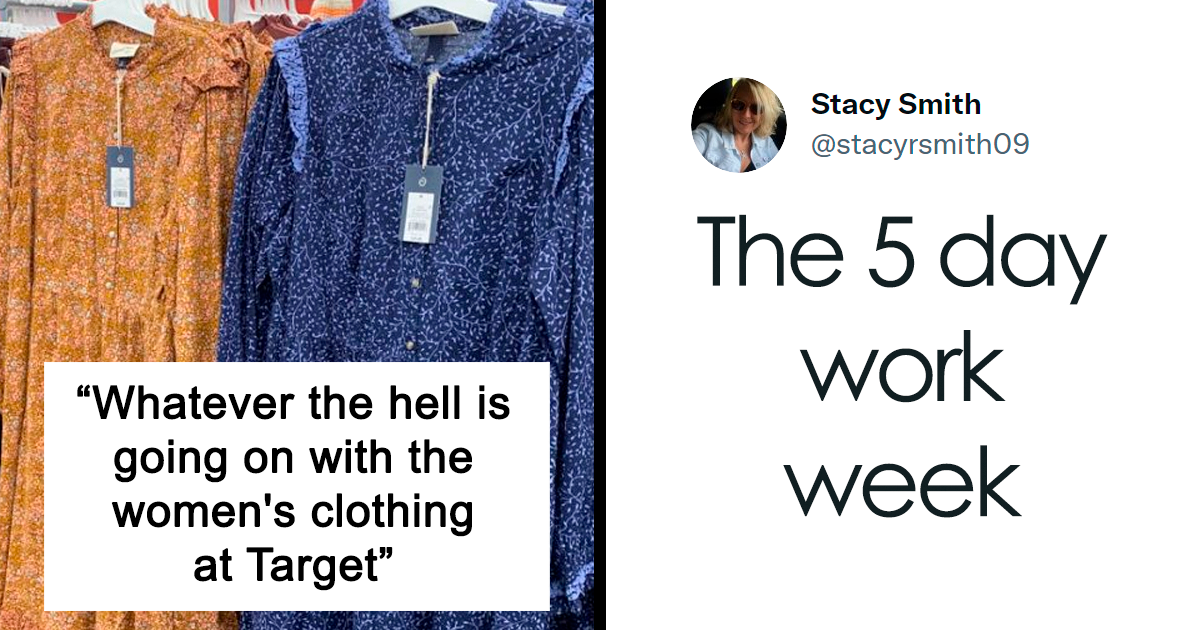
Then there were the wardrobe complaints, especially the eternal argument over tiny pockets. A pocket that cannot hold a phone, keys, or even a moderately ambitious granola bar is not a pocket. It is a decorative suggestion.
Why Weird Everyday Problems Are So Funny
They are small, but they are not imaginary
Many everyday frustrations live in the uncomfortable space between “not important enough to complain about formally” and “annoying enough to make you sigh at an inanimate object.” That is why they work so well in comedy. The humor comes from recognition. You read a complaint about a self-checkout machine accusing you of an “unexpected item in the bagging area,” and suddenly you remember every time you stood there being judged by a robot with the emotional warmth of a parking meter.
User-experience research helps explain why these minor moments linger. Nielsen Norman Group defines usability as how easy an interface is to use, and its research notes that people often give disproportionate weight to negative experiences, even small ones. In plain English: one bad button can ruin an otherwise lovely app, and one stubborn printer can make a peaceful adult briefly consider moving into the woods.
Humor turns irritation into connection
A funny complaint does something useful: it transforms annoyance into a shared experience. Instead of thinking, “Why is this happening to me?” people get to think, “Oh good, society has also been betrayed by fitted sheets.”
Research highlighted by the American Psychological Association has found that humorous media can help people feel calmer and more content during stressful periods. A joke does not repair a broken vending machine, but it can make the machine’s betrayal feel less personal. That may be the closest thing the internet has to emotional roadside assistance.
30 Funny or Weird Problems That Need a Solution
The original hashtag sparked plenty of real-life complaints. The following list is a fresh, expanded take on the kinds of tiny frustrations that make people mutter, “They really need to fix this.” Consider it a public suggestion box, except the suggestions are delivered with more dramatic sighing.
Technology Problems That Have Somehow Survived the Future
- Autocorrect changing a correct word into a wrong one with confidence. It does not merely make mistakes; it makes mistakes while acting like it has a law degree.
- Printers that report an error without explaining the error. “Printer problem” is not a diagnosis. That is a cry for help from a machine that has seen too much.
- Password rules that reject every password you can remember. Apparently, your password needs a capital letter, a symbol, a number, a moon phase, and the emotional support of a small fern.
- Apps that ask for an update the exact second you need them. Nothing says urgency like standing in a parking garage while your payment app downloads a new font.
- Charging cables that work only when bent at an angle that suggests modern dance. A cable should charge a phone, not demand choreography.
- Smart TVs that require a full committee meeting to switch inputs. You just want to watch something. You should not need to navigate six menus and agree to a privacy policy.
- Websites that force you to create an account to read one paragraph. Sometimes a person only needs the oven temperature, not a lifelong membership in the Roasted Vegetable Community.
- Two-factor authentication arriving five minutes after the login window closes. It is security by emotional exhaustion.
- Video calls that make everyone say, “Can you hear me?” at the same time. Technology has connected the planet, yet somehow nobody knows whether the microphone is on.
- Bluetooth devices that remember every phone except yours. Your speaker can find a neighbor’s smartwatch from 2018, but your own laptop is apparently a mystery.
Food, Shopping, and Packaging Crimes
- Snack bags filled with more air than snacks. At this point, some chips come with a side of atmosphere.
- Plastic packaging that requires scissors to open the scissors inside. This is not packaging. This is a test of character.
- Food labels that make “sell by,” “best by,” and “use by” sound interchangeable. The FDA has noted that most food-date labels are not federally standardized, which helps explain why people stare at yogurt containers like they are decoding ancient maps.
- Grocery carts with one rebellious wheel. Every store has one cart that wants to travel diagonally, like it has a secret appointment across the aisle.
- Reusable containers with lids that disappear into another dimension. Somewhere there is a parallel universe populated entirely by matching lids and lost socks.
- Online shopping photos that make every product look enormous. Then the package arrives, and your “statement lamp” is the size of a generous orange.
- Clothing pockets that are too shallow to hold a phone. Designers, please choose one: give people pockets or stop pretending.
- Receipts longer than the item you bought. You purchase a bottle of water and receive a paper scroll containing your destiny.
- Takeout containers that leak only after entering your car. They stay loyal through the restaurant, the sidewalk, and the elevator, then betray you on the passenger seat.
- Fruit stickers that refuse to peel off cleanly. Nobody wants to begin a healthy snack by scraping glue from an apple.
Entertainment and Public-Life Problems
- Movie start times that really mean trailer start times. A separate listing for previews and the actual feature would save countless people from either arriving too early or missing the opening scene while carrying popcorn.
- Movie dialogue mixed at whisper level and explosions mixed at rocket-launch level. Captions help many viewers follow dialogue, and accessibility standards recognize captions as an essential text equivalent for audio content. They are also a blessing when the hero mumbles like he is hiding from the screenplay.
- Public restroom hand dryers that sound like jet engines. You wanted dry hands. You received a surprise aviation experience.
- Elevator buttons with no clear sign that they were pressed. Did it register? Is help coming? Have you accidentally summoned the basement? Nobody knows.
- Restaurant menus that require a QR code but have terrible Wi-Fi. Welcome to dinner. Your appetizer is digital confusion.
- Gas-pump screens that play advertisements before allowing you to start. You came for gasoline, not a forced screening of “Five Reasons Your Car Needs More Things.”
- Airplane seats with charging outlets that do not work. Nothing inspires confidence like a power port that is decorative at 35,000 feet.
- Public benches designed to discourage sitting. A bench should invite a person to rest, not make them feel like they are being gently punished by architecture.
- Bathroom stall hooks placed where nothing can safely hang. A purse hook should hold a purse, not offer it a thrilling bungee-jump experience.
- Automatic doors that sense everyone except the person carrying groceries. The door opens for a drifting leaf, then watches you struggle with three bags and a watermelon.
What These Complaints Really Say About Daily Life
Underneath the jokes, there is a useful idea: small frustrations are information. A confusing label, a noisy commercial, a badly placed restroom, or a digital form that makes no sense may seem insignificant to the company that created it. But repeated friction adds up for the people using it every day.
That is why good design often feels invisible. A useful app gives clear feedback. A package opens without a wrestling match. A theater communicates honestly about start times. A pocket holds more than one receipt and a dream. These are not glamorous innovations, but they improve real experiences.
Even the silliest complaint can contain a decent design lesson. Nielsen Norman Group notes that clear feedback helps users understand what a system is doing. In other words, when you press an elevator button, submit a form, or tap “pay,” the system should not respond with the digital equivalent of a mysterious shrug.
Shared Experiences: Why Everyone Has a #TheyNeedToFix Story
Most people have their own private museum of tiny annoyances. There is the kitchen drawer that contains every utensil except the one you need. There is the shower curtain that slowly attacks you during every shower as if it has personal grievances. There is the fitted sheet that looks harmless in the laundry basket, then transforms into a geometry exam when it is time to fold it.
These experiences are funny because they happen in ordinary places: kitchens, offices, stores, movie theaters, parking lots, airports, and living rooms. They are not dramatic enough to become family legends on their own. Nobody gathers the grandchildren around the fireplace and says, “Let me tell you about the time the self-checkout machine insisted there was an unexpected item in my bagging area.” Yet almost everyone has lived a version of that moment.
The shared frustration is what makes the joke work. A person can complain about a phone charger that only works when positioned under a specific pile of books, and another person immediately understands the ritual. You adjust the cord. You hold your breath. You avoid moving the phone by even one millimeter. Then, when the charging icon finally appears, you feel as if you have negotiated peace between two hostile nations.
There is also something satisfying about naming a problem. The moment an irritation gets a sentence, it becomes easier to laugh at. “Why do grocery-store carts always have one bad wheel?” is not just a complaint. It is a recognition that countless other shoppers have been dragged sideways through the produce section by the same wobbly menace.
That is why internet hashtag challenges can feel oddly communal at their best. They turn scattered moments of inconvenience into a shared language. Someone posts about a restaurant menu trapped behind a QR code, another person remembers their phone dying at the table, and suddenly a room full of strangers is united by soup, weak Wi-Fi, and mild betrayal.
The goal is not to treat every small annoyance as a crisis. It is the opposite. Humor gives people a way to release a little pressure without turning a broken vending machine into a personal war. You laugh, you share the post, you buy a snack somewhere else, and you carry on with your day.
Still, a few of these problems genuinely deserve attention. Clearer food labels can reduce waste. Better captions make entertainment easier to follow. Honest movie start times would make date nights smoother. More functional pockets would improve daily life for millions of people who are tired of carrying phones in their hands like fragile ceremonial objects.
Until those fixes arrive, people will keep making jokes about the weird systems around them. And honestly, that may be the most useful feature of all: the ability to look at a ridiculous problem, recognize that everyone else has suffered through it too, and laugh before trying the button one more time.
Final Thoughts
Jimmy Fallon’s #TheyNeedToFix challenge worked because it celebrated the ridiculous little flaws that connect strangers more effectively than almost anything else. The funniest responses were not random complaints. They were miniature portraits of modern life: overdesigned technology, underdesigned pockets, suspicious packaging, confusing labels, and machines that expect humans to have more patience than humans actually possess.
Maybe nobody will solve every weird problem on the list. But if a vending machine becomes slightly less picky, a movie theater becomes more honest about trailers, or a pair of jeans gains a pocket capable of holding a phone, the internet will have done its job.