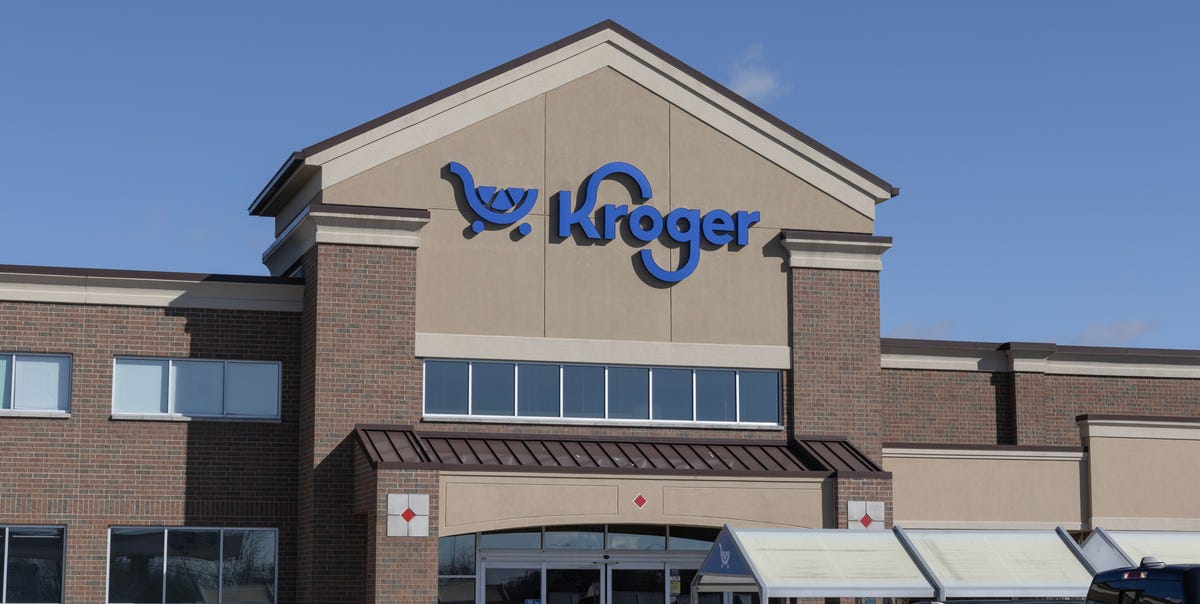

For many Americans, Kroger is more than a grocery store. It is the place where you grab milk at 9:47 p.m., stare at 14 kinds of hummus like you are choosing a new career, and somehow leave with a rotisserie chicken you never planned to buy. That is why news of Kroger store closures has landed with more emotional weight than a discontinued coupon booklet.
Kroger announced on June 20, 2025, that it planned to close approximately 60 underperforming stores over the following 18 months. That timetable points to the end of 2026, meaning the “by next year” wording reflects the original announcement period rather than the current calendar year. The company said the closures were intended to improve long-term efficiency and allow it to reinvest savings into the customer experience.
What Kroger Announced About Its Store Closures
The Kroger Company said it would close about 60 stores across the United States as part of a broader effort to streamline its store portfolio. In plain English: some locations were not producing the sustainable results Kroger wanted, so the company decided to stop pouring groceries into a cart with a wobbly wheel.
The company recorded a $100 million impairment charge tied to the planned closures. Kroger also said it expected a modest financial benefit from the changes and planned to direct savings back into improving the customer experience. Importantly, Kroger said associates working at affected stores would be offered roles at other company locations.
This was not a declaration that Kroger was abandoning brick-and-mortar grocery stores. It was a selective pruning strategy. Grocery chains routinely evaluate store performance based on factors such as sales volume, rent, nearby competition, store condition, labor costs, traffic patterns, delivery demand, and the changing habits of local shoppers.
Why Is Kroger Closing Stores?
1. Underperforming Stores Can Become Expensive Anchors
A grocery store may look busy on a Saturday afternoon, especially near the bakery sample table, but foot traffic alone does not guarantee profitability. Stores must cover wages, utilities, refrigeration, inventory losses, rent or property costs, equipment maintenance, pharmacy operations, and the mysterious expense of keeping avocados from ripening all at once.
When a location consistently fails to deliver enough sales or profit, the company may decide that its money would work harder elsewhere. That could mean remodeling stronger stores, improving pricing, opening in growing neighborhoods, expanding pickup and delivery, or investing in better fresh-food departments.
2. Grocery Competition Has Become a Full-Contact Sport
Kroger faces pressure from Walmart, Costco, Aldi, Amazon, regional grocers, warehouse clubs, dollar stores, and every delivery app promising groceries faster than you can locate your reusable bags. Consumers now compare prices more aggressively, switch stores more often, and expect both lower costs and better convenience.
That creates an awkward balancing act. Shoppers want low prices, fresh produce, digital coupons, quick pickup, easy returns, prepared meals, delivery options, and a checkout line that does not feel like the final level of a video game. Retailers must provide all of that while protecting already-thin grocery margins.
3. Kroger Is Shifting Resources Toward Growth Areas
Kroger’s closure plan came during a period when the company was also emphasizing fresh food, private-label products, e-commerce, digital promotions, and new store development. In its first-quarter 2025 results, Kroger reported a 3.2% increase in identical sales without fuel and 15% growth in e-commerce sales.
By June 2026, Kroger reported continued digital momentum, including 19% adjusted e-commerce sales growth in the first quarter. The company’s strategy appears to be less about shrinking for the sake of shrinking and more about moving capital toward stores, services, and markets where it sees stronger long-term returns.
Which Kroger Stores Are Closing?
Kroger did not release a single official master list when it announced the 60-store plan. Instead, individual closures emerged through local announcements, employee notices, union communications, and regional media reporting. That approach has understandably caused uncertainty for shoppers, because nobody enjoys turning a routine grocery run into a game of “Is My Store Still Here?”
Several locations were publicly identified in metro Atlanta during 2025, including stores in Atlanta, Alpharetta, Brookhaven, and Decatur. Local reporting said those closures were part of Kroger’s broader effort to improve efficiency.
In Louisville, Kroger confirmed the closure of its South Third Street location, with employees offered opportunities to transfer to other stores.
In the Houston area, Kroger also closed locations in the Heights and Spring areas during 2026 as part of the company’s broader operational review.
Other affected banners reported in various markets have included Kroger-owned supermarket brands such as Mariano’s, Pick ’n Save, QFC, and others. The important takeaway is that closures are not limited to one state or one storefront format. Kroger operates multiple regional banners, so customers should not assume that a store is safe or closing based solely on the sign above the entrance.
Is the Failed Albertsons Merger Related to the Closures?
The timing has encouraged plenty of speculation. Kroger’s proposed acquisition of Albertsons was blocked in late 2024 after regulators and courts raised antitrust concerns. The Federal Trade Commission said the merger could reduce competition and harm consumers and workers, while Kroger argued that the deal would help it compete more effectively with larger rivals.
However, Kroger did not formally state that the 60 store closures were caused by the failed merger. It is more accurate to say that the company’s strategic reset happened after the merger collapsed, not that the closures were officially presented as a direct consequence of it.
Retail companies often pause major decisions while a merger is under review. Once that kind of deal ends, executives may revisit investments, store performance, staffing structures, digital operations, and expansion plans. In other words, the abandoned merger may be part of the backdrop, but it should not be treated as a proven one-line explanation for every store closure.
What the Kroger Closures Mean for Shoppers
Expect Short-Term Inconvenience
For shoppers, the most obvious impact is practical. A nearby grocery store closing can mean longer drives, more crowded parking lots, fewer convenient pharmacy options, and the sudden loss of a familiar weekly routine. For older adults, people without reliable transportation, and households in underserved neighborhoods, the impact can be much greater than simply driving five extra minutes.
Customers who rely on a closing location should check where prescriptions will be transferred, update pickup and delivery preferences, save digital coupon information, and identify nearby Kroger-owned stores or competing grocers. It is also smart to ask about fuel points, rewards accounts, gift cards, and special orders before a store’s final day.
Pharmacy Customers Should Plan Early
If a closing store includes a pharmacy, do not wait until you have one lonely tablet left in the bottle. Contact the pharmacy team early and ask where prescriptions will be transferred. Confirm whether your insurance information, automatic refills, vaccination records, and prescription history will move with the account.
This is not glamorous work. Nobody has ever said, “What a thrilling afternoon; I updated my prescription transfer information.” Still, a few minutes of planning can prevent a last-minute medication scramble.
Digital Savings May Become More Important
Shoppers who move to another Kroger location may find that their loyalty account, digital coupons, and rewards history still make the transition easier. But prices and product availability can vary by store, especially when moving between neighborhoods with different formats, competition, and local demand.
It may be worth comparing weekly ads, pickup fees, private-label prices, fuel rewards, and pharmacy services across several nearby retailers. Grocery shopping is already a budgeting exercise. A store closure simply turns it into a slightly more advanced version with maps involved.
What the Closures Mean for Employees and Communities
Kroger said employees at affected stores would be offered positions at other locations. That is better than a simple “good luck out there” sign taped to the break-room fridge, but transfers can still be difficult. A new location may involve longer commutes, different schedules, unfamiliar managers, or changes in department assignments.
Communities can also lose more than a place to buy cereal. Grocery stores create local jobs, provide pharmacy access, support nearby small businesses, and often anchor shopping centers. When a major grocery tenant leaves, neighboring stores may see less foot traffic. Empty spaces can remain vacant for months, particularly when the building requires expensive refrigeration, loading docks, specialized electrical systems, and enough floor space to host an Olympic-level shopping-cart derby.
On the brighter side, some closed grocery sites are eventually reused by other retailers, medical providers, discount chains, international markets, fitness centers, or mixed-use developments. The future of each property depends heavily on local population growth, zoning rules, rent levels, and whether another grocer sees an opportunity where Kroger did not.
How Customers Can Prepare for a Kroger Store Closure
- Confirm the closing date: Check posted notices, local store updates, and Kroger’s store locator rather than relying on social-media rumors.
- Handle prescriptions early: Ask where pharmacy files and automatic refills will be transferred.
- Use rewards before the final day: Review digital coupons, fuel points, gift cards, and special-order balances.
- Find alternatives: Compare nearby Kroger locations, local grocers, warehouse clubs, discount retailers, and delivery services.
- Ask employees questions: Store teams can often explain final operating dates, pharmacy transitions, clearance schedules, and nearby replacement locations.
- Watch for local announcements: City officials, neighborhood groups, and local media may report on replacement tenants or redevelopment plans.
The Bigger Picture: Grocery Stores Are Changing, Not Disappearing
Kroger’s store closure plan is part of a larger shift in American grocery retail. Physical stores remain important, but shoppers now expect them to work alongside apps, delivery platforms, pickup lanes, loyalty programs, personalized offers, and online ordering. A supermarket is no longer just a building full of food. It is also a warehouse, a pickup hub, a pharmacy, a data engine, and occasionally the only place where you can buy both birthday candles and cat litter at 10 p.m.
That does not make closures painless. It simply explains why grocery companies are making sharper decisions about where to operate. Kroger is closing some stores while still investing in new locations, remodels, e-commerce, and stronger markets. The company’s future strategy appears to be focused on fewer weak locations and more investment in stores that can compete on price, convenience, assortment, and digital service.
Experiences Related to Kroger Store Closures
The following section reflects common experiences reported by shoppers, employees, and communities when a neighborhood grocery store closes. It is not a firsthand account from one specific Kroger location.
The first sign is often small. A shopper notices fewer seasonal displays near the entrance. The bakery case looks a little less enthusiastic. The store bulletin board has a notice that people read twice because surely it cannot mean the grocery store they have visited for 15 years is actually closing. Then the questions start: Where will prescriptions go? Will the deli workers keep their jobs? What happens to the rewards points? Is the next closest store really across three highways and a parking lot designed by someone who hates left turns?
For regular customers, a grocery store can be woven into daily life more deeply than people realize. There is the cashier who knows you always forget your reusable bags. There is the produce clerk who tells you which peaches are worth buying. There is the self-checkout machine that somehow recognizes you as its longtime nemesis. When a store closes, the inconvenience is real, but so is the loss of routine. A familiar place disappears from the weekly calendar, and suddenly buying pasta sauce requires a new route, a new parking pattern, and a new opinion about another store’s produce department.
Employees often experience the closure differently. A transfer offer can provide a path forward, but it may also mean longer drives, new schedules, or a department change. Coworkers who have worked together for years may be split between several stores. The job technically continues, but the work community changes. Grocery employees are often the people who keep a neighborhood running during holidays, storms, school mornings, and every last-minute dinner crisis. Their transition deserves more attention than a brief corporate statement and a closing-date sign.
For the surrounding neighborhood, the closure can become a conversation about access. Some shoppers can drive to another supermarket without much trouble. Others rely on walking, buses, rides from relatives, or limited delivery services. A store closure may make fresh food, pharmacy care, and everyday essentials harder to reach. Local leaders may begin discussing food access, transportation, redevelopment, and what type of business could realistically take over a large former grocery space.
Still, communities are adaptable. Shoppers find new habits. Employees build new teams. Nearby stores absorb new customers, and sometimes a replacement business eventually opens in the old space. The transition can be frustrating, but it can also reveal what residents value most: affordable groceries, convenient pharmacy care, friendly workers, reliable fresh food, and a store close enough that a forgotten carton of eggs does not become a full-scale expedition. That is the real lesson behind Kroger’s closures. A grocery store may be a business on a balance sheet, but for the people who use it every week, it is part of the neighborhood’s everyday infrastructure.
Final Thoughts
Kroger’s decision to close approximately 60 underperforming stores through the end of 2026 is a significant retail shift, but it is not a nationwide exit from grocery retail. The company is attempting to reduce weaker locations while investing in stronger stores, digital services, customer value, and future growth opportunities.
For shoppers, the best response is practical preparation: verify local closure details, transfer prescriptions early, protect rewards information, compare nearby grocery options, and stay alert for community updates. For employees and neighborhoods, the impact can be more personal and more complicated. A grocery store closure changes routines, commutes, access to food, and the shape of local shopping districts.
And yes, it may also force some people to discover that their new grocery store keeps the peanut butter in an entirely unreasonable aisle. Change is hard. Grocery aisle redesigns are harder.
SEO Tags