Guy Protests Family’s Entitled Thanksgiving Request, Their Actions Make Him Skip The Celebration Altogether

Thanksgiving is supposed to be the holiday of gratitude, gravy, and pretending your uncle’s political opinions are just “part of his charm.” But every so often, the turkey takes a back seat to something much juicier: family drama with a side of entitlement. That is exactly why one viral story about a man refusing an over-the-top Thanksgiving demand hit such a nerve online.
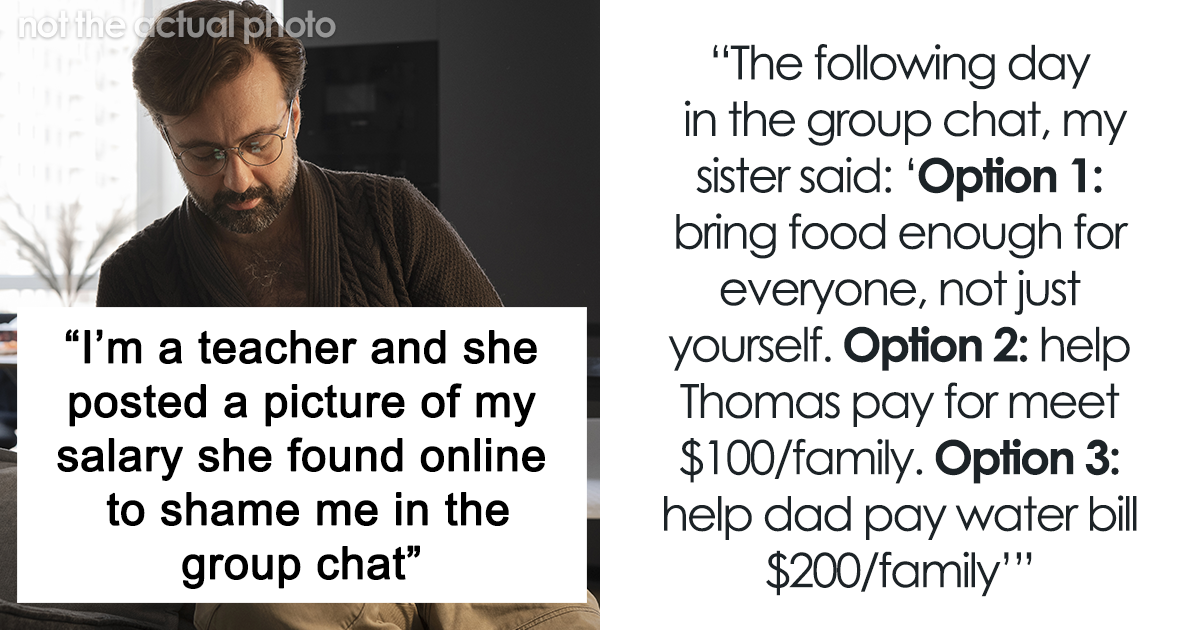
In the now widely discussed situation, a man was told that his family needed to bring at least $100 worth of food or help cover the cost of expensive meat for the holiday meal. That alone raised eyebrows. Then the situation got worse. Instead of talking it out like adults gathered around a table built for carbs and compromise, a relative publicly shamed him in the family group chat by posting information about his salary. At that point, he did what many people only fantasize about doing during holiday season: he skipped the celebration altogether.
And honestly? A lot of readers understood exactly why.
What Happened In This Thanksgiving Blowup?
The basic facts made the situation feel less like a warm family gathering and more like a surprise invoice with stuffing. According to the story, the extended family Thanksgiving involved roughly 20 to 25 people. A nephew decided he would cook the meat after buying a grill and spending hundreds of dollars. Then came the kicker: each family unit was expected to either bring a minimum amount of food, contribute cash, or somehow help cover other hosting-related costs.
Now, let’s be fair for one second. Feeding a crowd on Thanksgiving is not cheap. Even a basic holiday spread can cost real money, and hosts often end up carrying the invisible labor too: shopping, prepping, cleaning, organizing, and trying not to lose their minds because someone moved the roasting pan. Asking people to contribute is not automatically outrageous.
But this story crossed the line in two important ways. First, the financial expectation appeared to be imposed suddenly rather than agreed on in advance. Second, when the man pushed back, the family response was not respectful discussion. It was escalation. Public shaming. Social pressure. A digital version of standing on a chair and yelling, “Ladies and gentlemen, let us now review Gary’s paycheck!”
That was the moment the issue stopped being about mashed potatoes and became about dignity.
Why So Many People Took His Side
1. Surprise Costs Feel Like A Trap
Holiday gatherings already come with enough emotional math. Who is hosting? Who is traveling? Who is bringing dessert? Who is pretending not to notice that Cousin Dave brought store-brand rolls again? When a big cost is suddenly introduced without prior agreement, it can feel less like teamwork and more like an ambush.
That is one major reason this Thanksgiving story resonated. People do not usually object to contributing when the expectations are clear, reasonable, and shared ahead of time. What they hate is being told the rules after the game has started.
2. Public Shaming Is Almost Always A Point Of No Return
Family conflicts are messy enough in private. Bring them into a group chat and things get nuclear fast. Posting someone’s salary to pressure them into compliance is not holiday planning. It is humiliation dressed up as accountability. Once money becomes a weapon, the atmosphere changes completely. Instead of gathering in gratitude, everyone starts performing, defending, and keeping score.
No one wants to eat turkey while wondering whether dessert will be followed by a slideshow called “Who Did Not Pull Their Weight This Year.”
3. Holiday Stress Amplifies Existing Family Patterns
The reason stories like this go viral is not just because they are dramatic. It is because they are familiar. Many families have recurring roles: the over-functioner, the people-pleaser, the martyr host, the sibling who keeps receipts, the relative who turns every disagreement into a moral referendum. During the holidays, those patterns tend to get louder.
Financial pressure, nostalgia, tradition, and unrealistic expectations often collide all at once. A small disagreement about food can quickly reveal much bigger issues about control, respect, and old resentments. That is why this Thanksgiving dispute felt bigger than a $100 contribution. It was really about whether one family member was allowed to say “no” without getting punished.
Was The Family Completely Wrong To Ask For Help?
This is where the conversation gets more interesting. No, the family was not automatically wrong for asking guests to chip in. Modern holiday etiquette has shifted. Plenty of families do potluck-style Thanksgivings. Guests bring sides, desserts, drinks, or paper goods. Some families divide the menu by category. Others rotate hosting duties to spread out the cost and labor. All of that can work beautifully.
What does not work beautifully is converting Thanksgiving into a last-minute billing system. The issue was not merely the request for help. It was the way the request was framed, the lack of prior agreement, and the aggressive response when someone objected. If the family had calmly said, “This year is expensive, so can we divide dishes ahead of time?” the outcome might have been completely different.
That distinction matters. Shared contribution is reasonable. Emotional extortion is not.
There is also a difference between asking guests to bring a dish and demanding that every household meet a financial threshold. One approach feels collaborative. The other feels like Thanksgiving developed surge pricing.
The Real Problem: Control Disguised As Tradition
Entitlement often hides behind language that sounds practical. “We’re just trying to make it fair.” “Everyone should do their part.” “It’s only right.” Sometimes that is true. Sometimes it is just a prettier wrapper for control.
In this story, the most revealing detail was not the dollar amount. It was the reaction to dissent. Healthy families may disagree about money, menus, and logistics, but they still leave room for people to opt out or negotiate. Unhealthy dynamics tend to treat disagreement as disloyalty. Once that happens, a person is no longer being invited to celebrate. They are being pressured to comply.
That is why the man’s decision to skip the gathering made sense to so many readers. At some point, staying home stops being petty and starts being self-respect.
Skipping a toxic holiday event does not mean a person hates family. Sometimes it simply means they no longer wish to pay an emotional cover charge to enter the room.
What Good Thanksgiving Communication Actually Looks Like
If this family had handled things better, the conversation might have sounded something like this:
Good version: “We’re expecting about 25 people. Meat is expensive this year, so let’s divide responsibilities now. One household brings potatoes, one brings pie, one brings drinks, and if anyone wants to contribute cash instead, that is optional.”
See how much less terrifying that is? No shaming. No weird ultimatums. No references to utility bills that make guests feel as though simply existing near a faucet will bankrupt the host.
Holiday planning works best when it is transparent, specific, and respectful. Assign dishes early. Ask about budgets. Be realistic about what each household can do. And for the love of all things cranberry, never make the group chat the place where you stage a character assassination.
Thanksgiving Etiquette Without The Nonsense
For Hosts
- Set expectations early, not after shopping decisions have already been made.
- Assign dishes or categories clearly so guests know what is actually helpful.
- Do not assume every household has the same budget.
- Ask for contributions with appreciation, not pressure.
- Never weaponize someone’s finances in front of the family.
For Guests
- Bring what you agreed to bring, not your own rogue interpretation of the assignment.
- If you cannot meet the request, say so clearly and early.
- Offer alternatives instead of disappearing without a word.
- Do not expect leftovers, control the menu, or take over the kitchen unless invited.
- Remember that “helping” should reduce stress, not add a sequel.
These guidelines sound simple because they are simple. The hard part is not the etiquette. The hard part is getting people to follow it when they are tired, broke, emotionally overloaded, and convinced that their green bean casserole is the glue holding civilization together.
Why More People Are Choosing To Skip Toxic Holiday Gatherings
One of the biggest reasons this story connected with readers is that it reflects a wider shift in how people think about family boundaries. More adults are asking a question that previous generations often swallowed whole: does attending every family holiday actually make sense if the event leaves you feeling stressed, belittled, or financially cornered?
For some people, the answer is still yes. They go, they smile, they survive, and they immediately text their best friend from the bathroom. But for others, the answer is no. They choose a smaller meal, a quiet night at home, or a Friendsgiving with people who do not turn the turkey into a transaction.
That choice is not always dramatic. Sometimes it is deeply practical. Peace has value. Predictability has value. Being around people who do not measure your worth by your wallet also has tremendous value.
And let us be honest: a relaxed meal with people who genuinely like you often tastes better than a five-star feast served with resentment.
The Bigger Lesson From This Viral Family Story
The man who skipped Thanksgiving was not really protesting potatoes, meat, or even money. He was protesting entitlement. He was pushing back against the idea that family members are allowed to impose unfair expectations and then shame anyone who resists. That is why the story spread. It captured a feeling many people know all too well: the moment a holiday gathering stops feeling like connection and starts feeling like coercion.
Thanksgiving works best when people contribute with goodwill, not under pressure. The point is not to create a flawless table or recover every grocery expense down to the last onion. The point is to gather in a way that leaves people feeling welcomed, respected, and fed in more ways than one.
If your holiday plan requires a spreadsheet, a guilt campaign, and a public review of everyone’s income, you are not hosting Thanksgiving. You are producing a low-budget courtroom drama with pie.
And in that kind of production, skipping the show may be the healthiest line in the script.
Related Experiences People Often Share In Similar Thanksgiving Conflicts
Stories like this rarely exist in a vacuum. They feel familiar because so many people have lived some version of them, even if the details are different. One common experience is the “holiday tax” scenario. A relative volunteers to host, chooses the most expensive possible menu, and then expects everyone else to reimburse the decision after the fact. The conflict usually is not about generosity. Most guests are happy to contribute. The problem is being handed a price tag without discussion, as though attendance came with hidden fees.
Another familiar experience involves the “dish hierarchy” problem. In many families, certain relatives become deeply territorial about specific foods. One person is the pie person. One is the stuffing expert. One acts like the mashed potatoes are a hereditary title passed down through the centuries. Trouble starts when someone new joins the mix or when a relative insists on controlling not just what they bring, but what everyone else should bring too. What could have been a manageable group meal suddenly becomes a turf war fought with casserole dishes.
Then there is the invisible labor issue, which hits a lot of gatherings harder than people admit. One person shops, cooks, cleans, texts reminders, rearranges furniture, worries about dietary needs, and still has to smile when somebody strolls in late carrying napkins and a mysterious confidence. This imbalance can breed resentment fast. Sometimes the entitled behavior comes from guests who contribute almost nothing. Other times, it comes from hosts who do far too much and then use guilt to control everyone around them. Either way, the emotional atmosphere gets weird before the rolls even hit the table.
Many people also describe the humiliation factor as the real turning point. A request for help may be awkward, but public embarrassment changes everything. Relatives who joke about someone’s income, relationship status, parenting, job, or diet often act as if they are “just being honest.” In reality, they are asserting power. Once a family member feels mocked rather than welcomed, it becomes much harder to believe the holiday is about togetherness. That is when people start making alternate plans, even if they once loved the tradition.
And finally, there is the quiet rise of the peaceful alternative. Plenty of people who skip chaotic family Thanksgivings do not end up lonely or miserable. They create smaller rituals. They host Friendsgiving. They split a simple meal with a partner. They order takeout and watch movies. They reclaim the day instead of enduring it. For many, that decision is not anti-family at all. It is pro-sanity. It is a way of saying, “I still believe in gratitude, good food, and meaningful connection. I just no longer believe they require a guilt trip and a group chat meltdown.”
That may be the most relatable part of all. Underneath the drama, what people really want from Thanksgiving is not perfection. It is respect, clarity, and a chance to enjoy the people around them without feeling managed, measured, or manipulated.
SEO Tags