
Space is famously beautiful, quietly terrifying, and extremely inconvenient for humans. It’s cold, it’s vacuum-y, and it has this rude habit of being very far away. That’s why the future of spaceflight won’t be built by humans aloneit’ll be built by smart robots: machines that can see, plan, adapt, and work when we can’t (or when a spacesuit would turn a simple “tighten the bolt” into a six-hour cardio session).
We already rely on robots to explore Mars, fix problems on the outside of the International Space Station (ISS), and keep satellites alive longer than their designers dared to dream. The next leapliving and working on the Moon, operating in lunar orbit, and pushing toward Marswill demand even more autonomy, more dexterity, and more “robot common sense” (which is still being installed via software updates, so please be patient).
Why Spaceflight Needs Robots That Think
Space missions have three stubborn constraints: risk, distance, and cost. Smart robots help with all three.
1) Risk: Space doesn’t forgive small mistakes
A single micrometeoroid, a bad connector, or a leaky coolant line can turn “normal ops” into “everyone, please stop breathing loudly.” Robots can handle dangerous inspections and maintenance without putting astronauts in harm’s way. On the ISS, robotic systems have long reduced the need for spacewalksbecause spacewalks are awesome, but they’re also the most expensive way to move your hands two feet to the left.
2) Distance: Your robot can’t wait 20 minutes for advice
When a robot is on Mars, round-trip communication delays can be tens of minutes. That’s not great for driving around rocks, choosing safe routes, or deciding whether a cliff is “scenic” or “career-ending.” So modern planetary robots use onboard autonomy: they perceive terrain, plan paths, and execute tasks with limited human babysitting.
3) Cost: Robots make missions scalable
Want to build a base, run science, maintain vehicles, and operate infrastructure on the Moon? Doing that with only human labor would be like trying to construct a city using only weekend volunteers and one borrowed ladder. Robots scale the workforce without scaling the life-support systems.
The Robot Coworkers Already Living in Orbit
Astrobee: the free-flying helper on the ISS
Inside the ISS, NASA’s Astrobee robots float like helpful little office dronesexcept the office is moving at ~17,500 mph, and HR is Mission Control. Astrobee can move autonomously or be controlled from Earth, and it’s built to take on routine tasks such as inventory scans, documentation, camera work, and moving small cargo. The big win is simple: every minute a robot handles “housekeeping” is a minute astronauts can spend on research, repairs, or mission-critical work.
Robonaut: the humanoid experiment that taught us hard lessons
NASA’s Robonaut 2 was an ambitious attempt to bring humanoid dexterity into space operationsbecause humans built the station, and human-shaped tools are everywhere. Robonaut proved the concept and also proved another space truth: it’s hard to keep anything running perfectly for years in orbit. Even when projects hit obstacles, they generate critical data about how to design the next generation of robotic assistantsmore robust hardware, better diagnostics, and smarter recovery behaviors.
Robotic Muscle Outside the Station: Fewer Spacewalks, More Science
Dextre and the Mobile Servicing System: robotic “hands” for external maintenance
Outside the ISS, NASA’s Mobile Servicing System includes the Special Purpose Dexterous Manipulatorbetter known as Dextre. Think of it as a two-armed robotic technician that can swap components, change batteries, and replace external hardware with precision. The practical impact is huge: robotic maintenance reduces the number of spacewalks needed for routine tasks, saving time, reducing risk, and keeping crews focused on higher-value work.
This isn’t sci-fi. It’s the boring, beautiful reality of space operations: robots doing careful, repeatable work so humans can do the creative, adaptive stuff. And yes, sometimes the creative stuff is also “finding where that tiny tool floated off to.”
Planetary Robots: When Driving to Work Includes a 20-Minute Lag
Perseverance: a mobile laboratory with a mind-bogglingly complex “hands” system
NASA’s Perseverance rover isn’t just a roverit’s an automated field geologist with a sampling-and-caching system designed to drill rock cores, seal them in tubes, and store them for eventual retrieval. NASA engineers have described this sample system as one of the most complex robotic systems ever built, because it’s not just “grab a rock.” It’s precision drilling, contamination control, tube handling, sealing, and internal logisticsall on a machine millions of miles away.
Ingenuity: the robot that turned “five flights” into a legend
Then there’s Ingenuity, the Mars helicopter that was originally a technology demonstration and ended up rewriting the playbook. It flew dozens of times, scouting routes and proving powered flight in Mars’ thin atmosphere was not only possible but operationally useful. That success isn’t just a cool headlineit’s a preview of future robot teams: a rover on the ground paired with aerial scouts and specialized helpers working together as a system.
Autonomy is the real engine
The headline hardware gets the glory, but autonomy is what makes these machines productive. Mars robots plan safer drives, avoid hazards, manage power, and execute multi-step commands with partial information. As missions get more ambitiouslonger traverses, more sampling, more constructionautonomy becomes less “nice to have” and more “either this works or we all stare at a loading bar for three years.”
Robots That Fix Spacecraft Instead of Tossing Them
Spaceflight has a waste problem. Satellites are expensive, and the traditional model has often been: build it, launch it, don’t touch it, replace it. Smart robotic servicing flips that script.
MEV: commercial satellite life extension
A major milestone came when Northrop Grumman’s Mission Extension Vehicle (MEV-1) docked with Intelsat 901 in 2020, demonstrating a real, operational way to extend a satellite’s life by providing propulsion and attitude control. That’s not just clever engineeringit’s a new business model and a sustainability lever. Longer-lived satellites can reduce replacement launches and help manage the growing congestion in valuable orbital regions.
OSAM-1: a hard lesson in complexity
NASA’s On-orbit Servicing, Assembly, and Manufacturing 1 (OSAM-1), previously known as Restore-L, aimed to demonstrate refueling and servicing technologiesbut the mission was canceled. That outcome still matters, because it highlights how difficult robotic servicing is at real scale: precision rendezvous, secure grasping, fluid transfer, tool use, and safety constraints all stacked together. The future will build on both the successes and the expensive lessons learned.
Rules of the road: smart robots need smart norms
There’s also a policy wrinkle: the same technologies that can repair a satellite can also approach it in ways that make people nervous. That’s why industry and government groups have worked on best practices and standards for rendezvous, proximity operations, and servicingbecause “trust me, I’m just here to help” is not a sufficient safety protocol in geosynchronous orbit.
Robots That Build the Future: Mining, Printing, and Assembling Off Earth
If we’re serious about living and working beyond Earth, we can’t ship every brick, beam, and bolt from Florida. Smart robots enable in-situ resource utilization (ISRU): using local materials like lunar regolith (Moon dust and crushed rock) to build infrastructure.
Lunar excavation: RASSOR and the problem of digging in low gravity
Digging on the Moon is weird. On Earth, heavy machinery uses weight for traction. On the Moon, your excavator is basically a feather trying to shovel concrete powder without floating away. NASA teams have explored specialized excavator designs like RASSOR, built to manage reaction forces while collecting and moving regolith in low gravity. The point isn’t one specific robotit’s the entire category: autonomous, durable diggers that can operate for long periods with minimal human intervention.
3D printing with “moon dirt”
NASA and partners have also worked on additive construction conceptsusing simulated regolith to create printable materials and developing robotic systems for automated building. The vision includes landing pads (to reduce dust blast), protective berms, roads, and eventually habitats. On Earth, robotics plus 3D printing already changes how we build. In space, it could be the difference between “camping trip” and “sustainable presence.”
In-space manufacturing: Archinaut / OSAM-2
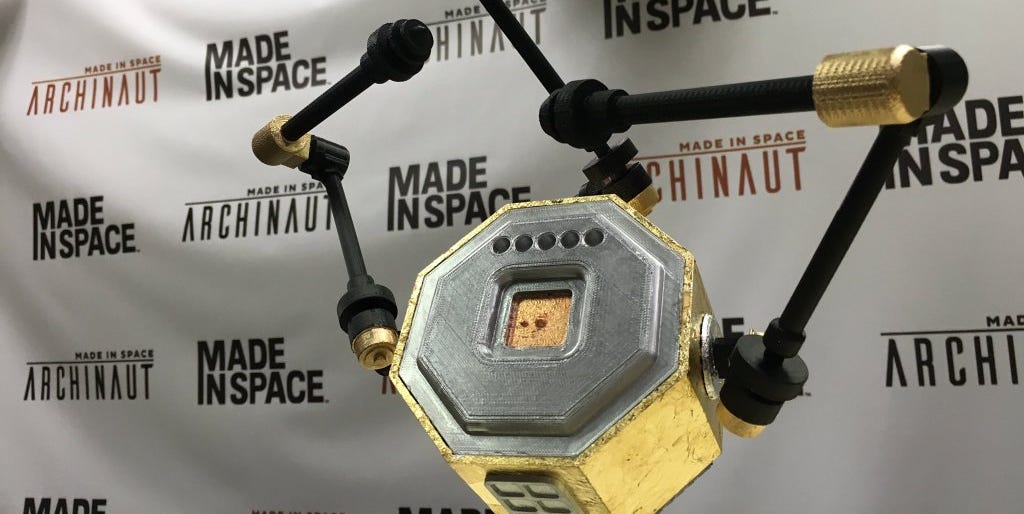
Not everything needs to be built on the ground. Technologies like OSAM-2 (also referred to as Archinaut One) aim to demonstrate robotic manufacturing and assembly in orbitprinting and assembling large structures that don’t fit inside a rocket fairing. Imagine building big antennas, booms, or frames in space instead of folding them like origami and hoping they unfold politely.
What Makes a Space Robot “Smart” (and Not Just Expensive)
“Smart” doesn’t mean “slap AI on it and call it a day.” Space robots need a layered brainequal parts perception, planning, and paranoia (the healthy kind).
- Perception: Cameras, lidar, and sensors that can interpret messy environmentsdust, glare, shadows, and unfamiliar surfaces.
- Planning: The ability to choose actions, sequence tasks, and adapt when a step fails.
- Fault detection & recovery: Diagnose problems, switch modes, and keep going safely when hardware misbehaves.
- Human-in-the-loop control: Autonomy where it helps, supervision where it mattersespecially near humans or high-value hardware.
- Energy & resource management: Power, thermal limits, communications windowsspace robots live on a strict budget.
NASA has been proving these ideas for decades through autonomy demonstrations on spacecraft and Earth-observing missionsshowing that onboard software can detect issues, replan activities, and execute goals with reduced ground intervention. That same philosophy is now spreading across exploration robots, space logistics, and future infrastructure.
The Next Decade: Artemis, Gateway, and a Robot-First Logistics Chain
Gateway and Canadarm3: autonomy at lunar distance
NASA’s planned Gateway lunar space station is designed to be a proving ground for deep-space operations. Its next-generation robotic arm system, Canadarm3, is intended to handle maintenance, vehicle berthing, inspections, and external operationssome of it autonomously. The key detail is the environment: lunar orbit is farther away, with different logistics and higher latency than low Earth orbit, which nudges operations toward more autonomy by necessity.
Robotic mobility on the Moon: the Lunar Terrain Vehicle
NASA’s Lunar Terrain Vehicle concept emphasizes advanced navigation and the ability to operate with or without a crew. That matters because crew time is precious, and long traverses in harsh conditions demand vehicles and robots that can keep themselves safe, keep themselves oriented, and keep themselves useful when the humans are busy doing human thingslike science, exploration, and not getting covered in abrasive dust.
VIPER’s evolving path: robots still lead the way
The Moon’s south pole is a high-value target because of the potential for water ice in permanently shadowed regions. NASA’s VIPER rover program has shifted over time, reflecting how hard it is to land, operate, and deliver science in that environment. Regardless of the exact path, the goal stays the same: send robots first to map resources so humans can follow with better information and fewer surprises.
The Unsexy Challenges: Dust, Delays, and the “Please Don’t Break That” Problem
Robots in space face problems that would make a normal factory robot file a complaint with its union rep.
Lunar dust is basically tiny knives
Regolith is abrasive, clingy, and electrostatically annoying. It gets into joints, seals, and mechanisms. Designing robots that can survive dust requires careful materials, shielding, and cleaning strategies. This is why lunar robotics testing focuses so heavily on durability and long-term operationsnot just “can it move today,” but “can it move after a thousand dusty cycles.”
Autonomy must be safe, not bold
In space, a robot that “tries something creative” can become a robot that “creates a debris cloud.” Smart robotics emphasizes conservative behavior: keep-out zones, passively safe trajectories, careful approach logic, and clear consent/coordination for proximity operations around other spacecraft.
Will Robots Replace Astronauts?
Not really. They’ll replace the parts of astronaut life that are dangerous, repetitive, or wildly inefficient while expanding what astronauts can accomplish. The best future looks like a team:
- Humans set goals, interpret complex science, troubleshoot the weird stuff, and make judgment calls.
- Robots execute tasks continuously, operate in hazardous zones, handle heavy logistics, and keep infrastructure running.
In other words: astronauts become mission directors and explorers, while robots become the around-the-clock workforce. Spaceflight stops being a series of heroic one-offs and starts looking more like a sustainable transportation and operations network.
Real-World Field Notes: What Working With Space Robots Actually Feels Like (Extra )
Talk to engineers and operators who work with space robots and you’ll hear a consistent theme: it’s part high technology, part patience, and part learning to think like a machine that can’t “just reach over” when something is slightly out of place.
On the ISS, free-flyers like Astrobee turn mundane chores into a robotics workflow. The “experience” isn’t dramatic; it’s quietly transformative. Instead of an astronaut floating through modules scanning barcodes and snapping photos, you can schedule a robot, review the results, and redirect human time to tasks that only humans can do. That shift feels small until you add it up across weeks and monthsthen it becomes a mission multiplier. Researchers also use these platforms as testbeds: a new sensor, a new navigation routine, a new way to coordinate robot motion in a cluttered environment. The station becomes a living robotics lab, and every successful run reduces risk for future deep-space missions.
Outside the station, robotic manipulation feels like performing surgery with oven mittsexcept the “patient” is a hundred-million-dollar asset and the operating room is vacuum. Robotic arms and dexterous tools succeed because operators plan obsessively. They simulate moves, define safe paths, confirm clearances, and build in slow, deliberate steps. When it works, it looks almost boring, and that’s the point. “Boring” in space means “safe.” Over time, teams get better at designing hardware meant for robotic handlingstandardized interfaces, clearer markers, better tool compatibilityso robots can do more with fewer custom procedures.
Planetary robotics has its own flavor of “experience”: the daily rhythm of planning a rover’s work in chunks called sols, balancing science ambition against power and safety. The rover is partly autonomous, but it still needs thoughtful intent. Operators craft sequences like a recipe: drive here, image this, abrade that surface, place the instrument, drill, cache, document, sleep, recharge. And then Mars does Mars thingsrocks crumble, dust shifts, lighting changesand the robot’s autonomy and fault protection become the difference between a setback and a lost day. Ingenuity’s success added a new feeling to that workflow: the sense that robots can be teammates, not just tools. An aerial scout changes how you explore: you see routes ahead, you choose safer paths, you plan smarter.
Lunar construction testingwhether it’s excavation prototypes or regolith-based 3D printingoften happens in giant test bins of simulated lunar soil. The experience is strangely grounded: engineers in work boots, watching a robot dig in “moon dirt” under controlled conditions, hunting for failure modes. But the mindset is spaceflight through and through. Every jam, slip, and dust intrusion teaches a lesson about bearings, seals, thermal cycles, and how to design a mechanism that won’t panic when the environment gets hostile. The dream is boldrobots building landing pads, berms, and habitatsbut the reality is earned one test at a time, one improved joint at a time, one “okay, that totally broke, now we know why” at a time.
Put all these experiences together and you get the real secret: smart robots aren’t a single breakthrough. They’re a long chain of practical winsmore autonomy here, more durability there, better standards everywhereuntil space operations become less like stunts and more like a sustainable system.
Conclusion
Smart robots are the future of spaceflight because they turn distance into capability. They handle risk without risking lives. They extend missions, repair assets, explore harsh worlds, andsoonbuild the infrastructure that makes living off Earth plausible. The next era won’t be humans or robots. It’ll be humans with robots: a partnership where machines do the heavy, dangerous, repetitive work, and people do what we do bestdecide what’s worth doing next.