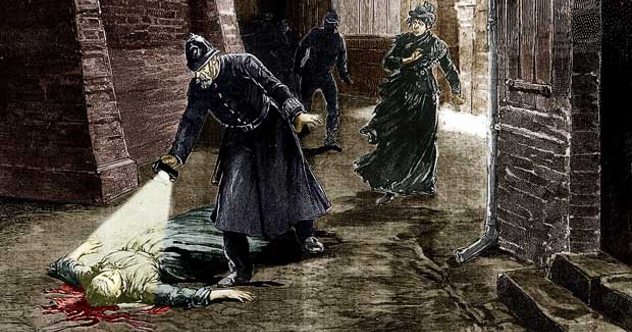

Few names in true crime have survived quite like Jack the Ripper. More than a century after the Whitechapel murders of 1888, the unidentified killer still haunts history books, documentaries, walking tours, podcasts, and the occasional late-night internet rabbit hole that starts innocently and ends with you staring at Victorian maps at 2 a.m.
But here is the strange thing: most people know the nickname, the foggy London setting, and the basic mystery. Far fewer know the messy details that made the case so difficult, so famous, and so endlessly debated. The real Jack the Ripper story is not just about murder. It is also about poverty, newspapers, police limitations, social panic, misinformation, and the uncomfortable way a city turned tragedy into legend.
This article explores 10 things you probably do not know about Jack the Ripper, from the origins of the name to the women behind the headlines, the failed investigation, the suspicious letters, and why modern DNA claims still have not slammed the case shut.
1. “Jack the Ripper” May Have Been a Media Invention
The killer was not born with the name Jack the Ripper. In fact, nobody knows his real name, and even the famous nickname may have come from a hoax. During the 1888 Whitechapel murders, police and newspapers received many letters claiming to be from the murderer. One of the most famous, later known as the “Dear Boss” letter, was signed “Jack the Ripper.”
That name had everything Victorian newspapers loved: menace, rhythm, and a villainous flair. It was practically a brand before branding departments had whiteboards. Once the press published it, the nickname stuck. Before that, the killer was often called the “Whitechapel Murderer” or “Leather Apron.” Neither had quite the same chilling headline power.
The problem? Many historians believe the letter may have been written by someone trying to stir up publicity. If true, one of history’s most infamous criminal names may have been created not by the killer, but by the media machine around him.
2. The “Canonical Five” Are Not the Only Possible Victims
Most serious discussions of Jack the Ripper focus on five women: Mary Ann Nichols, Annie Chapman, Elizabeth Stride, Catherine Eddowes, and Mary Jane Kelly. They are often called the “canonical five,” meaning they are the victims most commonly accepted by historians as part of the same murder series.
However, Whitechapel experienced other violent attacks around the same period. Some researchers have argued that victims such as Martha Tabram or Alice McKenzie might also belong in the case. Others believe the Ripper may have killed fewer than five, especially because Elizabeth Stride’s murder differed in some important details from the others.
This uncertainty matters because the number of victims shapes every theory about the killer. If there were five, the pattern looks one way. If there were three, seven, or more, the profile changes. In other words, even the body count is still wearing a question mark.
3. The Victims Were Real Women, Not Just “Ripper Victims”
One of the biggest problems with the Jack the Ripper legend is that it often turns the women into props in the killer’s story. Their names appear as a list, then the spotlight jumps back to suspects, knives, letters, and conspiracy theories.
In reality, the victims had full lives before they became part of a crime file. They worked, moved through difficult relationships, struggled with poverty, slept in lodging houses, and tried to survive in one of London’s harshest neighborhoods. Mary Ann Nichols, often called Polly, was a mother. Annie Chapman had experienced illness and hardship. Elizabeth Stride had migrated and worked in different settings. Catherine Eddowes was known for her wit. Mary Jane Kelly, the youngest of the five, remains especially difficult to reconstruct because so much about her life is uncertain.
Seeing them only through the killer’s actions is like reviewing a whole book by reading the final page after someone spilled tea on it. A better approach is to remember that the women were people first, victims second, and historical symbols only because the world failed to protect them.
4. Whitechapel Was Already Under Enormous Pressure
The murders did not happen in a quiet, comfortable neighborhood suddenly invaded by evil. Whitechapel, in London’s East End, was already known for overcrowding, poverty, immigration tension, casual labor, poor sanitation, and cheap lodging houses. Many residents lived one bad day away from hunger.
That social environment shaped both the crimes and the investigation. Dark alleys, crowded streets, and transient housing made it easier for a killer to disappear. At the same time, prejudice against poor people, immigrants, and sex workers affected how the public talked about the case.
Jack the Ripper became a monster in the fog, but the real horror was also structural. The murders exposed the conditions of Victorian urban poverty to readers who might otherwise have preferred not to think about them before breakfast.
5. The Police Investigation Was Bigger Than Many People Think
It is easy to mock the Victorian police for failing to catch the killer. After all, modern viewers are used to fingerprint databases, DNA testing, surveillance cameras, phone records, and detectives who solve cases in 42 minutes with time left for a dramatic hallway conversation.
But the Ripper investigation was not tiny or lazy. Police interviewed large numbers of people, followed leads, watched streets, questioned suspects, and dealt with waves of tips and letters. They also faced major limitations. Fingerprinting was not yet a standard investigative tool in Britain. Blood typing was not available for criminal investigation. Crime scene preservation was primitive by modern standards. Photography existed, but not in the instant, systematic way investigators use it today.
The police were not solving a modern case badly. They were trying to solve a modern-feeling case with Victorian tools, Victorian bureaucracy, and Victorian newspapers breathing down their necks.
6. The Letters Created More Confusion Than Clarity
The Jack the Ripper letters are famous, but fame is not the same thing as reliability. Police and newspapers received hundreds of messages from people claiming to be the killer, offering advice, making threats, or simply enjoying the attention. Most were almost certainly hoaxes.
The best-known letters include the “Dear Boss” letter, the “Saucy Jacky” postcard, and the “From Hell” letter. Some researchers treat one or more of these as potentially important; others are deeply skeptical. The letters did not just complicate the investigation. They helped create a personality for a killer whose actual identity was unknown.
That is one reason the Ripper case feels so theatrical. The murderer may have been silent, but the letters gave him a voice. Unfortunately, that voice may have belonged to pranksters, journalists, attention-seekers, or people with very poor hobbies.
7. The “Double Event” Made the Panic Explode
On September 30, 1888, Elizabeth Stride and Catherine Eddowes were killed within a short period of each other in different locations. This night became known as the “double event.” It intensified public fear because it suggested that the killer could strike, escape, and strike again before dawn.
Stride’s murder has always raised debate because her body was not mutilated in the same way as some of the others. One theory is that the killer was interrupted before he could continue. Another is that Stride may not have been a Ripper victim at all. Catherine Eddowes, however, suffered injuries that strongly matched the escalating violence associated with the case.
The double event turned fear into something close to hysteria. For Whitechapel residents, this was not an abstract mystery. It was a local emergency with footsteps outside the door.
8. Mary Jane Kelly’s Murder Was Different in a Disturbing Way
Mary Jane Kelly, usually considered the fifth canonical victim, was killed indoors in her room on November 9, 1888. That alone made her case different. The earlier murders occurred outdoors or in semi-public spaces, where the killer had little time. Kelly’s murder gave the attacker privacy, and the result was far more extensive violence.
Because her death is often treated as the final Ripper murder, researchers have long debated what happened afterward. Did the killer die? Was he imprisoned? Did he leave London? Did he stop because the pressure became too intense? Or was Mary Jane Kelly not the end after all?
The honest answer is not very satisfying: nobody knows. History rarely gives neat season finales, even when the audience desperately wants one.
9. More Than 100 Suspects Have Been Proposed
One reason Jack the Ripper remains famous is that the empty space where the killer’s identity should be invites endless speculation. Over the years, suspects have included local men, doctors, butchers, sailors, immigrants, artists, royalty, and even theories suggesting the killer could have been a woman.
Some suspects had genuine police attention at the time, such as Montague John Druitt, Aaron Kosminski, and Michael Ostrog, who appeared in later police memoranda. Other suspects emerged much later through books, documentaries, or theories built on coincidence. Some claims are thoughtful. Others have the structural integrity of a sandwich left in the rain.
The suspect list tells us as much about each era’s imagination as it does about 1888. People tend to create the Ripper they expect to find: a mad doctor, a criminal genius, a royal conspirator, a foreign outsider, or a hidden monster next door.
10. Modern DNA Claims Have Not Officially Solved the Case
In recent years, some researchers have claimed DNA evidence points to Aaron Kosminski, a Polish barber who lived in London and was named in historical suspect discussions. The claim is linked to genetic testing on a shawl said to be connected to Catherine Eddowes.
However, many experts remain cautious. The shawl’s provenance is disputed, meaning its chain of custody is uncertain. It has also been handled over many years, raising contamination concerns. Old DNA can be difficult to interpret, and mitochondrial DNA does not identify a person with the same precision many casual readers imagine.
So, has Jack the Ripper been identified? Not officially. Kosminski remains one of the more discussed suspects, but the case is still widely treated as unsolved. The mystery survives because the evidence is incomplete, degraded, missing, or debated. Victorian London did not save the case file with future forensic podcasts in mind.
Why Jack the Ripper Still Fascinates People
Jack the Ripper endures because the case sits at the crossroads of crime, history, media, social inequality, and mystery. It has all the ingredients of a story people cannot stop revisiting: an unknown villain, a vivid setting, unreliable clues, frightened streets, flawed institutions, and unanswered questions.
But fascination can become unhealthy when it turns the killer into the star. The better way to study the Whitechapel murders is to treat them as a window into Victorian society. The case reveals how newspapers shaped public fear, how poverty made women vulnerable, how policing struggled before modern forensic science, and how myth can grow larger than fact.
In that sense, the question is not only “Who was Jack the Ripper?” It is also “Why do we keep asking?” The answer may be that unsolved mysteries make us feel history is still alive, still whispering, still hiding one last clue in the fog.
Experience Section: What Exploring the Jack the Ripper Story Feels Like Today
Reading about Jack the Ripper is not like reading a normal historical crime summary. It feels more like entering a maze where every corridor has a gas lamp, a newspaper headline, and three people arguing about whether the handwriting on a letter matters. The deeper you go, the more you realize that the case is less a single mystery and more a crowded room of smaller mysteries.
One experience many readers share is surprise at how modern the story feels. The media frenzy, public panic, copycat messages, suspect speculation, and amateur detective culture all feel strangely familiar. Replace Victorian newspapers with social media feeds and you can almost see how the same case might unfold today: viral theories, questionable “breakthroughs,” maps, threads, heated comments, and someone confidently declaring the case solved after watching one video.
Another striking experience is walking, even virtually, through the geography of Whitechapel. The murder sites were close together, but the world around them has changed dramatically. Modern London is busy, bright, and layered with new buildings, traffic, restaurants, offices, and tourists. Yet the historical map still creates a sense of compression. The victims lived and died within a tight urban environment where poverty, lodging houses, pubs, alleys, markets, and police beats overlapped.
For many people, the emotional turning point comes when they stop focusing on the killer and start learning about the women. At first, the case can seem like a puzzle: dates, locations, suspects, injuries, letters. But when the victims’ lives come forward, the mood changes. The story becomes less about a mysterious shadow and more about vulnerable people navigating a brutal city. That shift matters. It turns true crime from entertainment into historical responsibility.
There is also a humbling experience in studying the investigation. Modern readers may feel tempted to say, “How did they not catch him?” But the answer becomes clearer when you understand the time period. Investigators lacked tools that are now basic to police work. They were overwhelmed by bad tips and hoax letters. They had to manage fear in a crowded district while newspapers amplified every rumor. The case reminds us that evidence is fragile. Once a clue is lost, contaminated, misread, or never collected, later generations can only argue over the shadow it left behind.
Finally, exploring Jack the Ripper teaches a useful lesson about certainty. The case attracts bold claims because people dislike loose ends. A named suspect feels more satisfying than a blank space. A DNA headline feels more exciting than a careful footnote. But history often asks us to live with uncertainty. The most honest answer may be the least dramatic: we do not know who Jack the Ripper was, and we may never know.
That uncertainty is frustrating, but it is also what keeps the case important. It pushes readers to think critically, compare sources, question sensational claims, and separate evidence from storytelling. In the end, the Jack the Ripper case is not just a dark tale from 1888. It is a lesson in how crime becomes legend, how victims can be overshadowed, and how truth can disappear when fear, fame, and poor evidence all meet in the same foggy street.
Conclusion
Jack the Ripper remains one of the most infamous unsolved cases in criminal history, but the real story is far more complex than a mysterious killer in a top hat. The name may have come from a hoax letter. The victim list is still debated. The women behind the case had lives that deserve more attention than the murderer’s mythology. The police investigation was serious but limited by the tools of the time. The press helped turn local terror into an international legend.
The most important thing to know about Jack the Ripper is that the mystery is not only about identity. It is about how society remembers crime. Do we chase the villain, or do we study the world that allowed the violence to happen? Do we repeat sensational myths, or do we look carefully at evidence? The story still matters because it forces us to ask those questions.