William Reardon’s Dinner Plate: Why This Handmade Dish Deserves a Seat at the Table

Most dinner plates have one job: hold food without causing a small domestic crisis. William Reardon’s dinner plate manages that basic assignment, then quietly adds craftsmanship, history, texture, and just enough personality to make Tuesday-night pasta feel less like a survival exercise.
Made through New York Stoneware, the dinner plate reflects ceramicist William Reardon’s interest in functional pottery that belongs in everyday life rather than behind glass in a room where nobody is allowed to breathe too enthusiastically. It is handmade, sturdy, generously sized, and intentionally imperfect in the best possible way. In other words, it is a plate with manners, but not a boring one.
For people who care about handmade ceramics, thoughtful table settings, modern rustic interiors, or simply eating dinner off something that does not look like it escaped from a hotel breakfast buffet, William Reardon’s dinner plate offers a compelling case for upgrading the cupboard.
The Story Behind William Reardon’s Dinner Plate
William Reardon is a New York ceramicist and the founder of New York Stoneware, an urban pottery studio established in 2013. His work sits at the intersection of art, utility, and the deeply satisfying idea that useful objects should not have to look disposable.
Reardon studied ceramics and architecture, and that combination makes sense when looking at his tableware. His work often feels structured without becoming stiff. The forms are simple, but they are not bland. There is a sense of proportion, balance, and visual weight that comes from someone who understands both objects and space.
The dinner plate is part of a broader collection of handmade stoneware designed for regular use. That phrase matters. This is not “special occasion only” pottery that spends 364 days a year hiding in a cabinet like it is waiting for a royal visit. The goal is to make daily meals feel more intentional.
That philosophy is especially refreshing in a world overflowing with identical plates manufactured by the million. There is nothing inherently wrong with mass-produced dinnerware, of course. It does the job. But handmade pottery reminds us that “does the job” and “makes the meal feel better” are not exactly the same thing.
A Modern Plate With an Old-World Starting Point
One of the most interesting details about William Reardon’s dinner plate is its inspiration: an 18th-century Italian pewter charger. A charger is traditionally a large decorative or serving plate placed beneath other dishes during formal meals. It is essentially the overachiever of the dinner table.
Reardon took that historical reference and translated it into something more useful for contemporary dining. Instead of creating a museum-style replica, he developed a plate that carries some of the visual presence of old pewter while remaining practical for everyday meals.
The result is a dinner plate that feels grounded and substantial. It has a quiet old-world character without requiring you to wear a powdered wig before serving roasted chicken. That balance is one reason handmade stoneware works so well in modern homes: it can feel historic, warm, and personal without becoming costume drama décor.
Why Historical Inspiration Matters
Historical inspiration can give a handmade object more depth, but only when the maker avoids turning it into a gimmick. Reardon’s approach works because the reference point is not shouted from across the room. The plate does not scream, “Look! I have researched European metalwork!” It simply carries a sense of proportion and presence that feels considered.
This is the difference between design with a backstory and design that needs a 12-page instruction manual to explain why it exists. William Reardon’s dinner plate can be appreciated without knowing anything about Italian pewter, but knowing the source of inspiration adds another layer to the experience.
What Makes Handmade Stoneware Different?
Handmade stoneware has a personality that factory-made dinnerware usually cannot reproduce. Every piece may vary slightly in glaze color, dimensions, texture, and finish. Those variations are not defects. They are part of the point.
A handmade plate records the process of being made. The clay was shaped, trimmed, glazed, and fired by people rather than pushed through a fully automated line. You may notice subtle differences from one plate to another: a slightly deeper glaze pool near the edge, a tiny shift in tone, or a handmade curve that gives the plate a softer presence.
That does not mean handmade pottery is fragile or impractical. Good stoneware is made for use. The charm comes from the fact that each plate has its own tiny signature, like a sibling who resembles the family but still refuses to wear the same sweater.
The Beauty of Variation
Perfectly matched dinnerware can look crisp and polished, but handmade ceramics offer something else: rhythm. A set of William Reardon dinner plates can feel coordinated without looking cloned. The pieces belong together, yet they retain their individual character.
This makes handmade dinnerware especially appealing for people who want a table that feels relaxed and collected over time. Instead of looking like it was unpacked from a showroom display five minutes before guests arrived, the table feels lived in.
How William Reardon’s Dinner Plate Is Made
New York Stoneware describes a hands-on studio process that begins with forms designed and thrown on the potter’s wheel. The pieces are then trimmed, finished, stamped, slipped, glazed, and fired by a small team of artisans.
That sequence sounds simple until you remember that clay has opinions. It can shrink, shift, crack, warp, react unpredictably to heat, or decide that the glaze color you carefully tested last week is suddenly not its emotional truth. Ceramic work requires planning, technical skill, patience, and a willingness to accept that fire has the final vote.
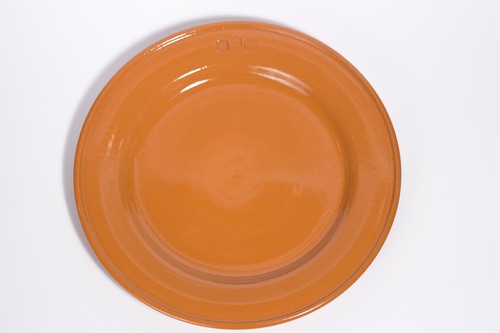
Reardon’s studio uses specially formulated red clay and applies white clay slip before glazing. This helps create visual depth and nuanced color rather than a completely flat surface. The glazes are mixed in the studio and applied by hand, which contributes to the subtle variation across finished pieces.
It is this layered process that gives the dinner plate its character. The plate is not merely colored; it has depth. The surface can catch light differently depending on the angle, the food served, and whether your kitchen has flattering evening lighting or the suspiciously aggressive overhead bulb found in many apartments.
The 11-Inch Format: Big Enough for Dinner, Not Big Enough for Regret
William Reardon’s dinner plate is approximately 11 inches in diameter, which places it in a versatile range for everyday meals. It is roomy enough for a composed dinner, a generous salad, grilled vegetables, or a plate of pasta that accidentally became a plate of pasta plus bread plus “just one more bite.”
An 11-inch plate offers useful visual space without feeling like a serving platter. This matters because food presentation is not only for restaurant chefs with tweezers and alarming confidence. A plate with enough breathing room can make an ordinary meal look more appealing.
Try serving a simple dinner of roast chicken, greens, and potatoes on a large handmade plate. The food has space to look intentional. The plate frames the meal instead of crowding it. Suddenly, dinner looks like a plan rather than a refrigerator negotiation.
Foods That Work Especially Well
Because of its broad, balanced format, the William Reardon dinner plate works well for a wide range of meals:
- Roasted chicken with seasonal vegetables and pan sauce
- Pasta with a chunky tomato sauce or slow-cooked ragù
- Grilled fish with rice, herbs, and lemon
- Steak, roasted potatoes, and a sharp green salad
- Vegetarian grain bowls with roasted squash, greens, and tahini dressing
- Weekend pancakes, because breakfast deserves emotional support too
The plate is not limited to dinner. It can also work for brunch, dessert, shared appetizers, sandwiches, or whatever culinary experiment happens when leftovers and confidence meet at 10:30 p.m.
Why Handmade Dinnerware Changes the Meal
It may sound dramatic to say that a plate can change dinner, but tableware influences how a meal feels. A handmade plate asks you to slow down for half a second. You notice the weight. You notice the glaze. You notice the food a little more.
That does not mean every dinner becomes a spiritual retreat. Sometimes dinner is scrambled eggs eaten while answering emails. Sometimes it is takeout noodles and a television show you have watched three times already. But even in those moments, using a handmade dish can make the routine feel less disposable.
Handmade pottery also creates a connection between the user and the maker. You are not just using a plate; you are using an object shaped through a sequence of human decisions. The curve of the rim, the thickness of the clay, the glaze response, and the finish all carry evidence of touch.
That connection is part of why functional ceramics remain so appealing. A plate can be art, but it can also be useful. It does not have to choose a side.
Styling a Table Around William Reardon’s Dinner Plate
The beauty of neutral or earthy handmade dinnerware is that it can work across several interior styles. William Reardon’s dinner plate can feel at home in a farmhouse kitchen, a Brooklyn apartment, a minimalist dining room, or a table set outdoors under string lights where someone inevitably forgets the bug spray.
For a Casual Everyday Table
Pair the dinner plate with simple linen napkins, clear glassware, and brushed metal flatware. Add a small bowl of fruit or a low ceramic vase with herbs. Keep the arrangement relaxed. Handmade plates do not need a parade of decorative accessories to prove they are interesting.
For a Dinner Party
Layer the dinner plate with a smaller salad plate or bowl in a complementary color. Use a soft runner, candlelight, and a few natural elements such as branches, pears, or seasonal flowers. The goal is warmth, not a centerpiece so tall that guests have to communicate using hand signals.
For a Modern Rustic Look
Combine the plate with wood serving boards, woven placemats, simple glass tumblers, and linen textiles. The contrast between clay, wood, glass, and fabric creates a table that feels tactile and lived in.
Care, Durability, and Everyday Use
Stoneware is valued because it can be both beautiful and durable. Product information for William Reardon’s dinner plate identifies it as dishwasher- and microwave-safe, while the studio describes its clay body as suitable for dishwasher, microwave, and oven use.
Still, “safe” does not mean “immune to every kitchen disaster ever invented.” Avoid dramatic temperature changes, such as moving a cold plate directly into a very hot oven. Do not stack plates carelessly with metal utensils trapped between them. And if a plate does chip, do not panicbut assess whether the chipped area is safe and comfortable for food use.
The most practical approach is respectful normal use. Put the plate to work. Wash it. Serve on it. Let it become part of your routine. Handmade pottery becomes more meaningful through use, not through being treated like a nervous celebrity.
Is William Reardon’s Dinner Plate Worth It?
Whether a handmade dinner plate is “worth it” depends on what you value. If you only need the cheapest possible plate that can survive a college move, a discount store set may be the sensible answer. There is no shame in practical dinnerware. Everyone has eaten cereal from a bowl with a mystery crack.
But if you value craftsmanship, materials, design history, and objects that can improve daily rituals, the William Reardon dinner plate offers something mass-market dinnerware does not. It is both a functional plate and a small piece of contemporary American craft.
Its value is not only in how it looks on a shelf. The value is in repeated use: weekday meals, birthday dinners, rainy-day pasta, holiday gatherings, and the occasional meal that turns out better than expected. The plate becomes part of the memory because it was there when the memory happened.
Experience Notes: What It Feels Like to Live With a William Reardon Dinner Plate
The following section offers practical, experience-based dining scenarios rather than claiming personal ownership or a laboratory-style product test.
Living with a handmade dinner plate is less about conducting a formal review and more about noticing small moments. On the first day, you may simply admire the glaze and wonder whether it is too nice for leftovers. By the third use, you realize that leftovers are exactly what it is for. The plate is not asking to be worshipped. It is asking to hold your food without looking bored.
One of the first noticeable differences is visual. A homemade meal often looks more complete on handmade stoneware. A pile of roasted vegetables, for example, becomes more than a pile. It has contrast against the plate, texture around the edges, and enough room to feel like dinner rather than an accident involving a sheet pan.
There is also a tactile difference. Handmade pottery tends to have a presence when you pick it up. It may feel more substantial than thin department-store porcelain, but not clumsy. The weight communicates durability. It tells you that this plate has plans. It is not going to buckle emotionally under the pressure of a baked potato.
At a casual dinner with friends, the plate can become an easy conversation starter. Someone may ask where it came from. Someone else may run a finger along the rim. Eventually, somebody will say, “These are too nice for us,” right before using one to hold a second helping of lasagna. That is usually the moment the plate proves its purpose.
For everyday meals, the experience becomes quieter. You stop thinking about the plate as a purchase and start thinking of it as part of the kitchen. It is there for fried eggs in the morning, sandwiches at lunch, and dinner after a long day. That familiarity is part of the charm. Handmade tableware becomes better when it stops being precious.
The minor variations also become more meaningful over time. You may notice that one plate has a slightly deeper glaze tone or a softer curve at the rim. Rather than seeing that as inconsistency, you begin to recognize it as identity. One becomes the plate you choose for pasta. Another becomes the one you bring out for guests. This is irrational, of course, but kitchens are allowed to have tiny rituals.
Holiday meals offer another kind of experience. A handmade dinner plate can make a crowded table feel warmer, especially when paired with cloth napkins, serving bowls, candles, and food that everyone claims they are too full to eat before accepting dessert. The plate fits into the scene without trying to steal it.
There is also something reassuring about using an object made through a slow process in a fast day. When work is chaotic, meals are rushed, and the kitchen looks like a vegetable drawer lost a fight, a handmade plate brings a small amount of order. It does not solve your schedule. It does not wash itself. But it makes the meal feel more deliberate.
That may be the strongest argument for William Reardon’s dinner plate. It does not promise to transform your life. It simply brings a little more beauty, weight, and human character to something you already do every day: sit down and eat.
Final Thoughts
William Reardon’s dinner plate is a thoughtful example of functional handmade ceramics. Inspired by historical pewter forms but designed for modern use, it combines an 11-inch dining surface, rich studio-made glaze, durable stoneware construction, and the subtle variation that makes handmade pottery feel alive.
It works because it does not force a choice between beauty and practicality. It can hold a carefully plated dinner party entrée, a casual weeknight meal, or a heroic serving of comfort food. It is art that earns its place in the dishwasher.
For anyone interested in handmade dinnerware, artisan pottery, American craft, or simply making everyday meals feel a little more special, William Reardon’s dinner plate is worth considering. After all, dinner happens every day. Your plate might as well contribute something besides silence.