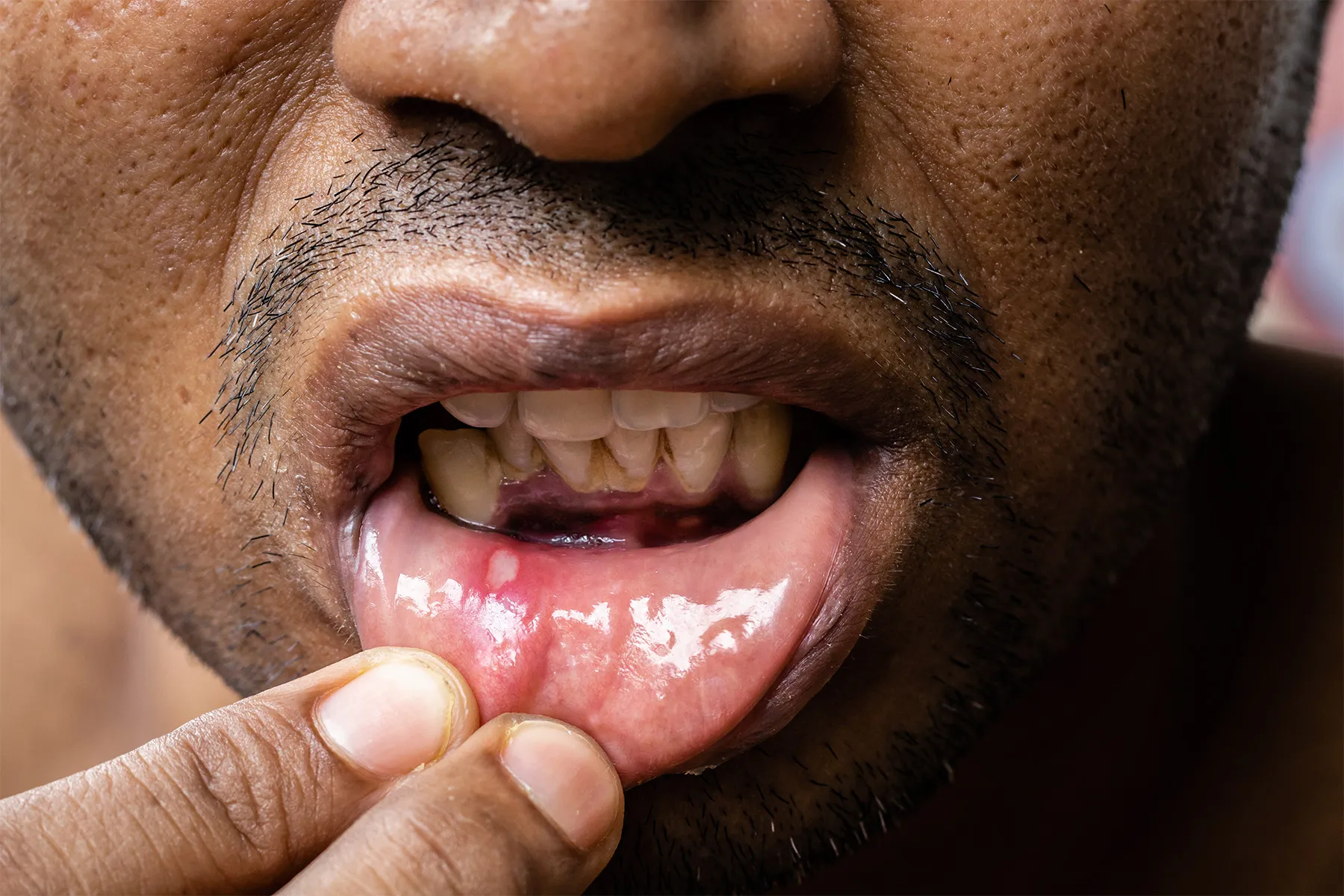

Ulcerative colitis is famous for causing trouble in the colon, but inflammatory bowel disease does not always respect departmental boundaries. For some people, a flare in the gut arrives with an unwelcome side act: tender spots inside the lips, on the tongue, along the gums, or beneath the cheeks. These mouth sores may be small, but they can make a glass of orange juice feel like a chemistry experiment gone wrong.
Mouth ulcers can occur as an extraintestinal manifestation of inflammatory bowel disease, meaning a symptom that appears outside the intestines. However, a sore is not automatically proof that ulcerative colitis is active. Nutritional deficiencies, medication reactions, infections, dental irritation, stress, and ordinary canker sores can look remarkably similar. Understanding the possibilities helps patients know what can be managed at home, what deserves a routine appointment, and what should prompt faster medical attention.
Can Ulcerative Colitis Cause Mouth Sores?
Yes. People with ulcerative colitis can develop aphthous stomatitis, the medical term for recurring canker sores. These lesions usually form on soft tissues inside the mouth and often appear as round or oval ulcers with a pale white, yellow, or gray center surrounded by a red border. They may sting before they become visible and can make chewing, swallowing, brushing, and talking uncomfortable.
Ulcerative colitis affects the lining of the colon and rectum, while Crohn’s disease can directly involve any part of the digestive tract from the mouth to the anus. For that reason, prominent or persistent oral disease is often associated more strongly with Crohn’s. Still, research and clinical guidance recognize aphthous ulcers and other oral changes in people with ulcerative colitis. A mouth sore may occur during intestinal activity, appear before digestive symptoms worsen, or develop for a completely separate reason.
What UC-Related Canker Sores Often Look Like
Typical aphthous ulcers are shallow, sharply defined, and painful. Minor sores are usually smaller than a centimeter and often heal without scarring in roughly one to two weeks. Larger “major” aphthae may be deeper, last for weeks, and occasionally leave scars. Unlike cold sores caused by herpes simplex virus, canker sores form inside the mouth and are not contagious.
A Rare Oral Condition Linked With IBD
Pyostomatitis vegetans is a rare but more distinctive oral manifestation associated with inflammatory bowel disease, particularly ulcerative colitis. Instead of one or two neat ulcers, it can produce many tiny yellow-white pustules on red, fragile tissue. The lesions may merge into winding lines sometimes described as “snail-track” ulcers. This pattern is not a do-it-yourself diagnosis; it warrants evaluation by a gastroenterologist, dentist, dermatologist, or oral medicine specialist and may require a biopsy or other testing.
Why Mouth Sores Develop in People With Ulcerative Colitis
There is no single explanation that covers every patient. In practice, clinicians consider several overlapping causes.
1. Systemic Inflammation
Ulcerative colitis involves abnormal immune activity. Although the most obvious injury occurs in the colon, inflammatory signaling can affect other tissues, including the joints, skin, eyes, liver, and mouth. An oral ulcer that repeatedly appears during bowel flares may therefore be part of the same inflammatory pattern. Tracking timing can be useful: note whether sores arrive alongside increased stool frequency, blood, urgency, abdominal pain, fatigue, fever, or weight loss.
2. Nutritional Deficiencies
Active disease may reduce appetite, restrict food choices, or contribute to blood loss and poor nutritional status. Deficiencies do not always produce a classic canker sore, but they can cause soreness, inflammation, cracks, or ulcer-like changes in and around the mouth. Folate deficiency can cause open sores on the tongue and inside the mouth. Vitamin B12 deficiency may cause soreness of the mouth or tongue, while riboflavin deficiency can contribute to cracked lips and lesions at the corners of the mouth. Iron status may also be checked when bleeding, fatigue, pallor, or anemia is present.
This is one reason random supplement shopping is not ideal. Taking high-dose folic acid, iron, zinc, or vitamin B12 without confirming a need can obscure the real problem, cause side effects, or interact with treatment. A clinician may order a complete blood count and targeted tests for iron, ferritin, folate, vitamin B12, and other nutrients based on symptoms and medical history.
3. Medication Effects
Some drugs can irritate oral tissues or make infections more likely. Methotrexate, which is used in some inflammatory conditions, can damage the lining of the mouth and requires prompt medical contact if mouth sores develop. Immune-modifying therapies can also alter infection risk, so a white coating, spreading redness, fever, blisters, or rapidly worsening pain should not automatically be treated as a routine canker sore. Never stop ulcerative colitis medication on your own; call the prescribing clinician so the cause and safest next step can be assessed.
4. Stress, Trauma, and Irritating Foods
Life with ulcerative colitis can be stressful, and stress is commonly reported around episodes of recurrent aphthous ulcers. A sharp tooth, accidental cheek bite, hard toothbrush, poorly fitting dental appliance, or crunchy food can create a local wound that looks suspiciously inflammatory. Hot peppers, citrus, vinegar, tomatoes, salty snacks, and very hot drinks may not create the ulcer, but they can make an existing one announce itself with theatrical enthusiasm.
5. A Condition Unrelated to UC
Cold sores, oral thrush, hand-foot-and-mouth disease, dental infections, allergic reactions, autoimmune conditions, and precancerous or cancerous lesions can all affect the mouth. Location and appearance offer clues but are not foolproof. Herpetic sores often begin with blisters and commonly involve firmer, keratinized surfaces or the lip border, whereas aphthous ulcers usually occur on softer inner-mouth tissue without a blister phase. Persistent, hard, painless, irregular, or unexplained red or white lesions deserve professional examination.
Do Mouth Sores Mean an Ulcerative Colitis Flare Is Coming?
Sometimes, but not reliably. Some patients notice mouth ulcers at the same time as intestinal symptoms, and oral manifestations can reflect broader inflammatory activity. Others develop canker sores while their bowel disease appears quiet. Still others discover that the true culprit is anemia, folate deficiency, a medication reaction, a broken filling, or a completely ordinary aphthous ulcer.
The most useful approach is pattern recognition rather than prediction. Keep a brief symptom log with the date, number and location of sores, photos, pain level, healing time, foods eaten, medication changes, bowel symptoms, temperature, and any eye, skin, or joint problems. A record covering several episodes is more informative than trying to remember whether “that tiny crater near the molar” appeared before or after Tuesday’s lunch.
How Doctors Evaluate Recurrent Mouth Sores
A clinician or dentist usually begins by examining the lesion and asking how long it has been present, whether it recurs, and which other symptoms are occurring. Important details include recent medication changes, fever, diarrhea, rectal bleeding, genital ulcers, eye pain, skin rashes, swollen joints, weight loss, difficulty swallowing, tobacco use, and dental trauma.
Depending on the findings, evaluation may include blood counts, iron studies, folate or vitamin B12 testing, inflammatory markers, infection testing, or a review of ulcerative colitis activity. A persistent or unusual lesion may need referral to an oral medicine specialist or biopsy. Mouth ulcers accompanied by eye inflammation, genital sores, fever, swollen lymph nodes, or a widespread rash broaden the differential diagnosis and should be assessed rather than repeatedly numbed and ignored.
Treatment and Relief for UC-Associated Mouth Sores
Control the Underlying Bowel Inflammation
When oral lesions track with active ulcerative colitis, improving control of the intestinal disease may help them settle. UC treatment may include aminosalicylates, corticosteroids, immunomodulators, biologic medicines, small-molecule drugs, or surgery, depending on severity and prior response. The mouth sore itself should not dictate a medication change without a broader assessment of disease activity and safety.
Use Gentle Home Care
For a small, familiar canker sore without warning signs, supportive care may reduce pain while it heals:
- Rinse gently with salt water or a mild alcohol-free mouth rinse.
- Choose soft, bland foods such as oatmeal, yogurt, eggs, smoothies, mashed potatoes, rice, soup cooled to a comfortable temperature, or tender fish.
- Avoid acidic, spicy, sharp, crunchy, or very salty foods until the tissue recovers.
- Use a soft-bristled toothbrush and brush carefully around the sore.
- Drink enough fluid, especially if diarrhea is also present.
- Ask a pharmacist or clinician about a protective paste or topical anesthetic appropriate for you.
Most ordinary canker sores improve on their own within one or two weeks. Over-the-counter topical anesthetics may provide temporary relief, but they do not treat an underlying UC flare, deficiency, infection, or medication reaction.
Prescription Options
For severe or recurrent aphthous ulcers, clinicians may prescribe a topical corticosteroid paste, gel, or rinse. Other treatments depend on the diagnosis. Antiviral medicine is used for herpes, not ordinary canker sores; antifungal medicine is used for candidiasis; nutrient replacement is appropriate when a deficiency is confirmed; and systemic anti-inflammatory treatment may be needed for extensive IBD-related disease. Using leftover steroid paste on an unidentified blistering or infectious lesion is not a clever shortcut.
When to Call a Doctor or Dentist
Arrange an evaluation when a mouth sore lasts longer than about 10 to 14 days, repeatedly returns, is unusually large, scars, interferes with eating or drinking, or looks different from your usual canker sores. The American Dental Association advises professional assessment for a sore that persists for a week or longer, while other clinical references use roughly 10 days as a practical threshold. The exact day matters less than the pattern: a lesion that is not healing deserves attention.
Contact your medical team promptly if sores begin after a medication change or occur with worsening diarrhea, rectal bleeding, significant abdominal pain, fever, marked fatigue, dehydration, weight loss, pus, spreading swelling, a rash, eye pain, genital sores, trouble swallowing, or signs of infection. Seek urgent care for difficulty breathing, rapidly swelling lips or tongue, inability to keep fluids down, confusion, or other severe symptoms.
Living With Ulcerative Colitis and Mouth Sores: Real-World Experiences
The following examples are composites based on common patient experiences, not quotations from one identifiable person.
The “Tiny Sore, Giant Attitude” Problem
A common experience begins with a slight tingling inside the lower lip. By the next morning, a white-centered ulcer has appeared, and suddenly toast feels like roofing material. The person may have no major intestinal symptoms, so the first instinct is to blame stress, a late night, or the ambitious amount of salsa eaten at dinner. That may be correct. A single small canker sore that heals normally does not necessarily mean ulcerative colitis is waking up.
The practical challenge is eating enough while avoiding pain. People often switch temporarily to softer meals, let food cool, skip citrus, and carry a water bottle. They may discover that toothpaste foam, a stiff toothbrush, or a jagged chip aggravates the spot. The sore becomes less mysterious when it improves over seven to fourteen days and does not arrive with bowel symptoms.
When the Mouth Mirrors the Gut
Another pattern is more coordinated. Several sores appear during a week of increasing urgency, blood in the stool, cramping, and exhaustion. The patient may initially focus on the mouth because it is visible, but the more important clue is the cluster of symptoms. A photo of the lesions and a short bowel-symptom record can help the gastroenterology team decide whether testing or a treatment adjustment is needed.
People describing this pattern often say the mouth ulcers feel like an early warning light. That observation can be useful, but it should remain a personal pattern rather than a universal rule. The same person may later have a sore caused by biting a cheek or developing a nutrient deficiency. Bodies are annoyingly fond of reusing the same special effects for different plots.
The Deficiency Surprise
Some patients experience repeated mouth tenderness, cracks at the corners of the lips, fatigue, and reduced exercise tolerance. They assume every symptom belongs to ulcerative colitis, yet blood testing reveals iron, folate, vitamin B12, or another nutritional problem. Treatment then focuses on the specific deficiency and why it developed, such as ongoing blood loss, limited intake, or another medical factor.
This experience can be reassuring because it offers a concrete target, but it also demonstrates why guessing with supplements is risky. A laboratory-confirmed plan is more useful than buying half the vitamin aisle and hoping one bottle wins.
The Medication Question
A different scenario occurs when mouth sores appear soon after a new medicine or dose change. The patient may worry that reporting the symptom will mean losing a treatment that controls UC. In reality, contacting the prescriber allows the team to determine whether the sore is minor, whether laboratory monitoring is needed, or whether the drug could be causing toxicity or increasing infection risk. The safest action is communication, not abruptly stopping treatment.
What Tends to Make Daily Life Easier
Patients often build a small “mouth-sore routine”: a soft toothbrush, bland foods, an approved topical product, photos taken in good light, and a note of the start date. Dental visits matter too, because a sharp filling or gum problem can quietly keep traumatizing the same area. Coordinated care among a gastroenterologist, primary care clinician, dentist, dietitian, and oral medicine specialist can be especially helpful when lesions recur.
The emotional side deserves recognition. Repeated ulcers can make eating socially awkward, disturb sleep, and add one more unpredictable symptom to an already unpredictable disease. Asking for pain control, nutrition support, or a closer review of UC activity is not overreacting. A sore measured in millimeters can still have an outsized effect on quality of life.
Conclusion
Mouth sores can occur with ulcerative colitis, especially as aphthous ulcers or, rarely, pyostomatitis vegetans. Yet inflammation is only one possible explanation. Nutrient deficiencies, medication effects, infection, stress, and dental injury may produce similar symptoms. Small, familiar canker sores often heal with gentle care, but persistent, recurrent, severe, or unusual lesions should be examined. The best strategy is to treat the mouth and the whole person: document patterns, protect nutrition and hydration, review medications, assess UC activity, and involve both medical and dental professionals when needed.
SEO Metadata