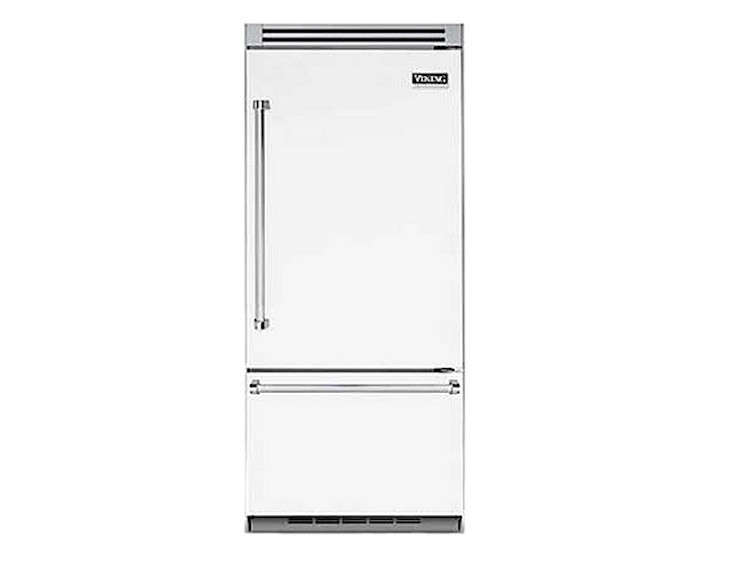

A refrigerator usually earns attention only when it stops working, starts making noises like a submarine, or allows an innocent bag of spinach to become a science project. The Viking Professional 5 Series 36-inch built-in bottom-freezer refrigerator takes a different approach: it is designed to be noticed.
With its tall professional profile, substantial handle, built-in construction, and stainless-steel presence, this Viking refrigerator is intended for upscale kitchens where appliances are part of the architecture. Common models in this family include the VCBB5363 and its newer VCBB5364 successor, with separate left-hinge, right-hinge, stainless-steel, custom-color, and panel-ready configurations.
Behind the restaurant-inspired exterior is a 20.4-cubic-foot layout, including approximately 15.3 cubic feet of refrigerator space and 5.1 cubic feet of freezer capacity. The design combines temperature-management technology, adjustable glass shelving, humidity-controlled produce drawers, LED lighting, an automatic ice maker, and a pull-out bottom freezer.
Is it the right refrigerator for every home? Certainly not. It is large, expensive, installation-sensitive, and decidedly uninterested in squeezing into a random opening left behind by a standard freestanding fridge. For the right kitchen, however, it offers the visual authority and organized storage that buyers expect from a luxury built-in appliance.
A Professional Refrigerator Built Around a 36-Inch Footprint
The Viking Professional 5 Series bottom-freezer refrigerator is nominally 36 inches wide and stands roughly 83 to 84 inches tall, depending on how the leveling system is adjusted. That height allows it to fill the vertical space commonly reserved for professional built-in refrigeration, creating a fitted appearance beneath the upper cabinetry or finished enclosure.
Unlike a counter-depth freestanding refrigerator, this is a true built-in appliance. Its refrigeration system, trim, door swing, electrical connection, water supply, and anti-tip support must all be considered during kitchen planning. The result can look exceptionally polished, but only when the opening has been prepared correctly. Built-in refrigerators are glamorous right up until someone discovers the cabinet opening is half an inch too narrow.
Key dimensions and capacities
- Overall width: Approximately 36 inches
- Adjustable overall height: About 82 3/4 to 84 1/16 inches
- Cabinet-depth installation: A minimum 24-inch-deep opening is generally required
- Total capacity: Approximately 20.4 cubic feet
- Refrigerator capacity: Approximately 15.3 cubic feet
- Freezer capacity: Approximately 5.1 cubic feet
- Approximate shipping weight: Around 565 pounds
That final number deserves respect. At roughly 565 pounds before the refrigerator is filled with groceries, this is not an appliance that two optimistic neighbors should attempt to carry through the kitchen while saying, “We’ve almost got it.” Professional delivery and installation are essential.
Exterior Design: Bold, Industrial, and Unapologetically Viking
The Viking 5 Series design language is easy to recognize. Stainless steel, strong horizontal lines, substantial hardware, and a ventilated top grille give the refrigerator a commercial-inspired appearance. It pairs naturally with Viking ranges, wall ovens, ventilation hoods, and dishwashers, although it can also serve as a visual centerpiece in a mixed-brand kitchen.
The stainless-steel model is the most familiar choice, but Viking has historically offered a broad color palette, including dark neutrals, blues, greens, warm metallic shades, and brighter statement finishes. Some configurations are also available in custom-panel versions for kitchens where the refrigerator should visually disappear into surrounding cabinetry.
Hinge orientation must be chosen before ordering. The door is not a simple field-reversible design, so buyers should carefully evaluate traffic flow, nearby walls, island clearance, and the location of the primary food-preparation area. A refrigerator door that opens the wrong way becomes an expensive daily reminder that measuring is more exciting than it looks.
Door stops and kitchen clearance
Depending on the exact configuration, adjustable door-stop positions may limit the door to approximately 90, 110, or 120 degrees. This can help prevent the handle or door edge from striking an adjacent wall or cabinet. However, a restricted opening may also affect access to drawers and wide shelves, making proper layout planning important before installation.
ProChill Temperature Management
One of the refrigerator’s central features is Viking’s ProChill Temperature Management System. The system uses electronic controls and a variable-speed compressor designed to adjust cooling output according to demand rather than simply switching between full power and complete rest.
This matters because refrigerators face constantly changing conditions. A warm pot of soup enters the compartment. The door opens during breakfast. A grocery delivery adds several pounds of room-temperature food. The compressor must respond without turning the lettuce into an iceberg or letting the milk take an unauthorized tropical vacation.
Digital controls provide a visible temperature setting, while the cooling system is intended to keep conditions stable throughout the cabinet. An odor-management system also helps reduce excess humidity and unwanted smells. Viking’s Plasmacluster ion technology is promoted as a filter-free method of controlling airborne odors, bacteria, and mold spores inside the refrigerator compartment.
These are manufacturer-described preservation features rather than magic spells. Food still needs proper wrapping, timely rotation, and sensible placement. No air-purification system can save forgotten seafood hiding behind three jars of mustard.
Interior Storage and Everyday Organization
The refrigerator compartment is positioned at eye level, which is the primary ergonomic advantage of a bottom-freezer design. Fresh ingredients, drinks, leftovers, and produce are easier to see without repeated bending. Frozen food is placed below, where it remains accessible in a full-extension drawer.
Adjustable glass shelving
The refrigerator includes three adjustable glass shelves. Viking’s Spillproof Plus shelving uses thick tempered glass and raised containment features intended to keep liquid from spreading throughout the cabinet. One shelf has also been marketed with a nano-based spill barrier.
In everyday use, spill containment is more valuable than it sounds. A leaking container of berry sauce can transform an ordinary refrigerator cleanup into an archaeological expedition. A shelf that keeps the mess on one level saves time, paper towels, and several newly invented words.
Humidity-controlled drawers
Two Adjustable Humidity Zone drawers provide separate storage for produce. Higher humidity is generally useful for leafy vegetables that lose moisture quickly, while lower humidity suits many fruits and vegetables that release ethylene gas or benefit from greater airflow.
The drawers use soft-close slides, reducing the slamming that can bruise delicate produce or send a rolling lime into another dimension. Separate deli drawers provide space for cheeses, sandwich ingredients, cured meats, and other smaller foods that might otherwise become buried beneath larger containers.
Door storage
Metal or aluminum door bins are designed to hold heavier items more securely than lightweight plastic bins. Depending on the exact model configuration, the refrigerator may include several adjustable bins, covered dairy compartments, and a fixed storage bin.
The layout is sturdy, although buyers who regularly store oversized gallon containers should examine the bin dimensions in person. Some product listings specifically indicate that traditional gallon-door storage is not included.
The Pull-Out Bottom Freezer
The 5.1-cubic-foot freezer is smaller than the fresh-food compartment, which suits households that prioritize refrigerated ingredients over bulk frozen storage. The main drawer extends on ball-bearing rollers and includes a self-closing mechanism intended to help maintain a reliable seal.
An upper basket can move independently, giving frequently used items a dedicated level above the deeper main compartment. This is useful for frozen vegetables, breakfast foods, ice packs, or the emergency pint of ice cream that should not be buried beneath a twenty-pound turkey.
The factory-installed automatic ice maker fills a removable ice bucket without adding an exterior water or ice dispenser. This keeps the refrigerator door visually clean and reduces the number of exterior openings, although households that want filtered drinking water from the refrigerator will need another solution.
Adaptive defrost technology determines when a defrost cycle is needed rather than relying only on a fixed mechanical schedule. By reducing unnecessary defrost cycles, the system is designed to support more consistent frozen-food storage and efficient operation.
Lighting, Controls, and Useful Alerts
LED lighting runs across the upper and side areas of the refrigerator compartment, helping illuminate foods that would otherwise disappear into shadow. Theater-style ramping gradually brightens the interior when the door opens. It is a small detail, but it gives the appliance a refined feel and makes midnight snacking look suspiciously cinematic.
Digital controls allow users to manage temperature settings without guessing whether an unlabeled dial should be positioned at three, five, or “slightly colder than Tuesday.” The refrigerator also includes door-open and temperature alerts. On applicable models, the warning activates when the refrigerator door or freezer drawer remains open for several minutes or when the internal temperature rises beyond the normal operating range.
A Sabbath mode is included for households that require it. Wi-Fi connectivity and app-based controls are generally not part of this 5 Series model family, which may be a disadvantage for buyers seeking remote notifications. Other buyers may consider the absence of yet another household app to be a tiny act of mercy.
Installation Requirements Buyers Should Not Ignore
The Viking Professional 5 Series 36-inch built-in bottom-freezer refrigerator requires more preparation than a typical plug-in appliance. Viking’s installation documentation calls for a grounded 115-volt, 60-hertz electrical connection on a dedicated 15-amp circuit. Models with automatic ice makers also require a properly positioned water line, with manufacturer documentation specifying an acceptable water-pressure range.
The opening must account for the refrigerator’s adjustable height, depth, hinge movement, top grille, anti-tip structure, and optional flush-mount trim. Standard installations generally require an opening approximately 35 5/8 to 35 3/4 inches wide, while a flush-mount installation may use a different width and trim configuration.
An anti-tip board must be securely installed above the appliance. Because the refrigerator is extremely heavy and its door creates leverage when opened, anti-tip installation is a safety requirement, not a decorative suggestion.
Before ordering, the installer should verify:
- The finished width, height, and depth of the opening
- The location of the dedicated electrical outlet
- The water-line entry point and shutoff valve
- The required door swing and hinge side
- Clearance from nearby walls, counters, and islands
- Access through exterior doors, hallways, and stairs
- Whether a flush-mount trim kit is required
- Availability of authorized Viking service in the area
A perfectly designed refrigerator is not useful when it cannot make the turn from the hallway into the kitchen. Measure the delivery path as carefully as the cabinet opening.
Energy Use and Maintenance
Several VCBB5363 and VCBB5364 listings identify the refrigerator as ENERGY STAR qualified, although buyers should verify the current EnergyGuide label for the exact model and production year. Energy consumption can vary by configuration, usage habits, room temperature, door-opening frequency, and temperature settings.
The variable-speed compressor and adaptive defrost system are designed to avoid unnecessary energy use. LED lighting also consumes less electricity and produces less heat than traditional incandescent refrigerator bulbs.
Routine care remains important. Owners should keep the top grille and surrounding ventilation areas unobstructed, clean spills promptly, inspect door gaskets, and avoid packing food tightly against interior air passages. Heavy overloading can restrict circulation and make it harder for the appliance to maintain consistent temperatures.
Stainless-steel surfaces should be cleaned with a soft cloth and a suitable nonabrasive cleaner. Harsh scouring pads may turn a beautiful professional finish into something resembling an aggressively used restaurant prep table.
Potential Drawbacks to Consider
It is a substantial financial commitment
This is a luxury built-in refrigerator, not a budget replacement for a basic top-freezer model. In addition to the appliance price, buyers may need professional delivery, cabinet modifications, plumbing work, electrical preparation, trim accessories, and installation labor.
The freezer is relatively compact
A 5.1-cubic-foot freezer works well for normal household use, but enthusiastic warehouse-club shoppers may need additional freezer capacity. Large families that freeze complete meals, buy meat in bulk, or maintain a suspiciously ambitious frozen-pizza inventory should assess the compartment in person.
Service access matters
Luxury appliances frequently use specialized components and trained service networks. Before purchasing, buyers should confirm that an authorized technician operates within a reasonable distance. They should also ask the dealer about parts support, warranty procedures, and what happens if service is needed after the labor warranty expires.
Owner reviews are mixed
Small online review samples for some VCBB5363 variants include praise for the refrigerator’s lighting, appearance, storage layout, and premium feel. They also include complaints involving cooling failures, door problems, repeated repairs, service delays, and expensive parts. These comments are anecdotal and cannot predict the performance of every unit, but they reinforce the importance of dealer support and local service availability.
Best Buy’s archived page for one older VCBB5363 configuration showed a relatively low average rating from a limited number of reviews. Because the sample is small and includes model-specific experiences, it should be considered alongside professional installation quality, warranty coverage, current-generation updates, and information from local appliance specialists.
Who Should Buy the Viking Professional 5 Series Refrigerator?
This refrigerator is most appropriate for homeowners building or remodeling a high-end kitchen around professional-style appliances. It makes particular sense when visual coordination with a Viking range and hood is important, when fresh-food access matters more than maximum freezer volume, and when the kitchen has been designed specifically for an 84-inch built-in unit.
It may also suit serious home cooks who appreciate wide shelving, dedicated deli storage, separate humidity drawers, bright lighting, and an uncluttered exterior without a through-the-door dispenser.
Buyers should consider another option when they need a large freezer, extensive smart-home features, a reversible door, an exterior water dispenser, easy do-it-yourself installation, or the lowest possible ownership cost. A standard counter-depth refrigerator may deliver more capacity per dollar, while competing luxury built-ins may offer different service networks, warranties, and interior configurations.
A 500-Word Ownership Experience: Living With a Viking Built-In Refrigerator
The experience of living with the Viking Professional 5 Series begins before the refrigerator is switched on. Delivery day feels less like receiving an appliance and more like welcoming a stainless-steel monument. The unit arrives tall, heavy, and carefully protected. A competent installation crew checks the opening, confirms the water connection, secures the anti-tip support, adjusts the height, aligns the door, and tests the seal. When completed correctly, the refrigerator appears to belong to the cabinetry rather than merely standing in front of it.
During the first week, the most noticeable benefit is usually fresh-food visibility. The refrigerator compartment is at a comfortable height, and the LED lighting makes it difficult for leftovers to hide. Adjustable shelves accommodate casserole dishes, pitchers, tall bottles, and party trays. The deli drawers prevent small packages from spreading across the shelves like unsupervised paperwork.
The humidity drawers require a little experimentation. Leafy greens generally benefit from a more humid setting, while fruits with skins often prefer lower humidity. Once the settings become part of the household routine, produce organization becomes easier. The soft-close movement also feels more refined than a conventional plastic drawer that must be persuaded with a hip-check.
The bottom freezer changes how frozen food is organized. Frequently used items naturally migrate to the upper basket, while larger packages settle into the main drawer. The system works well until someone drops six unrelated bags into the deepest section and creates a frozen-food sedimentary layer. Using small bins or grouping foods by type can make a major difference.
The automatic ice maker is convenient for everyday drinks and entertaining. Because there is no external dispenser, the refrigerator door retains a clean professional appearance. The compromise is that users must open the freezer to access ice, and drinking water must come from the sink, a separate filtration system, or a countertop appliance.
In an open-concept kitchen, operating noise may be noticeable during cooling cycles, ice production, or defrosting, although the variable-speed compressor is designed for quiet operation. Normal sounds can include airflow, water-valve activity, ice dropping, and occasional expansion noises. Persistent grinding, repeated alarms, heavy frost, or unstable temperatures should be investigated rather than accepted as the refrigerator developing a personality.
Cleaning is generally straightforward. Glass shelves help contain spills, and removable bins provide access to corners. Stainless steel requires regular wiping, especially in homes where every family member apparently opens the refrigerator with the entire palm of one hand. A microfiber cloth kept nearby can prevent fingerprints from becoming part of the kitchen décor.
The long-term ownership experience depends heavily on installation quality and service support. A well-installed unit with properly aligned doors, unrestricted airflow, and correct temperature settings can provide an impressive combination of storage and design. A poorly installed unit can experience sealing problems, excessive cycling, frost, or cabinet damage.
For that reason, the smartest ownership habit begins before purchase: identify the authorized service company, understand the warranty, retain installation documents, register the appliance, and keep the model and serial numbers accessible. A luxury refrigerator should make daily life easier, but it also deserves the same planning given to cabinetry, countertops, and other permanent kitchen investments.
Final Verdict
The Viking Professional 5 Series 36-inch built-in bottom-freezer refrigerator is an attractive choice for a carefully designed professional-style kitchen. Its strongest qualities are its commanding exterior, eye-level fresh-food storage, bright LED lighting, flexible glass shelving, humidity-controlled drawers, sturdy door bins, and organized pull-out freezer.
Its limitations are equally important. The freezer is modest in size, installation is complex, ownership costs can be high, and access to experienced service should be confirmed before buying. Because specifications differ among VCBB5363, VCBB5364, left-hinge, right-hinge, colored, and panel-ready versions, the final decision should always be based on the exact SKU rather than the family name alone.
For buyers who value professional styling and built-in integrationand who have the kitchen, budget, and service network to support itthe Viking 5 Series can be a dramatic and highly functional centerpiece. Just remember: the refrigerator may look like the star of the kitchen, but accurate measurements are the real hero of this story.
Note: Product features, dimensions, finishes, model availability, warranty terms, and ENERGY STAR status may vary by exact SKU and production year. Verify the current specification sheet, installation guide, hinge orientation, and service coverage with an authorized Viking dealer before purchasing.