Guy Posts A 100 Y.O. Photograph That Reveals The History Of A Lesbian Relationship In His Family

Editorial note: This article is written for web publication and synthesizes real historical context about queer family history, lesbian relationships, archival preservation, and the viral story of a century-old family photograph.
A Century-Old Photo, A Family Secret, And A Love Story That Refused To Vanish
Every family has that one box of old photographs. It usually lives in a closet, smells faintly like dust and cardboard, and contains at least three mystery babies, one stern-looking aunt, and a man in a hat who appears in every picture but has no name. Most of the time, these photographs are treated like decorative time capsules. We admire the collars, squint at the handwriting on the back, and move on.
But sometimes, an old photograph does something much bigger. It opens a door.
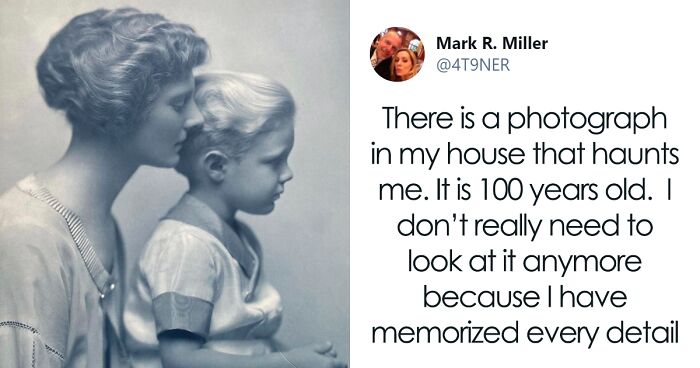
That is what happened when Mark Miller shared a nearly 100-year-old family photograph connected to his great-aunt Leslie and the woman she loved, Lucia Larranga. The image, according to the story that circulated widely online, showed Leslie holding her son, while Luciathe woman described as her loverstood behind the camera. To Miller, the picture was more than a family keepsake. It was evidence. It was memory. It was a small, silver-toned argument against the idea that lesbian relationships did not exist in earlier generations.
And that is why the internet reacted so strongly. The photograph did not arrive as a dramatic movie scene or a museum exhibit with velvet ropes. It appeared as a family photo: ordinary, domestic, and quietly radical. In a world that often treats LGBTQ history as something that began at Stonewall and then immediately jumped to rainbow merchandise, this picture reminded people that queer people were building homes, raising children, loving each other, and making complicated choices long before the law, the culture, or the family scrapbook knew what to do with them.
The Story Behind Leslie, Lucia, And A Family Built Against The Rules
According to Miller’s account, Leslie was born in San Francisco in 1895 and met Lucia in 1917. Their relationship unfolded in a time when same-sex marriage was not legally available, lesbian identity was rarely discussed in public, and women’s lives were often expected to follow a narrow script: marry a man, have children, and keep the household running smoothly enough that no one asked inconvenient questions.
Leslie and Lucia, however, wanted a family. The story says that Leslie married Kenneth Moore, a junior army officer, with an understanding that the marriage would help make motherhood possible. Their son Robert was born in 1918, during the Spanish flu pandemic, and later grew up in a household shaped by Leslie, Lucia, and another woman, Louise Taylor, who became part of their family after a trip to Hawaii.
By today’s standards, people might describe this arrangement as queer co-parenting, chosen family, or a creative family structure. In the early twentieth century, there was no neat public language for it. That absence of language matters. When a society does not have words for a relationship, it often pretends the relationship does not exist. The result is historical silence, and silence is one of erasure’s favorite outfits.
That is why Miller’s photograph felt so powerful. It gave shape to a relationship that might otherwise have been flattened into “roommates,” “companions,” “close friends,” or the classic historian’s shrug: “unmarried women who lived together for unknown reasons.” The unknown reasons, as it turns out, were sometimes love, loyalty, desire, partnership, and the everyday work of keeping a family alive.
Why Old Photographs Matter In LGBTQ Family History
Family photographs are tricky little objects. They look simple, but they are packed with clues. Who is standing close to whom? Who took the photo? Who is missing? Who is labeled carefully, and who is described only as “friend”? Why did this picture survive when so many others disappeared?
Archivists often remind researchers that photographs should be read like documents. A photograph is not just a face; it is evidence of a relationship, a place, a social world, and sometimes a secret. For queer history, photographs can be especially important because many LGBTQ people had to protect themselves by leaving fewer written traces. A love letter could be dangerous. A diary could be found. A public declaration could mean losing work, housing, children, or family support. A photograph, however, could hide in plain sight.
That is part of the beauty of Miller’s family image. On the surface, it may look like a mother-and-child photograph from another era. With the family context restored, it becomes something richer: a record of lesbian love, co-parenting, and resilience. It also asks viewers to reconsider countless other old pictures sitting in albums across America. How many “best friends” were partners? How many “aunts” were lovers? How many women who were remembered as eccentric were simply living as honestly as their century allowed?
Lesbian Relationships Did Not Suddenly Appear In Modern Times
One reason the story went viral is that it pushes back against a lazy myth: that LGBTQ identities are new. They are not. The words, politics, legal rights, and public visibility have changed, but same-sex love has always existed.
In nineteenth- and early twentieth-century America, romantic relationships between women often appeared under social categories such as “romantic friendship” or “Boston marriage.” A Boston marriage usually referred to two women living together in a long-term household, often financially independent from men. Some of these relationships were romantic or sexual; others were not. The important point is that women created domestic lives together at a time when marriage, property, education, and professional opportunity were heavily shaped by gender expectations.
Famous examples include writer Sarah Orne Jewett and Annie Adams Fields, whose partnership has become one of the best-known examples of the Boston marriage tradition. Photographer Alice Austen and schoolteacher Gertrude Tate also lived together for decades on Staten Island, and Austen’s photographs of women embracing, posing in male drag, and living outside conventional femininity have become important to LGBTQ visual history.
These histories help us understand Leslie and Lucia’s story without forcing it into a modern template. We can honor their relationship while admitting that the past used different words and carried different dangers. The point is not to paste twenty-first-century labels onto every old friendship. The point is to stop automatically sanding queer possibilities off the historical record.
The Problem With “Just Friends”
Ah yes, “just friends”the phrase that has done more historical heavy lifting than a team of exhausted librarians.
For generations, intimate relationships between women were often minimized because society assumed women were naturally affectionate, emotionally expressive, and sexually passive. Two women could hold hands, share a home, exchange passionate letters, sleep in the same bed, and still be described as unusually devoted companions. Sometimes that description was accurate. Sometimes it was a convenient way to avoid scandal. Sometimes it was a refusal to see what was right in front of everyone.
This does not mean every intense female friendship in history was lesbian. That would be careless. But it is equally careless to assume none of them were. The better approach is to look at context: family testimony, letters, household arrangements, financial decisions, parenting roles, community rumors, legal records, and, yes, photographs.
In Miller’s case, the family story gives the photograph its power. The image alone might be ambiguous. Combined with the preserved account of Leslie and Lucia’s relationship, it becomes a rare and moving record of a queer family structure from nearly a century ago.
Chosen Family Before The Phrase Became Popular
One of the most striking parts of the story is that Leslie and Lucia did not merely fall in love; they built a family. That distinction matters.
Queer history is often told through moments of resistance: raids, court cases, protests, police harassment, fired workers, banned books, and brave public speeches. Those stories are essential. But LGBTQ history is also made at kitchen tables. It is made in childcare, rent payments, holiday meals, household chores, inside jokes, and the question every family eventually asks: “Who forgot to buy milk?”
Robert, the child in the story, was reportedly raised by women who found a way to care for him outside the standard model of the time. That detail disrupts another stereotype: the idea that queer life is separate from family life. In reality, queer people have always been parents, aunts, guardians, neighbors, teachers, and caregivers. They have raised children in official and unofficial ways, often without recognition and sometimes under threat.
The story also complicates the idea that family history must be neat to be meaningful. Leslie’s marriage to Kenneth Moore, the birth of Robert, Lucia’s role, Louise Taylor’s later place in the householdnone of it fits into a tidy genealogy chart. But real families rarely do. Genealogy may love straight lines, but actual human beings prefer loops, detours, and surprise guest stars.
How Archives Help Fight Lesbian Erasure
The emotional response to Miller’s post also reflects a larger truth: lesbian history has often survived because people saved things. A photograph. A letter. A magazine. A bar flyer. A button. A diary. A carefully labeled envelope.
Institutions such as the Lesbian Herstory Archives in Brooklyn, the GLBT Historical Society in San Francisco, ONE Archives at the USC Libraries, the Smithsonian, the Library of Congress, and the National Archives all preserve materials that help reconstruct LGBTQ life across generations. These collections matter because official records often documented queer people only when the state was policing, excluding, or pathologizing them. Community archives, by contrast, preserve love, humor, friendship, art, organizing, and daily life.
That is why family photographs are so important. They can fill gaps that official documents leave empty. A census may list two women as boarders. A photograph may show them seated together like spouses. A death certificate may erase a partner. A box of letters may restore her name.
When Miller shared his family’s photograph, he did what good archives do: he connected evidence with context. Without context, a picture can be misread. Without evidence, a story can be dismissed. Together, they create memory strong enough to resist erasure.
Why The Internet Loved This Story
The story spread because it offered something people crave: proof that love existed before permission arrived.
Modern LGBTQ rights are often discussed through legal milestones. In the United States, Massachusetts became the first state to allow same-sex marriage in 2004, and the Supreme Court’s Obergefell v. Hodges decision made marriage equality nationwide in 2015. These moments were historic, but they did not invent queer love. They recognized, very late, what people had already been living.
That is the emotional force of a 100-year-old photograph. It says: before Pride campaigns, before hashtags, before marriage equality, before corporate rainbow logos discovered June, there were people quietly choosing each other. They may not have had legal protection, but they had devotion. They may not have had public language, but they had private certainty. They may not have had approval, but they had a life.
And, frankly, that is enough to make even the most emotionally unavailable corner of the internet blink a little too long at the screen.
What This Story Teaches Us About Reading Family History
Stories like Leslie and Lucia’s encourage us to read family history with more curiosity and less assumption. Not every unmarried aunt was lonely. Not every lifelong “companion” was merely convenient. Not every unconventional household was a failure to follow tradition. Sometimes it was a successful escape from tradition.
For families, this means asking better questions. Who kept house together? Who appears in every holiday photograph? Who was included in wills, letters, travel albums, and children’s memories? Who did older relatives speak about with unusual warmth or unusual silence? Both can be clues.
It also means treating queer ancestors with dignity. Their stories should not be turned into gossip or flattened into scandal. Many people lived carefully because they had to. If we are lucky enough to discover them now, the goal should not be to expose them but to restore them.
Related Experiences: When A Family Photo Changes Everything
Many people who encounter stories like this begin looking at their own family albums differently. A photograph that once seemed ordinary suddenly becomes a puzzle with better lighting. There is the great-aunt who never married but shared a house with the same woman for forty years. There is the “roommate” who appears in vacation photos, birthday dinners, and hospital visits. There is the family friend whose name was spoken with tenderness but never fully explained. These details may not prove a romantic relationship on their own, but they invite a more honest investigation.
One common experience is the shock of realizing that family silence was not the same as absence. Older relatives may have avoided naming a relationship because they were protecting someone, protecting themselves, or simply using the limited language available to them. In some families, the truth was known but politely wrapped in euphemism. In others, younger generations discover it only through letters, photographs, or legal papers after everyone involved has passed away. The emotional effect can be complicated: joy at finding a queer ancestor, sadness that they had to hide, and frustration that the family story was edited for so long.
Another related experience is the sudden feeling of connection. For LGBTQ people, discovering queer relatives can be deeply affirming. It says, in a quiet but powerful way, “You are not the first.” That matters. Many queer people grow up feeling like they appeared out of nowhere, as if they are the family plot twist. A photograph like Leslie and Lucia’s turns that idea upside down. It suggests that queerness may have been present all along, tucked into albums, recipes, postcards, and stories told halfway.
There is also a lesson here for anyone preserving family history. Write names on the backs of photographs. Record oral histories. Ask elders about the people in the picture before memory becomes guesswork. Store photos carefully, digitize them when possible, and share copies with trusted relatives. Most importantly, preserve context. “Aunt Mary and Helen, 1932” is useful. “Aunt Mary and Helen, who lived together in Chicago and raised my mother after the war” is priceless.
These experiences show why the viral photograph resonated beyond one family. It was not only about Leslie and Lucia. It was about every person who has looked at an old image and wondered what story was missing. It was about every family that has inherited silence and decided, gently but firmly, to ask better questions. Sometimes history does not arrive as a textbook. Sometimes it arrives as a faded photo, a name in pencil, and the realization that love has been standing in the frame the whole time.
Conclusion: A Photograph Can Be Small And Still Change The Story
Mark Miller’s century-old family photograph became memorable because it transformed private memory into public recognition. It showed that lesbian relationships were not a modern invention, a political trend, or a footnote waiting for permission. They were part of family life, domestic life, and American history.
Leslie and Lucia’s story is moving not because it was simple, but because it was real. It included love, strategy, parenting, risk, and resilience. It reminds us that the past was never as straight as some people like to imagine. It was full of people finding ways to love within, around, and sometimes directly through the walls built around them.
So the next time someone opens a dusty family album, maybe they should pause before saying, “Oh, they were just friends.” Maybe they were. Maybe they were not. Either way, the better question is: what did they mean to each other?
Because sometimes a photograph is not just a photograph. Sometimes it is a family telling the truth a hundred years late.
SEO Tags