
Driving on the right side of the road sounds easy until your brain, which has been confidently running on “left-side autopilot,” suddenly realizes it has been promoted to international traffic coordinator. The steering wheel may be on the other side, the passing lane may feel backward, roundabouts may look like choreography, and your first right turn might feel like a small driving exam watched by every pigeon on the sidewalk.
The good news: adjusting to driving on the right side of the road is absolutely learnable. Millions of travelers, expats, students, business drivers, and road-trip dreamers make the switch every year. The key is not bravery alone. It is preparation, slower decision-making, lane discipline, mirror awareness, and a willingness to practice before you fling yourself into rush-hour traffic like the main character in an action movie.
This guide explains how to adjust safely and confidently, whether you are visiting the United States, Canada, most of continental Europe, or another country where traffic keeps right. You will learn how to position the car, manage intersections, handle turns, avoid common mistakes, and build muscle memory without terrifying your passengers into gripping the door handles like mountain climbers.
Why Driving on the Right Side Feels Strange at First
If you learned to drive in a left-side traffic country, your habits are deeply wired. You instinctively know where to look first, how far to stay from the curb, which lane feels “normal,” and where oncoming traffic should appear. When switching to right-side driving, those habits do not disappear; they compete with the new rules.
The hardest part is not usually steering. Modern cars are designed to be intuitive. The real challenge is spatial orientation. Your brain must relearn lane placement, mirror scanning, turn angles, and how to judge the center line from a different seating position. For example, if you are used to sitting on the right side of the car, driving a left-hand-drive vehicle may make the right edge of the car feel wider than it is. That can lead to drifting toward the curb or parking too far from it.
Another challenge is decision speed. In familiar driving, you make dozens of small decisions automatically. In unfamiliar right-side traffic, each decision takes a fraction longer. That is normal. The safest strategy is to reduce pressure: drive slower, plan earlier, avoid distractions, and give yourself more space than usual.
Step 1: Study the Basic Rule Before You Start
The core rule is simple: keep to the right side of the road and pass on the left unless local rules say otherwise. In the United States, this principle appears in state driver handbooks and traffic laws. On multi-lane roads, slower traffic usually stays right, while the left lane is generally used for passing, preparing for a left turn, or following posted lane directions.
Before driving, read a short local driver guide for the state or country you are visiting. Look for rules on turning right at red lights, lane markings, school buses, pedestrian crossings, roundabouts, toll roads, speed limits, and mobile phone use. Road signs may look familiar, but local customs can still surprise you. A sign is not decoration; it is the road politely telling you what mistake not to make.
Step 2: Choose the Easiest Car You Can
If you are renting a car, make life simple. Choose an automatic transmission if available, especially for your first few days. Switching road sides is enough mental gymnastics without also shifting gears with the opposite hand. Pick a vehicle that is not too wide, not too powerful, and not packed with confusing controls that require a small engineering degree.
Before leaving the rental lot, adjust the seat, mirrors, steering wheel, climate controls, navigation, and phone connection. Learn where the turn signals and windshield wipers are. Many drivers accidentally activate the wipers when they mean to signal. It is harmless, but it does announce to the world: “I am new here, and my windshield is emotionally prepared.”
Step 3: Sit in the Car and Rehearse the Basics
Spend five quiet minutes in the parked car before moving. Say the rule out loud: “Drive on the right. Look left first when entering traffic. Stay near the center line, not the curb.” This sounds silly, but verbal reminders help override old habits.
Practice reaching for the gear selector, checking mirrors, signaling, and looking over the correct shoulder. Notice your position in the lane. In a left-hand-drive car, the driver sits closer to the center line on a two-way road. That position is useful because it helps you judge oncoming traffic and lane boundaries. If you are used to the opposite seat, remind yourself that your body should be near the center of the road, not floating toward the sidewalk.
Step 4: Start in a Low-Stress Area
Your first practice route should not be downtown, a mountain road, a freeway interchange, or a place where five lanes merge while everyone behaves like they are late for a moon launch. Begin in a quiet neighborhood, empty parking lot, business park, or suburban street with clear markings.
Practice starting, stopping, turning right, turning left, changing lanes, parking, and pulling out from the curb. Focus on smooth control. The goal is not speed; the goal is teaching your brain that the right side is the new normal. Ten calm minutes in a parking lot can save you from ten sweaty minutes at a major intersection.
Step 5: Use Lane Position as Your Anchor
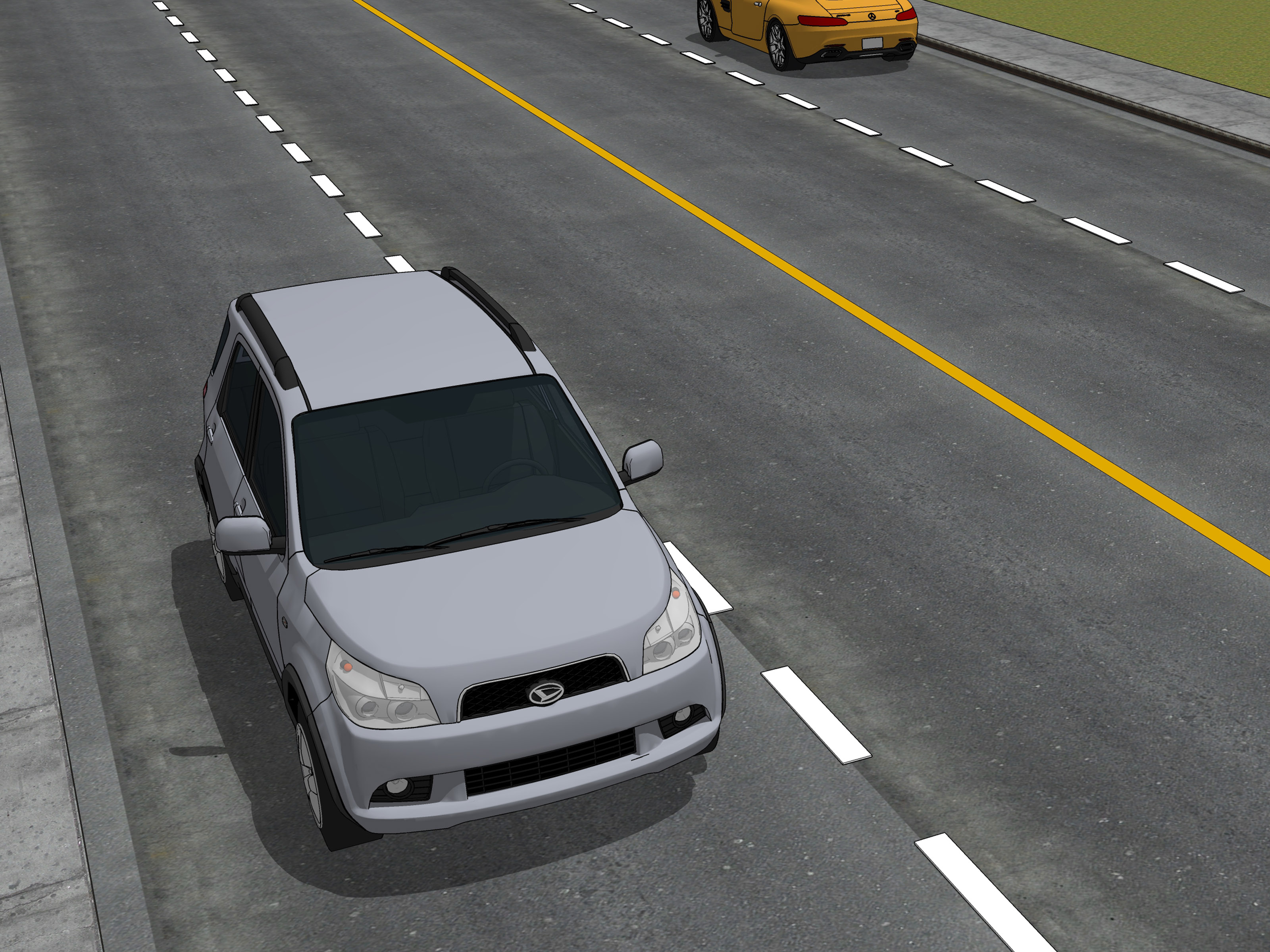
Lane position is the foundation of safe right-side driving. On two-way roads, stay in the right lane unless passing or preparing for a left turn. On highways, avoid camping in the left lane. Move right when you are not overtaking. This improves traffic flow and reduces the chance of faster vehicles approaching unexpectedly from behind.
A practical trick is to use the lane markings as visual rails. Keep the center line or lane divider slightly to your left. Keep the road edge, curb, or shoulder to your right. If you feel yourself drifting, do not jerk the wheel. Gently correct and re-center. Small corrections are safer than dramatic steering moves.
Step 6: Be Extra Careful With Turns
Turns are where many side-switch mistakes happen. When turning right, stay close to the right edge and turn into the nearest right lane unless signs or markings allow otherwise. Do not swing wide into another lane. Before turning, check for pedestrians, cyclists, scooters, and vehicles in your blind spot.
When turning left, remember that you cross oncoming traffic unless you have a protected signal or a road layout that says otherwise. Look carefully, yield when required, and turn into the correct lane on the right side of the road you are entering. A helpful phrase is: “Right turn tight, left turn wide enough.” In other words, right turns are close and direct; left turns cross the intersection and finish on the right side of the new road.
Example: Turning From a Two-Way Street
Imagine you are on a two-way street and want to turn left. You should position the car near the center line, signal early, wait for a safe gap, then turn into the lane to the right of the center line on the new street. Do not accidentally drift into the left-side lane after the turn. That is the old habit trying to sneak back in wearing sunglasses.
Step 7: Relearn Intersections
Intersections require patience. Your old scanning pattern may not match the new traffic flow. In right-side traffic, vehicles closest to you may approach from different angles than you expect. When entering a road, crossing traffic, or turning, pause long enough to look both ways twice.
At stop signs, come to a complete stop where required. At traffic lights, obey lane arrows and posted restrictions. In many U.S. locations, right turn on red may be allowed after stopping, but not everywhere and not when a sign prohibits it. Always yield to pedestrians and cyclists before turning.
Step 8: Approach Roundabouts Slowly
Roundabouts can feel confusing when you are adjusting to right-side driving. In countries where traffic keeps right, roundabout traffic usually moves counterclockwise. You typically yield to vehicles already in the roundabout, enter to the right, and exit using the correct lane.
Reduce speed before entering. Read the signs early. Choose your lane before the roundabout, not inside it. If you miss your exit, do not panic. Continue around safely and try again. A roundabout is not a moral test; it is just a circular road with opinions.
Step 9: Build a Mirror and Blind-Spot Routine
When everything feels reversed, mirrors become your best friends. Adjust them before driving so you have the widest practical view. Check the rearview mirror often, use side mirrors before any lane change, and turn your head to check blind spots. Technology such as blind-spot monitoring is helpful, but it does not replace your eyes.
Develop a simple routine: mirror, signal, shoulder check, move. Repeat it every time. Consistency matters because unfamiliar traffic can overload your attention. A routine gives your brain a checklist to follow even when the road gets busy.
Step 10: Let Navigation Help, But Do Not Let It Boss You Around
GPS is useful when driving on the right side for the first time because it gives early warnings for turns and lane choices. Set the route before moving. Use voice directions so you do not stare at the screen. If you miss a turn, let the navigation reroute. Do not make sudden lane changes just because a robotic voice calmly announced, “Turn now,” as if physics were optional.
It is often safer to take a longer, simpler route than a shorter route filled with complex turns, tight city lanes, and surprise one-way streets. When you are new to the road system, easy beats clever.
Step 11: Avoid Driving When Tired
Fatigue makes old habits stronger. If you land after a long flight, step into a rental car, and immediately drive on the opposite side of the road, your brain may not be operating at championship level. Consider taking a taxi, rideshare, hotel shuttle, or public transportation for the first trip if you are exhausted.
If you must drive, keep the route short, avoid night driving, and take breaks. Tired drivers react more slowly and make more lane-position errors. Add unfamiliar right-side traffic, and the risk increases. Coffee helps alertness, but it does not install a new operating system in your brain.
Step 12: Watch Pedestrians and Cyclists Closely
Pedestrians and cyclists are especially important when turning. In right-side traffic, cyclists may ride near the right edge or in bike lanes. Before turning right, check the curbside area and your right blind spot. Before turning left, watch for pedestrians in the crosswalk and oncoming vehicles.
In busy cities, people may step into crosswalks quickly, delivery cyclists may appear beside you, and scooters may move faster than expected. Slow down around intersections, schools, parking lots, and shopping areas. If you are unsure whether someone is about to cross, assume they might.
Step 13: Understand Passing and Freeway Driving
On highways and freeways, the basic rhythm is: enter from the right, merge smoothly, keep right when traveling slower, and pass on the left when safe. Use acceleration lanes to match traffic speed before merging. Do not stop at the end of a ramp unless traffic conditions force you to.
Once on the highway, maintain a safe following distance. Signal well before changing lanes. Check mirrors and blind spots. Return to a right lane after passing when safe and legal. If you feel overwhelmed, choose the right lane, maintain a steady speed, and exit when practical. There is no award for staying on the freeway while your nervous system files a complaint.
Step 14: Use a Passenger as a Co-Pilot
A calm passenger can be very helpful. Ask them to remind you to keep right, watch for signs, and help with navigation. However, choose your co-pilot wisely. You want someone who says, “The next turn is in half a mile,” not someone who gasps dramatically every time a leaf crosses the road.
Agree on simple phrases before starting. For example: “Keep right,” “Check left,” “Next lane,” or “Slow down.” Short instructions reduce confusion. Long lectures during traffic do not help, even if they are technically excellent lectures.
Step 15: Give Yourself a Three-Day Adjustment Window
Many drivers feel noticeably better after a few short drives. The first day is about survival and awareness. The second day is about smoother lane placement. By the third day, your brain often begins to accept the new traffic pattern. That does not mean you should become careless. It means you can start driving more naturally while still keeping your checklist active.
The biggest danger often comes after you feel comfortable. That is when old habits may return during stress, fatigue, or empty roads. Be especially careful when leaving parking lots, gas stations, rural roads, and quiet streets. Without other traffic to guide you, it is easier to drift back to the familiar side.
Common Mistakes to Avoid
Drifting Toward the Curb
This happens when the driver misjudges the vehicle width from the unfamiliar seat. Correct it by using lane markings and practicing in a low-stress area.
Turning Into the Wrong Lane
This is most common after left turns or when leaving parking lots. Pause before entering the road and say, “right side” before moving.
Looking the Wrong Way First
At intersections, old habits can make you scan in the wrong order. Look both ways twice, especially when crossing traffic or entering a roundabout.
Following GPS Too Aggressively
If you miss a turn, keep going. Sudden corrections are more dangerous than a two-minute detour.
Driving Too Soon After Travel
Jet lag, stress, and unfamiliar roads are a poor combination. Rest first when possible.
Practical Checklist Before Your First Drive
- Confirm local driving laws, license rules, and insurance requirements.
- Choose an automatic car if possible.
- Adjust mirrors, seat, steering wheel, and navigation before moving.
- Practice in a quiet area before entering busy roads.
- Repeat: drive on the right, pass on the left.
- Use the mirror-signal-shoulder-check routine for every lane change.
- Take breaks and avoid driving tired or distracted.
Real-World Experiences: What It Actually Feels Like to Adjust
The first experience many drivers describe is not fear exactly, but mental noise. You may know the rule perfectly: drive on the right side of the road. Yet the first time you pull out of a hotel parking lot, your hands may feel confident while your brain yells, “Are we sure about this?” That moment is normal. The trick is to slow the entire process down. Stop fully. Look both ways. Identify the correct lane. Then move.
A common experience is feeling too close to the curb. Drivers who are used to sitting on the opposite side of the vehicle often overcorrect because the passenger side feels huge and mysterious. One helpful method is to glance at the lane markings instead of staring at the curb. Keep the driver’s seat visually aligned closer to the center of the lane. After several miles, your sense of width improves.
Another memorable adjustment is the first busy intersection. Left turns can feel especially strange because you must cross traffic and finish on the right side of the road. A good approach is to wait for a clear, generous gap rather than accepting the kind of tight opening you might take at home. You are not trying to impress anyone with your reflexes. You are teaching your brain a new traffic language.
Many travelers also discover that parking lots are surprisingly tricky. Because traffic is slower and lane markings may be faded, old habits sneak in. You might exit a gas station and briefly aim for the wrong side before correcting. This is why quiet roads and empty lots are excellent practice spaces. They reveal mistakes at low speed, where learning is safe and inexpensive.
Highway driving often feels easier than city driving once you are merged. The lanes are clearer, traffic flows in one direction, and the rule is simple: keep right unless passing. The stressful part is usually entering and exiting. Read signs early, signal clearly, and avoid last-second lane changes. If your exit appears too suddenly, skip it. The GPS may sigh internally, but it will recover.
Passengers can make the experience better or worse. A helpful passenger gives calm reminders and manages navigation. An anxious passenger narrates every nearby vehicle like a sports commentator. If possible, set expectations before driving. Ask for quiet, short instructions. The driver needs focus, not a live podcast titled “Things That Might Go Wrong.”
After a day or two, most drivers notice small wins. You stop reaching for the wrong side of the car. Turns feel smoother. Lane position becomes less awkward. You begin reading traffic naturally instead of translating every movement. Still, stay humble. The moment you relax too much is often when you leave a quiet driveway and forget which lane you need. A simple verbal cue, “right side,” remains useful long after you feel comfortable.
The best overall experience comes from treating the adjustment as a skill, not a personality test. Confident drivers are not fearless; they are prepared. They choose simple routes, drive rested, check mirrors, respect pedestrians, and give themselves permission to be beginners for a few days. With practice, driving on the right side of the road becomes less like solving a puzzle and more like driving anywhere else: eyes up, hands steady, brain engaged, snacks waiting at the destination.
Conclusion
Learning how to adjust to driving a car on the right side of the road is mostly about replacing automatic habits with deliberate ones until the new pattern feels natural. Start slowly, choose simple routes, keep right, pass left, watch intersections carefully, and use a consistent mirror and blind-spot routine. The first drive may feel awkward, but awkward is not failure. It is your brain updating its map.
Whether you are visiting the United States, relocating for work, studying abroad, or taking a long-awaited road trip, the safest approach is patient preparation. Respect local laws, avoid rushing, and remember that every confident right-side driver once had a first day too. Drive calmly, laugh at small mistakes, and let practice do what practice does best: turn confusion into confidence.
SEO Tags
Note: This article is for general educational guidance. Always follow the traffic laws, signs, and licensing requirements of the place where you are driving.