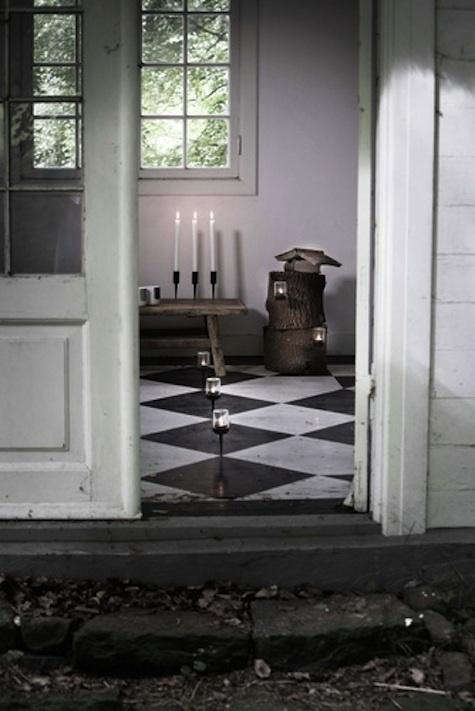

Some home accessories whisper. Others politely clear their throat. The Pipe Candleholders by Pernille Vea for Menu walk into the room wearing a wool cloak, carrying a hammer, and saying, “Where shall we put the fire?” These are not delicate little candle cups meant to sit nervously on a doily. They are cast-iron, spike-ended, Viking-inspired candleholders designed to be knocked into wood, soil, beams, stumps, walls, fences, and other sturdy surfaces that can handle a little drama.
Designed by Danish designer Pernille Vea for the Scandinavian design brand Menu, the Pipe Candleholders turn a simple candle into a small architectural moment. They are functional, sculptural, rustic, minimalist, and just a bit mischievous. In a world full of scented candles named things like “Cloudy Cashmere Afternoon,” these candleholders bring the energy of “I built this cabin myself, and yes, there is soup.”
At first glance, the design is almost primitive: a spike on one end, a candle socket on the other. But that is the charm. The Pipe Candleholders do what great Danish design often does best: they remove the unnecessary, honor the material, and let function become the decoration. No scrollwork. No glitter. No floral ceramic swans. Just iron, flame, shadow, and a little Norse confidence.
What Are the Pipe Candleholders by Pernille Vea?
The Pipe Candleholders are a series of cast-iron candle holders designed to be driven into a suitable surface rather than placed on top of one. Instead of behaving like traditional tabletop candlesticks, they work more like a practical lighting tool from another age. Imagine a blacksmith, a farmhouse, a dark barn, and someone saying, “We need light over there.” The solution? Hammer a candleholder into a wooden post. Done. Elegant? Actually, yes.
The design was inspired by rough candleholders from the Viking age, when lighting needed to be portable, sturdy, and useful in places where modern convenience had not yet arrived. The Pipe design updates that old idea for contemporary homes, gardens, patios, cabins, restaurants, and atmospheric corners that need more personality than a standard lamp can provide.
The series has appeared in several formats, including versions for tall candles and hurricane-style holders for tea lights. Some versions are vertical, some horizontal, and hurricane models include glass protection around the flame. This makes the collection unusually versatile: it can feel rugged outdoors, sculptural indoors, or ceremonial when repeated in a row along a wall, fence, beam, or log.
Who Is Pernille Vea?
Pernille Vea is a Danish industrial and product designer known for creating household objects with personality, utility, and a distinctly Nordic sense of restraint. She graduated from the Danish School of Design in 1996 with a focus on furniture and product design, and her work has been associated with inventive shapes, approachable function, and everyday objects that do more than merely sit there looking expensive.
Vea’s design language often balances practicality with play. That balance matters with the Pipe Candleholders because the idea could easily have become theatrical furniture for people who say “bespoke” too often. Instead, the result is surprisingly usable. It is bold but not silly, rustic but not fake-rustic, modern but not cold. In other words, it has range.
Menu, Audo Copenhagen, and the Scandinavian Design Connection
The Pipe Candleholders were produced for Menu, the Danish design brand long associated with clean-lined furniture, lighting, and home accessories. Menu later became part of Audo Copenhagen, a broader Danish design house that united Menu and by Lassen. This matters because the candleholders belong to a specific design tradition: Scandinavian objects that treat daily life as worthy of thoughtful design.
Scandinavian design is often summarized with words like simplicity, minimalism, function, and natural materials. That is accurate, but it can sound too polite. The better way to say it is this: a well-designed object should earn its place in the room. It should work hard, age well, and avoid behaving like it is auditioning for a reality show. The Pipe Candleholders fit that philosophy beautifully. They are practical lighting accessories, but they also change the mood of a space instantly.
Design Inspiration: A Viking Idea Reimagined
The best part of the Pipe Candleholders is the origin story. Many modern accessories claim to be “inspired by nature,” which sometimes means someone made a beige bowl and named it after fog. Here, the inspiration is more specific and more interesting: ancient spike candleholders that could be mounted wherever light was needed.
That historical reference gives the design its backbone. The spike is not decorative. It is the point of the object. It lets the candleholder become part of the architecture, the landscape, or the furniture. Hammer it into a log, and suddenly the log becomes a candle stand. Drive it into a fence post, and the fence becomes evening lighting. Use several along a beam, and the entire beam becomes a quiet, glowing installation.
The Pipe Candleholder is therefore not just an accessory. It is a tiny design intervention. It asks the owner to participate. You do not simply unwrap it and place it on a shelf. You choose a surface, consider the angle, commit to the placement, and create a little scene. That is rare in home decor, where many products arrive fully decided and slightly bossy.
Materials and Construction: Why Cast Iron Works
The choice of cast iron is central to the Pipe Candleholders’ appeal. Cast iron feels honest. It has weight, texture, and durability. It does not pretend to be delicate. It also pairs naturally with wood, stone, brick, linen, leather, and other materials commonly found in Scandinavian, rustic, industrial, farmhouse, Japandi, and modern organic interiors.
Cast iron also helps the design feel grounded. A shiny chrome version might look too slick. A thin aluminum version might feel flimsy. Ceramic would be charming until the first enthusiastic hammer tap created a tragic pottery moment. Cast iron gives the Pipe Candleholders their seriousness. They look like objects with a job.
The finish also allows the candleholders to work in many color palettes. Against pale wood, they create contrast. Against dark-stained wood, they become moody and architectural. Against stone or greenery, they feel elemental. Add a flame, and the entire object changes from hardware to atmosphere.
Indoor Styling Ideas
1. Use a Log as a Candle Base
One of the most charming indoor uses is to drive the Pipe Candleholders into a piece of firewood or a small log. This creates a portable centerpiece that feels rustic without becoming a full lumberjack costume. Place it on a dining table, mantel, console, or hearth, and it immediately adds texture and warm light.
For a clean modern look, use one smooth piece of pale birch or oak. For a cabin feel, choose a darker, rougher log with visible bark. Just make sure the base is stable and large enough that it will not roll, wobble, or behave like a candlelit bowling pin.
2. Create a Wall-Mounted Candle Moment
Because the design can be mounted into wood, it can work beautifully on a wooden wall panel, exposed beam, or reclaimed timber feature. A single candleholder can create a subtle accent. A row of them can create a dramatic rhythm of light and shadow.
This approach is especially effective in dining rooms, entryways, cabins, screened porches, and rooms with minimal decor. The candleholders become both lighting and sculpture. They do not need much company. In fact, they prefer not to be surrounded by thirteen tiny objects from a discount shelf. Give them space. Let them brood handsomely.
3. Style Them With Scandinavian Minimalism
The Pipe Candleholders pair well with neutral interiors, natural textiles, pale woods, handmade ceramics, and matte black accents. Try them with linen napkins, stoneware plates, a simple wooden bench, or a wool throw. The goal is not to make the room look staged; the goal is to make it feel calm, warm, and intentionally lived in.
If your room already has a lot of visual noise, the candleholders can help anchor the space. Their simple line and dark material provide contrast without clutter. Think of them as punctuation marks in the room: small, strong, and very capable of changing the tone of the sentence.
Outdoor Styling Ideas
1. Fence Posts and Garden Paths
Outdoors, the Pipe Candleholders feel completely at home. Mounted into a fence post, they can frame a garden dinner, mark a pathway, or create a glowing boundary around a patio. Their Viking-inspired character makes them especially appealing in natural settings where ordinary lanterns might feel too polished.
For outdoor use, hurricane versions with glass protection are the more practical choice because they help shield the flame from wind. Even then, candles should be used carefully and supervised. The design may look like it was born in a saga, but your homeowner’s insurance does not care about sagas.
2. Tree Stumps and Outdoor Tables
A tree stump can become an instant candle pedestal with the Pipe design. This works beautifully for backyard parties, garden weddings, outdoor lounges, or rustic restaurant patios. The result is casual but memorable, as though the landscape itself decided to host dinner.
When styling outdoors, repeat the candleholders in odd numbers for a natural look. Three along a stump, five along a beam, or several at varying heights can create a layered glow. Avoid placing flames near dry leaves, fabric, low branches, or anything that might interpret “ambiance” as an invitation to combust.
Why These Candleholders Still Feel Fresh
Although the Pipe Candleholders have been around for years and may now be found more often through vintage, resale, or specialty design sources than standard retail channels, the concept still feels current. In fact, it may feel more relevant now than when it first appeared.
Why? Because many people are tired of disposable decor. They want objects with story, weight, and longevity. The Pipe Candleholders offer all three. They are not trend-chasing accessories in a seasonal color called “mushroom oat mist.” They are durable, tactile, and rooted in a historical idea. That gives them staying power.
They also align with the renewed interest in warm minimalism, slow living, handmade materials, and indoor-outdoor design. A small cast-iron candleholder that can move from cabin to garden to dining room fits the way people increasingly think about home: flexible, personal, and connected to natural materials.
Practical Tips Before You Use Them
Because the Pipe Candleholders are designed to be hammered or knocked into surfaces, placement matters. Choose solid wood, a stable stump, a beam, or another appropriate surface that can safely hold the spike. Avoid fragile furniture, thin boards, painted antiques, rental-property trim, or anything you would be sad to explain later.
Use the right candle size for the holder. A candle that is too loose can tilt or drip. A candle that is too wide may crack, shave, or sit unevenly. For hurricane versions, use the recommended tea light or candle type so the glass shade can do its job properly.
Always follow basic candle safety: never leave a burning candle unattended, keep candles away from flammable materials, keep them out of reach of children and pets, and extinguish them before leaving the room. Trim wicks before lighting and place candles where drafts will not push the flame sideways. The Pipe Candleholders may look tough, but the flame is still an open flame, not a decorative suggestion.
Are Pipe Candleholders Right for Your Home?
The Pipe Candleholders are ideal for people who like accessories with character. If your taste leans toward Scandinavian design, rustic modern interiors, cabin decor, industrial accents, or sculptural objects, they will probably make your heart do a tiny design-cartwheel.
They may not be the best choice if you prefer highly polished glamour, delicate crystal, or decor that never asks for tools. They also require thoughtful placement, which is part of their charm but not everyone’s idea of a relaxing Saturday. Some people want a candleholder they can set down in two seconds. Others want to gently hammer iron into wood and feel like a tasteful Viking. Know yourself.
How to Decorate With Them Without Overdoing It
The main styling mistake with dramatic accessories is trying to make everything around them equally dramatic. Do not pair the Pipe Candleholders with ten other statement pieces, antlers, giant lanterns, oversized signage, and a decorative wheel that nobody can explain. Let the candleholders be the interesting thing.
For a dining table, use one log-mounted arrangement with simple tableware. For a mantel, place two or three at different heights and balance them with a ceramic vase or a stack of books. For a patio, line them along one visual path rather than scattering them everywhere like medieval runway lights.
The design works best when it feels discovered rather than displayed. That is the magic. It should look as if the candleholder belongs exactly where it is, not as if it has been placed there by a nervous stylist with a clipboard.
Buying Notes: New, Vintage, and Resale
Because Menu has evolved into Audo Copenhagen and product lines change over time, shoppers may encounter Pipe Candleholders through resale marketplaces, vintage Scandinavian design shops, specialty home stores, or old-stock retailers. Listings may describe them as Menu Pipe Candleholders, MENU Denmark candleholders, Pernille Vea candleholders, cast-iron Pipe candleholders, vertical Pipe holders, horizontal Pipe holders, or Pipe Hurricane holders.
When buying, check the version carefully. Some are made for tall candles; others are hurricane-style holders for tea lights. Some mount vertically, while others mount horizontally. Look at dimensions, material, condition, and whether the listing includes original packaging or multiple pieces. If buying secondhand, inspect for rust, cracks, missing glass, bent spikes, or residue inside the candle cup.
A little patina can be attractive on cast iron, but structural damage is another matter. These objects are meant to hold fire, so “probably fine” is not the most comforting product condition. Choose pieces that are stable, clean, and appropriate for actual use.
Experience Notes: Living With a Candleholder That Refuses to Be Boring
The first experience of using a Pipe Candleholder is different from using a normal candleholder because it begins with a decision. A regular candlestick asks, “Where should I sit?” The Pipe Candleholder asks, “Where should I live?” That tiny shift changes everything. You start noticing surfaces differently: a leftover piece of firewood, the edge of a garden beam, a thick stump near the patio, a wooden post that has been doing nothing but holding up a porch and looking underappreciated.
For an indoor dinner, the easiest setup is a single log centerpiece. Place two Pipe Candleholders into a stable piece of wood, add slim taper candles, and keep the rest of the table simple. Suddenly the table feels warmer and more intentional. Guests notice it immediately, partly because it is beautiful and partly because people are fascinated by objects that seem to have arrived from both a design store and a medieval tool shed. It is a conversation starter without being loud. Nobody has to ask what it is, but everyone wants to.
Outdoors, the experience becomes even better. A few hurricane-style holders along a fence or deck post can turn an ordinary evening into something atmospheric. The glow is lower, warmer, and more intimate than overhead lighting. It does not flood the yard; it edits it. Faces look softer, drinks look fancier, and even the salad seems to have made an effort. The candleholders also encourage slower use of space. You do not rush around a candlelit garden. You linger. You notice shadows. You become the kind of person who says, “Let’s sit outside a little longer,” which is usually a sign that the design is doing its job.
The most satisfying part is how adaptable the Pipe Candleholders are. In a minimalist apartment, they bring texture and edge. In a cabin, they look almost native to the architecture. In a modern farmhouse, they add authenticity without leaning into cliché. In a restaurant or boutique hospitality setting, they can create memorable lighting moments without requiring complicated installation. They are small objects, but they have spatial confidence.
There is also a practical lesson hidden in the experience: dramatic design works best when it is used sparingly. One or two Pipe Candleholders can feel poetic. Twenty in a small room can feel like a Viking-themed escape room. The key is restraint. Give each flame room to breathe. Let the iron, wood, and shadow do the talking. When styled with a light hand, these candleholders make a space feel thoughtful, tactile, and alive.
Of course, the experience also comes with responsibility. Because the design invites creative placement, it is tempting to push the concept too far. Do not mount them near curtains, dry greenery, paper decorations, or unstable surfaces. Do not leave them burning while you wander off to become mysterious elsewhere. The romance of candlelight is wonderful, but it should never outrank common sense. Used carefully, the Pipe Candleholders deliver exactly what great accessories should: beauty, function, story, and a little spark of surprise.
Conclusion
The Pipe Candleholders by Pernille Vea for Menu are proof that a small accessory can carry a big idea. Inspired by Viking-era utility and refined through Danish design restraint, they transform candlelight into something architectural, tactile, and memorable. Their cast-iron construction gives them weight and durability, while their spike-mounted design invites creative use indoors and outdoors.
They are not for every home, and that is exactly why they are interesting. They suit people who appreciate objects with history, material honesty, and a little functional drama. Whether mounted in a log centerpiece, placed along a garden fence, or used to add atmosphere to a wooden beam, the Pipe Candleholders bring warmth without fuss and character without clutter.
Note: This article is written for web publication and synthesizes real product information, designer background, brand history, Scandinavian design context, practical styling ideas, and candle-safety guidance into original editorial content.