
After a hard workout, doing absolutely nothing can sound like a world-class training strategy. Couch? Check. Snacks? Check. Moving only when the remote control is out of reach? Elite-level commitment.
But sometimes, a little movement may help you feel better than complete inactivity. That is the idea behind active recovery: using easy, low-intensity physical activity after strenuous exercise or on recovery days without creating enough additional stress to interfere with your body’s repair process.
Active recovery can include walking, gentle cycling, swimming, mobility exercises, light yoga, or other comfortable movement. Sports medicine organizations and major medical centers generally describe it as low-impact, low-intensity activity intended to keep the body moving while allowing recovery from harder training.
However, active recovery is not automatically superior to rest, and it certainly is not permission to sneak another hard workout into your “day off.” The right approach depends on your training load, soreness, sleep, health, and whether you are dealing with normal fatigue or an actual injury.
What Is Active Recovery?
Active recovery is physical activity performed at a substantially lower intensity than your normal training. The goal is recovery, not fitness testing, calorie annihilation, personal records, or proving something to the person on the treadmill next to you.
It can be used in three common situations:
- Between intense exercise intervals: Slow walking, jogging, or pedaling instead of standing completely still.
- Immediately after exercise: A low-intensity cool-down following a run, cycling session, game, or gym workout.
- On a recovery day: Gentle exercise performed between more demanding training days.
Active recovery differs from passive recovery, which means resting with little or no intentional physical activity. Neither approach is universally best. ACE notes that active and passive recovery can serve different purposes, while Hospital for Special Surgery emphasizes that both active recovery days and complete rest days have a place in a sensible training program.
How Does Active Recovery Work?
It keeps circulation going without adding much training stress
Gentle muscle contractions help maintain blood circulation while placing substantially less demand on the body than another full workout. That can make stiff muscles feel more comfortable and help maintain normal movement after strenuous activity.
The critical word, however, is gentle. If your “recovery ride” ends with you hunched over the handlebars questioning every life choice you’ve made since breakfast, congratulations: you have invented another workout.
It helps your body transition from hard effort to rest
Following vigorous aerobic exercise, gradually lowering your exercise intensity can allow heart rate and blood pressure to move toward resting levels more progressively. Mayo Clinic recommends slowing the same activity for roughly five to 10 minutes as a simple cool-down strategy.
Active recovery and lactate
You may have heard that active recovery “flushes lactic acid” to prevent next-day soreness. That explanation needs an update.
Low-intensity movement can influence the clearance and reuse of lactate after intense exercise, which can matter during short-term recovery between repeated efforts. But lactate accumulation is not considered the cause of delayed-onset muscle soreness, or DOMS. Lactate levels decline relatively quickly after exercise, while DOMS usually develops much later. Cleveland Clinic and research indexed by the National Library of Medicine specifically describe the idea that trapped lactic acid causes next-day soreness as a myth.
So yes, movement may help you feel less stiff. No, you are not literally rinsing yesterday’s workout out of your quadriceps like detergent from a sock.
Potential Benefits of Active Recovery
1. It may reduce the feeling of muscle soreness
Research on post-exercise recovery strategies suggests that active recovery can sometimes reduce perceived delayed-onset muscle soreness, although the effect is not dramatic or universal. A systematic review examining multiple recovery methods found beneficial effects of active recovery on DOMS, while results for other performance measures were more variable.
That distinction matters. Feeling somewhat better does not necessarily mean your muscles have instantly completed every biological repair process occurring beneath the surface.
2. It can reduce stiffness and maintain mobility
Sitting still all day after an unfamiliar or intense workout can leave some people feeling as if their legs have been replaced with two pieces of antique furniture. Easy walking, swimming, cycling, and mobility work can keep joints moving through comfortable ranges of motion.
HSS notes that active recovery may help with soreness, mobility, and range of motion, particularly when movement remains comfortable.
3. It can preserve the habit of daily movement
People who enjoy exercising frequently sometimes find complete inactivity mentally difficult. An easy recovery session offers structure without requiring another intense training stimulus.
This can be particularly useful when the activity itself is enjoyable: walking with a friend, taking an easy bike ride, doing relaxed yoga, or swimming at a pace that would not frighten a rubber duck.
4. It may help recovery between repeated efforts
Active recovery is frequently used between intervals in cycling, running, rowing, and other sports. Some research and exercise-professional guidance suggest that appropriately selected active recovery can maintain endurance performance better than completely passive recovery in certain repeated-exercise situations.
This does not mean you should jog around between every set of squats. Recovery strategies need to match the activity and training objective.
5. Low-intensity activity can be mentally refreshing
Hard training is stressful both physically and psychologically. A recovery walk outdoors or relaxing movement session may provide the mood benefits associated with physical activity without the pressure of chasing numbers, pace, repetitions, or heart-rate zones.
Regular physical activity is associated with improvements in mood and overall well-being, and choosing enjoyable forms of movement can make an exercise program easier to sustain.
Best Active Recovery Exercises
Walking
Walking may be the simplest active recovery workout available. It requires almost no equipment, intensity is easy to control, and you can stop whenever necessary.
A comfortable 15- to 30-minute walk may work well after a demanding training day. You should generally be able to breathe comfortably and carry on a conversation.
Easy cycling
A stationary bike or relaxed outdoor ride can provide rhythmic lower-body movement without the impact of running. Keep resistance low and cadence comfortable.
If you suddenly decide the person ahead of you must be caught at all costs, your active recovery session has officially resigned from its position.
Swimming or water exercise
Swimming can be particularly attractive after running or other impact-heavy training because water supports body weight while allowing movement through a large range of motion.
Use relaxed strokes and avoid turning the session into race practice. HSS includes light swimming and pool-based exercise among useful low-impact recovery activities.
Gentle yoga
Easy yoga can combine movement, breathing, balance, and mobility. Choose comfortable positions rather than demanding strength poses or aggressive stretches.
A recovery session is not the ideal time to discover whether your hamstrings can negotiate with gravity.
Mobility exercises
Simple movements such as hip rotations, shoulder circles, controlled lunges, ankle mobility exercises, and thoracic rotations may help restore comfortable movement after training.
Mobility work should feel smooth rather than painful. Avoid forcing joints beyond their normal range.
Light elliptical or rowing
An elliptical trainer can provide low-impact aerobic movement, particularly for runners seeking a temporary break from repetitive impact. Easy rowing can also work, provided technique is good and resistance remains low.
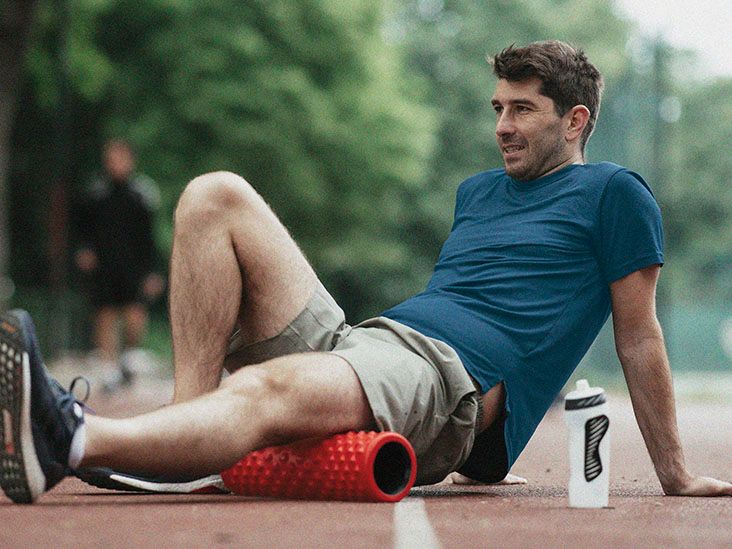
Foam rolling
Foam rolling is not technically aerobic active recovery, but many people combine it with recovery sessions. Research suggests it may reduce muscle tenderness and some effects associated with DOMS.
More pressure is not automatically better. Grimacing as though you’re being interrogated by a foam cylinder is not required for effectiveness.
How Hard Should an Active Recovery Workout Be?
The easiest practical rule is that an active recovery session should feel distinctly easier than normal training.
You can use the talk test: conversation should be easy. Breathing should remain controlled, and you should finish feeling at least as good as when you started.
For many healthy exercisers, recovery work falls in a very easy aerobic range. The exact heart rate varies dramatically with age, conditioning, medications, temperature, and individual physiology, so there is little value in pretending one universal number applies to everyone.
Instead, look for these signs:
- You can speak in complete sentences.
- Your muscles feel warmer and looser rather than increasingly fatigued.
- Your technique remains effortless.
- You do not develop worsening pain.
- You finish feeling refreshed rather than depleted.
NASM similarly emphasizes that successful active recovery depends heavily on controlling intensity rather than simply accumulating more exercise.
A Simple 25-Minute Active Recovery Workout
For a generally healthy person with mild post-workout stiffness, a basic recovery session might look like this:
- 5 minutes: Comfortable walking.
- 10 minutes: Easy stationary cycling, swimming, or elliptical exercise.
- 5 minutes: Gentle mobility for the hips, shoulders, ankles, and upper back.
- 5 minutes: Slow walking and relaxed breathing.
Nothing in this workout should feel competitive. The purpose is to move, not to quietly turn recovery day into cardio day while hoping your hamstrings do not notice.
Active Recovery After Different Workouts
After running
Try walking, easy cycling, swimming, or an elliptical trainer. These options reduce repetitive running impact while maintaining movement.
After strength training
A recovery walk, low-resistance cycling session, or gentle mobility routine may be preferable to repeating heavy resistance exercises for muscles that are still fatigued.
After a long endurance event
The recovery requirement after a marathon, long cycling event, tournament, or similarly demanding effort may be substantially greater. Walking and basic movement may be appropriate, but several days of reduced training or complete rest may also be necessary.
Recovery also depends on hydration, food intake, and sleep. Active recovery cannot compensate for chronically inadequate sleep or insufficient nutrition. Your body is impressive, but it cannot manufacture glycogen and muscle proteins from positive thoughts and a six-minute stretching video.
Active Recovery vs. Complete Rest
The fact that active recovery can be useful does not mean complete rest is somehow lazy or inferior.
Rest days give your body time to recover from accumulated training stress. Persistent fatigue, reduced performance, irritability, unusual soreness, and sleep disturbances can occur when exercise load consistently exceeds recovery capacity. HSS and Harvard Health both emphasize the importance of sufficient recovery when training begins producing ongoing fatigue or declining performance.
A complete rest day may be more appropriate when you have:
- Severe fatigue.
- Sharp or localized pain.
- Significant swelling or bruising.
- An acute muscle or joint injury.
- Fever or systemic illness.
- Persistent soreness that keeps worsening.
- Major sleep deprivation.
- Signs that your normal performance is declining from accumulated training stress.
Precautions: When Active Recovery Is Not a Good Idea
Do not use active recovery to train through an injury
Normal DOMS is typically characterized by generalized muscle tenderness and stiffness following unfamiliar or demanding exercise. Sharp, sudden, highly localized, or progressively worsening pain deserves more caution.
Johns Hopkins recommends avoiding exercise when you are tired or in pain and obtaining adequate rehabilitation following sports injuries before returning to strenuous activity.
Stop if symptoms become worse
If gentle movement increases pain rather than easing stiffness, stop. Swelling, bruising, joint instability, weakness, or an inability to move normally may indicate something more significant than routine post-workout soreness.
Be cautious when sick
Active recovery should not become a loophole for exercising through significant illness. Mayo Clinic advises against exercising when symptoms include fever, widespread muscle aches, major fatigue, chest congestion, or other more serious systemic symptoms.
Know the warning signs of rhabdomyolysis
Extremely strenuous exercise can rarely contribute to rhabdomyolysis, a serious breakdown of muscle tissue. Severe muscle pain or swelling accompanied by weakness or dark brown or tea-colored urine requires urgent medical assessment rather than another recovery walk.
Consider your medical history
People recovering from surgery or managing cardiovascular, metabolic, neurological, orthopedic, or other chronic health conditions may need individualized exercise recommendations. If a healthcare professional has given you activity restrictions, those recommendations take priority over generic recovery advice from the internet.
Common Active Recovery Mistakes
Turning recovery into another workout
This is the classic mistake. Twenty minutes of gentle cycling becomes 45 minutes. Then somebody turns up the resistance. Then there is a sprint “just to see how the legs feel.”
Your legs have now submitted their formal complaint.
Stretching aggressively
Stretching can improve flexibility, but studies have not consistently shown that post-workout static stretching prevents soreness. Stretch comfortably rather than forcing sore muscles into extreme positions.
Ignoring sleep
A beautifully planned recovery routine cannot replace adequate sleep. Training adaptations occur when exercise stress is followed by sufficient recovery.
Assuming soreness equals progress
A workout does not have to make stairs terrifying for three days to be productive. Soreness is influenced by novelty, eccentric loading, training volume, and individual response. It is not a reliable scoreboard for workout quality.
Practical Recovery Experiences: What Often Works in the Real World
The biggest lesson people tend to learn about active recovery is that the best session often feels almost suspiciously easy. That can be difficult for enthusiastic exercisers to accept.
Imagine a recreational runner who completes a hard 10K workout on Saturday. On Sunday morning, the legs feel heavy but there is no sharp pain, swelling, or unusual weakness. Sitting at a desk all day may make the stiffness more noticeable. A relaxed 25-minute walk followed by several minutes of gentle hip and ankle mobility may leave the runner moving more comfortably.
Notice what did not happen: no tempo run, no hill repeats, no attempt to “sweat the soreness out.” The objective was simply comfortable movement.
A strength-training example looks slightly different. Suppose someone completes a demanding leg workout involving squats, Romanian deadlifts, and lunges. The next day, the quadriceps and glutes are mildly sore. Instead of another lower-body lifting session, the person performs 15 minutes of easy cycling and a few controlled mobility drills.
The resistance on the bike stays low. There is no burning sensation in the legs. By the end, the muscles feel warmer and less wooden. That is much closer to the purpose of active recovery.
Another common experience occurs after returning to exercise following time off. A person might enthusiastically perform the exact workout they were capable of six months earlier, only to discover 24 hours later that sitting down has become an advanced technical maneuver.
In that situation, light walking may feel good, but the bigger lesson is not simply “do more active recovery.” The training dose itself probably needs adjustment. Johns Hopkins notes that muscle fatigue and soreness can persist longer when people return after inactivity, which supports gradually rebuilding workload rather than immediately returning to previous levels.
People who exercise frequently also tend to discover that recovery is not the same every week. A 30-minute recovery ride might feel excellent after one training block and exhausting during another. Work stress, travel, poor sleep, hot weather, illness, nutrition, and accumulated exercise volume all influence how the same activity feels.
This is why rigid recovery formulas can be less useful than paying attention to patterns.
If you usually feel better after 20 minutes of easy movement, active recovery may be a useful tool. If you repeatedly start recovery sessions feeling tired and finish even more depleted, your body may be asking for actual rest rather than a creatively renamed workout.
Competitive athletes often have another challenge: psychologically accepting easy days. When every workout is measured by pace, power, distance, heart rate, weight, or repetitions, an intentionally slow session can feel unproductive.
Yet recovery is part of training rather than an interruption to it. The hard session provides the stimulus; recovery gives the body an opportunity to respond to that stimulus. Continually adding stress without sufficient recovery can eventually interfere with performance instead of improving it.
The most sustainable approach is therefore flexible. Some recovery days may involve walking, mobility work, or easy swimming. Others may involve nothing more athletic than making breakfast and locating the sofa.
Both can be legitimate.
Conclusion
Active recovery is a simple concept: move gently enough to promote comfortable circulation and mobility without creating substantial additional fatigue. Walking, swimming, relaxed cycling, easy yoga, mobility drills, and other low-intensity exercises can all serve this purpose.
Research suggests active recovery may reduce perceived soreness, help maintain movement, and improve recovery between certain repeated bouts of exercise, but its effects vary with the individual and situation. It should complementnot replacesleep, nutrition, hydration, sensible training progression, and complete rest when necessary.
Most importantly, recovery should actually feel like recovery. If your easy day starts requiring grit, aggressive motivational music, and negotiations with your cardiovascular system, dial it down.
Note: This article provides general educational information and is not a substitute for individualized medical advice. Seek professional assessment for severe or persistent pain, significant swelling, suspected injury, unusual weakness, dark urine, chest symptoms, or other concerning symptoms.
SEO Information