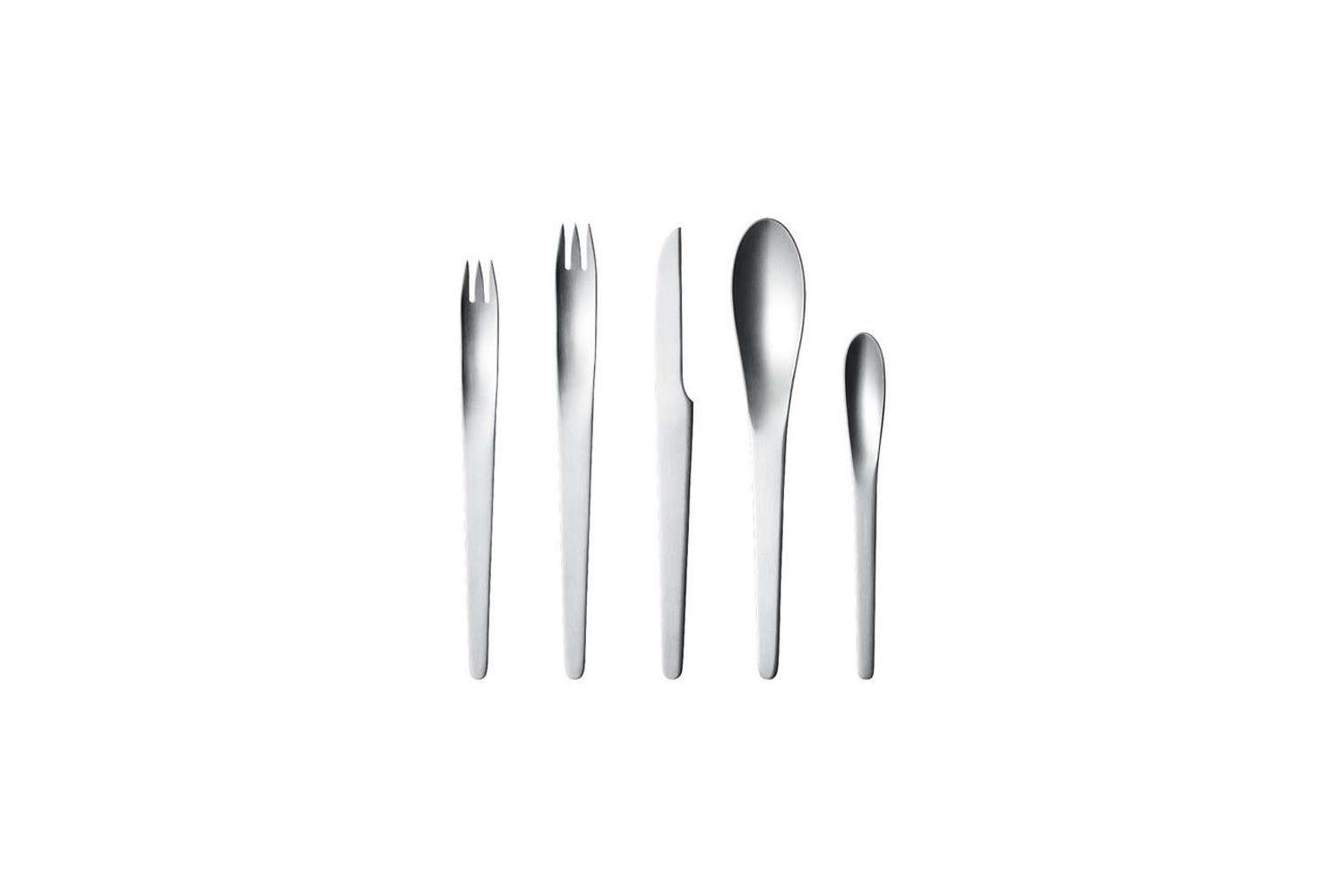

The AJ 5 Piece Place Setting is not the kind of flatware that politely fades into the background. Designed by Danish architect and modernist legend Arne Jacobsen, this five-piece cutlery set has the quiet confidence of a black turtleneck, a perfectly poured espresso, and a spaceship dining room all rolled into one. It is slim, sculptural, matte, and unmistakably moderneven though the original design dates back to 1957.
At first glance, the AJ place setting may look almost too minimal. The spoon bowls are shallow, the fork tines are narrow, and the knife feels more like a design object than something that would ever threaten a steak. But that is exactly the point. The AJ flatware collection was created to remove excess, challenge tradition, and bring a futuristic silhouette to the everyday table. It is flatware for people who believe dinner should taste good and look like it was art-directed by a very stylish Scandinavian.
In this guide, we will explore what makes the AJ 5 Piece Place Setting special, what is included in the set, how it fits into modern dining, how to care for it, and whether it makes sense for everyday meals, special occasions, or design collectors who secretly judge spoons at restaurants.
What Is the AJ 5 Piece Place Setting?
The AJ 5 Piece Place Setting is a stainless steel flatware set based on Arne Jacobsen’s iconic cutlery design. A standard five-piece setting typically includes a dinner fork, dinner knife, starter or salad fork, dessert spoon or soup spoon, and teaspoon. Depending on the retailer or region, the exact spoon terminology may vary slightly, but the idea is the same: one complete setting for one person.
The set is commonly associated with Georg Jensen, the Danish design house known for silverware, jewelry, tableware, and sculptural home objects. The AJ cutlery line is made from matte-finished stainless steel, giving it a soft, understated look instead of the mirror-shiny finish found on many traditional flatware sets.
What separates this place setting from ordinary stainless steel flatware is its silhouette. The pieces are long, slender, and almost aerodynamic. The handles flow into the functional ends without decorative borders, floral engravings, or dramatic flourishes. No vines. No swirls. No mysterious Victorian curls. Just clean lines and a shape that still looks surprisingly futuristic.
The Design Story Behind AJ Flatware
Arne Jacobsen was not simply designing utensils. He was designing an entire visual language. Known for architecture, furniture, lighting, and interior design, Jacobsen believed objects should work together as part of a complete environment. His most famous projects often included everything from the building structure down to the chairs, lamps, door handles, and tableware.
The AJ cutlery design emerged in the late 1950s, a period when modernism was reshaping homes, hotels, offices, and public spaces. Designers were moving away from ornate decoration and toward function, clarity, and new materials. Stainless steel was practical, durable, and modern. For Jacobsen, it was also an opportunity to rethink how everyday tools could look and feel.
The result was cutlery that looked radically different from the heavy, decorative flatware many households were used to. The AJ design stripped away nearly everything unnecessary. The pieces feel precise and architectural, but not cold. Their curves are subtle, and their proportions are intentionally unusual. The set is minimalist, yes, but it is not boring. It has personalityjust the type that speaks softly and owns excellent lighting.
Why the AJ 5 Piece Place Setting Became Iconic
The AJ 5 Piece Place Setting became iconic because it does something difficult: it makes a fork interesting. Most flatware is chosen after people have already spent all their energy picking plates, glassware, napkins, chairs, flowers, and whether the centerpiece is “tasteful” or “accidentally blocking everyone’s face.” AJ flatware refuses to be an afterthought.
One reason for its fame is its connection to modernist design history. Arne Jacobsen’s cutlery has appeared in museum collections and is widely recognized as an example of Danish modern design. It also gained pop-culture status after being used in Stanley Kubrick’s film 2001: A Space Odyssey, where its futuristic shape looked perfectly at home in a cinematic vision of space-age living.
That film connection matters because it proves how forward-looking the design was. A set created in 1957 could appear in a science-fiction world and still look believable as the tableware of the future. Many products from the 1950s look charmingly vintage today. AJ flatware looks like it might have arrived early from tomorrow.
What Comes in a Five-Piece Place Setting?
A typical AJ 5 Piece Place Setting includes the essential utensils needed for a complete individual table setting. While names may differ slightly by retailer, the set usually includes:
- Dinner fork
- Dinner knife
- Starter fork or salad fork
- Dessert spoon or soup spoon
- Teaspoon
This combination works well for a multi-course meal, a dressed-up dinner party, or an elevated everyday table. The dinner fork and knife handle the main course. The smaller fork is useful for salads, appetizers, or desserts. The larger spoon works for soups, desserts, grains, or saucy dishes. The teaspoon is ideal for coffee, tea, yogurt, small desserts, and the occasional emergency peanut butter excavation.
Because each set serves one person, buyers usually purchase multiple settings depending on household size. A service for four requires four five-piece settings. A service for eight requires eight. If you host often, it is wise to buy a few extra pieces or settings while the pattern is available, because nothing tests domestic peace like realizing one guest has a designer fork and another has the backup spoon from college.
Material and Finish: Why Matte Stainless Steel Matters
The AJ place setting is typically made from stainless steel with a matte finish. Stainless steel is popular for flatware because it is durable, food-safe, corrosion-resistant, and suitable for daily use when properly cared for. The matte surface gives the AJ pieces a softer, more architectural appearance than high-polish flatware.
Matte flatware has a visual advantage: it feels modern without shouting. It pairs beautifully with white porcelain, stoneware, glass, linen, marble, wood, and even casual ceramic plates. It also photographs well, which matters more than many people admit. A table with AJ flatware looks clean, intentional, and calmthe dinner-party equivalent of having your inbox at zero.
However, matte finishes can show water spots, fingerprints, or scratches differently from polished flatware. That does not mean the set is fragile. It simply means care habits matter. Rinsing after use, avoiding harsh abrasives, and drying promptly can help preserve the finish and keep the pieces looking sharp.
How to Style the AJ 5 Piece Place Setting
For a Minimalist Table
The easiest way to style AJ flatware is to let it breathe. Use white plates, clear glassware, and neutral linens. Keep the centerpiece low and simple: a small vase, a few branches, or a bowl of citrus. The slim profile of the cutlery will become part of the table’s architecture.
For a Warm Modern Table
If you worry the set may look too sleek, balance it with texture. Try stoneware plates, woven placemats, linen napkins, and warm wood serving boards. The matte stainless steel contrasts beautifully with natural materials, creating a table that feels modern but still welcoming. Think “design magazine,” not “laboratory lunch break.”
For a Formal Dinner
The AJ 5 Piece Place Setting can also work in formal settings, especially for hosts who prefer modern elegance over traditional ornament. Place forks on the left, knife and spoons on the right, and arrange utensils in the order they will be used from the outside in. The narrow shapes make the table feel crisp and organized.
Is AJ Flatware Comfortable to Use?
This is where personal preference enters the room wearing strong opinions. The AJ 5 Piece Place Setting is beautiful, but it does not feel like every other flatware set. The pieces are slim and distinctive. Some people love the light, sculptural feel. Others may prefer heavier, more rounded, traditionally ergonomic flatware.
The spoon shapes are especially unique. Their shallow bowls create a dramatic profile, but they may not be everyone’s first choice for a giant bowl of chowder. The forks are elegant and narrow, excellent for composed plates and refined dining, but less robust than thick, chunky everyday utensils. The knife is sleek and visually striking, although people who regularly cut dense meats may want to consider how it feels in hand.
In other words, AJ flatware is a design-forward choice. It is functional, but it prioritizes visual purity and modernist form. For many buyers, that is exactly the appeal. For others, it may be better as a special-occasion set rather than the utensil equivalent of sweatpants.
Best Uses for the AJ 5 Piece Place Setting
The AJ place setting shines in homes where design matters. It is ideal for modern apartments, minimalist dining rooms, Scandinavian-inspired interiors, gallery-like kitchens, and tables where every object is chosen with intention. It also makes a memorable wedding, housewarming, or anniversary gift for someone who appreciates classic design.
Because of its museum-worthy reputation, the AJ set is also attractive to collectors. It belongs to that rare category of household object that is both usable and historically significant. You can eat pasta with it on Tuesday and still feel like you own a small piece of design history. Not bad for something that also survives the dishwasher.
The set is also a conversation starter. Guests may not immediately know the name Arne Jacobsen, but they will notice the unusual shape. Someone will pick up the spoon, tilt it, and ask, “Wait, what is this?” Congratulations: your flatware has just become the evening’s most sophisticated icebreaker.
How to Care for AJ Stainless Steel Flatware
Although the AJ 5 Piece Place Setting is generally designed for practical use, good care will extend its life and preserve the matte finish. Stainless steel is strong, but it is not invincible. Acidic foods, salty residues, harsh detergents, and long periods of dampness can all cause staining or pitting over time.
Rinse After Use
Rinse pieces soon after meals, especially if they have touched vinegar, mustard, citrus, tomato sauce, eggs, salt, or coffee. These foods are common culprits behind stains and surface marks. Nobody wants a designer teaspoon with the emotional scars of last night’s salad dressing.
Use the Dishwasher Carefully
If the manufacturer’s instructions allow dishwasher cleaning, load the flatware loosely so pieces do not nest tightly together. Avoid mixing stainless steel with sterling silver or silver-plated pieces in the same basket, because contact between different metals during washing can cause damage. Remove and dry the pieces after the cycle to reduce water spots.
Avoid Abrasive Cleaners
Skip steel wool, rough scouring pads, and aggressive polishing compounds. A soft sponge, mild dish soap, and warm water are usually enough. For stubborn marks, use a stainless-steel-safe cleaner and test gently. Matte finishes reward patience, not brute force.
AJ 5 Piece Place Setting vs. Traditional Flatware
Traditional flatware often focuses on familiarity: rounded handles, deeper spoons, decorative edges, and a comfortable weight that feels instantly recognizable. AJ flatware takes a different path. It is leaner, more sculptural, and more visually dramatic.
If your dining style is classic, ornate, or rustic farmhouse, AJ may feel like a stylish alien at the table. If your style is modern, Scandinavian, industrial, minimalist, or artful, it can look perfect. The set pairs especially well with simple dinnerware because it adds interest without adding clutter.
Choosing between AJ and traditional flatware is not only about function. It is about the mood you want your table to create. Traditional flatware says, “Welcome, dinner is served.” AJ flatware says, “Welcome, dinner is servedand yes, the spoon has architectural credentials.”
Is the AJ 5 Piece Place Setting Worth It?
The AJ 5 Piece Place Setting is worth considering if you value design history, minimalist style, and distinctive table presentation. It is not the cheapest flatware option, and it may not be the most conventional choice for every household. But it offers something many ordinary sets do not: identity.
For everyday buyers, the question is whether you want flatware that disappears or flatware that contributes to the atmosphere. AJ pieces are not background players. They add a refined, futuristic note to the table. For collectors and design lovers, the appeal is even stronger. This is a functional object with a recognized place in modern design culture.
The best approach is to think honestly about your habits. If you want heavy, deeply curved spoons and steakhouse-style knives, AJ may feel too delicate or unconventional. If you enjoy clean lines, conversation-worthy objects, and the elegance of restraint, the AJ 5 Piece Place Setting may be exactly your kind of table drama.
Buying Tips Before You Choose AJ Flatware
Before buying, confirm what each five-piece set includes. Some retailers may describe the spoon and fork pieces differently, so check the product details carefully. Also consider how many settings you need. A couple may start with four settings, while frequent hosts may prefer eight, ten, or twelve.
Look for the finish, steel type, care instructions, and return policy. If possible, handle one place setting before committing to a full service. Flatware is tactile. It should look good, but it should also feel right in your hand. A fork may be beautiful enough for a museum, but it still has to help you eat roasted potatoes without turning dinner into a balance exercise.
Finally, consider replacement availability. Iconic patterns often stay in production for many years, but individual pieces can still go out of stock. Buying a few extra teaspoons or forks can be a smart move, especially if your household includes children, roommates, or a dishwasher basket that seems to send cutlery into another dimension.
Experience Notes: Living With the AJ 5 Piece Place Setting
Using the AJ 5 Piece Place Setting feels different from using standard flatware, and that difference is part of the charm. The first experience is visual. When placed beside a dinner plate, the pieces look almost like drawn lines. They do not dominate the table, but they sharpen it. A simple meal of grilled fish, roasted vegetables, and rice suddenly looks more composed, as if the plate received a small design grant.
The second experience is tactile. The pieces are slim, so they encourage a lighter grip. If you are used to thick, heavy flatware, the AJ set may feel surprisingly delicate at first. After a few meals, that delicacy can become pleasant. It makes eating feel more intentional. You notice the shape of the fork, the balance of the knife, and the shallow curve of the spoon. This is either delightful or mildly dramatic, depending on your relationship with utensils.
For casual meals, AJ flatware brings elegance without requiring ceremony. It looks excellent next to a plain white plate and a linen napkin, but it also works with takeout noodles transferred into a real bowl because adults deserve small victories. The set can elevate everyday dining without demanding candles, chargers, or a playlist called “Dinner in Copenhagen.”
For hosting, the AJ place setting earns attention. Guests often comment on it because the shapes are unfamiliar. The flatware becomes an easy conversation piece, especially for people interested in architecture, film, Scandinavian design, or beautiful household objects. It is the rare table accessory that can make a guest pause before the first bitenot because something is wrong, but because the object feels considered.
There are practical lessons, too. The spoons are elegant, but they are not oversized comfort spoons. If your dinner menu includes hearty soups, deep stews, or giant bowls of cereal, you may occasionally wish for a deeper bowl. The forks are graceful and precise, but they do not have the chunky confidence of casual bistro flatware. The knife is stylish, though not necessarily the tool you would choose for aggressive cutting. In daily life, this means AJ flatware is best when paired with meals that suit its refined personality: salads, pasta, seafood, desserts, breakfast settings, appetizers, and composed main courses.
Cleaning is straightforward when handled with care. The matte finish looks best when pieces are rinsed soon after use and dried promptly after washing. Leaving them wet overnight can invite water spots, which are not tragic but do interrupt the clean look. A soft towel and a few extra seconds after the dishwasher can make the set look much better over time.
The overall experience is this: the AJ 5 Piece Place Setting makes the table feel curated. It is not for everyone, and that is a compliment. It appeals to people who enjoy the small rituals of living wellthe way a cup feels, how a chair sits in a room, how a fork can quietly change the mood of dinner. It proves that even ordinary objects can carry imagination. And if your teaspoon looks like it belongs on a spacecraft, honestly, breakfast becomes a little more exciting.
Conclusion
The AJ 5 Piece Place Setting is more than a set of utensils. It is a compact lesson in modern design, a functional collectible, and a striking way to bring Scandinavian minimalism to the dining table. Designed by Arne Jacobsen and associated with Georg Jensen’s design heritage, it remains relevant because it still feels fresh, daring, and beautifully restrained.
This flatware set is best for people who appreciate clean lines, matte stainless steel, and objects with a story. It may not satisfy every traditional preference for weight, spoon depth, or heavy-duty ergonomics, but it offers a rare combination of utility and design significance. Whether used for everyday meals or special gatherings, the AJ place setting turns the simple act of setting the table into something more thoughtful.
Note: Product details, set composition, materials, and care recommendations may vary slightly by retailer or production batch. Always check the seller’s current specifications before purchasing.