
Humans love to brag about skyscrapers, bridges, smart homes, and climate-controlled offices. Fair enough. We did invent elevators, zoning permits, and the mysterious art of assembling furniture with one missing screw. But long before we were sketching blueprints, insects were already building cities, farms, nurseries, tunnels, waterproof shelters, air-conditioning systems, and portable homes with no laptops, no coffee breaks, and absolutely no construction helmets.
Welcome to the astonishing world of amazing animal architects, where the smallest builders on Earth create some of nature’s most efficient structures. Insects may be tiny, but their engineering is bold, practical, and often ridiculously clever. Termites build mounds that breathe. Honey bees create wax combs that maximize storage. Weaver ants stitch leaves together with larval silk. Caddisfly larvae construct underwater homes from pebbles and plant bits. Even bagworms drag around custom-made camouflage cases like introverted fashion designers.
This is not just cute bug trivia. Insect engineering influences soil health, plant growth, water flow, food webs, architecture, robotics, and biomimicry. In other words, bugs are not simply crawling around aimlessly. Many are running miniature construction firms with excellent sustainability policies.
Why Insects Are Nature’s Master Builders
Insects build for the same basic reasons humans do: safety, food, comfort, reproduction, and survival. The difference is that insects often solve design problems with extremely limited materials. A termite may have soil, saliva, and teamwork. A bee has wax and body heat. A paper wasp has wood fiber and spit. A caddisfly larva has silk and whatever stream debris happens to be lying around.
Yet these materials become sophisticated structures. The secret is not one genius insect sitting in a tiny office shouting, “Bring me the plans!” Instead, much insect architecture comes from repeated simple actions. One worker adds a pellet of soil. Another responds to the shape. A bee builds beside an existing cell. Ants pull leaves together because neighboring ants are pulling too. This process, called collective construction, can create complex results without central control.
That is the magic of ingenious insect engineering: small bodies, simple rules, huge outcomes.
Termite Mounds: The Original Green Buildings
If insects gave out architecture awards, termites would need a very large trophy shelf. Some termite species construct towering mounds made from soil, saliva, and organic matter. These structures may look like rough dirt castles, but inside they can contain tunnels, chambers, ventilation shafts, nurseries, and fungal gardens.
The most famous feature of termite mounds is climate control. Certain mound-building termites live in hot environments where temperature swings can be brutal. Their colonies, however, need relatively stable conditions. The mound helps manage airflow, moisture, heat, and gases. Warm air, wind, and temperature differences interact with the mound’s porous walls and internal passages, helping the colony breathe without electric fans or a utility bill.
What Humans Can Learn From Termites
Architects and engineers have studied termite mounds for ideas about passive ventilation. The goal is simple: design buildings that use natural airflow instead of relying entirely on mechanical cooling. Termites do not “think” like architects, but their structures demonstrate a principle humans increasingly care about: smart design should work with the environment, not fight it all day with air conditioners.
Termites also act as ecosystem engineers. Their digging mixes soil, moves nutrients, improves water infiltration, and creates habitats for other organisms. In some landscapes, termite mounds become islands of fertility where plants grow differently from surrounding areas. For insects that are often treated only as pests, termites have a surprisingly impressive ecological resume.
Honey Bees and the Brilliant Geometry of Honeycomb
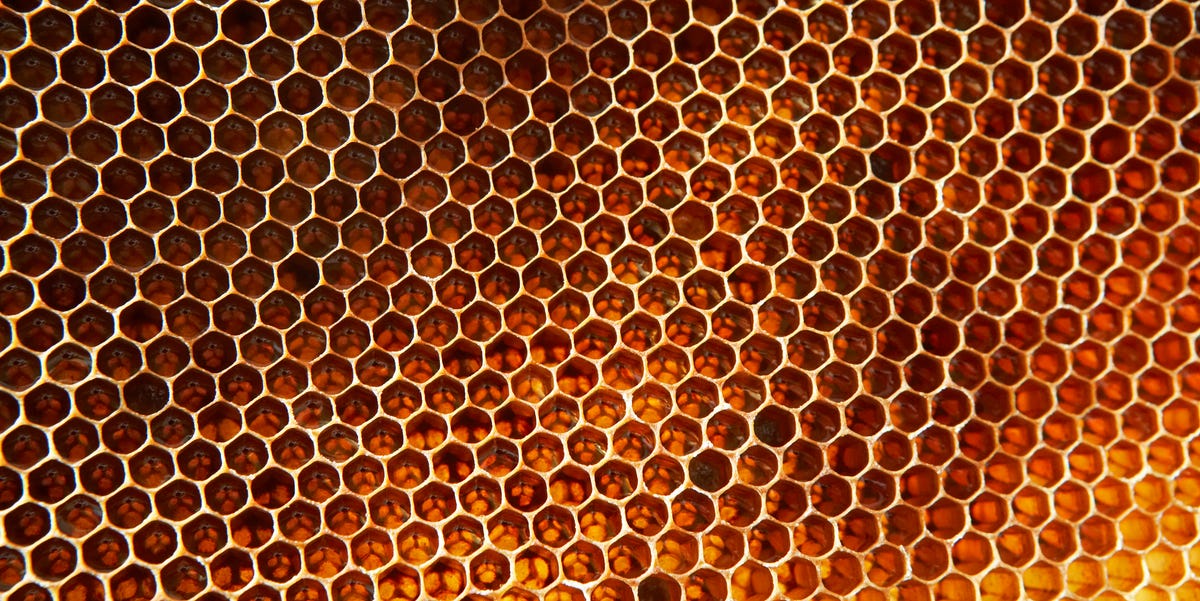
Honey bees are the celebrities of insect architecture, and their honeycomb deserves the fame. A honeycomb is built from wax secreted by worker bees and shaped into rows of cells used for raising young and storing honey and pollen. The final pattern is famously hexagonal.
Why hexagons? Because hexagons fit together without gaps while using less wall material than many other shapes. A honeycomb is a masterclass in efficient storage. It is strong, space-saving, and economical with wax, which is costly for bees to produce. If your pantry were designed by bees, every cereal box would fit perfectly, and there would be no weird corner where old crackers go to retire.
Research suggests that bees may begin with more rounded wax cells, which then shift toward hexagonal forms as warm wax softens and surface tension helps pull the walls into place. The result looks mathematical, but it is also physical. Bee architecture combines behavior, material properties, temperature, and crowd collaboration.
Stingless Bees and Spiral Cities
Honey bees are not the only bees with construction flair. Some stingless bees build brood combs in spirals, terraces, and other elaborate patterns. These structures show how simple building rules can generate beautiful complexity. A bee does not need to understand geometry to produce it. Sometimes nature’s best designs emerge from many tiny decisions stacked together with patience and wax.
Weaver Ants: The Living Sewing Machines
Weaver ants build nests in trees by pulling living leaves together and fastening them with silk. Here is the wonderfully strange part: adult worker ants do not produce the silk. Their larvae do. Workers carry larvae like little glue guns, gently stimulating them to release silk along the leaf edges.
Before the silk comes out, the ants must first move the leaves. Since one ant cannot bend a large leaf alone, workers form chains with their bodies, creating living bridges and pulling teams. Imagine a group of construction workers linking arms to drag a wall into place, except everyone has six legs and no one complains about overtime.
Weaver ant nests can be surprisingly strong, forming hollow chambers that protect the colony from weather and predators. The design is also flexible. If leaves grow, dry, or tear, the ants repair or replace parts of the structure. Insect architecture is not frozen; it is maintained, upgraded, and sometimes abandoned when better real estate appears.
Leafcutter Ants: Underground Farmers With City Planning Skills
Leafcutter ants are often described as tiny farmers, but they are also underground architects. They cut pieces of leaves, carry them back to the nest, and use them to cultivate a fungus that serves as the colony’s main food source. The ants are not eating the leaves directly like a salad bar. They are feeding their crop.
Inside large leafcutter ant nests, chambers may be organized for fungus gardens, waste areas, brood care, and traffic flow. The colony must manage humidity, temperature, sanitation, and food supply. Waste is especially important. A fungus farm can become unhealthy if contaminated, so many leafcutter ants maintain refuse dumps away from active gardens.
This is agriculture, architecture, and public health rolled into one underground system. Humans took thousands of years to develop large-scale farming. Ants were doing it long before we were arguing about which tractor brand is best.
Paper Wasps: Wood Pulp, Saliva, and Suspended Nurseries
Paper wasps are named for their building material. Many species scrape fibers from weathered wood or plant stems, chew them, mix them with saliva, and create a paper-like pulp. From this, they build combs of open cells where young wasps develop.
The nest may hang from a porch ceiling, branch, eave, or other sheltered surface. Each cell works like a nursery room. The gray, papery texture can look fragile, but it is an effective lightweight material. Some wasp nest materials resist moisture surprisingly well because oral secretions help bind and waterproof the structure.
Of course, finding a wasp nest near your front door may not inspire poetic admiration in the moment. Your first thought may be less “architectural marvel” and more “I will use the back entrance forever.” Still, from a design perspective, paper wasps are skilled material scientists.
Mud Daubers: Solitary Masons of the Insect World
Mud daubers are solitary wasps that build small mud nests on buildings, bridges, rafters, and protected surfaces. Unlike social wasps, mud daubers usually work alone. Their nests may look like tubes, lumps, or organ-pipe-style rows depending on the species.
Female mud daubers collect wet mud, shape it into cells, and provision those cells with paralyzed spiders for their larvae. Then they seal the chamber. It is not exactly a cozy bedtime story, especially if you are a spider, but it is efficient. The larva hatches into a stocked pantry and protected shelter.
Mud dauber construction shows how insects use local materials with remarkable precision. No kiln, no brick factory, no delivery truck. Just mud, mandibles, instinct, and a very specific plan.
Caddisfly Larvae: Underwater Builders With Silk Superpowers
Caddisflies spend part of their lives as aquatic larvae, and many species are famous for building protective cases. These cases may include sand grains, tiny stones, plant pieces, bark fragments, or shells, all fastened together with silk produced by the larva.
Some caddisfly larvae build portable cases they carry like underwater sleeping bags. Others spin silk nets that help capture food particles in flowing water. Their silk works underwater, which makes it especially interesting to scientists studying adhesives and materials.
Because caddisflies use materials from their surroundings, their cases can reveal local habitat conditions. A larva in a sandy stream may build with sand. One near vegetation may incorporate plant fragments. If insects had design magazines, caddisflies would dominate the “rustic stream cottage” category.
Bagworms: The Portable Home Trendsetters
Bagworm caterpillars build tough protective cases from silk and bits of leaves, twigs, bark, or other plant material. Unlike insects that build one fixed nest, bagworms carry their homes with them while feeding. Only the head and front part of the body extend from the opening when the caterpillar moves or eats.
As the caterpillar grows, it enlarges the bag. The outside often blends into the host plant, providing camouflage. This is architecture, armor, and disguise in one compact package. Bagworms may not win popularity contests with gardeners, especially when they defoliate ornamental plants, but their portable engineering is undeniably impressive.
Gall-Making Insects: Architects Who Reprogram Plants
Some insects do not build with mud, wax, or silk. They convince plants to build for them. Gall wasps, gall midges, aphids, and other insects can trigger abnormal plant growths called galls. These structures may appear on leaves, stems, flowers, or buds, and they come in astonishing shapes: balls, spikes, fuzzy lumps, cups, blisters, and tiny plant mansions with room service.
Inside the gall, the developing insect gains shelter and food. The plant tissue grows around the insect, forming a customized chamber. Scientists are still studying the chemical signals involved, but the result is clear: gall-making insects manipulate plant development in ways that look almost like biological architecture.
For homeowners, galls may look alarming, but many are harmless to the overall health of the plant. For biologists, they are fascinating examples of how insects shape living structures without carrying a single brick.
How Insect Engineering Inspires Human Innovation
Insect architecture matters because it expands our imagination. Engineers study termite mounds to think about passive ventilation. Materials scientists study insect silk and wax structures. Roboticists study ants to understand decentralized teamwork. Ecologists study insect nests to understand soil, nutrient cycling, and habitat creation.
The keyword is biomimicry: learning from nature’s designs to solve human problems. Insects are especially useful teachers because they build with minimal energy and local resources. They recycle. They adapt. They repair. They scale their structures to colony needs. They do not order exotic imported marble when mud will do.
Lessons From Amazing Animal Architects
Insect builders teach several powerful lessons. First, small actions add up. A termite mound is not built in one heroic afternoon. It grows through thousands or millions of tiny contributions. Second, materials matter. Bees use wax differently from wasps using pulp or ants using leaves. Third, design should fit function. A caddisfly case protects in water; a honeycomb stores efficiently; a termite mound breathes.
Finally, insect architecture reminds us that intelligence does not always look like human planning. A colony can solve problems without a central boss. A structure can be beautiful without decoration. A home can be made from mud, silk, spit, leaves, or plant tissue and still outperform human expectations.
Experiences Related to Amazing Animal Architects and Ingenious Insect Engineering
One of the best ways to appreciate insect engineering is to slow down outdoors and look closely. Many people walk past insect architecture every day without noticing it. A paper wasp comb under an eave, a mud dauber tube near a garage, a bagworm case dangling from an evergreen, or a small gall on an oak leaf can become a miniature museum exhibit once you recognize what you are seeing.
A memorable nature-watching experience often begins with curiosity rather than equipment. You do not need a lab coat or a safari hat dramatic enough to frighten squirrels. A simple walk through a backyard, park, garden, or streamside trail can reveal insect builders at work. Look for patterns: repeated cells, sealed chambers, silky threads, folded leaves, or unusual plant growths. These clues tell a story about shelter, food, defense, and reproduction.
Watching ants can be especially rewarding. A line of ants may look chaotic at first, but after a few minutes, traffic patterns appear. Some ants carry food. Others remove debris. Some inspect openings or repair disturbed soil. If you gently observe without interfering, the colony begins to look less like a crowd and more like a living system. It is a reminder that engineering is not always loud. Sometimes it is quiet, persistent, and happening under your shoes.
Streams offer another kind of experience. Turn over a submerged stone carefully, and you may find caddisfly larvae in cases made of sand or plant fragments. These tiny cases are often so well camouflaged that they seem like moving bits of gravel. Place the stone back gently, because the stream is their neighborhood, and nobody likes a giant rearranging the furniture.
Gardens also provide excellent insect architecture lessons. Bagworms show how portable construction works. Galls show how insects can influence plant growth. Bees and wasps show how geometry and material choice shape survival. Even pest species can be viewed with a more balanced eye: control may be necessary in some situations, but understanding the organism makes management smarter and more respectful.
For families, teachers, or curious readers, insect architecture can become a hands-on learning theme. Children can sketch nest shapes, compare materials, observe ant trails, or research how honeycomb geometry saves space. Adults can connect the same examples to sustainability, architecture, materials science, and ecology. The topic is wonderfully flexible: it can be playful, scientific, artistic, or deeply practical.
The most powerful experience, though, is the shift in perspective. Once you notice insect engineering, the natural world feels busier and more intelligent. A patch of soil becomes a construction zone. A leaf becomes a nursery. A twig becomes a doorway. A lump on a plant becomes a private chamber built by chemistry and time. The world has not changed; your attention has.
That is the real gift of studying amazing animal architects. It turns ordinary places into places of discovery. It reminds us that innovation is not limited to human hands. Sometimes the most elegant design on the block belongs to a creature small enough to fit on a fingernail.
Conclusion: Tiny Builders, Giant Ideas
Insects are some of the most inventive builders on Earth. From termite mounds that regulate airflow to honeycombs that conserve wax, from weaver ant leaf nests to caddisfly stone cases, these structures prove that great engineering does not require size. It requires adaptation, efficiency, and a close relationship with the environment.
The next time you see a wasp nest, ant mound, gall, or strange little case on a branch, pause before dismissing it as “just a bug thing.” It may be a nursery, fortress, farm, ventilation system, camouflage suit, or underwater cabin. In the world of amazing animal architects, even the tiniest builder may have a design lesson worth stealing.