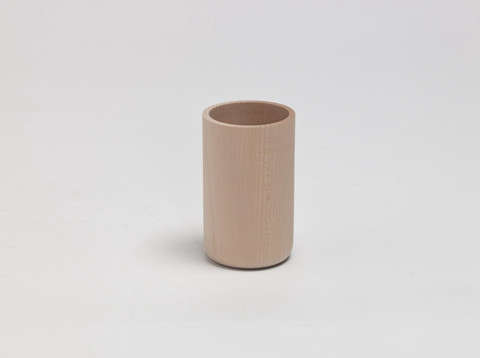

A pen pot may be one of the smallest things on a desk, but it has a suspicious amount of authority. Leave your pens lhiding beneath notebooks, rolling toward the floor, or forming a tiny plastic civilization behind your monitor. The Another Desktop Series Pen Pot turns that daily mess into something more intentional: a compact home for the tools that still matter in a very digital world.
This is not a dramatic reinvention of office life. It is a beautifully simple desk organizer with a clear job: keep writing tools upright, visible, and ready. Yet the charm of a well-designed wooden pen holder is that it changes the way a workspace feels. Instead of looking like a temporary landing zone for cables, receipts, and half-finished coffee, the desk begins to resemble a place where actual ideas might survive.
A Small Object With a Surprisingly Big Job
The Another Desktop Series is designed as a family of matching desk objects, including a pen pot, pencil pot, sharpener pot, tape dispenser, and eraser pot. Each piece has a specific role, which is a refreshing concept in an era when one random drawer is expected to store batteries, paper clips, coupons, mystery keys, and emotional baggage.
The pen pot is the simplest member of the group, but it may also be the most useful. A desktop organizer works best when it does not ask you to make a complicated decision every time you use it. You should not need an instruction manual to put a pen away. You should be able to reach, write, return, and continue living your life without launching a search-and-rescue mission under your desk.
That is where the pen pot earns its place. It creates a designated home for pens, pencils, markers, scissors, rulers, and other small writing supplies. The result is not merely a tidier surface. It is a desk that asks less of your attention. When the things you use most often are within easy reach, you spend less time looking for tools and more time using them.
Why a Pen Pot Still Matters in a Digital Workspace
Modern workspaces are packed with digital tools, but pens have stubbornly refused to retire. We still jot down phone numbers, sketch quick ideas, sign forms, label packages, annotate printed documents, circle mistakes, and write notes that are somehow easier to remember when they are made with ink instead of keyboard clicks.
A good desktop pen holder recognizes that writing tools should be available without dominating the desk. The goal is not to display every pen you have ever owned, including the promotional one from a dentist who moved away in 2014. The goal is to keep a useful selection close by.
A practical setup might include two everyday pens, one fine-tip pen, one pencil, one highlighter, a small ruler, and a pair of scissors. That is enough for most tasks. Everything else can live in a drawer, storage box, or supply cabinet. Your desktop should be a working surface, not a museum of office supplies.
There is also a visual benefit. Loose pens create visual noise because they point in different directions, overlap papers, and disappear into the background. A pen pot gathers that mess into one vertical shape. It is a tiny design trick, but it makes the surface feel calmer almost immediately.
The Appeal of the Another Desktop Series Pen Pot
The appeal of the Another Desktop Series Pen Pot is not that it tries to look futuristic. It does the opposite. Its design language feels warm, practical, and quietly timeless. The collection has been associated with maple construction and a restrained, functional style that fits easily into modern, Scandinavian-inspired, traditional, and creative home offices.
That matters because desk accessories can easily become visual clutter disguised as décor. A neon plastic organizer may be fun for a week, but it can become exhausting when it competes with your monitor, keyboard, desk lamp, wall art, and the 47 browser tabs you are pretending to manage.
A wooden pen pot has a more forgiving presence. It adds texture without shouting. It can sit beside a sleek laptop just as comfortably as it can live on a vintage writing desk. It looks intentional without demanding applause. In the world of office accessories, that is a rare skill.
Function Before Decoration
The best desk organizers do not make you work around them. They make your work easier. A useful pen pot should be stable enough that it does not tip when you pull out scissors, tall enough to hold writing tools upright, and compact enough that it does not steal the entire desk surface.
The Another Desktop Series follows the idea that individual desk objects can work together without becoming a matching set that feels overly precious. You can use one piece on its own, or build a small collection over time. That makes the pen pot a practical starting point for anyone who wants a more organized desk without buying a giant office storage system that requires a blueprint and emotional support.
How to Style a Pen Pot on Your Desk
A pen pot works best when it is placed in the “easy reach” zone of your desk. For most right-handed people, that means placing it toward the right side of the work area. Left-handed users can mirror the setup. The important thing is that you should not have to twist, stretch, or knock over your water bottle every time you need a pen.
Start with the basics: laptop or monitor in the center, keyboard directly in front, mouse within a comfortable reach, and writing tools near your dominant hand. Place the pen pot slightly behind the keyboard line rather than directly in front of it. This keeps the desk open while preserving quick access.
For a Minimalist Desk
Keep only five to seven tools in the pen pot. Choose matching or complementary pens, one pencil, and one small pair of scissors. Pair the holder with a neutral notebook, a simple desk lamp, and one small plant or framed photo. The desk should feel useful, not staged for a furniture catalog where nobody is allowed to answer email.
For a Creative Workspace
Use the pen pot as a front-line container for the tools you reach for repeatedly: fineliners, colored pencils, brush pens, mechanical pencils, and a slim ruler. Store the larger collection elsewhere. Artists and designers often need more tools than most people, but even a creative desk benefits from separating “today’s tools” from “everything I own because it was on sale.”
For a Small Home Office
Small desks need vertical organization. A pen pot is ideal because it turns scattered writing tools into a compact upright cluster. Pair it with a wall-mounted shelf, a slim document tray, or a rolling cart for overflow supplies. Keep large items off the desktop whenever possible so the work surface remains available for writing, typing, and the occasional dramatic stare into space.
What Belongs in a Pen Pot?
The answer is not “all stationery ever created.” A pen pot becomes less useful when it is overloaded. Too many items make it harder to find the tool you want, and the container starts to resemble a tiny metal forest after a windstorm.
For everyday use, keep the following in your wooden pen holder:
- Two reliable pens for daily writing.
- One pencil for notes, sketches, or temporary markings.
- One highlighter for important documents.
- One fine-tip pen for labels or detailed notes.
- A compact pair of scissors if the pot is stable enough.
- A slim ruler or bookmark-sized straightedge.
Move duplicates, dried-out markers, extra pencils, and novelty pens to another storage area. A desk organizer should help you make decisions faster, not ask you to choose between twelve nearly identical blue pens.
Pairing the Pen Pot With the Rest of the Desktop Series
The real strength of the Another Desktop Series is its coordinated approach. The pen pot handles writing tools. The pencil pot supports additional stationery. The sharpener pot contains the messiest part of using wooden pencils. The tape dispenser makes a mundane object feel more deliberate. The eraser pot gives small loose items a place to live without escaping into the void.
Used together, these pieces create a desk landscape with clear zones. Pens go in one place. Erasers go in another. Pencil shavings are contained. Tape is no longer hiding in a drawer behind expired coupons and a cable that belongs to absolutely nothing.
You do not need every piece to benefit from the system. Start with the pen pot and observe what repeatedly clutters your workspace. Do paper clips wander? Add a small lidded container. Are pencils constantly shedding wood flakes? Consider a dedicated sharpener pot. Does tape disappear at the exact moment you need to mail something? That is tape dispenser territory.
Choosing a Pen Pot That Works for You
Whether you choose the Another Desktop Series Pen Pot or another desk organizer, focus on a few practical details. First, check the footprint. A beautiful pen holder is not helpful if it consumes half a tiny desk. Second, consider the height. Short containers may cause pens to fan outward, while overly tall containers can hide the tools you need.
Material matters, too. Wood adds warmth and weight, making it a strong choice for a home office, study, or creative desk. Metal mesh feels more industrial and practical. Acrylic works well when you want to see every item at a glance. Ceramic can look elegant but may chip if it spends its life getting bumped by rulers and coffee mugs.
The best choice is the one that fits your habits. A designer may want multiple compartments. A writer may prefer one clean cylinder. A student may need a portable caddy. A person who keeps 38 pens “just in case” may need a deeper personal conversation with their stationery collection.
Care Tips for a Wooden Pen Holder
A wooden pen pot is easy to maintain. Empty it occasionally and shake out pencil dust, eraser crumbs, and mysterious debris that may have arrived during a long week. Wipe the exterior with a soft, dry cloth. For a more thorough cleaning, use a slightly damp cloth and dry it promptly.
Avoid soaking wood or leaving it near a sweating cold drink. Water rings are not a design trend, no matter how many people try to call them “patina.” Keep ink pens capped, especially fountain pens and markers, and do not allow a leaking pen to turn the inside of the pot into an accidental abstract painting.
Conclusion: The Desk Upgrade That Does Not Need a Software Update
The Another Desktop Series Pen Pot is proof that useful design does not need to be complicated. It gives writing tools a proper home, reduces visual clutter, and adds warmth to the kind of workspace where screens, cables, and deadlines often take over.
A pen pot will not answer your emails, organize your taxes, or explain why your printer only breaks when you are in a hurry. But it can make your desk easier to use and nicer to look at. Sometimes that is enough to help a workday begin with a little less chaos and a little more intention.
Desk Experiences: What a Pen Pot Can Change in Everyday Work
The most interesting thing about a pen pot is how quickly it becomes invisible once it is doing its job well. On day one, it looks like a small decorative object. By day seven, it becomes part of a working rhythm. Reach for a pen. Make a note. Put it back. Continue. There is no drama, no tangled drawer, no tiny avalanche of highlighters every time you need to sign for a package.
Consider the experience of a remote worker using a dining table as a temporary office. At the beginning of the day, the table is covered with a laptop, charger, notebook, coffee mug, headphones, receipts, and a pen that somehow rolled underneath the chair. A compact pen pot creates one controlled station for the smallest but most frequently used tools. When the workday ends, the writer can place the pot on a nearby shelf, close the laptop, and return the table to normal life. The transition feels cleaner because the supplies have a home.
For a student, the experience is slightly different. Study sessions often involve switching between handwritten notes, printed material, digital research, and the ancient ritual of trying to find a working highlighter. A desk pen holder prevents small tools from drifting across the surface. It also makes packing up easier. Instead of gathering scattered pencils one by one, the student can lift a single container and move it to a shelf, backpack, or study cart.
Creative work offers another example. A sketcher, designer, or hobbyist may use different tools throughout the day, but not every tool needs to live on the desk at once. A pen pot can hold the current set: black fineliner, graphite pencil, eraser, small brush pen, and favorite marker. The rest can stay stored away. This creates a focused workspace that supports the project at hand rather than displaying every possibility at once. A smaller selection can feel surprisingly freeing.
There is also a psychological shift that happens when the desk stops looking accidental. A neat pen pot tells your brain, quietly, that this area has a purpose. It can help create a small ritual before work begins: straighten the notebook, refill the water bottle, place the favorite pen in the front, and begin. The ritual does not need to be complicated to matter. A well-organized desk can make starting feel easier.
Of course, a pen pot is not magic. It cannot prevent clutter from returning if every item on the desk has nowhere else to go. The best experience comes from treating it as part of a simple system. Keep everyday writing tools in the pot. Put backup supplies in a drawer. Use a tray for loose items. Recycle old paper. Remove dead pens before they become permanent residents.
That is the real value of the Another Desktop Series Pen Pot. It is not just a container. It is a reminder that small objects can shape daily habits. A tidy desk may not solve every problem, but it can prevent your favorite pen from vanishing five minutes before an important call. In office life, that is practically a superpower.