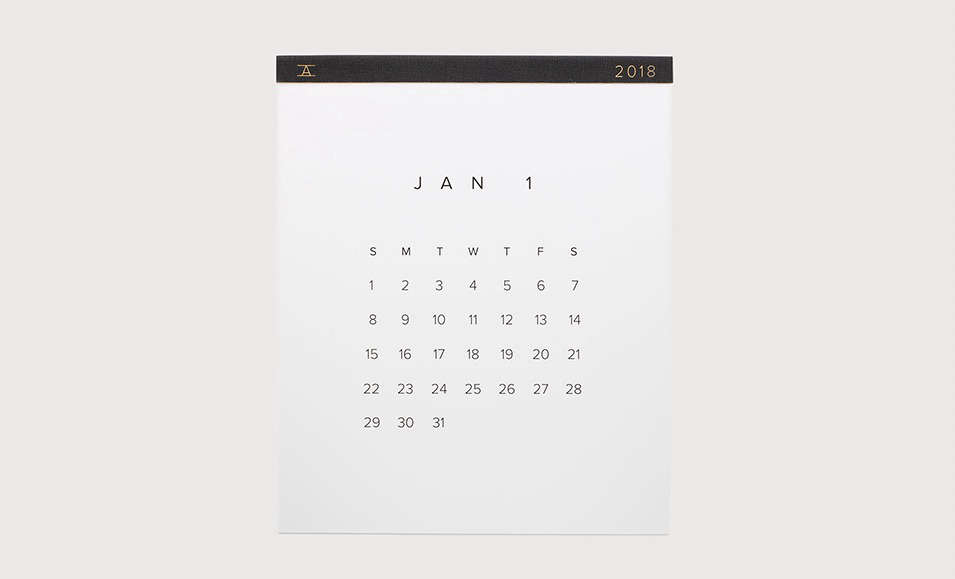

The Appointed 2018 Large Wall Calendar belongs to that rare category of desk-and-wall tools that makes organization feel less like punishment and more like interior design with a purpose. In a world where calendars beep, flash, sync, crash, and occasionally remind you about a meeting three minutes after it ended, a beautifully made paper wall calendar offers something refreshingly calm: the whole month, right there, behaving itself.
Appointed, the American-made stationery brand known for minimalist notebooks, planners, and desk tools, built its reputation around the idea that better tools can inspire better work. The 2018 wall calendar fits that philosophy neatly. It was not designed to shout from the wall with loud graphics or motivational phrases about crushing Monday. Instead, it focused on clean typography, tactile materials, a monthly layout, and a polished look that suited modern offices, studios, kitchens, dorm rooms, and home workspaces.
This article explores what made the Appointed 2018 Large Wall Calendar appealing, why paper calendars still matter, how minimalist design improves daily planning, and what real users can learn from a calendar that treated scheduling as both a practical habit and a design experience.
What Is the Appointed 2018 Large Wall Calendar?
The Appointed 2018 Large Wall Calendar was a monthly wall calendar covering January 2018 through December 2018. It was created as a simple, refined planning tool for people who wanted a visible calendar without visual clutter. Product listings described it as approximately 11 x 13.5 inches, or about 28 x 34 cm, making it large enough to read at a glance while still compact enough for smaller rooms.
Its construction was part of the appeal. The calendar featured book cloth binding, brass foil accents, perforated pages, and recycled paper. It was also assembled by hand in the United States, which matched Appointed’s broader brand identity: American-made paper goods with classic design and careful materials.
Unlike many wall calendars, it did not lean on scenic photography, holiday illustrations, cartoons, inspirational quotes, or decorative borders. The design was intentionally stripped back. The focus stayed on the month, the days of the week, and the dates. In other words, it was the calendar equivalent of a perfectly pressed white shirt: simple, useful, and quietly confident.
Why Minimalist Wall Calendars Became So Popular
The popularity of minimalist wall calendars is not hard to understand. Many people spend their days surrounded by visual noise: browser tabs, inbox badges, sticky notes, group chats, app notifications, and that one unpaid parking ticket that keeps living rent-free in the brain. A clean wall calendar reduces the mess. It gives the eye one place to land.
Minimalist planning tools work because they remove friction. When a calendar is too busy, users may admire it as artwork but ignore it as a planning system. A calendar like the Appointed 2018 Large Wall Calendar did the opposite. It made the date structure clear and let the user add meaning through handwriting, color coding, symbols, or personal routines.
Design That Does Not Compete With Your Life
A good calendar should support the day, not become another task. Appointed’s version used neutral styling and strong material choices to make the calendar feel premium without becoming distracting. That balance is important for modern interiors, especially in shared spaces such as kitchens, entryways, offices, and creative studios.
Its black-and-white look also made it flexible. It could hang beside a bookshelf, above a desk, near a family command center, or in a meeting room without clashing with the surroundings. The calendar did not demand that your walls adopt a personality. It simply improved the room and helped everyone remember what day it was, which is an underrated public service.
Key Features of the Appointed 2018 Large Wall Calendar
Monthly Layout
The calendar used a monthly format, ideal for big-picture planning. Monthly calendars are especially helpful for tracking deadlines, school schedules, editorial calendars, appointments, bill due dates, birthdays, travel, and project milestones. A monthly view helps users see how time is distributed instead of treating every day as a separate emergency.
Perforated Pages
Perforated pages made it easy to remove each month cleanly. This small feature matters more than it sounds. Nobody wants a calendar that ages into a ragged paper beard by April. A clean tear keeps the object looking intentional throughout the year.
Book Cloth Binding
The book cloth binding gave the calendar a refined, stationery-forward feel. It made the piece look closer to a design object than a disposable office supply. For people who care about notebooks, pens, typography, and the texture of good paper, that detail was a major part of the charm.
Recycled Paper
The use of recycled paper gave the product a more responsible material story. Paper calendars are physical objects, so material choice matters. Recycled paper does not automatically make any product perfect, but it does show thoughtful sourcing and gives buyers a more sustainable option than calendars designed purely for throwaway convenience.
Made in the United States
Appointed built much of its brand around American-made stationery. For shoppers who prefer domestic production, small-batch craftsmanship, or carefully sourced office goods, this added value beyond the design itself. It positioned the calendar as a premium planning tool rather than a last-minute grocery-store purchase on December 31.
Who Was This Calendar Best For?
The Appointed 2018 Large Wall Calendar was especially useful for people who wanted organization to look good. It suited professionals, students, designers, teachers, parents, freelancers, small business owners, and anyone who prefers seeing time laid out physically.
For a freelancer, it could become a simple deadline tracker. For a family, it could hold school events, appointments, sports practices, and dinner plans. For a design studio, it could serve as a clean project overview. For a student, it could help map exam weeks and assignment due dates without requiring another app login.
It was not the best fit for someone who needed large writing boxes, detailed hourly scheduling, built-in holiday reminders, or a dry-erase surface. Its strength was visual simplicity. Users who wanted maximum information density might prefer a larger grid calendar or desk pad. But for people who valued aesthetics as much as utility, the Appointed calendar offered a polished middle ground.
Paper Calendar vs. Digital Calendar: Why Use Both?
Digital calendars are excellent for alerts, shared events, recurring meetings, and time-zone gymnastics. They are less excellent when you want to see the shape of an entire month without tapping, zooming, swiping, or accidentally opening a recipe video. This is where a wall calendar shines.
Paper calendars provide a physical reminder. They sit in a visible place and quietly do their job. Research and productivity discussions often point to the planning value of paper tools, especially because handwritten notes can create stronger memory cues and encourage a broader view of upcoming responsibilities. A wall calendar also reduces dependence on screens, which is useful when your phone already has seventeen jobs and a suspiciously low battery.
The smartest setup is often not paper versus digital. It is paper plus digital. Use the digital calendar for alerts and sharing. Use the wall calendar for visual planning, household coordination, project rhythm, and quick daily orientation. One buzzes in your pocket; the other tells the truth from the wall.
How to Use a Minimalist Wall Calendar Effectively
Choose One Primary Location
A wall calendar only works if people see it. Place it somewhere with regular foot traffic: near the desk, beside the kitchen counter, by the entryway, or in a home office. Avoid hiding it behind a door unless your goal is to create a secret museum of missed appointments.
Use Simple Color Coding
Because the Appointed 2018 Large Wall Calendar had a clean layout, it worked well with color coding. Try one color for work deadlines, another for personal appointments, another for family plans, and another for bills or recurring tasks. Keep the system simple. If you need a legend longer than a restaurant menu, the system is too complicated.
Create a Weekly Review Habit
Spend five minutes every Sunday reviewing the upcoming week. Add appointments, circle key dates, and cross-check with your digital calendar. This habit turns the calendar from decoration into a decision-making tool.
Track Milestones, Not Every Tiny Task
A wall calendar is best for events and milestones, not every micro-task. Put “client draft due,” “rent due,” “flight to Chicago,” or “science project deadline” on the calendar. Save “reply to one email” for a task list. The calendar should help you see the month, not become a wall-mounted panic attack.
Design Analysis: Why the Appointed Calendar Worked
The design strength of the Appointed 2018 Large Wall Calendar came from restraint. The calendar trusted white space. It did not over-explain itself. The typography was clear, the materials were elevated, and the monthly structure was familiar. That combination made the product easy to use immediately.
Good stationery often succeeds because of small details. The weight of the paper, the binding edge, the tear of the perforation, the spacing of the numbers, and the absence of unnecessary decoration all affect how a product feels in daily life. Appointed understood that a calendar is touched, read, written on, stared at, and lived with for twelve months. That is a long relationship for a piece of paper, so it had better be pleasant company.
Appointed’s Place in the Premium Stationery Market
Appointed launched with a mission to create better American-made paper goods, beginning with notebooks and expanding into planners, calendars, desktop essentials, and other organizational tools. Its products often appeal to people who see stationery as part of their workflow, not just a supply cabinet category.
The premium stationery market has grown because many consumers want objects that feel intentional. A planner is no longer just a planner. It can be a productivity tool, a design accessory, a personal ritual, and a small rebellion against the chaos of digital life. The Appointed 2018 Large Wall Calendar fit neatly into that movement. It was practical, but it also carried a sense of taste.
Practical Buying Lessons From the 2018 Edition
Although the 2018 calendar itself is now a past-year item, it still offers useful lessons for choosing a wall calendar today. First, size matters. A calendar should be large enough to read from a normal distance but not so large that it dominates the room. Second, material quality matters if the calendar will hang for a full year. Thin paper, weak binding, and poor perforation become annoying quickly.
Third, consider the writing surface. Some people need large boxes for notes; others only need date visibility. Fourth, match the calendar to the room. A colorful illustrated calendar might be perfect for a child’s room, while a minimalist black-and-white calendar may work better in a professional office or modern home. Finally, choose a layout that matches how you think. If you plan by month, use a monthly wall calendar. If you plan by hour, pair it with a weekly planner or digital calendar.
Experience Notes: Living With an Appointed 2018 Large Wall Calendar
Using a calendar like the Appointed 2018 Large Wall Calendar is a different experience from using a phone calendar. The first thing you notice is the quiet. There are no notifications, no badges, and no tiny red dot judging your entire existence. There is just the month, neatly arranged, waiting for you to decide what matters.
In a home office, the calendar becomes a visual anchor. You look up from your laptop and immediately understand where you are in the month. That is surprisingly grounding. Digital tools often show time in fragments: today, tomorrow, next event, next reminder. A wall calendar shows time as a landscape. You can see how close the deadline is to the weekend, whether a trip collides with a project, or whether you have accidentally scheduled three appointments on the same day because optimism briefly overpowered common sense.
The minimalist design also changes how you write. Because the page is clean, every mark feels intentional. A deadline written in black pen looks official. A birthday circled in blue feels cheerful. A vacation block drawn across several dates becomes a small emotional reward every time you pass the wall. The calendar starts as a product, but by March or April it becomes a record of your year.
Another experience-related benefit is shared visibility. In a household, a wall calendar reduces the classic question, “Wait, you had that today?” When everyone can see the plan, coordination improves. Parents can add school events, students can add exam dates, roommates can add rent reminders, and partners can add travel plans. The calendar becomes a quiet referee. It may not solve every scheduling conflict, but at least it gives everyone the same evidence.
For creative work, the calendar is especially helpful. Writers, designers, marketers, teachers, and small business owners often need to see campaign dates, publishing deadlines, launch windows, and review periods. A clean monthly wall calendar makes it easy to map the rhythm of work. You can mark draft dates, review dates, delivery dates, and follow-up days without opening project management software. It is not a replacement for complex systems, but it is a wonderfully simple dashboard.
The tactile quality matters too. Turning a page at the end of the month creates a small ritual. Perforated pages make that transition tidy and satisfying. There is something psychologically useful about removing the old month and revealing a blank one. It says, gently but firmly, “New page. Try again.” That may sound dramatic for a calendar, but anyone who has survived a chaotic month understands the emotional power of fresh paper.
The Appointed 2018 Large Wall Calendar also worked well as decor because it did not look temporary or cheap. Many calendars feel like promotional giveaways. This one felt chosen. The book cloth binding and restrained design helped it sit comfortably in a well-designed room. Even after the year ended, some users might have kept favorite pages for reference, craft projects, or memory keeping.
The only real drawback of such a minimalist calendar is that it expects the user to build the system. It does not provide stickers, prompts, holiday notes, meal-planning sections, or habit trackers. For some people, that is perfect. For others, it may feel too bare. But that is also the point: the calendar gives you structure without telling you how to live. Frankly, more office supplies should have that level of emotional maturity.
Overall, living with an Appointed-style wall calendar is about making time visible. It brings planning out of the device and into the room. It turns schedules into something you can see, discuss, revise, and remember. The 2018 edition may belong to the past, but the lesson is still current: a well-designed paper calendar can make a busy life feel a little more organized, a little more beautiful, and a lot less like a browser with too many tabs open.
Conclusion
The Appointed 2018 Large Wall Calendar was more than a dated paper product. It represented a thoughtful approach to planning: clean design, quality materials, American-made craftsmanship, and a monthly format that helped users see time clearly. Its appeal came from what it included and what it wisely left out. No clutter. No gimmicks. No visual shouting. Just a handsome calendar designed to help people organize real life.
For anyone choosing a wall calendar today, the 2018 Appointed edition remains a useful benchmark. Look for clarity, durable construction, good paper, a layout that supports your habits, and a design you will still enjoy looking at in November. A calendar hangs around for a whole year. It should earn the wall space.