
Some houses announce themselves with marble foyers, movie-theater basements, and kitchens large enough to host a minor league baseball team. Then there is the Oak Bluffs cottage by Hutker Architects: a modest, character-rich Martha’s Vineyard home that proves small-scale design can have a very large personality. At roughly 1,000 square feet, this Victorian Carpenter Gothic cottage does not need to shout. It grins from the porch, waves from the red rocking chairs, and says, “Come in, but please shake the sand out of your shoes first.”
Set within the historic atmosphere of Oak Bluffs, Massachusetts, the cottage belongs to a place famous for colorful gingerbread houses, summer porches, seaside walks, and architecture that treats ornament like a local language. Hutker Architects approached the renovation with the kind of restraint that makes a house feel refreshed rather than replaced. The result is a Martha’s Vineyard cottage that honors its past while making room for modern living, relaxed weekends, and the occasional sandy towel tossed over a chair with zero ceremony.
Why This Oak Bluffs Cottage Matters
The phrase “Oak Bluffs cottage” instantly calls up images of bright trim, playful porches, pointed gables, and homes that look as though they wandered out of a Victorian storybook and settled near the sea. Oak Bluffs was originally incorporated as Cottage City in 1880 and later renamed in 1907, reflecting its evolution from a seasonal resort identity into a fuller year-round community. Its architectural character is deeply tied to the Martha’s Vineyard Camp Meeting Association and the famous Campground, where small wooden cottages replaced earlier tent structures and became one of America’s most beloved collections of Carpenter Gothic design.
That context matters because a cottage in Oak Bluffs is never just a cottage. It is part shelter, part local history, part family scrapbook, and part neighborhood performance. Change one porch bracket carelessly and the whole street may raise an eyebrow. Renovate thoughtfully, however, and the home can become more livable without losing the quirks that made it lovable in the first place.
Hutker Architects and the Art of Listening to Place
Hutker Architects is closely associated with New England coastal homes, especially on Martha’s Vineyard and Cape Cod. Founded by Mark A. Hutker, FAIA, the firm has built its reputation around houses that respond to landscape, family habits, regional craft, and long-term durability. Their philosophy is not about dropping a glossy object onto a site and hoping the neighbors clap. It is about studying how a home should live in its setting and how people will actually use it.
That approach suits an Oak Bluffs cottage beautifully. A heavy-handed remodel could easily flatten the house’s charm. A too-precious restoration could make it feel like a museum where guests are afraid to sit down. Hutker Architects found the sweet spot: keeping the cottage’s Victorian Carpenter Gothic spirit alive while allowing the rooms, porch, furniture, and flow to support contemporary comfort.
The Cottage Style: Victorian Carpenter Gothic with Coastal Ease
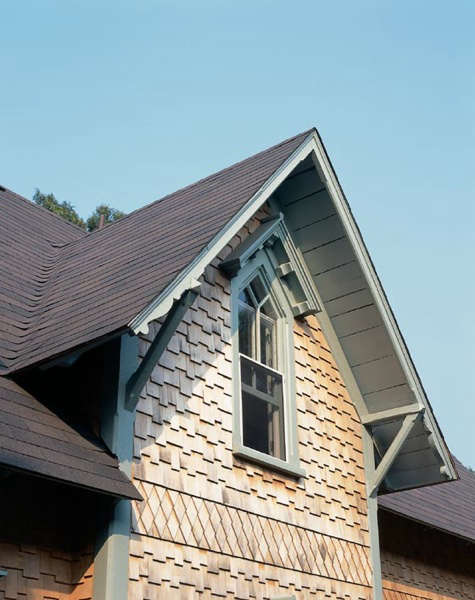
Victorian Carpenter Gothic architecture is wonderfully theatrical, but in Oak Bluffs it often comes with a wink. The style is known for steep gables, decorative wood trim, expressive porches, and vertical shapes that make compact houses feel lively. Unlike stone Gothic buildings, Carpenter Gothic uses wood to create drama. It is lacework instead of limestone, gingerbread instead of gargoyles.
In the Oak Bluffs cottage by Hutker Architects, that language is softened by coastal informality. The seafoam-green porch gives the home a breezy, salt-air mood. The red rockers add a confident pop of color, the kind of design move that says summer has officially clocked in. Painted furniture adds another layer of personality, making the interior feel collected rather than decorated by committee.
A Porch That Does More Than Look Pretty
In a Martha’s Vineyard cottage, the porch is not just an exterior feature. It is a room with better ventilation and more gossip potential. It is where coffee tastes better, books get half-read, and neighbors become part of the daily rhythm. The seafoam-green porch of this Oak Bluffs cottage gives the home a cheerful threshold between public street life and private retreat.
The red rocking chairs are especially important. They do not merely provide seating; they set the emotional temperature. A red rocker on a seafoam porch is friendly, nostalgic, and just bold enough to keep the cottage from becoming too polite. It invites lingering. It also reminds us that great coastal design is not always about beige linen and driftwood. Sometimes it is about a color combination with the confidence of a beach-town parade.
Small Space, Big Lessons
At about 1,000 square feet, the Oak Bluffs cottage offers a useful lesson for anyone interested in small home design. Compact homes demand discipline. Every room must work hard, but the design cannot feel like a spreadsheet. In cottages, efficiency should still leave room for charm, odd corners, vintage pieces, and the joy of not taking everything too seriously.
One of the smartest ideas behind a project like this is that scale becomes an advantage. Smaller rooms feel intimate. Painted furniture can carry more visual weight. A porch can function like an additional living room. Built-ins, flexible seating, and simple circulation become more important than sheer square footage. The cottage does not compete with large coastal estates; it wins by being memorable, human-scaled, and emotionally generous.
Painted Furniture as Personality
The ad hoc collection of painted furniture is one of the most charming elements associated with the cottage. In many design projects, “matching” becomes a trap. Everything coordinates, but nothing sings. Painted furniture works differently. It suggests time, use, adaptation, and the happy possibility that a chair may have had three lives before arriving at the dining table.
For SEO readers researching “coastal cottage design ideas,” this is a practical takeaway. You do not need to buy an entire matching set to create cohesion. A shared palette, repeated materials, and a relaxed attitude can tie together mismatched pieces. In a Victorian cottage, this approach feels especially natural because the architecture itself is layered, decorative, and full of handmade character.
Designing With History Instead of Around It
Historic cottage renovation is a delicate sport. It is less like swinging a hammer and more like joining a conversation already in progress. The original structure has opinions. The neighborhood has opinions. The climate definitely has opinions, especially when salt air, wind, moisture, and summer crowds enter the room.
Hutker Architects’ broader body of work emphasizes regional materials, careful listening, and homes that feel rooted in their settings. That philosophy is especially relevant in Oak Bluffs, where the visual identity of the community is part of the architecture’s value. The goal is not to freeze a house in time, but to let it keep speaking its original language with better plumbing, smarter layouts, and more comfortable daily routines.
Respecting the Street View
In a place like Oak Bluffs, the street-facing elements of a cottage carry public meaning. Porches, railings, trim, paint colors, and window proportions all contribute to the rhythm of the neighborhood. A thoughtful renovation respects that shared visual experience. It does not try to turn a small Carpenter Gothic cottage into a glass box wearing a tiny hat.
The beauty of this Hutker Architects project lies in its balance. The cottage still reads as part of the local architectural family, but it feels lively and usable. The porch remains a social gesture. The color palette remains playful. The furniture feels human and touchable. Nothing seems sealed behind velvet ropes.
Oak Bluffs: A Setting With Built-In Character
Oak Bluffs sits on the northeastern shore of Martha’s Vineyard and is known for its public beaches, harbor, parks, and historic gingerbread cottages. Its identity is inseparable from summer culture, walkability, and visual delight. The town’s famous Campground cottages grew out of the 19th-century camp meeting movement, when temporary tents gradually evolved into permanent wooden cottages. Over time, those cottages became increasingly ornamental, colorful, and beloved.
This background helps explain why the Oak Bluffs cottage by Hutker Architects feels so appealing. It is not merely “cute.” It belongs to a larger architectural story about community, seasonal life, religious gathering, tourism, craft, and the American love affair with the porch. The cottage captures that spirit without turning it into a theme park version of itself.
What Homeowners Can Learn From the Renovation
Even if your own home is nowhere near Martha’s Vineyard, this project offers practical lessons. First, start with what the house already does well. Maybe it has a welcoming entry, a sunny corner, old trim, or a front porch with good bones. Preserve the feature that gives the house its soul before chasing trends.
Second, use color with purpose. The seafoam-green porch and red rockers work because they feel connected to place, mood, and memory. They are not random splashes. They create a sense of arrival and make the home instantly recognizable.
Third, let furniture tell a story. A collected interior often feels warmer than a perfectly matched one. Painted chairs, vintage tables, woven textures, simple lamps, and practical fabrics can create a relaxed coastal cottage look without turning the room into a souvenir shop.
Fourth, remember that small homes need strong editing. Keep what supports the way you live. Remove what only creates clutter. In a 1,000-square-foot cottage, every object should either work hard, look beautiful, carry meaning, or preferably do two of those things before breakfast.
Why the Cottage Still Feels Fresh
Although the Remodelista feature on the cottage dates back several years, the design still feels relevant because it avoids short-lived trends. It does not rely on oversized luxury gestures or hyper-polished finishes. Instead, it leans into proportion, color, porch life, local character, and the charm of imperfection.
That is why this Oak Bluffs cottage continues to resonate with design lovers. It reminds us that a home does not have to be huge to be inspiring. It does not have to be minimal to feel calm. It does not have to be expensive-looking to feel valuable. Sometimes the most memorable houses are the ones that look ready for lemonade, bare feet, and a book that may or may not be finished before sunset.
Experience Notes: Living With the Spirit of an Oak Bluffs Cottage
To understand the appeal of the Oak Bluffs cottage by Hutker Architects, imagine arriving on a warm afternoon after the ferry has done its gentle work of separating you from the mainland. The air has that unmistakable coastal mix: salt, sun-warmed wood, sunscreen, and someone nearby making lunch with the confidence of a person on vacation. You walk through Oak Bluffs and the cottages seem to greet you one by one. Some are bright enough to qualify as dessert. Others are softer, weathered, and shy. Then you reach a cottage like this one, and the porch does what good porches do: it slows you down.
The seafoam-green color feels instantly restful. It has enough personality to be memorable but not so much that it demands applause. The red rockers create a small stage for everyday rituals. Morning coffee becomes a ceremony. Afternoon reading becomes an event. Evening conversation becomes easier because no one is trapped in a formal living room pretending to understand modern art. The porch is casual, but it has manners.
Inside, the experience of a compact cottage is different from a large vacation house. You become more aware of movement, sound, and light. A chair pulled slightly out of place matters. A window left open changes the room. Painted furniture brings color down to human level, where hands touch, plates land, and elbows rest. Instead of feeling designed from a distance, the home feels assembled through use. That is a rare quality, and it is one of the reasons small cottages can feel more alive than grand houses.
There is also an emotional lesson here for anyone renovating an old home. You do not need to erase every wrinkle. In fact, please do not. The best historic cottage renovations keep a little evidence of age: a stair that feels narrow by modern standards, a porch that creaks politely, a room that asks you to choose furniture carefully. These details remind people that the house existed before the renovation and will hopefully continue long after it.
The Oak Bluffs setting deepens the experience. Because the town is walkable and visually rich, the cottage is part of a larger daily rhythm. You can imagine stepping out for a morning stroll, passing other gingerbread cottages, returning with coffee, and spending the afternoon in the soft boundary between indoors and outdoors. That boundary is where coastal living often feels most authentic. Not in the perfect magazine moment, but in the ordinary sequence of porch, breeze, chair, book, neighbor, and dinner plans.
For designers, the experience is a reminder that architecture is not only about form. It is about tempo. This cottage slows the tempo. For homeowners, it shows that comfort and character can share the same small footprint. For visitors, it offers the fantasy we secretly want from a Martha’s Vineyard cottage: a place where the paint is cheerful, the chairs are ready, and the house seems to know that summer is short, so we had better enjoy it properly.
Conclusion
The Oak Bluffs cottage by Hutker Architects is a masterclass in respectful renovation, coastal charm, and small-space confidence. It shows how a 1,000-square-foot Victorian Carpenter Gothic cottage can feel generous when its best qualities are protected and amplified. The seafoam porch, red rockers, painted furniture, and historic Martha’s Vineyard setting all work together to create a home that feels rooted, relaxed, and quietly unforgettable.
For anyone studying coastal cottage design, historic home renovation, or the enduring appeal of Oak Bluffs architecture, this project offers a clear takeaway: the best homes do not simply look good in photographs. They make people want to sit down, stay awhile, and maybe claim a rocking chair before someone else gets the good one.