
Note: This article is written for web publication and synthesizes real public information from established technology, hacker culture, open hardware, and conference badge sources without inserting source links into the body copy.
Some documentaries need drone shots, dramatic strings, and a narrator whispering about “the human condition.” Badgelife, The Hardware Demoscene Documentary needs a soldering iron, a deadline, a lanyard, and one tiny circuit board that somehow contains LEDs, cryptography, inside jokes, and the emotional stability of a sleep-deprived engineer at 3:17 a.m.
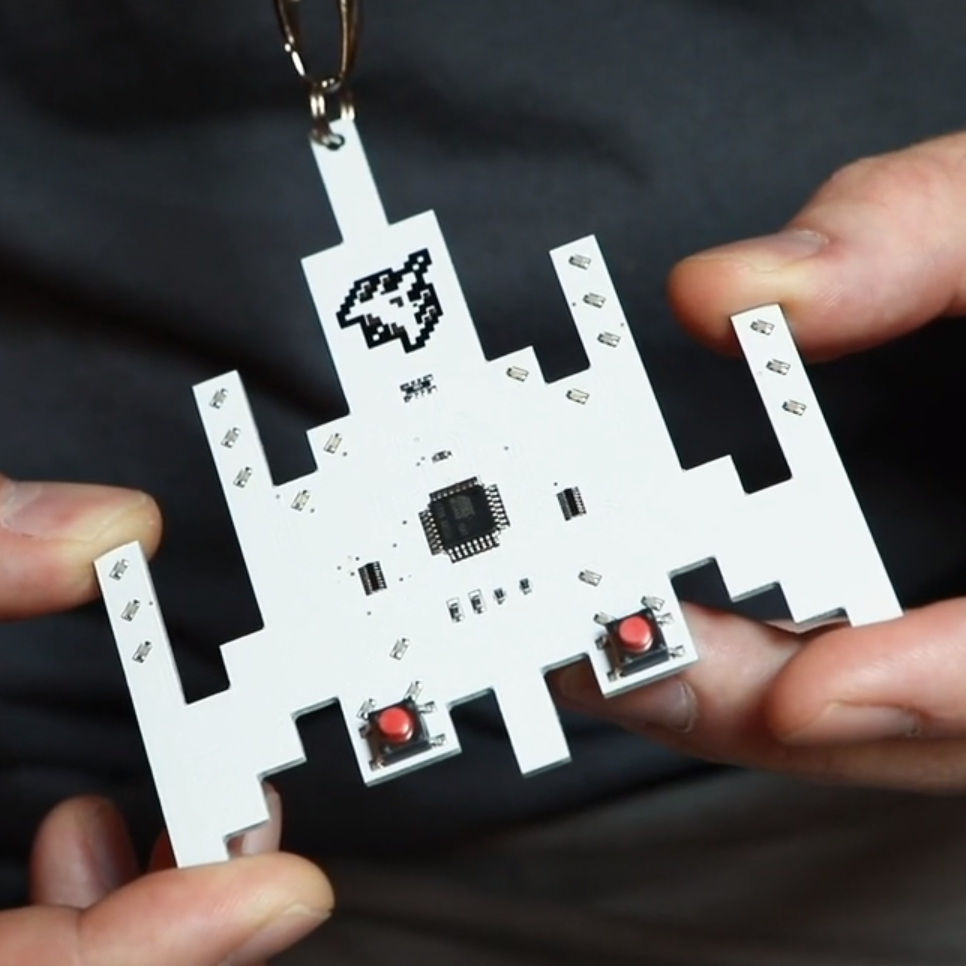
Badgelife is the culture of designing, building, collecting, hacking, trading, and wearing electronic conference badges. These are not the flimsy plastic name tags that say “Hello, My Name Is Dave.” They are custom printed circuit boards, often shaped like skulls, robots, game consoles, animals, cassette tapes, hacker symbols, or memes that aged beautifullyor not at all. They blink, beep, play games, broadcast signals, solve puzzles, run Python, host add-ons, and occasionally make their creators wonder why they did not choose a calmer hobby, like alligator dentistry.
The phrase “hardware demoscene” captures the magic perfectly. In the traditional demoscene, artists and programmers create impressive audio-visual software under strict limitations. In badgelife, makers do something similar with hardware. They accept constraintstiny budgets, tiny PCBs, limited manufacturing windows, small batteries, short firmware schedulesand still produce objects that feel like playable art. The Hackaday documentary helped frame this movement not as a novelty, but as a serious creative subculture where electronics, manufacturing, code, identity, and community collide.
What Is Badgelife?
Badgelife is the unofficial art form that grew around electronic badges at hacker, maker, and cybersecurity conferences, especially DEF CON in Las Vegas. At its simplest, a badge proves you belong at an event. At its most interesting, it becomes a mini-computer, a puzzle box, a collectible, a conversation starter, and a wearable resume for the person who designed it.
The culture includes official conference badges and independent badges made by groups, villages, artists, security researchers, hardware hackers, and friends who thought, “Wouldn’t it be funny if we made 200 of these?” That sentence has bankrupted more weekend schedules than anyone cares to admit.
A typical badgelife project may include:
- custom PCB artwork and unusual board shapes;
- LED animations, screens, sensors, speakers, buttons, radios, or capacitive touch controls;
- firmware puzzles, hidden menus, encrypted messages, and Easter eggs;
- SAO connectors for badge add-ons;
- limited production runs that become instantly collectible;
- a social layer of trading, gifting, and showing off builds at conferences.
That last point matters. Badgelife is not only about the object. It is about the hallway conversation that starts when someone asks, “What does that thing do?” The answer may be simple“It lights up.” It may also be a 22-minute explanation involving radio packets, an FPGA, and a puzzle that requires three other badges and the patience of a monk.
Why Call It the Hardware Demoscene?
The comparison to the demoscene is more than a catchy headline. The original demoscene is a computer art subculture built around making machines do surprising things, often within strict constraints. Classic demos showed off programming, graphics, and music skill on platforms like the Commodore 64, Amiga, Atari ST, and later PCs. The scene valued cleverness under pressure. Anyone can make something impressive with unlimited resources. The demoscene asks, “Can you do it in 64K?”
Badgelife asks a similar question: “Can you do it on a tiny board, powered by a coin cell or LiPo battery, manufactured before the conference, assembled correctly, shipped on time, and still cool enough that strangers will chase you through a casino hallway to trade for it?”
That is why the documentary framing works. Badgelife is performance art with a bill of materials. It is engineering as self-expression. It rewards design elegance, manufacturing courage, firmware polish, puzzle design, and visual taste. It also rewards stubbornness, because every badge creator eventually faces the sacred badgelife ritual: discovering a problem after the boards have already arrived.
The DEF CON Connection
DEF CON helped turn electronic badges from a clever conference feature into a cultural force. Earlier DEF CON badges designed by figures such as Joe Grand showed that a badge could be more than identification. It could be a hackable device, a contest platform, and a symbol of the event’s personality. Over time, attendee-made and group-made badges grew alongside the official badge, creating an ecosystem where unofficial hardware could be as anticipated as scheduled talks.
By the late 2010s, unofficial DEF CON badges had become a major attraction. Groups produced their own limited-run boards with games, puzzles, wireless features, cryptographic challenges, custom art, and elaborate backstories. The badge hunt became part scavenger hunt, part social engineering exercise, and part hardware fashion show. People did not just attend DEF CON with a badge; they attended wearing a constellation of tiny electronic creatures hanging from their necks like cyberpunk Christmas ornaments.
From Access Pass to Artifact
The evolution is important. A plastic badge says, “I paid to be here.” A badgelife badge says, “I participated.” It turns the attendee from a spectator into a player. You can hack it, customize it, attach add-ons, trade it, solve it, or learn from it after the event. Many badges become open source projects, allowing people to study the schematic, firmware, mechanical design, and production choices long after the conference ends.
This is one reason badgelife has educational value. A beginner can look at a badge and learn about PCB design, microcontrollers, LEDs, batteries, I2C buses, USB-C power, RF design, low-power firmware, enclosure decisions, assembly constraints, and user experience. It is a tiny classroom with blinky lights.
The Role of Hackaday and the Documentary Lens
Hackaday’s coverage gave badgelife a language that many people instantly understood: the hardware demoscene. The documentary approach showed badge creators not simply as hobbyists making trinkets, but as builders operating under real manufacturing pressure. They were choosing components, ordering PCBs, writing firmware, debugging prototypes, coordinating assembly, and hoping nothing exploded financially or electrically.
That lens matters because hardware is unforgiving. Software can often be patched after release. A board with the wrong footprint, reversed connector, noisy power rail, or missing pull-up resistor may become an expensive coaster. Badge makers take risks that are both creative and logistical. The documentary highlights the tension between art and production: the badge must be beautiful, fun, reliable, manufacturable, affordable, and done before the event begins.
In that sense, badgelife is a documentary-ready topic because the stakes are visible. You can see the board. You can see the deadline. You can see the creators soldering, packing, testing, labeling, and quietly bargaining with the universe that the next batch of boards will arrive before everyone leaves for Las Vegas.
SAOs: Tiny Add-Ons With Big Personality
No discussion of badgelife is complete without SAOs, commonly known as Shitty Add-Ons. The name is intentionally ridiculous, which is very on-brand for hacker culture. SAOs are small circuit boards that attach to larger badges through a standardized connector. They may be simple LED decorations, sensors, tiny displays, miniature characters, jokes, logos, or fully interactive accessories.
The SAO standard helped badgelife grow because it created interoperability. If a badge supports the connector, makers can create add-ons that work across many badge platforms. This turns the badge ecosystem into a modular playground. A main badge becomes a host, and SAOs become collectibles within the collectible.
In practice, SAOs made badgelife more accessible. Designing a full badge can be intimidating, expensive, and time-consuming. Designing a small add-on is a friendlier entry point. A maker can start with a tiny board, a few LEDs, a fun shape, and a connector. From there, they can learn fabrication, soldering, branding, packaging, and community distribution without immediately diving into the deep end of firmware complexity.
What Makes a Great Badgelife Badge?
A great badge is not always the most complicated one. Complexity is impressive, but personality wins hearts. Some of the most memorable badges succeed because they combine technical polish with a strong concept. A badge shaped like a game console should feel playful. A security-themed badge should invite investigation. A puzzle badge should reward curiosity without making users want to throw it into a decorative fountain.
1. Strong Visual Identity
PCB art is central to badgelife. Designers use board shape, solder mask color, silkscreen, copper layers, exposed metal, LEDs, and component placement as artistic tools. A badge may look like a robot, skull, cassette, spacecraft, retro computer, animal, or parody product. The board is both circuit and canvas.
2. Thoughtful Interaction
Buttons, touch pads, accelerometers, screens, radios, and audio elements invite users to play. Interaction turns a badge from jewelry into a device. The best badges make people explore naturally. They blink in a way that suggests a hidden mode. They display odd text. They respond to other badges. They make owners ask, “What else can this thing do?”
3. Hackability
Badgelife is rooted in hacker culture, so a badge should invite modification. Exposed headers, open firmware, debug pads, documentation, and expansion options all help. Hackability gives the badge a second life after the conference and makes it valuable as a learning platform.
4. Manufacturing Realism
A brilliant design that cannot be assembled affordably is not a badge; it is a beautiful spreadsheet-related tragedy. Good badge makers understand component availability, assembly tolerances, battery choice, shipping limits, packaging, test fixtures, and repair workflows. The glamour is in the blinking lights. The survival is in the logistics.
Examples That Show the Range of Badgelife
Badgelife has produced everything from simple LED ornaments to powerful embedded systems. DEF CON badges have included audio features, puzzles, hidden circuitry, and role-specific designs. Independent groups such as AND!XOR helped popularize highly collectible unofficial badges with personality, humor, and technical depth. Hackaday Superconference badges have leaned into education and hardware exploration, including badges that function as development platforms or retro-inspired computers.
Open Hardware Summit badges have also pushed the concept forward. Some badges used Wi-Fi, Bluetooth, e-paper displays, ESP32 microcontrollers, or even e-textile construction. Badge.Team projects, including badges for European hacker camps, demonstrate how far open source event badges can go. The MCH2022 badge, for example, was shaped like a game console and included serious hardware capabilities, encouraging attendees to write code, play, explore, and customize.
These examples prove that badgelife is not one thing. It is a spectrum. At one end, there is a charming LED board shaped like a taco. At the other, there is a wearable development platform with radios, processors, storage, displays, and an application ecosystem. Both belong. One might teach soldering. The other might teach embedded systems. Both can make someone smile, which is an underrated engineering requirement.
Why Badgelife Matters
Badgelife matters because it turns hardware into culture. Most consumer electronics hide their circuits behind smooth plastic. Badgelife puts the board on display. It celebrates traces, vias, solder joints, silkscreen jokes, and the weird beauty of components arranged with intention. It makes electronics less mysterious and more inviting.
It also builds community. A badge is an icebreaker for people who might otherwise stand awkwardly near the coffee station pretending to read the schedule. Trading badges, solving puzzles, comparing animations, and attaching SAOs create low-pressure social moments. In a field where many people are introverted, technical, or just tired from travel, a blinking board can do heroic diplomatic work.
Badgelife also teaches respect for manufacturing. Many software developers know the thrill of shipping code. Badge creators learn the terror of shipping atoms. Parts go out of stock. PCBs arrive late. Assembly houses ask questions. Batteries have rules. Connectors get rotated. Firmware bugs appear in the wild. Documentation becomes essential. Support becomes real. In the process, makers gain practical engineering experience that no tutorial can fully simulate.
The Dark Side: Cost, Waste, and Burnout
A good documentary does not only show the shiny side. Badgelife has real challenges. Limited-run hardware can be expensive. The rush to create bigger, brighter, more complex badges can lead to burnout. Some projects become e-waste if they are not documented, repairable, reusable, or meaningful after the event. Creators may underestimate costs, overpromise features, or spend months recovering from a project that was supposed to be “just for fun.” Famous last words, right after “This firmware change is safe.”
The healthiest version of badgelife is intentional. It values open documentation, reusable platforms, repairability, responsible battery choices, and realistic project scope. A badge does not need fifteen processors and a coffee grinder to be worthwhile. It needs a reason to exist, a good user experience, and a path for people to keep learning from it.
How Beginners Can Join Badgelife
For newcomers, badgelife can look intimidating. Do not start by trying to build the next legendary DEF CON badge. Start small. Design an SAO. Modify an existing open source badge. Build a simple LED circuit. Learn KiCad. Order a tiny PCB. Practice soldering. Read other designers’ documentation. Study how they handled power, programming headers, mounting holes, art layers, and user controls.
A beginner-friendly path might look like this:
- Design a small SAO with one or two LEDs.
- Create a simple PCB shape with readable silkscreen art.
- Order a small prototype batch.
- Hand-solder and test each board.
- Share build notes, mistakes, and photos.
- Trade or gift the boards at a local meetup or conference.
This process teaches the core lessons of badgelife without requiring a second mortgage or a dramatic soundtrack. Once you understand the basics, you can add microcontrollers, animations, sensors, puzzles, wireless features, or full badge functionality.
The Documentary’s Bigger Message
Badgelife, The Hardware Demoscene Documentary is ultimately about creative constraint. It shows what happens when people treat hardware as a medium, not just a product category. The badge becomes a stage. The PCB becomes a poster. The firmware becomes a hidden story. The conference hallway becomes a gallery where the art walks around wearing its own battery.
The movement also challenges the idea that electronics must be mass-produced to matter. Badgelife thrives on small runs, personal expression, local communities, inside jokes, and shared learning. A badge may only exist in 50 copies, but those 50 boards can inspire hundreds of conversations and dozens of future makers.
That is the real power of the hardware demoscene. It makes engineering feel human. It invites play. It rewards experimentation. It makes failure visible and survivable. It reminds us that technology does not always need to scale to millions of users to be meaningful. Sometimes it just needs to blink at the right moment, around the right people, and make someone say, “I want to learn how to build that.”
Additional Experiences: Living the Badgelife Mindset
The best way to understand badgelife is to imagine preparing for a major hacker conference with a badge project of your own. At first, the idea feels harmless. You sketch a shape on a napkin: maybe a tiny arcade cabinet, a robotic raccoon, or a circuit board shaped like a cassette tape. You tell yourself it will have “just a few LEDs.” This is how the trap opens.
Next, you open your PCB design software. Suddenly, the badge wants buttons. If it has buttons, it should have modes. If it has modes, it needs firmware. If it has firmware, it needs a microcontroller. If it has a microcontroller, you might as well add USB. If you add USB, perhaps a small screen would be fun. Three hours later, your simple LED badge has become a wearable computer with a menu system and an emotional support spreadsheet.
Then comes the first prototype. You hold the board in your hand and feel like a wizard. It is real. It exists. It has your art on it. Then you discover the LED footprint is backward. Or the battery connector is too close to the lanyard hole. Or the button works only when pressed with the exact pressure of a suspicious raccoon opening a trash can. This is not failure; this is tuition.
Badge creators often talk about the thrill of seeing strangers enjoy something they built. That moment is hard to beat. Someone puts the badge around their neck, presses a button, laughs at the animation, asks how it works, and suddenly all the late nights feel less ridiculous. Badgelife turns engineering into a gift economy. Even when badges are sold, the culture still carries a strong spirit of sharing: sharing files, tricks, parts sources, puzzle hints, assembly tips, and emergency soldering help.
The conference experience itself can feel like a moving museum. In one hallway, someone has a badge that displays encrypted clues. Around the corner, another person has built an SAO shaped like a slice of pizza. A table nearby is covered in rework tools, spare headers, and people repairing boards for strangers. Someone is explaining I2C to a beginner. Someone else is debugging radio packets. A group is trading badges like rare cards, except the cards require firmware updates.
There is also a special kind of humility that comes from badgelife. Hardware teaches patience. It does not care about your confidence. It does not care that the board looked perfect on screen. It will calmly remind you that physical reality has opinions. But that is why the culture is valuable. It gives makers a place to learn in public, celebrate weird ideas, and turn mistakes into lore.
For writers, filmmakers, educators, and technologists, badgelife offers rich storytelling material. It has characters, deadlines, creativity, conflict, comedy, and tiny glowing artifacts that symbolize much bigger ideas. It is about how communities form around objects. It is about how constraints fuel invention. It is about how open hardware can turn attendees into contributors. Most of all, it is about the joy of making something unnecessary, delightful, and strangely unforgettable.
That is why the documentary angle still resonates. Badgelife is not merely about badges. It is about people who decide that a conference credential can be a puzzle, a toy, a lesson, a sculpture, a joke, and a technical flex all at once. It is hardware with a heartbeatand sometimes, if the firmware is behaving, a surprisingly nice LED fade.
Conclusion
Badgelife, The Hardware Demoscene Documentary captures a culture where small circuit boards carry big meaning. Badgelife blends hacker tradition, PCB art, embedded systems, open hardware, puzzles, manufacturing drama, and community storytelling into one blinking, wearable medium. From DEF CON’s legendary badge history to SAO add-ons, Hackaday Supercon experiments, Open Hardware Summit designs, and Badge.Team’s open source platforms, the movement proves that hardware can be expressive, social, educational, and deeply fun.
For beginners, badgelife is an invitation. You do not need to build the most advanced badge in the room. Start with curiosity. Make a tiny board. Solder one LED. Share what you learned. The hardware demoscene is not reserved for experts; it is built by people willing to try, fail, repair, laugh, and try again. In a world of sealed gadgets and disposable tech, badgelife keeps the circuit visible and the community alive.