
Note: This original article is written for web publication in standard American English and synthesizes real cooking guidance from established U.S. food and recipe sources without copying their wording or structure.
If your dinner table has been begging for a vegetable dish with personality, this Best Harissa-Roasted Chickpeas and Carrots Recipe is ready to clock in wearing a tiny apron and a cape. It is smoky, spicy, sweet, creamy, crunchy, and deeply satisfying without requiring you to hover over the stove like a nervous contestant on a cooking show.
At its heart, this recipe is beautifully simple: carrots roast until tender and caramelized, chickpeas turn golden and crisp at the edges, and harissa brings that bold North African-style chile flavor that makes everything taste like it took far more effort than it did. Add a quick tahini-lime drizzle, fresh herbs, and a finishing crunch, and suddenly a humble sheet pan has become the main event.
This dish works as a vegetarian dinner, a vegan side dish, a meal-prep lunch, or a colorful holiday vegetable platter. It is also the kind of recipe that makes people say, “Wait, these are carrots?” which is exactly the level of drama vegetables deserve.
Why This Harissa-Roasted Chickpeas and Carrots Recipe Works
The magic comes from balance. Carrots are naturally sweet, especially after roasting. Harissa adds heat, garlic, peppery depth, and a little smokiness. Chickpeas bring protein, texture, and nutty flavor. Tahini cools everything down with creamy richness, while lime juice wakes up the whole plate like a splash of cold water on a sleepy Monday.
Roasting also does a lot of heavy lifting. High oven heat concentrates the carrots’ sweetness and helps the chickpeas dry out enough to become pleasantly crisp. The result is a dish that tastes layered and restaurant-worthy, even though most of the work happens while you are free to clean the counter, make rice, or stare proudly into the oven window.
What Is Harissa?
Harissa is a spicy chile paste commonly associated with North African cooking, especially Tunisian cuisine. It is usually made with red chiles, garlic, olive oil, and spices such as cumin, coriander, or caraway. Depending on the brand or homemade version, it can taste smoky, bright, earthy, fiery, or gently warm.
For this roasted carrots and chickpeas recipe, mild or medium harissa paste is ideal. You want enough heat to make the dish exciting, not so much that everyone at the table starts negotiating with a glass of water. If your harissa is very spicy, start with less and build from there. If it is mild, go ahead and let it sing.
Ingredients for the Best Harissa-Roasted Chickpeas and Carrots
Main Ingredients
- 1 1/2 pounds carrots, scrubbed and cut into sticks or thick diagonal pieces
- 1 can chickpeas, drained, rinsed, and patted very dry
- 2 tablespoons olive oil, divided
- 2 tablespoons harissa paste, mild or medium preferred
- 1 tablespoon honey, maple syrup, or agave
- 1/2 teaspoon ground cumin
- 1/2 teaspoon smoked paprika
- Kosher salt and black pepper, to taste
For the Tahini-Lime Sauce
- 3 tablespoons tahini
- 2 tablespoons fresh lime juice
- 1 teaspoon honey, maple syrup, or agave
- 1 small garlic clove, grated or finely minced
- 2 to 4 tablespoons warm water, as needed
- Pinch of salt
Optional Toppings
- Fresh parsley, cilantro, mint, or dill
- Crumbled feta or dollops of Greek yogurt
- Toasted pistachios, almonds, or sesame seeds
- Microgreens or arugula
- Lime wedges for serving
- Pomegranate seeds for a colorful finish
How to Make Harissa-Roasted Chickpeas and Carrots
Step 1: Preheat the Oven
Heat the oven to 425°F. This temperature is hot enough to caramelize the carrots while helping the chickpeas develop a crisp exterior. Place racks in the upper and lower thirds of the oven if you are using two sheet pans.
Step 2: Dry the Chickpeas Thoroughly
Drain and rinse the chickpeas, then spread them on a clean towel or paper towels. Pat them dry until they are no longer shiny with moisture. This step matters. Wet chickpeas steam; dry chickpeas roast. Steam is useful for broccoli. It is not invited to this crisp chickpea party.
Step 3: Season the Carrots
Place the carrots on a rimmed baking sheet. Toss with 1 tablespoon olive oil, cumin, smoked paprika, salt, and pepper. Spread them into a single layer with enough space between the pieces. Crowding the pan can make the carrots soften instead of roast.
Step 4: Season the Chickpeas
Place the chickpeas on a second rimmed baking sheet. Toss with the remaining tablespoon of olive oil, a pinch of salt, and black pepper. For the crispiest result, roast them plain first, then coat them with the harissa mixture near the end. This prevents the chile paste and sweetener from burning before the chickpeas are ready.
Step 5: Roast Until Golden
Roast the carrots on the lower rack for about 25 to 30 minutes, flipping once halfway through. Roast the chickpeas on the upper rack for about 30 minutes, shaking the pan once or twice. The carrots should be tender with browned edges, and the chickpeas should look golden and slightly split.
Step 6: Add the Harissa Glaze
In a small bowl, stir together harissa paste and honey, maple syrup, or agave. Spoon part of this mixture over the chickpeas and toss carefully. Return them to the oven for another 4 to 6 minutes, just until the glaze clings and the chickpeas look beautifully burnished.
If you want extra flavor on the carrots, brush or drizzle a small amount of the harissa glaze over them during the final few minutes of roasting. Do not overdo it; harissa should season the dish, not tackle it in the end zone.
Step 7: Make the Tahini-Lime Sauce
Whisk tahini, lime juice, garlic, sweetener, salt, and 2 tablespoons warm water in a bowl. At first, the sauce may thicken and look stubborn. Keep whisking and add more water, 1 tablespoon at a time, until it becomes smooth and pourable. The final texture should be creamy but loose enough to drizzle.
Step 8: Assemble and Serve
Spread the tahini-lime sauce on a serving platter or drizzle it over the roasted carrots and chickpeas. Add fresh herbs, nuts, greens, feta, yogurt, or pomegranate seeds if using. Serve warm, room temperature, or even slightly chilled the next day.
Recipe Card: Harissa-Roasted Chickpeas and Carrots
Prep Time, Cook Time, and Servings
- Prep time: 15 minutes
- Cook time: 35 minutes
- Total time: 50 minutes
- Servings: 4 as a side dish or 2 as a main dish
- Diet: Vegetarian, vegan-friendly, gluten-free
Instructions Summary
- Preheat oven to 425°F.
- Pat chickpeas very dry.
- Toss carrots with olive oil, cumin, smoked paprika, salt, and pepper.
- Toss chickpeas with olive oil, salt, and pepper.
- Roast carrots for 25 to 30 minutes and chickpeas for about 30 minutes.
- Mix harissa with honey, maple syrup, or agave.
- Toss chickpeas with harissa glaze and roast 4 to 6 minutes more.
- Whisk tahini-lime sauce and serve everything with herbs and toppings.
Tips for Crispy Chickpeas and Perfectly Roasted Carrots
Use Two Sheet Pans
Carrots and chickpeas roast at slightly different speeds and release different amounts of moisture. Using separate pans gives each ingredient room to become its best self. The carrots turn sweet and browned, while the chickpeas crisp instead of absorbing carrot steam like tiny beige sponges.
Cut Carrots Evenly
Try to cut the carrots into similar-size pieces. Thin carrot tips can stay whole, but thicker tops should be halved lengthwise. Uniform pieces roast evenly, which means no burnt matchsticks next to undercooked carrot logs.
Add Harissa Near the End
Harissa paste contains chiles, spices, garlic, and sometimes oil or acid. When mixed with sweetener, it can scorch if roasted too long. Adding it near the end keeps the flavor bold and fresh while still giving the chickpeas a sticky, savory coating.
Do Not Skip the Acid
Lime juice, lemon juice, or a small splash of vinegar makes the whole dish brighter. Without acid, the recipe can taste heavy. With acid, it becomes balanced, lively, and slightly addictive.
Flavor Variations
Make It Creamy
Serve the roasted chickpeas and carrots over Greek yogurt, labneh, whipped feta, or hummus. The creamy base softens the heat from the harissa and turns the recipe into a more filling main dish.
Make It Vegan
Use maple syrup or agave instead of honey, and skip dairy toppings. For a vegan platter, serve the vegetables over hummus or lemony tahini sauce with herbs and toasted seeds.
Make It a Grain Bowl
Spoon the roasted carrots and chickpeas over couscous, quinoa, farro, bulgur, or brown rice. Add cucumbers, greens, olives, and a little extra tahini sauce. Suddenly, yesterday’s side dish becomes today’s lunch, and you look wildly organized.
Make It Extra Spicy
Add a pinch of Aleppo pepper, crushed red pepper flakes, or cayenne to the harissa glaze. Taste your harissa first because some brands are gentle and others arrive with a tiny marching band of heat.
What to Serve with Harissa-Roasted Chickpeas and Carrots
This recipe is flexible enough to sit beside many dishes. For a simple vegetarian dinner, serve it with warm flatbread, hummus, cucumber salad, and olives. For a more complete meal, pair it with lemon rice, couscous, or roasted cauliflower. It also works beautifully beside grilled fish, roasted chicken, or lamb if you are serving a mixed table.
For entertaining, arrange the carrots and chickpeas on a wide platter over yogurt or tahini sauce. Finish with herbs, pistachios, and pomegranate seeds. It looks colorful, tastes bold, and requires no last-minute panic choreography.
Storage and Meal Prep
Store leftovers in an airtight container in the refrigerator for up to 4 days. The chickpeas will soften as they sit, but they will still taste delicious. To bring back some texture, reheat them on a sheet pan at 375°F for 8 to 10 minutes.
Keep the tahini-lime sauce in a separate container if possible. It may thicken in the refrigerator, so whisk in a splash of warm water before serving. The roasted carrots are excellent cold or room temperature, which makes this recipe especially useful for lunch boxes, picnics, and “I forgot to plan dinner but refuse to surrender” evenings.
Nutrition Benefits
Harissa-roasted chickpeas and carrots are not just pretty on the plate. Chickpeas provide plant-based protein, fiber, and a satisfying bite. Carrots bring natural sweetness, color, and beta-carotene. Tahini adds richness from sesame seeds, along with healthy fats and a nutty flavor that ties the dish together.
The recipe is naturally gluten-free and can easily be vegan. It is also built around affordable pantry and produce staples, which makes it practical for weeknight cooking. In other words, it has the flavor of a special occasion and the budget manners of a sensible grocery list.
Common Mistakes to Avoid
Using Wet Chickpeas
This is the biggest mistake. If chickpeas are not dried well, they will not crisp properly. Give them a good towel-dry before roasting.
Overcrowding the Pan
Vegetables need space. If the pan is packed too tightly, moisture gets trapped and everything steams. Use two sheet pans if needed.
Adding Too Much Harissa Too Early
Harissa is powerful and can burn when roasted too long, especially when mixed with sweetener. Add most of it near the end for the best flavor.
Forgetting the Finishing Touches
Fresh herbs, lime juice, and something creamy or crunchy make a big difference. They turn roasted vegetables from “nice side dish” into “please pass that platter again.”
Experience Notes: Cooking Harissa-Roasted Chickpeas and Carrots in Real Life
The first time you make harissa-roasted chickpeas and carrots, you may be surprised by how much personality comes from such a short ingredient list. The carrots start out firm and ordinary, the kind of vegetable that has been quietly minding its business in the crisper drawer. After 30 minutes in a hot oven, they become sweet, browned, and almost buttery at the edges. The chickpeas, meanwhile, go from soft and humble to crisp, nutty, and snackable. It feels like a glow-up montage, but with legumes.
One practical experience worth sharing: not all harissa tastes the same. Some jars are smoky and mild, some are sharp and garlicky, and others are hot enough to make you sit up straighter. Before adding it to the recipe, taste a tiny amount. If it feels strong, reduce the quantity and add more tahini sauce at the end. If it tastes mild, you can be more generous. This simple taste test saves the dish from becoming either too shy or too dramatic.
Another real-world tip is to roast the chickpeas longer than your instincts might suggest. At around 20 minutes, they may look done, but they often need more time to dry out and develop that crisp shell. You are looking for a golden color and a few split skins. When some chickpeas crack open, that is usually a good sign. They are not falling apart; they are announcing progress.
This recipe is also excellent for meal prep, but with one small warning: crispy chickpeas are crispest on day one. After refrigeration, they soften. That does not make them bad; it simply changes the texture. For leftovers, treat the dish more like a roasted vegetable salad. Serve it over greens, grains, or hummus, and add something fresh like cucumber, parsley, or lemon juice. If you want the chickpeas crisp again, reheat them separately in the oven or air fryer.
For family meals, this dish is a useful bridge between adventurous and familiar flavors. Carrots bring sweetness that makes the harissa less intimidating, while chickpeas make the dish hearty enough to satisfy people who believe dinner should involve more than “just vegetables.” Add warm pita and a creamy sauce, and it becomes a complete meal without much effort.
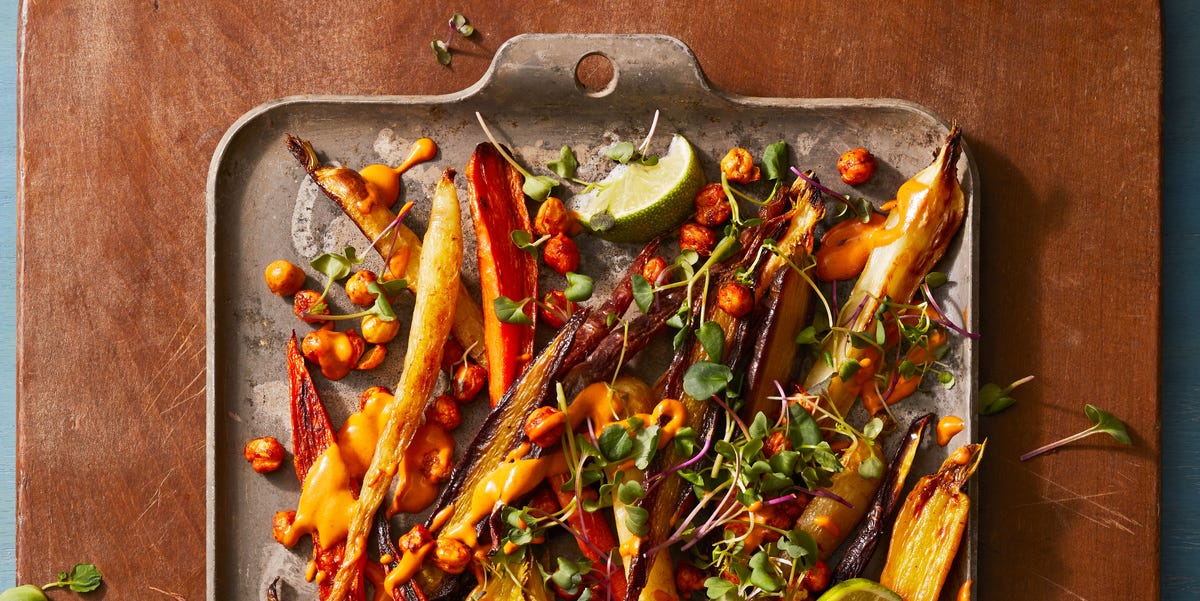
For guests, presentation matters. A wide platter makes the recipe look abundant and colorful. Spread tahini sauce or yogurt across the base, pile the roasted carrots and chickpeas on top, then scatter herbs and nuts over everything. The contrast of orange carrots, red harissa, green herbs, and creamy sauce makes the dish look like it came from a restaurant kitchen, even if your actual kitchen currently has one spoon in the sink and a mysterious smear of tahini on the counter.
The best part is how forgiving the recipe can be. No rainbow carrots? Regular orange carrots work beautifully. No tahini? Use yogurt, hummus, or a lemony garlic sauce. No fresh mint? Parsley or cilantro will do. No pomegranate seeds? Toasted almonds bring crunch instead. The basic formula stays the same: sweet roasted vegetables, hearty chickpeas, spicy harissa, creamy sauce, bright acid, and a fresh finish. Once you understand that structure, you can repeat it with cauliflower, sweet potatoes, squash, or Brussels sprouts.
In short, harissa-roasted chickpeas and carrots are weeknight-friendly but not boring, healthy-ish but not joyless, and impressive without being fussy. It is the kind of recipe that quietly earns a regular spot in your rotation. And if a vegetable dish can make people reach for seconds before the main course arrives, that is not just dinner. That is a tiny culinary victory.
Conclusion
The Best Harissa-Roasted Chickpeas and Carrots Recipe proves that a sheet pan, a can of chickpeas, a bunch of carrots, and a spoonful of harissa can do impressive things together. The carrots roast into sweet, caramelized pieces; the chickpeas become golden and hearty; and the tahini-lime sauce adds the creamy brightness that pulls every bite into balance.
This recipe is easy enough for a weeknight, colorful enough for a holiday table, and flexible enough for meal prep. Serve it as a vegetarian main dish, a vegan side, a grain bowl topping, or a party platter with herbs and crunchy nuts. However you plate it, one thing is clear: carrots are no longer the quiet sidekick. They have entered their main-character era.