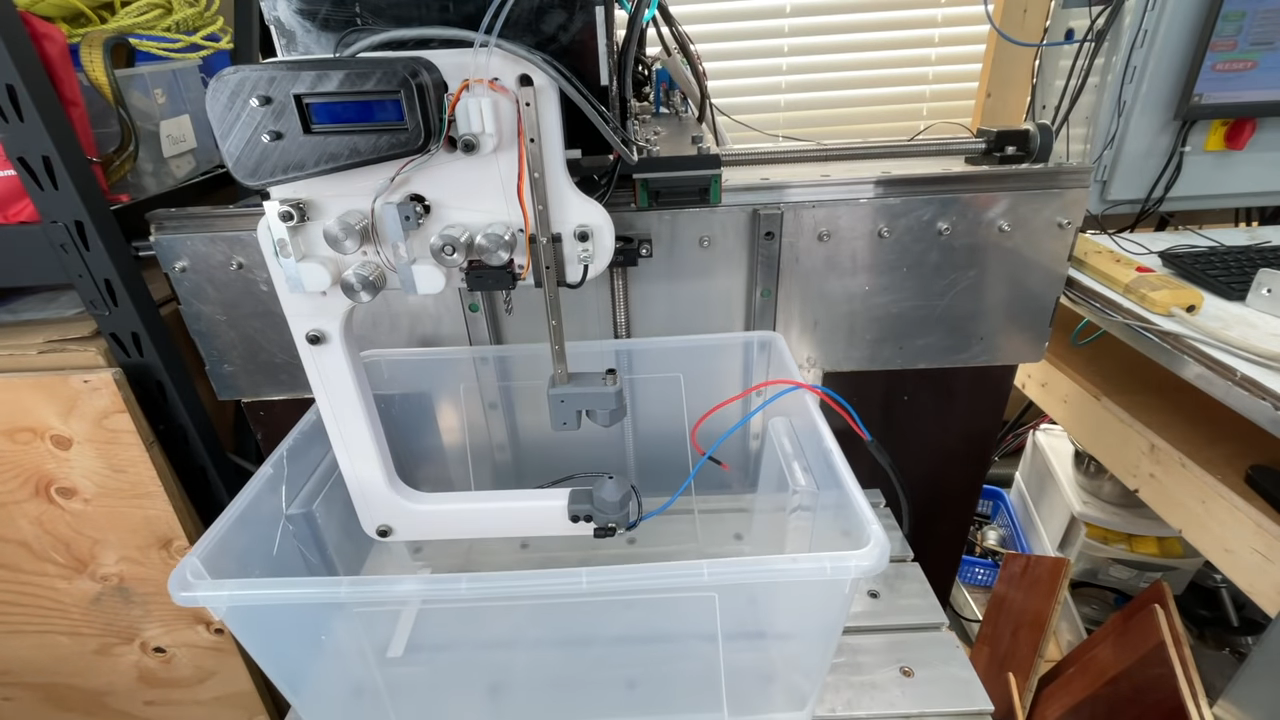

If you’ve ever tried to machine hardened steel with a standard cutter, you know the feeling: your tool screams, your setup flexes, and your confidence quietly leaves the room. That’s where EDM (Electrical Discharge Machining) changes the game. Instead of forcing a cutting edge through metal, EDM removes material using controlled electrical sparks. No traditional cutting force. No heroic spindle torque. Just precision spark erosion in a controlled gap.
For home shops, that’s a big deal. EDM makes “impossible later” parts possible now: tiny internal corners, high-aspect-ratio features, delicate details in hard alloys, and rescue jobs like broken tap removal in expensive workpieces. It’s not a replacement for your mill or lathe. It’s the specialist teammate that handles the geometry your other machines hate.
This guide walks you through how to bring EDM capability into a home shop the smart way: what EDM type fits your work, how to plan the setup, how to run safe and stable processes, and how experienced users make EDM pay for itself in real projects. If you like precision, practical workflows, and avoiding avoidable headaches, you’re in the right place.
Why EDM Belongs in a Serious Home Shop
EDM is often treated like “big factory technology,” but the value proposition maps perfectly to small shops:
- Hard materials become manageable: Tool steels, carbide-based components, and difficult alloys are no longer automatic outsourcing jobs.
- Complex geometry gets realistic: Thin slots, narrow contours, and precision profiles become repeatable.
- Low cutting force protects delicate parts: Less mechanical distortion on fragile features.
- Repair capability jumps: Hole EDM workflows can save parts that would otherwise become scrap.
- Finish and accuracy are tunable: Roughing plus skim strategies let you match quality to function.
The catch? EDM rewards discipline. Clean dielectric conditions, stable flushing, good fixturing, and consistent process habits matter more than “winging it.” If you enjoy dialing in repeatable systems, EDM feels like a natural extension of good machining practice.
EDM 101: Three Types, Three Use Cases
1) Wire EDM
Wire EDM uses a continuously fed wire electrode (often brass or coated wire) to cut profiles through conductive materials. Picture a very precise, spark-driven contour cutter. The wire is consumable and must feed smoothly with controlled tension and stable flushing.
Best for: Through-cuts, punch/die components, precise profile geometry, and high-accuracy small features.
Home-shop fit: Excellent when your work includes precision contouring and repeatable profile parts.
2) Sinker (Ram) EDM
Sinker EDM uses a shaped electrode to “burn” its geometry into the workpiece. This is ideal for blind cavities and details that are difficult to machine with rotating tools.
Best for: Mold cavities, complex pocket details, sharp internal features, and form-specific work.
Home-shop fit: Great for toolmaking and cavity work, especially if you can produce electrodes efficiently.
3) Hole-Drilling EDM (Hole Popper / Tap Burner)
Hole EDM uses tubular electrodes for fast small-hole creation and rescue operations, including broken drill or tap removal.
Best for: Starter holes, broken tap extraction, and difficult-hole machining in hard materials.
Home-shop fit: Often the fastest path to immediate ROI because it solves painful repair problems right away.
What EDM Is (and Isn’t) in a Home Workflow
EDM is not a universal replacement for milling. It’s a strategic process for specific geometry and material challenges. The winning approach is hybrid:
- Use conventional machining for bulk material removal.
- Use EDM where cutting force, tool access, or hardness would otherwise limit quality.
- Use inspection checkpoints to confirm function-critical dimensions and finish.
Think of it as division of labor. Your mill is the athlete; EDM is the surgeon. One moves fast, the other solves what speed alone can’t solve.
Home-Shop EDM Setup: Practical Blueprint
Electrical and Space Planning
Before machine shopping, map your electrical capacity, service clearances, and floor layout. EDM machines need reliable power, maintenance access, and room for fluid handling and consumables. Tight layouts create avoidable maintenance pain later.
Dielectric and Filtration Strategy
EDM quality is tied to dielectric management. Poor fluid condition increases instability, wire breaks, surface inconsistency, and dimensional drift. Build a simple maintenance cadence for filtration, fluid condition checks, and housekeeping around the machine.
Consumables Inventory
Keep critical consumables in stock: wire/electrodes, filters, wear components, and fluid-management supplies. Nothing kills productivity faster than pausing a precision job because a low-cost part is out of stock.
Environmental Stability
Precision work hates thermal swings and process chaos. If you want repeatability, prioritize stable shop conditions, consistent clamping practices, and predictable setup routines.
Parameter Logic: Roughing, Skim, and Surface Integrity
A common beginner mistake is trying to force one “perfect” pass to do everything. Better strategy: separate goals.
- Roughing pass: prioritize removal rate and controlled progress.
- Skim pass(es): prioritize dimensional refinement and improved surface condition.
Why this matters: EDM creates a thermally affected surface region (often called recast/white layer context in practice). Skim strategies and stable conditions help reduce unwanted effects and improve functional finish. In real life, that means better-fitting parts, better edge quality, and less post-process correction.
Process intent should match part function:
- Utility fixture slot? Don’t over-finish it.
- Precision die edge? Invest in skim quality.
- Critical seal/fatigue surface? Validate with inspection and conservative process settings.
First High-Value Project: Broken Tap Rescue
If you want a “wow, this machine already paid rent” moment, start with broken tap removal. This is where EDM can save expensive, partly completed parts that would otherwise be scrap.
A Simple, Repeatable Rescue Workflow
- Fixture and indicate carefully. Alignment quality decides rescue quality.
- Choose electrode size appropriately. Target controlled erosion of broken tool material.
- Start conservative. Stable sparks beat aggressive settings on rescue jobs.
- Maintain flushing/debris evacuation. Debris overload creates instability fast.
- Peck, inspect, and verify progress. Avoid collateral damage to parent threads.
- Post-rescue cleanup and thread check. Confirm part viability before final assembly.
Do this a few times and EDM stops feeling “specialized.” It becomes practical shop insurance.
Safety and Compliance Mindset for EDM at Home
Precision does not cancel risk. EDM combines electrical systems, metalworking fluids, and maintenance exposure points. Treat safety as part of cycle time, not an optional extra.
Non-Negotiable Shop Rules
- Electrical integrity first: inspect cords, plugs, and grounding before operation.
- Fluid hygiene: manage mist/splash, maintain fluid systems, and ventilate properly.
- Lockout/tagout behavior: isolate hazardous energy before servicing.
- Clean machine, clean aisle, clean response plan: spill control and housekeeping prevent incidents.
- Waste handling discipline: store and dispose of used oils/fluids correctly under local rules.
Short version: if your part quality standard is professional, your safety behavior should be too.
Common EDM Problems and Fast Corrections
Wire Breaks Keep Happening
Likely causes: poor flushing, contamination, unstable settings, guide wear, or tension issues.
Correction: improve flushing support, reduce aggressiveness, verify wire path and consumable condition, then retest.
Dimensions Drift Across Runs
Likely causes: thermal variation, setup movement, poor fluid consistency, or weak skim strategy.
Correction: stabilize environment, tighten fixturing, validate offsets, and standardize rough/skim process.
Surface Finish Is Rougher Than Expected
Likely causes: roughing-only approach, debris-rich gap, unstable spark conditions.
Correction: add skim passes, improve filtration/flushing, and optimize parameter strategy.
Cycle Time Feels Too Slow
Likely causes: over-finishing non-critical surfaces or conservative settings everywhere.
Correction: apply finish only where function needs it; keep utility surfaces efficient.
Cost and Upgrade Path: Spend Smart, Not Loud
The best EDM investment is the one that matches your job mix, not social media hype. Build your upgrade path around real work:
- If you do frequent repair/rescue: start with hole-drilling EDM capability.
- If you do profile precision: prioritize wire EDM.
- If you do cavity/tooling details: prioritize sinker EDM.
Budget for the full ecosystem:
- machine + installation readiness
- consumables and filtration
- inspection workflow
- maintenance time
- learning curve time
EDM profitability in a home shop often comes from avoided pain: fewer scrapped high-value parts, less outsourcing of difficult features, and more confidence taking on hard jobs.
Extended Shop Experiences: Bringing EDM Into Daily Reality (500+ Words)
One of the most interesting patterns across home and small professional shops is that EDM changes decision-making before it changes cutting. Early on, most users think EDM is “for special occasions”a tool for rare, impossible parts. Then a few real jobs arrive: a hardened component that keeps chipping cutters, a precise contour with tiny internal corners, or a broken tap in a nearly finished part. After those moments, EDM stops being exotic and starts becoming normal workflow planning. People begin asking, “Should I EDM this feature from the start?” instead of “Can I avoid EDM this time?” That mindset shift is huge.
I’ve seen shops run a successful “rough then refine” strategy where mills do all straightforward stock removal, and EDM handles only the geometry that truly benefits from spark erosion. The result is not just better dimensional consistency; it’s better emotional consistency too. Operators stop fighting impossible toolpaths and start using the right process at the right time. The mill still does the heavy lifting. EDM does the precise, difficult finishing. That combination reduces frustration and scrap in a way that feels almost unfair once you’ve experienced it.
Another recurring experience: beginners blame the machine when the real problem is process discipline. EDM can look easy in short clips onlinespark, fizz, done. But stable results come from boring habits: checking dielectric condition, keeping filters on schedule, verifying fixturing, running sensible rough/skim logic, and logging what worked. The shops that improve fastest treat these routines like part of the program, not optional chores. Once those habits are in place, performance becomes predictable. And predictable beats dramatic every time.
Broken tap rescue is where confidence grows fastest. A small restoration shop described EDM rescue as “panic prevention technology.” Before adopting EDM rescue workflow, a broken tap in a rare part could end the project or force expensive rework. Afterward, it became recoverable. Not always easy, but recoverable. That matters financially, but it also matters psychologically. When your downside risk is controlled, you take on better jobs, accept tougher parts, and design fixtures more boldly because failure is no longer a one-way door.
There’s also a design-quality effect that doesn’t get enough attention. Once you trust EDM capabilities, you stop designing around unnecessary compromises. Instead of adding oversized radii “just so a cutter can reach,” you can hold geometry closer to functional intent. Instead of splitting one part into multiple components to dodge tool-access limits, you can often simplify the assembly. Better manufacturing options lead to better designs, and better designs reduce tolerance stack headaches later. This is a quiet but powerful advantage in home shops where every iteration costs time you cannot get back.
Most experienced users eventually agree on the same economic truth: EDM pays back through avoided losses and higher completion quality more than through flashy headline speed. Yes, unattended cycles and automation features can improve throughput. But for small shops, the day-to-day wins are practical: salvage instead of scrap, precision features done in-house, fewer compromises, and fewer jobs sent out. EDM doesn’t need to run 24/7 to be worth it. It needs to solve the exact jobs that other methods make risky, expensive, or unreliable.
Finally, the learning curve is realbut friendly if you approach it with structure. Start with forgiving projects. Keep a simple process notebook. Record material, settings, flushing setup, and outcomes. Build your own playbook. In a few months, you stop guessing and start engineering your decisions. That is when EDM truly becomes part of your shop identity: not a novelty, not a backup plan, but a repeatable precision process you trust. And once that happens, “Bringing The Power Of EDM To The Home Shop” is no longer a slogan. It’s just how your shop works on Tuesday morning.
Conclusion
EDM brings a unique advantage to home shops: precision machining of difficult conductive materials and complex features with minimal cutting force. Used strategically, it complements milling and turning, reduces scrap risk, improves part quality, and opens jobs that were previously impractical. Choose the EDM type that matches your workload, run disciplined process control, and keep safety integrated into daily operations. Do that, and EDM becomes one of the most practical upgrades a serious home shop can make.