
Co-teaching sounds beautifully simple: put two skilled educators in one classroom, give them a shared group of students, and let the learning magic begin. In real life, of course, it can feel less like magic and more like two chefs trying to cook one soup while both are holding the ladle. Done well, though, co-teaching can be one of the most powerful instructional models in modern classrooms. It gives students more access to expert support, helps teachers combine strengths, and turns inclusion from a nice poster on the wall into an everyday practice.
The best co-teaching strategies do not depend on luck, friendship bracelets, or telepathic lesson planning. They depend on structure. Effective co-teachers plan together, teach together, assess together, and adjust together. Whether the classroom includes general education students, students with disabilities, English learners, gifted learners, or a wonderful mix of all of the above, co-teaching works when both educators share responsibility for every learner in the room.
This guide explores practical co-teaching strategies that work in real classrooms. You will find proven models, planning tips, classroom examples, common mistakes to avoid, and experience-based advice for making collaboration smoother, stronger, and far less awkward than two adults accidentally giving directions at the same time.
What Is Co-teaching?
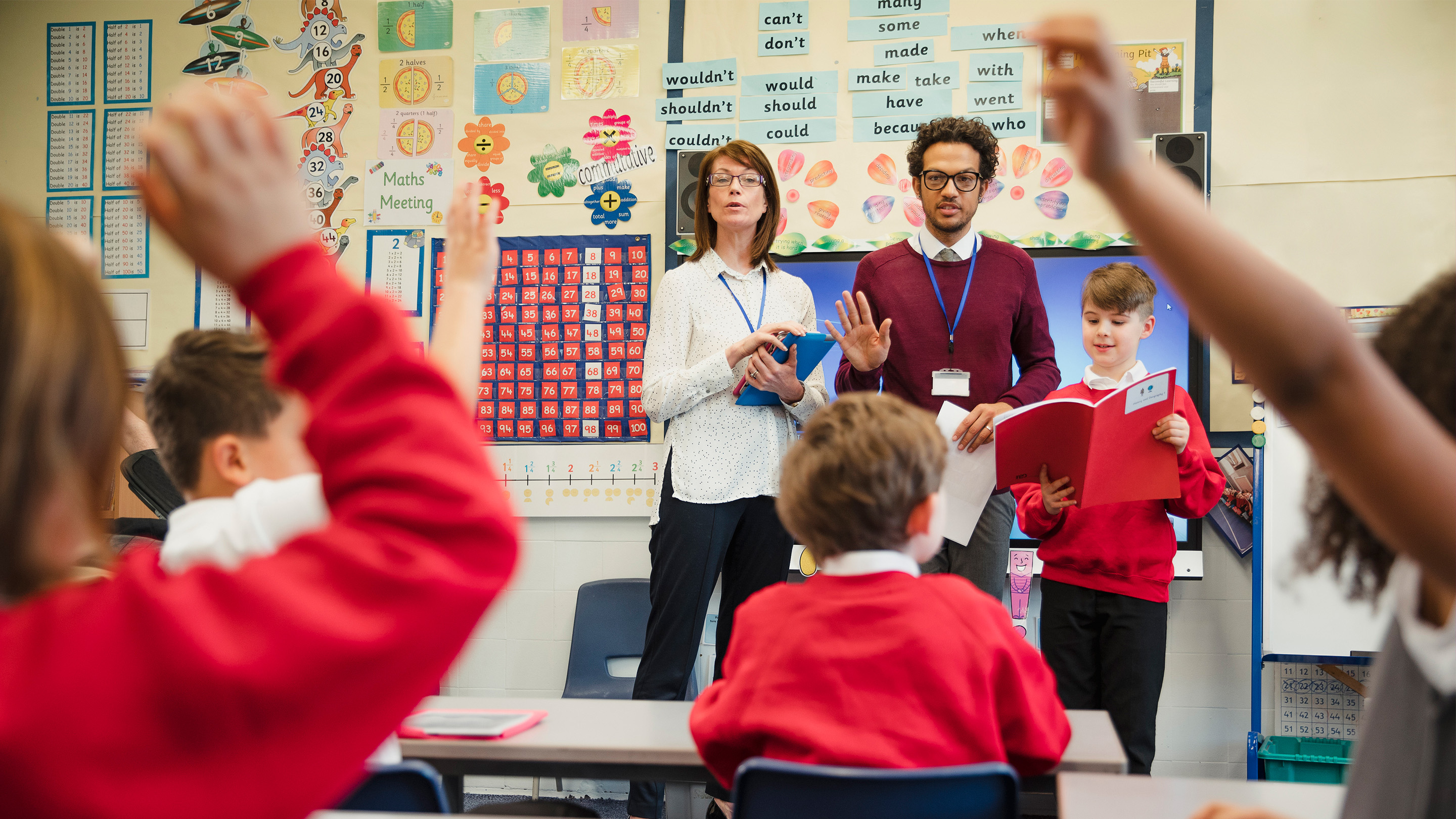
Co-teaching is a collaborative instructional approach in which two educators share responsibility for planning, delivering, and assessing instruction for the same group of students. In many schools, this partnership pairs a general education teacher with a special education teacher. In other settings, it may include an English language development teacher, reading specialist, instructional coach, or another certified educator.
The key word is share. Co-teaching is not one teacher leading while the other quietly floats around like a helpful classroom ghost. It is not a permanent assistant role. It is not “my students” and “your students.” Strong co-teaching means both teachers are visible, valued, and actively involved in instruction.
Why Co-teaching Matters in Inclusive Classrooms
Inclusive classrooms are built on the idea that students should learn alongside their peers while receiving the support they need. Co-teaching helps make that possible. Instead of pulling students out for separate instruction whenever they need help, co-teaching brings specialized support into the classroom. Students can access grade-level content, social learning, peer discussion, and individualized support in the same space.
For teachers, co-teaching also creates a professional partnership. One educator may bring deep content expertise; the other may bring specialized knowledge of accommodations, behavior supports, language development, or individualized instruction. Together, they can design lessons that are more flexible than either teacher might build alone. It is the academic version of a buddy movie, except with fewer car chases and more formative assessments.
The Six Co-teaching Models Every Teacher Should Know
Effective co-teaching teams do not use one model all year. They choose the structure that matches the lesson goal, student needs, available space, and time. The six common co-teaching models below provide a flexible toolkit.
1. One Teach, One Observe
In this model, one teacher leads instruction while the other collects targeted data. The observing teacher is not simply watching the clock or admiring the bulletin board. The observation should have a purpose, such as tracking which students ask questions, who needs repeated directions, how often students use academic vocabulary, or which learners struggle during independent work.
Best use: When teachers need information before making instructional decisions.
Example: During a math mini-lesson, one teacher explains how to solve multi-step equations while the other records which students correctly begin the first step. After class, both teachers use the data to form small groups for the next day.
2. One Teach, One Assist
One teacher provides whole-group instruction while the other circulates and supports students. This model is useful in short bursts, especially during note-taking, guided practice, technology use, or transitions. However, it becomes a problem when used every day. If one teacher is always “the real teacher” and the other is always “the helper,” students notice. Adults notice too. The classroom power balance starts wearing a neon sign.
Best use: Brief support during direct instruction or guided practice.
Watch out: Do not let this become the default model. Rotate leadership often.
3. Station Teaching
Station teaching divides the class into small groups that rotate through different learning stations. Each teacher leads one station, and a third station may involve independent practice, technology, reading, or collaborative work. This model is excellent for differentiation because teachers can target specific skills in smaller groups.
Best use: Skill practice, review, reading groups, science labs, writing workshops, and test preparation.
Example: In an English class, one station analyzes theme, another station reviews textual evidence with a teacher, and a third station uses a digital tool for vocabulary practice. Students rotate every 15 minutes, which also helps anyone who believes sitting still for 50 minutes is a form of medieval punishment.
4. Parallel Teaching
In parallel teaching, the class is split into two groups, and both teachers teach the same content at the same time. This reduces the student-to-teacher ratio and gives students more chances to respond, ask questions, and participate.
Best use: Discussions, debates, direct instruction, guided reading, math practice, or any lesson where smaller groups improve engagement.
Example: During a social studies lesson on the Constitution, each teacher leads half the class through the same primary source analysis. Students who rarely speak in a group of 28 may participate more confidently in a group of 14.
5. Alternative Teaching
Alternative teaching places most students in one group while a smaller group receives targeted instruction from the other teacher. The small group might need reteaching, enrichment, pre-teaching, language support, or assessment accommodations. The important rule is that the small group should change based on need. If the same students are always separated, alternative teaching can unintentionally create a “those kids” situation. Nobody wants that.
Best use: Quick intervention, enrichment, makeup instruction, pre-teaching vocabulary, or targeted review.
Example: Before a lab, one teacher reviews safety procedures with most students while the other previews key vocabulary with English learners and students who need extra language support.
6. Team Teaching
Team teaching is the most seamless model. Both teachers share instruction equally, switching roles naturally throughout the lesson. One may explain a concept while the other models a strategy. One may ask questions while the other charts student responses. This model requires trust, planning, and rhythm. When it works, it feels like a great podcast with lesson objectives.
Best use: Complex lessons, demonstrations, debates, modeling academic conversations, and highly interactive instruction.
Example: In a writing lesson, one teacher models writing a claim while the other plays the role of a skeptical reader, asking, “Where is your evidence?” Students see the thinking process out loud.
Co-teaching Strategies that Actually Work
Start with Shared Planning, Not Shared Panic
Co-teaching begins before students enter the room. Teachers need common planning time, even if it is short. A strong co-planning meeting answers five questions: What are students learning? How will they show it? What barriers might appear? Which co-teaching model fits best? Who is doing what?
A simple shared planning template can save time. Include the standard, objective, vocabulary, materials, accommodations, grouping plan, assessment method, and teacher roles. Without this structure, planning can become a polite conversation that ends with, “Great, see you tomorrow,” followed by two teachers privately wondering what just happened.
Define Roles Clearly
Students should see both educators as teachers. That requires clear role-sharing. Both teachers should lead instruction, give feedback, communicate with families, support behavior expectations, assess work, and know student goals. If one teacher owns the content and the other owns the “struggling students,” the partnership becomes divided.
Try rotating roles weekly. One week, Teacher A opens the lesson and Teacher B leads guided practice. The next week, switch. This builds credibility and keeps both teachers connected to the full class.
Use Student Data to Choose the Model
Do not choose station teaching because it looks cute on Pinterest. Choose it because the data says students need targeted practice. Do not choose team teaching because it feels impressive. Choose it because the lesson benefits from two voices and active modeling.
Quick data sources can include exit tickets, student work samples, quiz results, observation notes, IEP goals, language proficiency levels, and student self-reflections. The best co-teachers treat data like a flashlight, not a hammer. It helps them see what students need next.
Build Lessons with Universal Design for Learning
Universal Design for Learning, often called UDL, encourages teachers to design flexible lessons that give students multiple ways to access content, engage with ideas, and show what they know. Co-teaching and UDL fit together beautifully. With two educators in the room, it becomes easier to offer choices, scaffold tasks, support executive functioning, and provide multiple forms of feedback.
For example, students might learn new science vocabulary through images, a short reading, a teacher demonstration, and a partner discussion. They might show understanding through a written explanation, diagram, oral response, or digital slide. The goal is not to make 27 separate lesson plans. The goal is to remove predictable barriers before students crash into them.
Make Small Groups Fluid
Flexible grouping is one of the strongest co-teaching strategies. Students should move in and out of groups based on the skill being taught, not based on labels. A student may need support with reading comprehension but excel in discussion. Another may fly through computation but need help explaining mathematical reasoning.
Fluid groups protect student dignity and improve instruction. They also prevent the small teacher-led group from becoming known as “the help table,” which is only slightly more subtle than putting up a flashing sign.
Plan Classroom Management Together
Co-teachers need shared expectations for behavior, routines, transitions, technology, noise level, participation, and consequences. Students should not receive one answer from one teacher and a different answer from the other. That creates the classic childhood strategy known as “ask the adult who says yes.”
Before the year begins, co-teachers should discuss classroom norms, attention signals, bathroom procedures, late work policies, seating arrangements, and how to respond to disruptions. During lessons, both teachers should reinforce expectations consistently.
Use Both Teachers During Assessment
Assessment is not just grading after the lesson. In strong co-teaching classrooms, both teachers monitor learning during instruction. One teacher may lead discussion while the other checks student responses on whiteboards. One may review exit tickets while the other pulls a small group. Both teachers should understand what mastery looks like.
Co-assessment also helps teachers adjust instruction quickly. If half the class misses the same concept, tomorrow’s lesson changes. If three students need enrichment, one teacher can extend the learning while the other reteaches. This is where co-teaching becomes responsive instead of decorative.
Common Co-teaching Mistakes to Avoid
Using One Teach, One Assist Every Day
This is the most common co-teaching trap. It feels easy because it requires less planning, but it can reduce one teacher’s role and limit student access to both educators. Use it occasionally, not permanently.
Skipping Difficult Conversations
Co-teachers may disagree about grading, noise, pacing, discipline, homework, or how many inspirational posters are too many. Avoiding these conversations does not create harmony; it creates quiet frustration with a seating chart. Talk privately, respectfully, and early.
Planning Only for Content, Not Access
A lesson can be content-rich and still inaccessible. Co-teachers should ask: What vocabulary might block understanding? Which students need visuals? Who needs movement? What background knowledge is missing? What accommodations are required? Access is not an add-on. It is part of the lesson design.
Forgetting to Reflect
Reflection does not need to be a long meeting with muffins and a slideshow. A five-minute debrief can work: What went well? Who learned it? Who needs more support? Which model should we use next time? Small reflections lead to big improvements.
Practical Examples of Co-teaching in Action
Elementary Reading
During a third-grade reading block, teachers use station teaching. One station focuses on decoding multisyllabic words, another on comprehension questions, and a third on independent reading response. Students rotate in mixed groups. Both teachers gather notes and regroup students the next day based on performance.
Middle School Math
During a lesson on ratios, teachers use parallel teaching. Each teacher instructs half the class using the same examples. Because the groups are smaller, students solve problems on whiteboards and receive immediate feedback. At the end, the whole class comes together for an exit ticket.
High School Biology
Before a genetics lab, teachers use alternative teaching. One teacher reviews lab procedures with the larger group while the other pre-teaches vocabulary such as dominant, recessive, genotype, and phenotype. Later, both teachers circulate during the lab to ask questions and check understanding.
English Learner Support
In a co-taught English class, one teacher leads a mini-lesson on argumentative writing while the other models sentence frames and academic language. Students choose whether to draft independently, use a graphic organizer, or rehearse claims orally before writing. This approach supports language development without lowering expectations.
How School Leaders Can Support Co-teaching
Co-teaching does not thrive on goodwill alone. Administrators play a major role. Teachers need shared planning time, balanced class rosters, professional development, clear expectations, and schedules that do not treat co-teaching like a puzzle piece forced into the wrong box.
Leaders should also observe co-taught classes with the right lens. A quiet classroom is not always a successful classroom. A room with two active teachers, flexible groups, student discussion, and targeted support may look busy because learning is busy. The goal is not perfect choreography. The goal is meaningful access and progress for students.
Experience-Based Lessons: What Really Makes Co-teaching Work
After watching co-teaching succeed, stumble, recover, and sometimes trip over its own rolling cart, one lesson becomes clear: the relationship between teachers matters as much as the model. A beautifully designed station rotation can fall flat if the teachers do not trust each other. A simple parallel teaching lesson can shine when both educators communicate well and believe every student belongs to both of them.
One practical experience many co-teachers share is that the first few weeks set the tone. Students are quietly studying the adults. They notice who gives directions, who handles behavior, who answers questions, and whether both teachers know everyone’s name. When both educators greet students, lead routines, and respond to questions from day one, students quickly understand that there are two real teachers in the room. When one teacher stays at the back for too long, students also understand that message, even if no one says it aloud.
Another lesson from real classrooms is that short planning beats imaginary planning. Many teachers never receive the perfect 45-minute daily planning block. Waiting for ideal conditions can become a fancy form of giving up. Successful teams often use compact routines: ten minutes on Monday to choose models, a shared digital lesson plan, quick comments in the margins, and a Friday reflection. It is not glamorous, but neither is trying to co-teach by surprise.
Co-teaching also works better when teachers agree on signals. A quiet hand gesture, sticky note, or quick phrase can help partners adjust during instruction without interrupting the flow. For example, one teacher might signal that several students look confused, suggesting a quick pause for reteaching. Another might step in with an example, visual, or analogy. These small moves make the classroom feel responsive rather than scripted.
Experience also shows that students benefit when co-teachers let them see productive collaboration. When teachers respectfully disagree about how to solve a problem or interpret a text, students learn that thinking can be shared, revised, and strengthened. A co-taught classroom can model academic conversation in a way a solo classroom often cannot. Two adults thinking out loud can make invisible strategies visible.
The hardest part is usually not instruction; it is ego. Co-teaching asks adults to share space, authority, mistakes, and success. That can feel vulnerable. One teacher may worry about being judged. The other may worry about losing control of the classroom. The solution is not perfection. It is honest communication. The best partners say things like, “Can we try that differently tomorrow?” or “I noticed students needed more modeling,” instead of silently building a museum of resentment.
In the end, co-teaching works when teachers stop asking, “Whose job is this?” and start asking, “What do our students need next?” That single shift changes everything. The classroom becomes less divided, support becomes more natural, and students gain two educators who are fully invested in their success. That is the heart of co-teaching: not two teachers sharing a room, but two professionals building one stronger learning experience.
Conclusion
Co-teaching strategies that work are not mysterious. They are intentional, flexible, and student-centered. Strong co-teachers plan together, rotate instructional models, use data, share authority, design accessible lessons, and reflect honestly. They avoid the trap of turning one teacher into an assistant and instead build a classroom where both educators contribute expertise.
The best co-teaching classrooms feel balanced. Students know both teachers are there for everyone. Instruction shifts smoothly between whole-group lessons, small groups, stations, observation, intervention, and enrichment. Mistakes still happen, because classrooms are run by humans, not laminated flowcharts. But when co-teachers communicate clearly and focus on student growth, the partnership becomes more than a scheduling arrangement. It becomes a powerful strategy for inclusive, effective teaching.
Note: This article is written for web publication and synthesizes widely used, research-informed co-teaching practices from reputable U.S. education organizations, professional teaching resources, and inclusive education frameworks.