
Note: This article is based on real archaeological reporting about Cortijo Lobato, a Copper Age fortress uncovered during solar plant construction near Almendralejo, Spain.
Construction sites are famous for surprises. Usually, it is a stubborn rock, a broken pipe, or the legendary coffee cup someone set down and never found again. But near Almendralejo, a city in Spain’s Extremadura region, workers preparing land for a solar energy project uncovered something far more dramatic: a nearly 5,000-year-old fortress from the Copper Age.
The site, now known as Cortijo Lobato, turned an ordinary renewable energy project into one of Spain’s most exciting archaeological discoveries in recent years. Instead of only installing solar panels, the construction team helped reveal a fortified settlement with concentric walls, defensive ditches, bastions, domestic objects, evidence of fire, and even a mysterious Roman-era burial from thousands of years later.
In other words, one patch of ground managed to hold an ancient military puzzle, a prehistoric community, and a later Roman mystery all in the same dusty neighborhood. History, apparently, enjoys multitasking.
What Did Construction Workers Find?
The discovery happened during preliminary work for a photovoltaic solar plant developed by Acciona Energía. As construction crews began preparing the land, archaeological remains appeared beneath the surface. Rather than pushing ahead blindly, the company brought in specialists, including archaeologists from Tera S.L., to investigate and document the site.
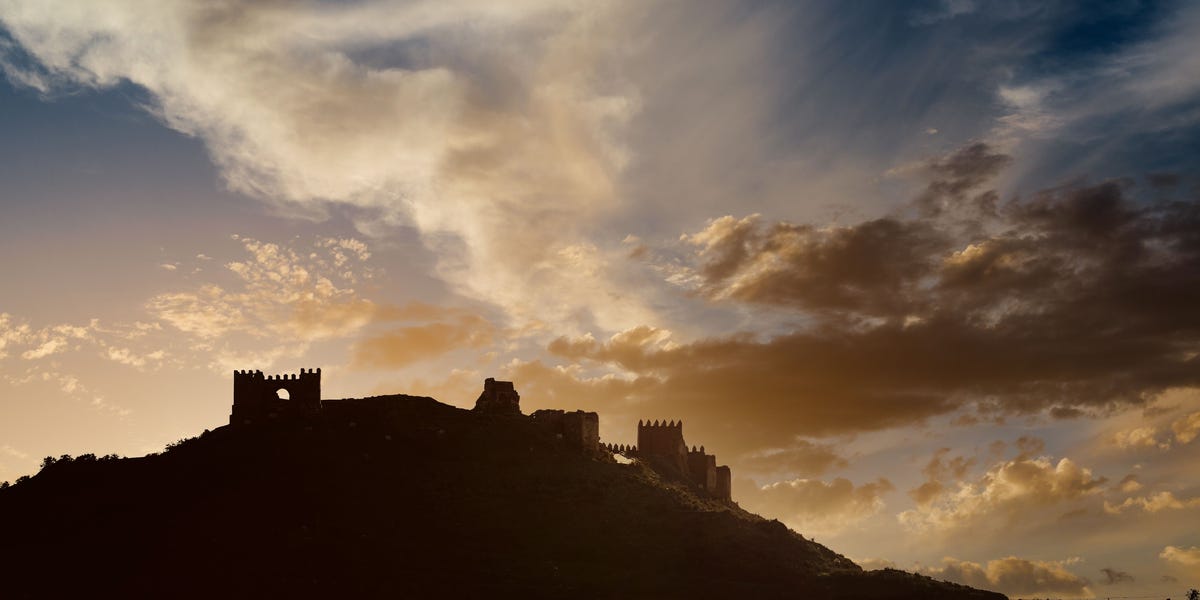
What they found was not a small scatter of pottery or a lonely stone wall. Cortijo Lobato turned out to be a large Copper Age fortress covering roughly 13,000 square meters, or about 140,000 square feet. The fortification sat on a strategic hilltop near Almendralejo, giving its ancient builders visibility over the surrounding landscape. For a community living almost five millennia ago, high ground was not just scenic real estate. It was security, surveillance, and status all rolled into one.
The fortress included multiple defensive features: three concentric walls, 25 bastions or tower-like projections, and deep ditches designed to slow or stop attackers. Some reports describe narrow entrances that would have forced people to pass through one at a time. That kind of design is not accidental. It suggests planning, labor organization, and a serious understanding of how to protect a settlement from danger.
Why Cortijo Lobato Matters
Cortijo Lobato is important because it challenges the lazy idea that people of the Copper Age lived in simple, peaceful villages with a few tools and a lot of quiet evenings. The fortress shows a community capable of large-scale building, defense planning, resource management, and possibly long-term conflict.
The Copper Age, also called the Chalcolithic period, was a transitional era between the Neolithic and the Bronze Age. People still relied heavily on stone tools, but copper was becoming increasingly important for ornaments, tools, and symbolic objects. In Iberia, this period saw growing social complexity, long-distance exchange, fortified settlements, and elaborate burial traditions.
That context makes Cortijo Lobato especially fascinating. Its walls were not decorative. Its ditches were not landscaping. Its bastions were not added because someone wanted the ancient version of curb appeal. This was a fortress designed to defend people, goods, food supplies, or authority. The structure points to a society that understood risk and invested heavily in protection.
A Fortress Built for Defense
The most striking feature of Cortijo Lobato is its defensive layout. The fortress was built with concentric barriers, meaning attackers would have faced one obstacle after another. First came ditches, then walls, then more protected interior space. This layered design made entry difficult and dangerous.
Archaeologists have identified bastions around the walls, which likely improved visibility and defensive control. In practical terms, bastions allowed defenders to monitor movement near the walls and protect weak points such as entrances. The fortification’s narrow access points may have been another smart defensive trick. A narrow gate limits the number of people who can enter at once, which is helpful if those people are not bringing snacks and friendly conversation.
The use of stone and adobe also tells a story. Building with these materials required labor, knowledge, and coordination. The community had to quarry or collect stone, prepare adobe, organize workers, and maintain the walls over time. A project of this scale suggests leadership or at least strong collective organization.
What Artifacts Were Found Inside?
The artifacts found at Cortijo Lobato help bring the ancient fortress back to life. Archaeologists have reported arrowheads, axes, grinding stones, plates, bowls, idols, loom-related pieces, and traces of cabins. These finds suggest that the site was not just a military shell. People lived, worked, cooked, stored food, made textiles, worshiped or practiced rituals, and defended their community within or around the fortified space.
Grinding stones point to food preparation, likely involving cereals or other plant foods. Loom parts suggest textile production, a vital craft in prehistoric households. Pottery fragments indicate storage and cooking. Idols may reflect symbolic or ritual life, reminding us that ancient people were not merely surviving; they were creating meaning, identity, and belief systems.
A possible water reservoir has also been reported at the site. That detail matters because water storage would have been essential during dry periods or conflict. If defenders expected to remain inside the fortress during a threat, access to water could mean the difference between endurance and surrender.
The Violent End of the Fortress
Cortijo Lobato appears to have been used for around 400 years before it was abandoned around 2450 B.C. Evidence of fire damage and numerous arrowheads suggests that the fortress may have suffered a violent attack. Archaeologists have not identified who attacked it or who defended it, but the signs point toward destruction rather than peaceful retirement.
This violent ending is one of the discovery’s most powerful details. A fortress with walls, ditches, towers, and controlled entrances still fell. That does not make its builders foolish. It makes the site human. Even the best defenses can fail when circumstances change, enemies adapt, resources run short, or internal pressures build.
The fire damage also raises bigger questions about the Copper Age in Iberia. Was conflict more common than previously believed? Were communities competing for farmland, water, trade routes, livestock, or prestige? Did climate stress or population growth increase tension? Cortijo Lobato cannot answer every question by itself, but it adds strong evidence to a wider conversation about violence and social organization in late prehistory.
The Roman Burial Mystery
As if a 5,000-year-old fortress were not enough, archaeologists also found a much later burial at the site. The grave belonged to a man from the Roman period, likely dating to the second or third century A.D. He was buried face down with a Roman military dagger, known as a pugio, placed on his back. Reports also note that his feet were missing or cut off.
This burial is strange because it happened more than 2,500 years after the Copper Age fortress had been abandoned. By the Roman period, the ancient walls would likely have been ruined or barely visible. Yet someone chose this location for a quick, unusual, and possibly dishonorable burial.
The pugio suggests the man may have been connected to the Roman army, although archaeologists have not reached a final conclusion about his identity or death. He could have been a soldier, a deserter, a victim of violence, or someone buried according to a specific punitive or symbolic practice. The face-down position adds to the mystery because prone burials are often interpreted as unusual, marginal, or dishonorable, though every case requires careful analysis.
This later burial turns Cortijo Lobato into a layered historical site. It was not only a Copper Age fortress. It also became, much later, a place where Roman-era people left behind a disturbing and unresolved clue.
Ancient Engineering Meets Modern Solar Power
One of the most interesting parts of this story is the contrast between ancient defense and modern renewable energy. Workers were preparing land for a solar plant, a symbol of the future, when they uncovered a fortress built nearly five millennia ago. The result is a rare meeting between two very different human priorities: generating clean power and preserving cultural memory.
Acciona’s project had to adapt to the archaeological discoveries. Reports indicate that the solar panel configuration was modified so areas of historical interest could be protected while the energy project continued. That balance matters. It shows how infrastructure development and archaeology do not always have to be enemies. With careful planning, a construction site can become a discovery site.
This is especially important because many archaeological finds are uncovered not by treasure hunters or movie-style adventurers, but by construction workers, survey teams, utility crews, and engineers. Roads, rail lines, housing developments, wind farms, and solar parks often expose buried history. When the right protocols are followed, those accidental discoveries can become priceless research opportunities.
What the Fortress Reveals About Copper Age Society
Cortijo Lobato gives researchers a valuable window into how Copper Age people organized themselves. The fortress required planning before construction began. Its builders had to understand terrain, defense, water, access routes, and materials. They also needed enough labor to dig ditches, raise walls, shape entrances, and maintain the site.
That implies social coordination. Whether the community was led by chiefs, councils, family groups, or another structure is still open to study. But the fortress suggests people were not acting randomly. They shared goals and invested in collective security.
The site also hints at economic concerns. Fortifications often protect something valuable. That may have included stored grain, livestock, water, metal resources, trade goods, ritual objects, or people themselves. In a world without modern police, insurance policies, or neighborhood group chats, walls were a serious statement: what is inside matters.
Specific Examples That Make the Discovery Stand Out
1. The Scale Was Unexpected
At roughly 13,000 square meters, Cortijo Lobato is unusually large for its period and region. The size alone makes it a standout discovery, but the complexity of its defenses makes it even more remarkable.
2. The Defensive Design Was Sophisticated
Three concentric walls, bastions, and ditches show that the builders were not improvising. They understood how to control movement and create barriers that would slow attackers.
3. The Artifacts Show Daily Life
Bowls, grinding stones, loom pieces, axes, and idols reveal more than conflict. They show cooking, craft, work, storage, and belief. The fortress was a lived-in world, not just a prehistoric bunker.
4. The Fire Damage Suggests a Dramatic End
The evidence of burning and arrowheads gives the site a dramatic final chapter. It suggests that the fortress may have been attacked and destroyed instead of gradually abandoned.
5. The Roman Burial Adds a Second Mystery
The face-down man with a military dagger connects the site to a much later period. His burial raises questions that may require further forensic and archaeological study.
Why Discoveries Like This Capture Public Imagination
People love stories like this because they collapse time. One moment, workers are preparing a modern energy project. The next, they are standing above a place where people built walls, stored water, defended entrances, made tools, and perhaps faced a violent attack almost 5,000 years ago.
There is also a satisfying irony in the discovery. Solar panels are designed to capture sunlight. Archaeology captures something else: the long shadow of human memory. At Cortijo Lobato, both ideas share the same landscape.
The story also reminds us that ancient people were not primitive background characters waiting for “real history” to begin. They were builders, planners, farmers, fighters, makers, and thinkers. They responded to danger, organized labor, and shaped their environment in ways that still impress modern researchers.
Experience-Based Lessons From the Cortijo Lobato Discovery
For construction workers, engineers, and site managers, a discovery like Cortijo Lobato offers practical lessons that go far beyond archaeology textbooks. The first lesson is simple: the ground is not empty just because it looks empty. A field may seem ordinary from the surface, but beneath it there may be walls, burials, tools, pottery, ancient roads, or settlement remains. Every scoop of soil has the potential to become a chapter of human history.
The second lesson is the importance of slowing down at the right moment. Construction schedules are tight, budgets are real, and deadlines do not politely pause for ancient pottery. Still, when unusual stones, bones, ceramics, or structural remains appear, the smartest move is not to rush. It is to secure the area, document what is visible, and call qualified specialists. That pause can protect workers from damaging heritage and protect companies from legal, financial, and reputational problems.
There is also a human experience involved. Imagine being a machine operator or survey worker and realizing that the shape in the soil is not random rubble but part of a wall built thousands of years before modern Spain existed. That moment changes the mood of a site. The land becomes less like a blank project zone and more like a shared responsibility. Workers are no longer only building for the future; they are helping recover the past.
For archaeologists, discoveries during construction create both pressure and opportunity. They must work carefully, often under time constraints, while coordinating with developers, local authorities, and preservation teams. The best outcomes happen when everyone treats the discovery as a problem to solve together, not as a nuisance. Cortijo Lobato shows that development can adapt. The solar project reportedly changed its layout to protect areas of archaeological interest while still preserving energy goals.
For the public, the experience is a reminder that history is not locked inside museums. It is under roads, farms, parking lots, riverbanks, and construction sites. Sometimes it waits quietly until a backhoe, survey trench, or foundation cut brings it back into view. That does not mean every building project hides a fortress, unfortunately for headline writers everywhere. But it does mean construction workers often stand on the front line of accidental discovery.
The final lesson is humility. Modern people often assume they are the first to truly understand engineering, planning, and crisis management. Then a 5,000-year-old fortress appears with layered defenses, water storage, strategic placement, and evidence of organized labor. Suddenly, the ancient world looks less distant and much more familiar. Different tools, same human concerns: safety, food, water, power, identity, and survival.
Conclusion
The discovery of Cortijo Lobato proves that construction can do more than reshape landscapes. Sometimes, it reveals the landscapes that came before us. What began as work for a solar plant near Almendralejo became a major archaeological story: a Copper Age fortress with walls, ditches, bastions, artifacts of daily life, signs of violent destruction, and a later Roman burial that still refuses to explain itself neatly.
For researchers, the site offers new evidence about prehistoric defense, social organization, and conflict in Iberia. For builders and developers, it shows why archaeological awareness matters on modern projects. For the rest of us, it is a thrilling reminder that the past is not gone. It is simply buried, waiting for the right shovel, the right survey, or the right construction crew to say, “Uh, you may want to come look at this.”