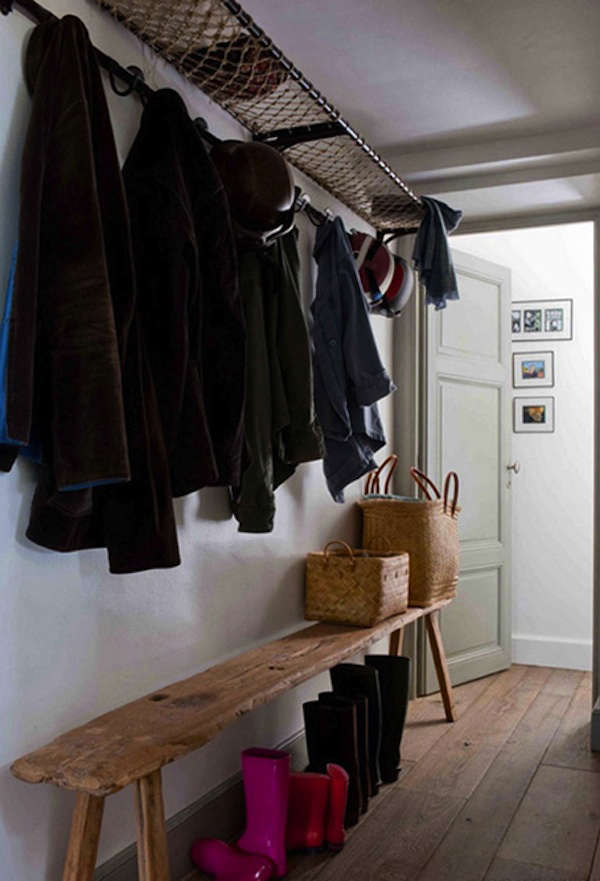

Some entryway ideas whisper, “Welcome home.” Others shout, “Please stop throwing your scarf on the doorknob like a medieval flag.” The Net Entryway Shelf belongs to that rare and useful middle category: practical enough to tame hats, gloves, scarves, sports gear, and mystery mittens, yet stylish enough to look like an intentional design choice instead of a desperate household truce.
Originally spotted in a smart, hard-working entryway designed with winter life in mind, the net shelf concept is beautifully simple. Instead of a solid shelf that traps dampness and hides clutter in a dusty little cave, a net shelf creates an airy holding zone. Wet hats can breathe. Gloves can dry. Scarves can rest without becoming a tangled wool salad. Boots stay below. Coats hang nearby. Suddenly, the front door stops behaving like a lost-and-found bin.
The appeal of the Design Sleuth: Net Entryway Shelf idea is not just the product itself. It is the design logic behind it: use vertical space, keep daily items visible, encourage airflow, and make storage feel casual rather than fussy. In other words, it is an entryway shelf that understands real life. Real life has rain. Real life has backpacks. Real life has one glove that disappears every February and returns behind the bench in April with no explanation.
What Is a Net Entryway Shelf?
A net entryway shelf is a wall-mounted storage shelf that uses open netting, mesh, or woven material instead of a flat wooden or metal surface. The best-known inspiration for this look is the sporty, utilitarian shelf style often associated with kids’ rooms, mudrooms, and casual family entryways. One product that closely matched the original inspiration featured an aluminum frame, an oil-rubbed bronze finish, cotton netting, included mounting hardware, and a long, shallow shape suitable for wall storage.
That combination matters. The frame gives structure. The netting provides airflow. The shallow depth keeps the shelf from bullying the hallway. The dark finish adds a slightly industrial edge, which helps the piece look less like a toy bin and more like a clever design move. It is a little locker room, a little boat house, a little Paris apartment, and a little “we finally have a place for the soccer shin guards.”
Why the Net Shelf Works So Well in an Entryway
It Uses Air as Part of the Design
Most storage hides things. A net shelf helps things recover. That distinction is important in an entryway, where damp outerwear and weather gear often arrive before anyone is ready to deal with them. A solid basket can hold gloves, but it can also trap moisture. A closed cabinet can hide hats, but it can also create that mysterious “wet wool in a suitcase” smell nobody wants greeting guests.
Netting gives small accessories a place to land while allowing air to move around them. This is especially helpful in colder climates or rainy seasons, when entryways become the first line of defense against mud, snow, drizzle, and the heroic amount of debris that somehow follows one child and one backpack into the house.
It Makes Clutter Look Intentional
Open storage can be risky. Too much of it and your entryway begins to look like a garage sale with a front door. But the net shelf has a visual trick up its sleeve: the grid or woven surface creates pattern and containment. Items inside look grouped, not abandoned. The shelf says, “These things belong here,” which is more than can be said for a lone beanie balanced on a lamp.
It Keeps the Floor Clear
Small entryway storage is often a battle for floor space. Benches, shoe racks, baskets, umbrella stands, and console tables all want a piece of the real estate. A wall-mounted net shelf moves storage upward, leaving room below for a bench, boot tray, low baskets, or simply the luxury of walking through the door without performing a sideways shuffle.
Design Details That Make the Look Feel Elevated
Choose a Finish That Matches the Mood
An oil-rubbed bronze or matte black frame gives the shelf a classic industrial feel. It pairs well with white walls, wood benches, vintage hooks, canvas totes, and rubber boots. A brushed nickel or aluminum finish feels sportier and cleaner, especially in a modern mudroom or kids’ zone. A painted frame, such as navy, forest green, or warm white, can make the shelf blend into a more decorative entryway.
The goal is not to make the shelf disappear. The goal is to make it look like it was invited to the party. If the rest of the entryway uses warm woods and brass hardware, a harsh silver frame may feel too gymnasium. If the space has black door hardware and simple hooks, a dark frame can tie everything together nicely.
Pay Attention to Scale
A net shelf works best when it is wide enough to be useful but shallow enough to stay polite. Long, narrow proportions are ideal because entryways are usually corridors, not ballrooms. A shelf around three feet wide can hold several hats, gloves, small sports items, or seasonal accessories without swallowing the wall.
Depth is the sneaky measurement. Too deep, and people bump into it. Too shallow, and it becomes decorative rather than functional. A depth around ten to twelve inches is often practical for lightweight accessories while still keeping the walkway open. Measure the door swing, the walking path, and the height of anyone likely to bonk their head. Design is glamorous, but not as glamorous as avoiding forehead injuries.
Use Strong Mounting Hardware
Because entryway shelves are used daily, secure installation matters. A shelf meant to hold hats and gloves may eventually be asked to hold a backpack, a stack of library books, or someone’s “just for a second” grocery bag. Mount into wall studs when possible, use appropriate anchors for the wall type, and follow the product’s stated weight capacity. The shelf should feel sturdy, not like it is negotiating with gravity.
How to Style a Net Entryway Shelf
The Classic Mudroom Setup
For a hardworking mudroom, install the net shelf above a bench. Add hooks between the shelf and the bench for coats, bags, and leashes. Place boot trays or low baskets below. This creates three useful levels: soft accessories above, hanging items in the middle, shoes below. It is simple, readable, and easy for everyone in the house to understand, including the person who claims they “didn’t know where the hat goes” while standing directly under the hat shelf.
The Small Apartment Entry
In a small apartment, the net shelf can replace a bulky console. Mount it high enough to keep the walkway open, then add two or three hooks beneath it. Use a narrow runner to define the entry zone and a small wall mirror to bounce light. The result is a “fake foyer” that feels intentional without stealing space from the living room.
The Family Drop Zone
For families, the net shelf can become a seasonal command center. Use it for winter accessories, sports gear, bike helmets, or outdoor toys. Label small cloth pouches or baskets inside the shelf by family member if needed. Keep the system easy: if storage requires too many steps, humans will rebel and return to the ancient method of dropping things on the floor.
The Design-Forward Version
To make the shelf feel more polished, surround it with thoughtful finishes. Try a painted beadboard wall, a simple wood bench, matching hooks, a woven rug, and one piece of art nearby. Limit the colors of stored items if you want a calmer look. Black gloves, gray scarves, tan baskets, and a dark metal frame can feel surprisingly chic. Yes, even mittens can participate in a design scheme.
What to Store on a Net Entryway Shelf
The net shelf is best for lightweight, flexible, and frequently used items. Think hats, gloves, scarves, baseball caps, dog towels, small sports balls, bike lights, soft bags, and seasonal accessories. It is not ideal for heavy books, fragile ceramics, loose keys, sunglasses without a case, or anything tiny enough to escape through the netting and vanish dramatically.
If you want to store smaller objects, add a shallow fabric bin or canvas pouch inside the shelf. This keeps the airy look while preventing little things from staging a jailbreak. For wet items, choose washable fabric inserts and avoid materials that hold moisture too long.
Net Shelf vs. Traditional Entryway Shelf
A traditional shelf is better for display: framed photos, small lamps, trays, vases, and decorative bowls. A net shelf is better for movement: grab-and-go gear, damp accessories, and casual storage. One says, “Please admire this ceramic vessel.” The other says, “Your gloves are drying and nobody stepped on them.” Both have value. The question is what your entryway actually needs.
If the area is mainly for guests, a standard floating shelf with a tray and mirror may be enough. If the area handles school runs, dog walks, rain jackets, sports practice, and daily chaos, the net shelf earns its keep. It is less formal, but far more forgiving.
How to Recreate the Look If You Cannot Find the Exact Shelf
Product lines change, and exact pieces are not always available forever. Fortunately, the design idea is easy to adapt. Look for wall-mounted sports net shelves, metal mesh shelves, wire basket shelves, or shallow wall baskets. The key ingredients are simple: open construction, strong brackets, a shallow profile, and a finish that works with your entryway hardware.
You can also create a DIY-inspired version using a sturdy metal frame and durable cotton or nylon netting, though safety and load capacity should be taken seriously. For most homes, buying a tested wall shelf or mesh basket system is the easier and safer route. DIY is charming until the hat shelf becomes a floor sculpture.
Common Mistakes to Avoid
Mounting It Too Low
If the shelf sits too low, it competes with coats, heads, and backpacks. Keep it high enough to clear daily movement but low enough that adults can reach it comfortably. For kids, pair the shelf with lower hooks or baskets so they can participate without scaling the wall like tiny mountaineers.
Overloading the Shelf
The beauty of net storage is its casual openness. Overstuff it, and it starts to look like a laundry hamper with ambition. Rotate seasonal items, remove what is not used, and keep only entryway essentials near the door.
Ignoring the Wall Around It
A shelf alone does not make a system. Add hooks, a bench, a boot tray, or a small landing spot for keys and mail. Entryway design works best when each item has a job. Otherwise, the shelf becomes one more place to put random things, and random things are very skilled at multiplying.
Maintenance and Cleaning Tips
Because netting can collect dust, shake out or vacuum the shelf regularly. Wipe the frame with a damp cloth and dry it thoroughly. If the netting is removable, follow care instructions before washing. Avoid storing soaking-wet items directly against the wall; give them a quick shake or place a washable towel below if needed.
Every month, do a quick edit. Return out-of-season accessories to deeper storage. Match gloves. Retire the lonely single mitten if its partner has been missing since the previous presidential administration. A net shelf works best when it stays light, breathable, and easy to use.
Experience Notes: Living With a Net Entryway Shelf
The first thing you notice after using a net entryway shelf is not the shelf itself. It is the absence of the old mess. No scarf on the stair rail. No damp hat on the radiator. No gloves stuffed into coat pockets where they become cold little surprises the next morning. The shelf quietly changes the rhythm of coming home.
In a busy household, the biggest benefit is visibility. When winter accessories live in a drawer, everyone asks where they are. When they live in a net shelf, the answer is obvious. Children can see their hats. Adults can find dog-walking gloves. Guests can place a scarf somewhere that does not involve balancing it on a chair like a decorative noodle.
The second benefit is speed. A good entryway system reduces tiny decisions. Where do wet mittens go? Into the shelf. Where does the leash go? On the hook. Where do boots go? On the tray below. These small routines matter, especially during school mornings or workdays when everyone is trying to leave at the same time and the house briefly becomes an airport security line.
One practical experience: the net shelf works best when it is not treated as a storage attic. It should hold what is currently in use, not every hat the family has owned since 2016. When it gets too full, the airflow advantage disappears and the shelf becomes visually noisy. A seasonal reset helps. In winter, keep gloves, hats, scarves, and hand warmers. In spring, switch to caps, lightweight dog towels, sunscreen sticks, or small outdoor accessories.
Another lesson is that the shelf looks better when paired with a grounding element below. A bench, shoe tray, or row of baskets gives the eye a complete storage story. Without something below, the shelf can feel like it is floating in a lonely way, as if it showed up early to a party and does not know where to stand. Add a bench and suddenly the wall makes sense.
For renters, a net shelf can still work, but installation needs planning. Use existing studs when allowed, choose hardware carefully, and check lease rules before drilling. If wall mounting is not possible, mimic the idea with a freestanding hall tree that has open cubbies or wire baskets. The principle is the same: breathable storage, easy access, and a clear drop zone.
The net shelf is especially helpful in homes where style and mess have been locked in a long, dramatic feud. It does not pretend life is perfectly tidy. It simply gives the mess a better outfit. A few gloves and scarves in an airy shelf look casual and lived-in. The same items on the floor look like the house lost a small battle. That is the magic of good entryway design: it does not demand perfection; it builds a smarter path for normal behavior.
Conclusion
The Design Sleuth: Net Entryway Shelf is more than a quirky storage piece. It is a reminder that the best entryway ideas solve real problems with visual charm. By combining open netting, a sturdy frame, vertical storage, and a casual mudroom spirit, this shelf turns everyday clutter into an organized, breathable, design-friendly system.
Whether you recreate the look with a sports net shelf, a metal mesh wall basket, or a similar open-storage solution, the lesson is the same: entryways need storage that matches how people actually live. Give hats, gloves, scarves, boots, bags, and daily gear a smart place to land, and the entire home feels calmer from the moment the door opens.