
Ask a kid whether astronauts need sunscreen in space, and you will probably get a confident yes. After all, space has no beach umbrellas, no shady trees, and definitely no ozone layer floating around with a giant bottle of SPF 50. The logic seems airtight. The Sun is right there. Space is, well, more “spacey” than Earth. Surely astronauts are getting broiled like cosmic kebabs.
But the real answer is more interesting than a simple yes or no. Astronauts do have to worry about solar radiation, yet ordinary sunscreen is not the star of the safety plan. In space, ultraviolet light is only part of the story. The bigger concern is ionizing radiation, which includes high-energy particles from the Sun and from outside our solar system. That is the kind of radiation that can punch through materials, damage cells, and keep mission planners awake at night for very good reasons.
So, do astronauts need sunscreen in space? Technically, sunscreen can help against ultraviolet radiation on exposed skin, but it is not the main line of defense in space. For astronauts, protective visors, suit materials, spacecraft shielding, real-time radiation monitoring, and careful mission planning matter far more. In other words, space safety is less “don’t forget your sunscreen” and more “bring an engineering department.”
The Short Answer: Yes for UV, No for the Bigger Problem
If an astronaut’s bare skin were exposed to unfiltered sunlight in space, ultraviolet radiation could absolutely be a problem. On Earth, we are partly protected by the atmosphere and the ozone layer, which block all UVC and most UVB before it reaches the ground. Space does not offer that luxury. Sunlight beyond Earth’s atmospheric filter is harsher, and UV exposure is more intense.
That sounds like a point for Team Sunscreen, and to a limited extent, it is. Sunscreen is designed to reduce damage from UVA and UVB rays. On Earth, that helps lower the risk of sunburn, premature skin aging, and skin cancer. In space, however, astronauts are not floating around in tank tops applying coconut-scented SPF while admiring the view. They are inside spacecraft or inside highly engineered spacesuits.
Those suits already include layers and protective visors that block harmful solar rays. The suit is doing the job sunscreen would normally do for UV exposure, and then some. At the same time, sunscreen does not solve the much bigger threat in space: high-energy ionizing radiation. That radiation is not the ordinary sunlight problem most people think about when they hear the word “sunburn.”
What Makes Solar Radiation in Space Different?
On Earth, most people deal mainly with ultraviolet radiation from the Sun. In space, astronauts face a more complicated menu of radiation hazards, and none of them come with a cheerful weather app reminder.
1. Ultraviolet Radiation
Ultraviolet radiation includes UVA, UVB, and UVC. At Earth’s surface, UVA is the most common type people encounter, while UVB is partly filtered by ozone and UVC is essentially blocked out. In space, there is no atmosphere to act like a planetary pair of sunglasses. That means unprotected exposure to the Sun is more dangerous.
So yes, from a pure skin-care perspective, sunscreen is relevant to UV. But astronauts are not relying on a bottle from the drugstore. Their suits and helmet visors are built to reduce that UV exposure far more reliably than a cream that can smear, wear off, or behave badly in odd conditions.
2. Solar Energetic Particles
The Sun does not just send out light. It can also blast out energetic particles during solar flares and coronal mass ejections. These solar energetic particles can raise radiation levels quickly, sometimes enough that spacewalks may need to be delayed or cut short.
This is where the “just use sunscreen” idea falls apart. Sunscreen can help with UV wavelengths. It does not stop energetic charged particles. That is like trying to protect yourself from a hailstorm with a thin layer of whipped cream. Admirably optimistic, scientifically unhelpful.
3. Galactic Cosmic Rays
Then there are galactic cosmic rays, which sound like a rock band from the future but are actually one of the hardest radiation problems in human spaceflight. These are extremely energetic particles that come from outside our solar system. They are especially difficult to block because they can penetrate materials more deeply than many other radiation sources.
For long-duration missions, such as trips to the Moon or Mars, galactic cosmic rays are a major concern. They are one reason space radiation is considered one of the toughest obstacles in deep-space exploration. Lotion does not help. Smart shielding, mission design, and dose monitoring do.
Why Astronauts Usually Do Not Slather on SPF During Missions
The phrase “need sunscreen in space” makes sense only if astronauts are being exposed to sunlight the way people are on Earth. In practice, that is not how spaceflight works.
Inside the Spacecraft
When astronauts are inside a spacecraft or space station, they are surrounded by structural materials that provide some shielding from the space environment. That shielding is not perfect, and astronauts still accumulate radiation dose during missions. But the issue is not usually “my nose might get a little pink.” It is cumulative exposure to ionizing radiation over time.
So while Earthbound advice says “wear sunscreen every day,” astronaut advice is closer to “track total radiation dose, know the space weather forecast, and stay near better-shielded areas if conditions worsen.” Slightly less catchy, admittedly.
During Spacewalks
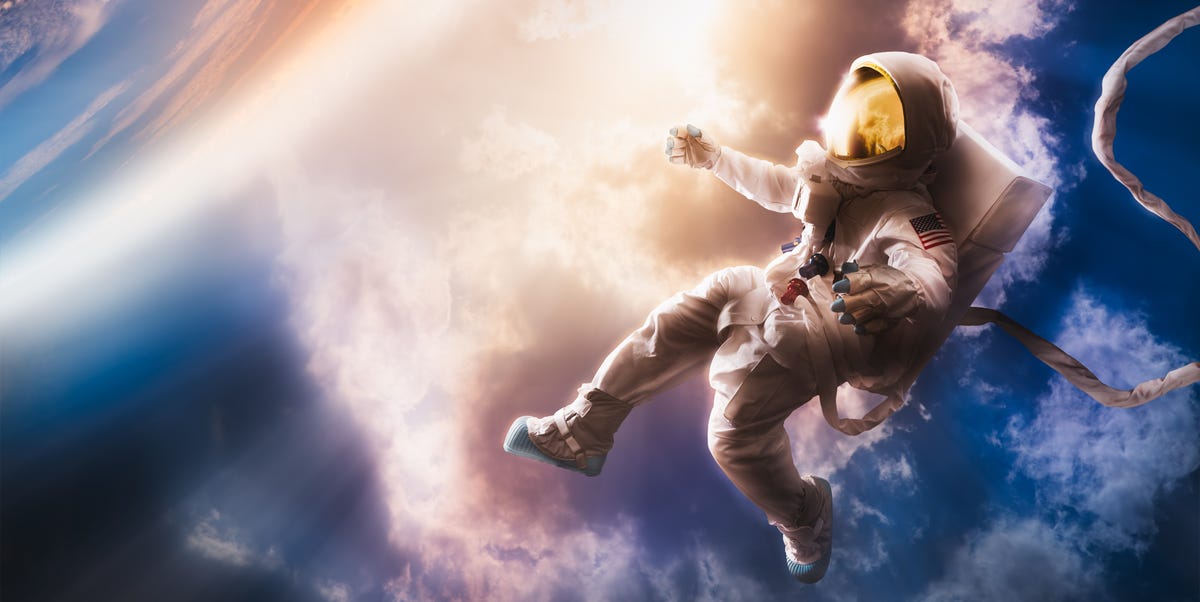
During a spacewalk, astronauts are more exposed than they are inside the spacecraft, but they are still not directly exposing skin to the Sun. Spacesuits are built with multiple protective layers, including materials and visor systems meant to protect against harsh sunlight and environmental extremes.
In other words, the suit itself is the protective clothing, shade structure, and UV barrier all rolled into one very expensive outfit. There is no practical reason to rely on sunscreen as the primary defense when the entire suit is already designed for that environment.
During Solar Storms
When solar activity intensifies, mission teams monitor the situation closely. If radiation risk rises, astronauts may be told to avoid less shielded areas, shelter in better-protected parts of the spacecraft, postpone a planned spacewalk, or return from an active EVA. That is the real protocol.
This difference matters because it shows the core truth: space radiation protection is a systems problem, not a skincare routine.
What Sunscreen Can Do, and What It Cannot
Sunscreen has a specific job. It is formulated to reduce the effects of ultraviolet radiation, especially UVA and UVB. Broad-spectrum sunscreens are designed to protect against both. On Earth, that is valuable because UV overexposure contributes to sunburn, skin aging, and higher skin cancer risk.
That usefulness does not disappear in space. If you somehow had exposed skin in direct unfiltered sunlight, broad-spectrum sunscreen would still make more sense than no protection at all. Physics does not suddenly become whimsical just because you are in orbit.
But sunscreen has clear limits:
- It does not block high-energy charged particles effectively.
- It does not replace suit materials, helmet visors, or spacecraft shielding.
- It does not manage cumulative radiation dose from a mission.
- It does not solve the deep-space problem posed by galactic cosmic rays.
So if the question is “Could sunscreen help against UV?” the answer is yes. If the question is “Is sunscreen enough to protect astronauts from space radiation?” the answer is a firm no, and the no is wearing a NASA badge.
How Astronauts Actually Protect Themselves from Radiation
The practical answer to solar radiation in space is a layered safety strategy.
Spacesuit Design
Spacesuits are engineered to protect astronauts from temperature extremes, tiny debris, pressure loss, and strong solar rays. The helmet visor and sun shades are especially important for eye and face protection. Think of the suit as a full-body protective system rather than clothing with a very high SPF number.
Spacecraft Shielding
The spacecraft itself provides shielding from the space environment. Some areas offer better protection than others, which is why mission planners pay attention to where astronauts go if solar conditions worsen. In future deep-space missions, spacecraft may include dedicated storm shelters or specially shielded areas for solar particle events.
Monitoring and Forecasting
Radiation protection in space depends heavily on monitoring. NASA and space weather experts track solar activity and estimate astronaut dose. If a serious solar radiation storm develops, crews can be warned in time to change operations. This is one of the most important reasons modern astronaut safety is possible at all.
Mission Timing and Exposure Limits
Astronauts do not simply rack up radiation like airline loyalty points. Their exposures are tracked and managed against established safety limits. Mission duration, destination, solar cycle conditions, and planned EVAs all influence the risk profile. Low Earth orbit missions benefit from partial protection by Earth’s magnetosphere, while deep-space missions face a much harsher environment.
Does the Answer Change on the Moon or Mars?
Yes, and in an important way. The farther astronauts travel from Earth, the less natural protection they have from Earth’s magnetic field. Low Earth orbit is not exactly a spa, but it is gentler than deep space. The Moon has no thick atmosphere and no Earth-like global magnetic shield. Mars has a thin atmosphere, but not enough to make radiation a casual concern.
That means future lunar and Martian explorers will need even more sophisticated radiation protection strategies. Suits, habitats, vehicles, operational timing, and shelter design become increasingly important. Sunscreen may still be conceptually useful against UV for any exposed skin, but once again, it is nowhere near the full answer. Deep-space exploration is not a beauty counter problem. It is a physics problem with paperwork.
So, Do Astronauts Need Sunscreen in Space?
The best answer is this: astronauts need protection from the Sun, but not in the same way beachgoers do. Sunscreen addresses only the ultraviolet portion of solar exposure. In space, astronauts also face ionizing radiation from solar energetic particles and galactic cosmic rays, and those hazards require much more than SPF.
That is why astronauts depend on suit materials, visors, spacecraft shielding, dose tracking, solar storm warnings, and operational rules. Sunscreen is not useless in principle, but in real missions it is a supporting extra at best, not the headliner. The real heroes are engineering, forecasting, and a healthy respect for what the Sun can throw across millions of miles.
In short, if you are packing for orbit, sunscreen is not the first item on the checklist. A well-designed spacecraft is.
Experience in Context: What This Means for Astronauts in Real Life
To understand why this topic matters, it helps to think about the astronaut experience in practical terms. Space is visually beautiful, but it is not gentle. Sunlight in orbit can look crisp, brilliant, and almost clean, yet the environment behind that beauty is unforgiving. Astronauts do not experience the Sun the way people do during a summer afternoon on Earth. There is no warm breeze, no humidity, and no natural atmospheric filter softening the exposure. The contrast is sharper, the shadows are darker, and the stakes are higher.
Inside a spacecraft, astronauts live with the knowledge that radiation is an invisible part of the mission. They cannot see it, smell it, or swat it away like a mosquito. Instead, it becomes one of those background realities of spaceflight, like microgravity, limited water, or the fact that everything important seems to involve a checklist. The crew may be looking out at Earth through a window, enjoying one of the greatest views available to any human, while mission specialists on the ground are also watching solar conditions and keeping an eye on risk.
During a spacewalk, the experience becomes even more intense. The astronaut is protected by a suit, but the awareness of exposure is never completely theoretical. A spacewalk is not a casual float with a scenic backdrop. It is a tightly choreographed operation in which mobility, timing, equipment function, and environmental hazards all matter at once. The Sun can be blindingly bright. The temperature swings are dramatic. The suit is a lifesaving personal spacecraft, and every layer of it matters.
That is also why the sunscreen question is so revealing. It sounds simple, but it points to the deeper reality that astronaut safety is built on prevention before discomfort ever starts. On Earth, sunscreen is often about reducing damage after you have chosen to spend time outside. In space, the goal is to avoid unnecessary exposure altogether, design hardware that blocks major hazards, and make decisions early if conditions turn risky. The mindset is proactive, not cosmetic.
For future missions to the Moon and Mars, that experience will likely become even more central. Astronauts may have to spend longer periods in environments with less natural protection than low Earth orbit offers. Radiation will not just be a technical footnote; it will shape habitat design, travel schedules, emergency planning, and daily routines. In that sense, the experience of living and working in space is partly an exercise in respecting things that remain invisible but powerful.
So when people ask whether astronauts need sunscreen in space, they are really asking how humans adapt to sunlight when Earth’s normal defenses are gone. The answer is fascinating because it shows how space exploration works at its best: not by pretending nature is harmless, but by studying it closely, building smarter tools, and preparing for the worst while still reaching for the stars.
Conclusion
Astronauts do need protection from solar radiation, but the phrase “wear sunscreen in space” captures only a tiny slice of the truth. Sunscreen is meant for ultraviolet radiation, and while UV matters, the bigger hazard in space comes from ionizing radiation that ordinary sunscreen cannot stop. That is why real astronaut protection relies on suits, visors, shielding, monitoring, storm forecasting, and careful operational decisions.
It is one of the clearest examples of how space travel changes familiar human questions. On Earth, sun safety may start with a bottle of SPF. In orbit, it starts with physics, engineering, and mission control. Same Sun. Very different rules.