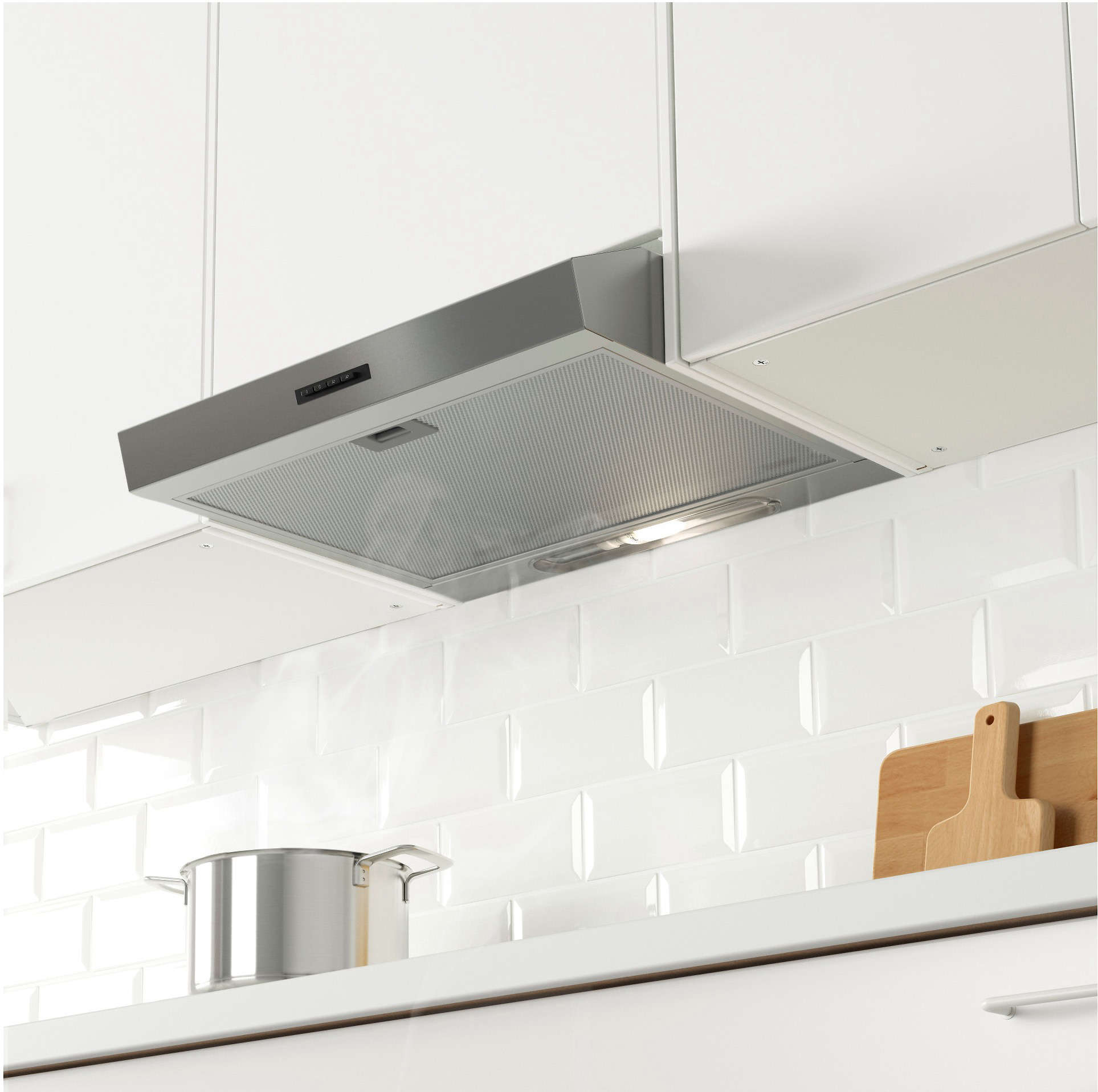

If your dream kitchen mood board says “clean lines, calm cabinets, and absolutely no giant stainless-steel spaceship hovering over the stove,” the Eventuell Built-in Extractor Hood is speaking your language. This style of hood is designed to hide behind a cabinet door, so the kitchen looks polished and seamless while still doing the decidedly unglamorous job of pulling out smoke, steam, grease, and last night’s overconfident garlic experiment.
The Eventuell Built-in Extractor Hood is one of those appliances that makes a kitchen feel smarter without shouting about it. It is an integrated hood liner rather than a dramatic showpiece, which means it is more about performance and less about posing for selfies. That is good news for homeowners who want a practical ventilation solution that does not steal the spotlight from the cabinets, backsplash, or heroic pot of Sunday sauce.
What makes this model interesting is the mix of hidden design and real-world utility. Archived product information and installation materials describe a 30-inch built-in hood with a 6-inch round vent recommendation, ducted or recirculating installation options, three blower speeds, two metal grease filters, and halogen lighting. In other words, it is not just pretty cabinetry camouflage. It is a legitimate kitchen ventilation tool with enough substance to matter when the skillet starts sizzling.
What Is the Eventuell Built-in Extractor Hood?
The Eventuell is an integrated range hood liner meant to fit inside a cabinet opening above the cooktop. Visually, that is the entire charm. Instead of looking like a separate appliance, it hides within the kitchen design and lets the cabinet front do most of the talking. For homeowners who love a minimalist or semi-custom kitchen look, that is a major selling point.
Its size also makes sense for a common American kitchen layout. A 30-inch width pairs naturally with a 30-inch cooking surface, which is one of the most standard cooktop and range widths in residential kitchens. The built-in format also works well in kitchens where every inch matters. A giant decorative hood can dominate a compact kitchen, but an integrated liner keeps things visually lighter.
That hidden-door design does come with a practical tradeoff: installation has to be more precise. This is not a “hang it up and call it a day” appliance. The cabinet opening, vent path, and electrical access all need to be right. The reward, though, is a kitchen that looks tailored instead of assembled in a hurry during a coffee break.
Key Specifications That Matter
Here is the short version for people who like their appliance details without a side of interpretive dance:
- Built-in, cabinet-integrated extractor hood
- 30-inch overall width
- Approximate dimensions: 30 inches wide, 11 7/8 inches deep, 13 5/8 inches high
- Designed for vented installation through a wall or roof, with recirculating setup possible using charcoal filters
- Recommended 6-inch round metal vent system
- Three blower speeds
- Two metal grease filters
- Dual halogen light housings using GU10, 120-volt, 50-watt max bulbs
- Recommended for cooktops up to 65,000 BTUs or less
Archived retail listings also describe the Eventuell at up to 385 CFM when ducted through a 6-inch round vent. That number places it in a respectable range for everyday family cooking, especially in kitchens where the goal is solid smoke and odor control without stepping into pro-style, jet-engine territory. It is not trying to be a restaurant hood, and honestly, most homes do not need one unless dinner regularly involves woks, cast iron, and a smoke alarm with trust issues.
Why This Built-in Hood Style Appeals to So Many Homeowners
1. It keeps the kitchen looking calm
A built-in extractor hood is a design trick with practical benefits. Because it sits inside the cabinet structure, it preserves a more uniform wall line. That is especially useful in modern, Scandinavian, transitional, and small-space kitchens where visual clutter can make the room feel busier than a group chat on a Monday morning.
2. It still handles real cooking needs
Do not confuse “hidden” with “weak.” The point of an integrated hood is not to disappear functionally. It is to disappear visually. A properly installed built-in unit can still remove steam, lingering smells, airborne grease, and a surprising amount of kitchen regret. For most households cooking pasta, sautéed vegetables, eggs, chicken, soups, and standard stovetop meals, a hood in this performance class can be a very comfortable fit.
3. It works with both ducted and recirculating setups
This flexibility matters more than people think. In some homes, venting outside is easy. In others, it is a puzzle involving cabinet framing, wall direction, attic access, and possibly a contractor who starts every sentence with, “Well, technically…” A convertible design gives homeowners options instead of ultimatums.
Ducted vs. Recirculating: Which Setup Makes More Sense?
The Eventuell is factory set for vented installation through the roof or wall, and that is generally the stronger option if your kitchen allows it. Ducted hoods move smoke, moisture, heat, and odors out of the house. That is why vented systems are usually preferred by manufacturers, remodelers, air-quality experts, and anyone who has ever seared steak indoors in January.
Recirculating mode is the backup plan, not the villain. In recirculating mode, air passes through filters and returns to the kitchen. That setup can still help with grease and odor reduction, especially where exterior ducting is not practical. But it does not remove heat and moisture as effectively as a true outside vent. If your home layout supports exterior venting, that route is usually the better long-term choice.
For the Eventuell specifically, recirculating installation requires a charcoal filter kit. The charcoal filters are not washable, and under normal use they are expected to last up to about six months before replacement. That is not a flaw; it is just the cost of asking a filter to wrestle with bacon fumes and stir-fry aromas on your behalf.
Installation Details You Should Not Ignore
Clearances above the cooking surface
This is where style must politely step aside for safety. The installation guidance for the Eventuell calls for a minimum of 24 inches from an electric cooking surface and 27 inches from a gas cooking surface, with 36 inches suggested as the maximum from the bottom of the cabinet to the cooking surface. Those numbers matter because capture efficiency drops when the hood is mounted too high, and safety risks climb when it is mounted too low.
Cabinet and vent fit
The hood is built around a 30-inch cabinet opening and a minimum 12-inch cabinet depth. The recommended vent system is a 6-inch round metal duct. Metal venting is preferred, with rigid metal recommended over flimsy foil or plastic options. Translation: this is not the moment to improvise with whatever mysterious tubing is hiding in the garage behind holiday decorations.
Duct path efficiency
Good ventilation is not just about the fan. It is about the whole path the air travels. The Eventuell installation guidance recommends keeping the vent system short and simple, with no more than three 90-degree elbows, at least 24 inches of straight vent between elbows if more than one elbow is used, and a maximum recommended vent length of 35 feet. Fewer bends usually mean better performance and quieter operation.
Local codes and makeup air
Like many ventilation products, range hoods can trigger local code questions, especially around ducting and makeup air. The manual notes that some jurisdictions may require makeup air systems above certain airflow thresholds. So yes, the hood may be hidden, but the permit office still sees everything.
How the Eventuell Built-in Extractor Hood Performs in Everyday Cooking
For regular home cooking, the Eventuell hits a practical sweet spot. A 30-inch integrated hood with roughly 385 CFM in ducted mode is strong enough for many kitchens without veering into luxury-hood territory. It is well suited for households making weeknight meals, simmered dishes, sautéed vegetables, grilled sandwiches, pancakes, pasta sauces, and the occasional “I thought this recipe said medium heat” situation.
Where it may feel less heroic is in very high-output cooking environments. If your cooktop is heavily gas-powered and your cooking style includes frequent wok cooking, blackened fish, or aggressive searing, broader buying guides suggest paying close attention to CFM sizing, burner output, and duct design. In plain English: if your kitchen routine could pass for a cooking competition intro, you may want more ventilation muscle.
Noise is part of the conversation too. Archived specs place the Eventuell around 7.3 sones at the high end, which means this is not a whisper-soft boutique appliance. It is more “I am helping” than “I am meditating.” For many households that is perfectly acceptable, especially because higher fan speeds are not always necessary for every meal.
Lighting, Controls, and Daily Usability
A range hood is easier to love when it is simple to use. The Eventuell keeps things refreshingly straightforward: light on/off, blower off/low, medium, and high. No touchscreens. No mystery icons. No need to press and hold three buttons while facing north during a full moon.
The halogen lighting helps illuminate the cooktop clearly, which is especially useful in kitchens where upper cabinets can cast shadows over the burners. Good task lighting is one of those features people underestimate until they are trying to decide whether onions are turning golden or quietly plotting arson.
Cleaning and Maintenance
Metal grease filters
The metal grease filters should be cleaned frequently. They can be washed in a dishwasher or in hot detergent solution, then dried thoroughly before reinstalling. This is excellent news because a removable, washable filter is far friendlier than a design that treats basic maintenance like an endurance sport.
Charcoal filters
If you use recirculating mode, the charcoal filters are not washable. They need replacement about every six months under normal use. That timeline can shift depending on how often you cook and how adventurous your menu gets. Toast and tea are gentle on filters. Fried fish, less so.
Exterior care
The exterior should be cleaned with mild soap and water or a nonabrasive cleaner, then wiped dry to avoid water marks. No steel wool. No harsh scouring pads. Stainless steel may look tough, but it still deserves basic respect.
Best operating habit
One of the smartest habits is also the simplest: turn the hood on before cooking and let it run for a bit after you finish. The manual recommends several minutes, and broader EPA guidance suggests leaving the hood on for 10 to 20 minutes after cooking when practical. That extra runtime helps clear lingering particles, moisture, and odors instead of letting them settle into your cabinets, curtains, and soul.
Who the Eventuell Built-in Extractor Hood Is Best For
This hood makes a lot of sense for homeowners who want an integrated kitchen look, cook regularly but not commercially, and value a balance of appearance and function. It is especially appealing in kitchen remodels where cabinet continuity matters and where a big decorative hood would feel visually heavy.
It is also a strong fit for people who appreciate sensible controls and serviceable maintenance. Washable grease filters, replaceable charcoal filters, and standard-size integration all make the ownership experience easier than some high-style appliances that seem designed mainly to win staring contests.
Who May Want a Different Hood
If your kitchen is large, your burners are extremely powerful, or your cooking style trends toward constant high-heat searing, you may want to compare stronger vented models. The same goes for buyers who prioritize ultra-quiet operation or want modern LED lighting instead of older-school halogen bulbs.
And if you cannot vent outside but cook heavily every day, remember that recirculating hoods help, but they are usually the compromise option rather than the gold standard. They are better than no hood at all, but they are not magic. Charcoal filters are hardworking, not supernatural.
Experience Section: What Living With an Eventuell Built-in Extractor Hood Feels Like
In day-to-day life, the biggest appeal of a built-in extractor hood like the Eventuell is how little it interrupts the kitchen visually. When it is tucked behind the cabinet door, the room feels more finished and less appliance-driven. That might sound like a small thing, but in a kitchen you see every day, visual calm matters. The whole space feels cleaner, more deliberate, and less like every object is competing for attention. For homeowners who hate bulky metal dominating the cooking wall, this hidden format feels like a deep exhale.
The second thing people usually notice is that the hood becomes part of their routine faster than expected. Flip on the light, choose a fan speed, start cooking. There is no learning curve worth complaining about. That simplicity is underrated. A kitchen appliance should not require a relationship counselor. It should work when you need it, make sense when you touch it, and avoid theatrical nonsense. On that front, the Eventuell style is refreshingly direct.
During actual cooking, the experience depends a lot on what is in the pan. For everyday meals, it feels appropriately capable. Boiling pasta, browning ground beef, sautéing onions, warming tortillas, or cooking eggs usually falls comfortably within its zone. Steam gets managed, odors are reduced, and the kitchen feels less stuffy afterward. If the hood is ducted outside, the difference becomes even more noticeable. The air feels fresher, and the room clears faster after dinner instead of smelling like “evidence of garlic” until bedtime.
Where people become more opinionated is noise. At lower settings, a hood like this usually blends into the background well enough. At high speed, it reminds you that ventilation is happening. Not in a horrifying way, but certainly not in a spa soundtrack way either. That is often the tradeoff with mid-powered integrated hoods: useful performance, practical simplicity, and a sound profile that says, “Yes, I am currently fighting smoke for you.” Most homeowners adapt quickly, especially because they only need the highest setting for more intense cooking.
Maintenance also shapes the ownership experience. The washable grease filters are a real advantage because they make routine upkeep less annoying. Once people understand that filters need regular cleaning and that charcoal filters in recirculating mode are consumables, the hood becomes much easier to live with. The only owners who tend to be disappointed are the ones who expect a range hood to stay effective forever with zero maintenance, which is a bit like expecting a coffee maker to survive life on espresso and denial alone.
Overall, living with an Eventuell Built-in Extractor Hood feels less flashy than owning a statement hood, but often more satisfying. It is the quiet organizer of the kitchen, even when the fan itself is not exactly quiet. It keeps the room looking streamlined, handles common cooking jobs well, and rewards good installation with solid everyday performance. That is not glamorous, but in a real kitchen, glamour is overrated. Reliable function with good design is the better love story.
Final Verdict
The Eventuell Built-in Extractor Hood is a smart option for homeowners who want integrated kitchen ventilation without sacrificing practical performance. Its hidden design, 30-inch format, ducted-or-recirculating flexibility, washable grease filters, and straightforward controls make it a strong match for many everyday kitchens. It is not the most powerful or quietest hood on the planet, but it was never trying to be a luxury showboat.
What it offers instead is balance: clean design, real ventilation, manageable upkeep, and a cabinet-friendly footprint. For many kitchens, that is exactly the point. The best appliances are not always the ones that demand applause. Sometimes they are the ones that quietly remove onion smoke while letting your cabinets take the compliments.