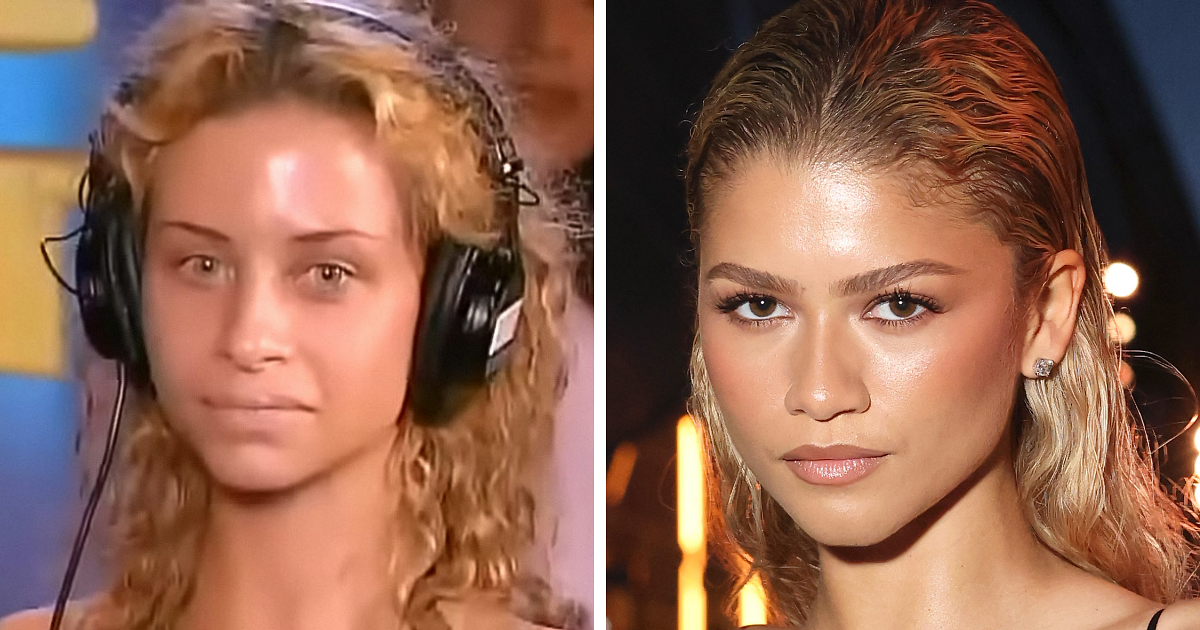

Editorial note: This article treats the viral “Miss Buttaface” label as a harmful media term from the resurfaced clip, not as a description of any person. Zendaya was not involved in the original contest; her name entered the conversation through a later online comparison.
The internet has a strange talent for digging up old pop-culture artifacts, dusting them off, and asking, “Were we all okay back then?” The latest example is a resurfaced clip from a 2004 Howard Stern Show segment known as the “Miss Buttaface” contest, which went viral again after social media users began debating beauty standards, early-2000s misogyny, and one especially controversial comparison involving Zendaya. The clip reportedly resurfaced on X in mid-August 2025 and quickly triggered a wave of discussion about how women were mocked on mainstream entertainment platforms in the 2000s.
The Zendaya connection is important to explain carefully. She was not part of the original contest, did not endorse it, and had no direct connection to the 2004 segment. Her name entered the story when an online post used a meme format comparing the contestant Stacy from the old clip with Zendaya, framing the comparison as commentary on modern beauty standards. Many fans immediately pushed back, arguing that both women were being dragged into an unnecessary and ugly ranking game.
What Happened With the Resurfaced “Miss Buttaface” Contest?
The old clip came from the shock-radio era, a time when humiliation was often packaged as comedy and served with the subtlety of a cymbal crash in a library. According to meme-tracking coverage, the segment featured women being judged by a panel and audience under a premise built around separating physical features into cruel categories. The phrase itself is a derogatory slang term, and the entire format now reads to many viewers as a time capsule of casual public body-shaming.
The contestant who drew the most renewed attention was identified online as Stacy or Stacey. When the clip circulated again, many viewers were stunned not just by the premise, but by how normalized the laughter and commentary appeared to be. Instead of treating the old video as harmless nostalgia, fans treated it like evidence in the case of “the early 2000s were doing entirely too much.”
Part of the outrage came from the fact that modern audiences have different expectations. Today, audiences are more likely to question who benefits when a woman is placed on display for mass judgment. In 2004, a segment like this could be sold as edgy entertainment. In 2025 and 2026, the same clip can look less like comedy and more like a public lesson in how not to talk about people.
Why Zendaya Became Part of the Conversation
Zendaya’s name became attached to the controversy through a social media comparison, not through the original broadcast. That distinction matters. Zendaya, born September 1, 1996, would have been a child when the original 2004 segment aired; she later became known as an actor, singer, and dancer, with major roles on Disney Channel and HBO’s Euphoria. Britannica notes that she has won two Primetime Emmy Awards and a Golden Globe for her work.
The comparison that sparked the backlash used Zendaya as an example of a modern “it girl” or model-like celebrity, while suggesting that the contestant from the old clip represented a past standard of beauty. Fans objected because the meme did not simply criticize the old contest. It revived the same ranking logic: put women side by side, assign value, and wait for the comment section to start swinging folding chairs.
That is why the outrage was not only about Zendaya. It was about the habit of turning women into debate topics. Fans saw the comparison as a double insult: it re-exposed Stacy to public judgment decades later and dragged Zendaya into a conversation designed around appearance-based competition. Nobody needed a scoreboard. Nobody ordered one. Yet the internet delivered it with fries.
Why Fans Were So Angry
1. The clip reminded people how cruel early-2000s entertainment could be
The Howard Stern brand has long been associated with provocative radio. Britannica describes Stern as a radio host known for controversial broadcasts, with The Howard Stern Show beginning on New York’s WXRK-FM in 1985 and entering syndication the following year. That context helps explain why many viewers saw the resurfaced clip as part of a larger shock-jock culture that often treated discomfort as content.
In the early 2000s, reality TV, tabloid magazines, late-night comedy, and radio frequently rewarded blunt cruelty. Women’s bodies were discussed as if they were public infrastructure. Haircuts, outfits, weight changes, facial features, aging, pregnancy, and even emotional distress became entertainment categories. Looking back, many viewers are asking why so much of that passed as “just jokes.”
2. The Zendaya comparison felt unnecessary
Zendaya is one of the most visible stars of her generation, and her fashion presence is often discussed alongside her acting career. TIME named her to the 2022 TIME100 list, and she has become a frequent reference point in conversations about celebrity style and cultural influence. But fans argued that using her image in a meme about an old humiliation-based contest was not commentary; it was bait with a Wi-Fi connection.
Many online users have grown tired of the “compare women to make a point” format. Whether the subject is Zendaya, Stacy, a pop star from 2007, or someone quietly buying oat milk in peace, the pattern is familiar: one woman is praised by putting another woman down. Fans pushed back because this kind of framing keeps the same old machine running, even when the caption pretends to criticize the machine.
3. People saw the resurfaced clip as proof that beauty standards are unstable
Another reason the story spread is that viewers noticed how quickly beauty standards change. What one era mocks, another era defends. What one generation calls “flawed,” another may call completely normal, attractive, or simply none of anyone’s business. The outrage became less about a single clip and more about the absurdity of treating beauty standards as fixed truth when they clearly change faster than a TikTok trend wearing roller skates.
The Bigger Issue: Body-Shaming as Entertainment
Body-shaming works by turning a person’s appearance into a public performance review. The problem is not just that it is rude. It encourages people to see human beings in fragments: face, body, outfit, age, weight, symmetry, camera angle. That mindset can travel beyond celebrities and land on regular people who never asked to be rated by strangers with ring lights.
Health and psychology research gives this conversation real weight. The National Eating Disorders Association explains that body dissatisfaction can be linked with depression, isolation, low self-esteem, and disordered eating behaviors. The American Psychological Association has also reported research showing that teens and young adults who reduced social media use by 50% for a few weeks showed improvements in how they felt about their weight and overall appearance.
That does not mean every meme causes harm by itself. But when appearance-based mockery becomes constant background noise, it trains audiences to judge themselves and others with the cold efficiency of a malfunctioning beauty pageant robot. The resurfaced contest upset fans because it looked like a loud, old-fashioned version of the same thing many people still experience online today.
Why the Early 2000s Keep Getting Reexamined
The reaction to the Zendaya-linked meme did not happen in a vacuum. In recent years, audiences have repeatedly revisited the media treatment of women in the 1990s and 2000s, especially female celebrities who were mocked, sexualized, or judged while very young. The Washington Post has described how the early-2000s media machine mistreated young female stars, including Britney Spears and Lindsay Lohan, in ways that many readers now find uncomfortable or openly misogynistic.
Britney Spears’ 2007 MTV Video Music Awards performance is often cited as a major example. At the time, commentary frequently focused not only on the performance but also on her body. CBS News covered the harsh scrutiny aimed at Spears’ appearance after that show, a reminder of how quickly celebrity criticism could become body commentary.
That historical memory matters because the “Miss Buttaface” clip landed in a culture that has already been reconsidering old entertainment habits. Fans are no longer watching these clips as passive viewers. They are watching as archivists, critics, and occasionally as unpaid prosecutors in the Court of Public Side-Eye.
How Social Media Changed the Outrage Cycle
In 2004, a shock-radio segment might air, create chatter, and then fade. In the 2020s, nothing fades; it merely waits in the algorithmic basement until someone reposts it. Once an old clip returns, it can reach millions of people who were too young to remember it, or not even born when it aired.
Pew Research Center has found that social media can bring pressure, drama, and appearance-related stress into teens’ lives, while also serving as a place for connection and expression. Its 2025 report noted that girls were more likely than boys to say social media made them feel overwhelmed by drama or pressure to post popular content. Pew’s 2026 research also found that roughly three-in-ten teen users of TikTok, Instagram, or Snapchat had experienced at least one form of harassment the study asked about.
This helps explain why fans responded so strongly. They were not only reacting to an old clip. They were reacting to the way old content can become new harassment, new comparison, and new viral entertainment. The past did not stay in the past; it got reuploaded, captioned, memed, and handed a fresh microphone.
What This Says About Zendaya’s Public Image
Zendaya’s public image has often been built around control, elegance, and selectiveness. She is not a celebrity who appears to chase every viral moment. That restraint is one reason her fans can be especially protective when her name is pulled into messy discourse. When a meme uses her image as shorthand for modern beauty, it reduces a working actor and cultural figure into a prop for someone else’s argument.
Fans also recognize that Zendaya has already spent much of her career under public scrutiny. From Disney Channel fame to blockbuster franchises and prestige television, she has grown up in front of cameras. The internet may admire her style, but admiration can easily become entitlement when people begin treating a public figure’s appearance as community property.
The smartest response to the controversy is not to “defend” Zendaya by insulting someone else. It is to reject the whole comparison. Zendaya does not need to be ranked against Stacy. Stacy does not need to be rejudged 20 years later. The audience does not need to behave like a panel of bored villains in a low-budget mirror factory.
Specific Examples of the Conversation Online
Several types of responses appeared after the clip and comparison spread. Some viewers focused on the old contest itself, saying it demonstrated why feminist criticism of media culture became so visible in the 2010s. Others pointed out that the contestant at the center of the clip did not deserve ridicule then and does not deserve renewed inspection now.
Another group criticized the meme format that brought Zendaya into the discussion. These fans argued that using a modern celebrity to make a point about past beauty standards only repeated the same mistake in a shinier package. It was like criticizing a messy kitchen by throwing spaghetti at the ceiling. Technically, a point was made. Unfortunately, now there is sauce everywhere.
There were also comments about how strange it feels to watch 2000s media with 2020s eyes. Many people who grew up during that era remember casual insults about appearance being treated as normal. Younger viewers, meanwhile, often see the same clips and wonder how audiences tolerated such open cruelty. Both reactions are useful because they show cultural change in motion.
Why This Story Matters Beyond Celebrity Gossip
At first glance, this controversy may look like another celebrity-adjacent internet storm. But it touches on bigger questions: Who gets mocked for entertainment? Who gets compared? Who gets protected? And why do old insults keep getting recycled as memes?
The story also shows how fan culture can act as a kind of public correction. Fans are not always calm, and comment sections are not exactly libraries with better lighting. Still, in this case, much of the outrage pointed toward a reasonable idea: people should not be reduced to appearance-based rankings, whether they are global celebrities or regular people who once appeared in a humiliating segment decades ago.
Search interest around terms like “Zendaya controversy,” “Miss Buttaface Contest,” and “Howard Stern Show clip” may bring readers to the story, but the real takeaway is broader. The resurfaced clip became viral because it exposed an old entertainment formula that many people no longer want to laugh along with.
500-Word Experience Section: What Watching This Controversy Feels Like in Real Life
For many viewers, the controversy feels oddly personal, even if they have no connection to Zendaya, Stacy, or the original show. That is because almost everyone has experienced some version of appearance-based judgment. Maybe it happened in school, where one careless comment lived rent-free in someone’s mind for years. Maybe it happened in a family gathering, where an aunt with no filter and too much potato salad decided to comment on someone’s body. Maybe it happened online, where strangers can turn a photo into a courtroom and appoint themselves judges, jury, and unpaid lighting experts.
The resurfaced contest hits a nerve because it reminds people of moments when they were reduced to one feature, one angle, one outfit, or one awkward photo. The internet often pretends that beauty debates are abstract, but they are not. Real people read them. Real people remember them. A joke made for an audience can become a sentence someone carries around long after the audience has moved on to the next viral distraction.
One relatable experience is the uncomfortable feeling of watching old media and realizing how much cruelty was once considered normal. Many people have had that moment: revisiting a reality show, comedy segment, red-carpet interview, or gossip headline and thinking, “Wait, this was allowed?” It can feel like discovering that a childhood playground was built entirely out of splinters. You remember the laughter, but now you can see who was paying for the joke.
Another experience is recognizing how quickly a “defense” can turn into another insult. In the Zendaya-linked meme debate, some people tried to defend Stacy by praising her appearance. Others defended Zendaya by attacking the comparison. The better lesson is that people do not need to pass a beauty test to deserve respect. Someone should not have to be declared gorgeous before the public agrees they were treated badly. Respect should not require a red-carpet lighting package.
This topic also connects to the everyday pressure of being visible online. Many people now curate photos, choose angles, delete posts, and worry about how they will be perceived. Even people who claim not to care often know exactly which side of their face they prefer in photos. That is not vanity; it is a survival strategy in a culture that can be weirdly intense about appearance. The Zendaya comparison became controversial because it showed how quickly a person’s image can be taken out of context and used in someone else’s argument.
The healthiest experience to take from this story is a shift in how we participate. We can laugh at absurd internet behavior without repeating its cruelty. We can discuss beauty standards without ranking women like limited-edition sneakers. We can analyze old media without re-humiliating the people caught inside it. And when a viral post tries to pull us into a comparison game, we can choose not to play.
In that sense, the outrage is not just anger. It is a sign that audiences are learning. Slowly, loudly, imperfectly, and with far too many quote-tweets, people are becoming better at spotting the difference between humor and humiliation.
Conclusion
The uproar over “Fans Outraged As Zendaya Linked To Resurfaced ‘Miss Buttaface’ Contest” is not really about one old clip or one viral meme. It is about how entertainment culture once normalized public appearance-based humiliation, how social media can revive old harm, and how fans now push back when women are placed into pointless comparison battles.
Zendaya’s connection to the story came through a meme, not through the original contest. That fact should remain front and center. The real issue is the culture that made the original segment possible and the modern internet habits that almost repeated the same mistake under the banner of commentary. If there is one useful lesson here, it is simple: people are not content props, and no viral joke is clever enough to justify turning someone’s appearance into a public scoreboard.