
Warning: full spoilers ahead. If you somehow dodged the internet for 25+ years (honestly, congrats), this is your last exit before the twist gets lovingly drop-kicked into the open.
Fight Club isn’t just a movie about guys punching each other in a basement. That’s like saying Jaws is about swimming. David Fincher’s 1999 adaptation of Chuck Palahniuk’s novel is a darkly funny, deeply anxious satire about identity, consumerism, and what happens when loneliness starts looking for a hobby.
A Quick Setup (So the Twist Hits Properly)
We follow an unnamed Narrator: a white-collar worker with severe insomnia and a life that looks like it was assembled from an IKEA catalog and quiet despair. Searching for relief, he drifts into support groups he doesn’t “qualify” for and discovers that crying with strangers is the only thing that helps him sleep.
Then he meets Tyler Durdenconfident, charismatic, allergic to the modern world, and basically what a panic attack would look like if it had cheekbones. Their friendship turns into an underground fight club, which eventually mutates into Project Mayhem, a larger movement that’s part anti-consumerist rebellion, part cult-with-a-dress-code.
The Final Twist, Explained in Plain English
Here it is: Tyler Durden is not a separate person. Tyler is the Narratorspecifically, an alter identity that “takes the wheel” during blackouts caused by insomnia and mental breakdown. The Narrator’s brain essentially creates Tyler as a living coping mechanism: everything he wishes he could be (fearless, decisive, reckless) shows up as someone he can “blame” while still enjoying the ride.
Once that revelation clicks, a bunch of earlier moments suddenly rearrange themselves like a magic trick you can’t unsee. Tyler “appears” at the perfect time, knows things he shouldn’t, and seems to move through the world with suspicious easebecause he’s not moving through the world at all. The Narrator is. Tyler is the story’s most dangerous shortcut: a fantasy of freedom that grows teeth.
So what’s actually happening in the last act?
- Project Mayhem’s “final exam” is a plan to wipe out debt records by destroying major credit-company buildingsan attempt to reset society by erasing the scoreboard.
- The Narrator tries to stop it once he realizes Tyler’s ideology has escalated from “life advice” to “mass harm.”
- He confronts Tyler and finally understands the key rule: he can’t defeat Tyler like an enemy, because Tyler is a part of him.
- He breaks Tyler’s control by harming himself in a way that symbolically “kills” Tyler (without describing it in detail: the movie does enough of that on its own).
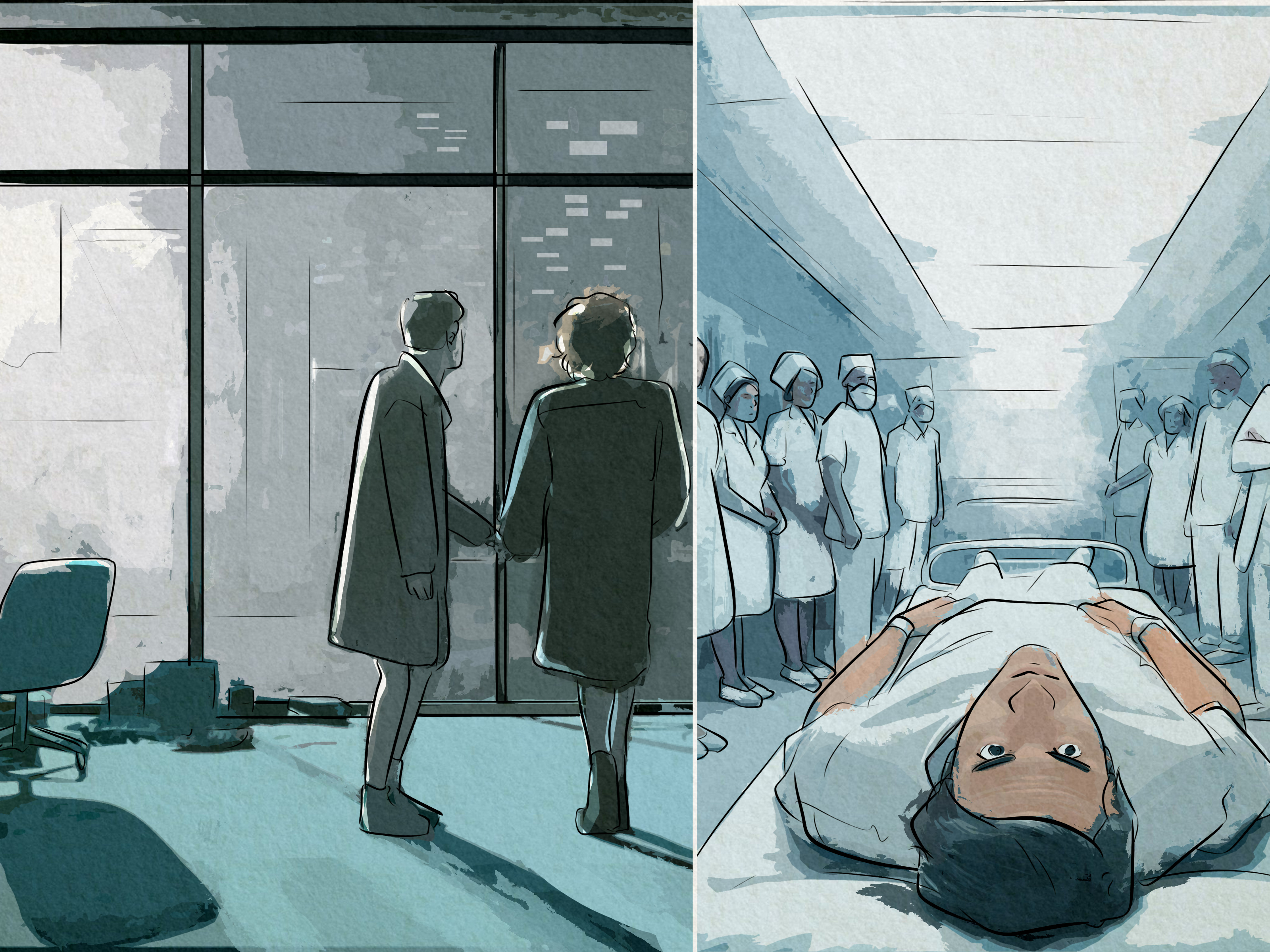
- The buildings fall anyway, and the Narrator stands with Marla, watching consequences unfoldboth external (the city) and internal (his identity).
That’s the core twist: Tyler isn’t the Narrator’s friend who went too far. Tyler is the Narrator’s mind going too farwith a megaphone.
How the Movie Hides the Truth in Plain Sight
Part of what makes Fight Club so rewatchable is that it plays fair. It doesn’t hide the twist; it hides it inside your assumptions. You expect two men. The film gives you one fractured perspective and lets your brain do the rest.
Clue #1: Tyler “teleports” because he’s not bound by reality
Tyler pops up at exactly the moment the Narrator needs a pushlike an internal voice with perfect timing. When you rewatch, Tyler’s entrances feel less like coincidence and more like an intrusive thought wearing sunglasses.
Clue #2: People react to the Narrator in ways that don’t fit the scene
There are moments where conversations feel slightly offlike other characters are responding to the Narrator, but the Narrator interprets it as them responding to Tyler. The movie doesn’t flash a neon sign that says “UNRELIABLE NARRATOR,” but it does keep leaving little footprints in wet cement.
Clue #3: The film’s logic is “dream logic” dressed as gritty realism
The cinematography is grounded and industrial, but the storytelling is slippery. The Narrator’s voiceover is witty and confident… which is exactly what makes it dangerous. A funny narrator can sell you a lie. (See also: every charismatic scammer on the planet.)
Clue #4: Tyler’s philosophy sounds like self-help… until it doesn’t
At first, Tyler’s speeches feel like aggressive therapy: reject consumerism, stop chasing status, face pain, wake up. But the language keeps intensifying, sliding from personal liberation into group obedience. That slope is the point. If a worldview requires you to stop thinking, it’s not freedomit’s a different cage with cooler posters.
What the Ending Really Means (And Why It’s So Uncomfortable)
On the surface, the ending is iconic: the skyline changes, the music kicks in, and the Narrator and Marla hold hands like it’s prom night at the end of the world. But thematically, it’s not a victory lap. It’s a messy receipt.
The Narrator “wins” internally by refusing Tyler’s controlchoosing reality over the thrill of destruction. But he doesn’t win cleanly. Project Mayhem is bigger than him now. That’s one of the film’s bleakest jokes: once you turn your pain into a movement, it stops belonging to you.
The buildings: literal plot event and symbolic gut-punch
Yes, the plan targets financial infrastructure. Symbolically, those collapsing towers represent the Narrator’s desire to delete the version of society that made him feel numb and small. It’s the fantasy of a hard resetburn down the system, start over, feel something real.
And that fantasy is exactly what the film critiques. Because destroying the scoreboard doesn’t automatically teach people how to live. It just removes the numbers.
Tyler Durden: Freedom Fantasy or Villain With a Great Jawline?
Tyler is compelling because he offers something modern life often doesn’t: certainty. He tells you who to blame, what to hate, and how to feel powerful fast. That’s why so many people misread the movie as an instruction manual instead of a warning label.
Fincher’s trick is that he understands Tyler’s appeal and exposes its cost. Tyler’s world is simple: pain equals truth, destruction equals rebirth, and empathy is “weak.” The Narrator’s world is harder: it requires complexity, accountability, and (worst of all) feelings.
The Big Themes, Without the Film-School Snooze
1) Consumerism as identity substitute
The Narrator tries to build a self out of stuff: furniture, clothes, brands, the illusion of a “complete” life. It doesn’t work, because objects can decorate a person, but they can’t be a person.
2) Masculinity in crisis (and the trap of “fixes”)
Fight Club is obsessed with masculinityespecially the kind that confuses emotional pain with personal failure. It shows men who feel powerless and try to solve it through ritualized toughness. The film doesn’t mock the pain; it mocks the shortcut. Violence becomes a substitute for vulnerability because vulnerability feels like standing in public without pants.
3) The seduction of belonging
Fight club gives isolated men rules, rituals, and a tribe. That’s intoxicating. But once belonging depends on obedience, it stops being community and starts being control. Project Mayhem doesn’t just offer meaning; it demands submission.
4) Satire that’s easy to misread
The movie’s tone is a balancing act: it’s funny, stylish, and quotableso it can accidentally make the wrong ideas look cool. That tension is part of its legacy. It’s a satire that’s constantly wrestling with its own charisma.
Project Mayhem: When “Self-Improvement” Becomes a Cult
Project Mayhem is what happens when a personal meltdown gets franchised. The Narrator starts with private suffering and ends up watching strangers commit public acts in Tyler’s name. The film draws a sharp line between feeling alive and making other people pay for your awakening.
It’s also why the movie still hits today: the path from alienation to radicalization can look weirdly ordinary at first. Step one is loneliness. Step two is a community. Step three is someone saying, “I have the answer.” Step four is everyone wearing the same haircut.
Film vs. Book: What’s Different About the Ending?
Without turning this into a term paper: the novel and the film share the same skeleton, but the film’s ending is more visually definitive and “cinematic.” The book leans more into ambiguity and consequence in a way that isn’t as skyline-shaped.
Even so, Palahniuk has generally spoken positively about the adaptation, and the film’s ending has become the version most people carry in their headsbecause it’s an image you can’t forget once it’s in there.
Why the Movie Still Sparks Arguments (and Memes) Decades Later
Fight Club arrived as a time capsule of late-’90s malaise and somehow stayed relevant, which is both impressive and… not great for society. It’s frequently called misunderstood because people quote Tyler like he’s a motivational speaker rather than a symptom.
But the film is also honest about why Tyler is attractive: he offers certainty to people who feel invisible. The movie doesn’t pretend that’s rare. It suggests it’s practically a business model.
A Rewatch Checklist: What to Look For the Second Time
- Voiceover vs. reality: notice where the Narrator explains the world with confidence while the visuals quietly disagree.
- How Tyler “solves” problems: the solutions get bigger, louder, and more harmfulwatch the escalation like a slow-boil.
- Marla’s role: she’s chaotic, but also often the only person responding to the Narrator as a real human being.
- The mood shifts: the film starts as personal satire and gradually morphs into something that resembles a thriller, because the stakes become external.
- How the “club” language works: rules create identity; identity creates loyalty; loyalty creates obedience.
of Viewer Experience: What Watching Fight Club Feels Like (and Why It Sticks)
For a lot of people, the first time watching Fight Club feels like being handed a cup of coffee that turns out to be espresso, and then someone shakes you gently by the shoulders and says, “Now think about capitalism.” It moves fast, it’s funny in a dry, sideways way, and it has that late-night, slightly greasy glow of a movie that knows exactly what it’s doingeven when you don’t.
On a first watch, you usually have one of two reactions. Reaction A: “This is wild.” Reaction B: “Wait… did that just happen?” Both are correct. The film is designed to keep you slightly off balance, like your brain is trying to solve a puzzle while the movie keeps turning the lights on and off. You might catch yourself laughing at a line and then immediately feeling guilty because the scene underneath the joke is kind of sad. That emotional whiplash is part of the experience: the movie wants you to feel entertained and unsettled at the same time.
Then comes the twist, and it doesn’t just reframe the plotit reprograms your memory of the movie you think you just watched. It’s the kind of reveal that makes people immediately say, “I need to watch that again,” not because they missed a detail, but because they missed an entire reality. The second viewing becomes a scavenger hunt: every conversation, every glance, every oddly timed entrance starts to feel like evidence. You stop asking “what happens next?” and start asking “what was really happening the whole time?” It’s one of the most satisfying kinds of rewatches because the film rewards attention without turning into homework.
Watching it with friends can be its own eventespecially if some people know the twist and others don’t. The “twist-knowers” become statues trying not to react, while the first-timers throw out theories like they’re auditioning for detective school. Afterward, the real fun is the debate: is the ending a bleak warning, a dark joke, a tragedy, or all of the above? People tend to project their own frustrations onto the film, which is why conversations can get heated. Fight Club is like a mirror that doesn’t show your faceit shows your coping strategies.
It can also hit differently depending on where you are in life. If you’re stressed, isolated, or feeling like you’re doing “everything right” but still empty, the Narrator’s numbness can feel uncomfortably familiar. The movie doesn’t offer a tidy solution (it’s not that kind of story), but it does underline something important: pain doesn’t automatically make your ideas wise, and feeling lost doesn’t justify burning everything down. If the film leaves you thinking about your own life in a heavy way, that’s not a failure of the viewing experienceit’s a sign the themes landed. The healthiest “fight club” takeaway is not “be Tyler,” but “don’t outsource your identity to a fantasy.”
Conclusion: The Twist Is the Hook, but the Point Is Bigger
Fight Club endures because the twist is brilliantbut also because the movie is about something painfully common: the fear that your life is being lived on autopilot. Tyler Durden is a cinematic lightning bolt, but he’s also a caution sign. The final scene isn’t saying, “This is the answer.” It’s asking, “What did you think the answer was?”
If you come away shaken, amused, irritated, or ready to argue with a friend, congratulations: the film worked exactly as intended.