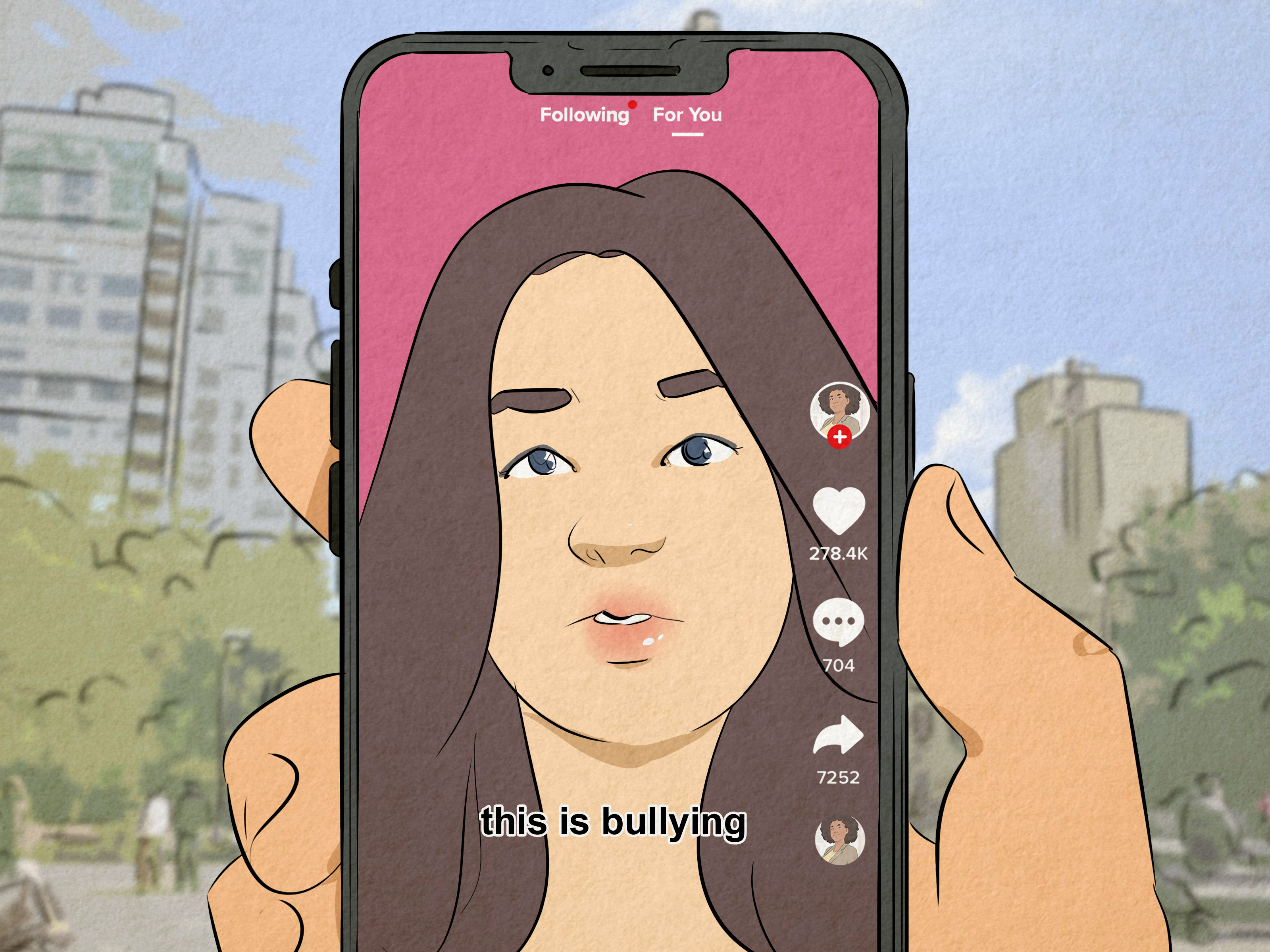

The internet has given us many questionable inventions: eating challenges, prank wars, filters that turn humans into potatoes, and now the flip the camera trend. At first glance, it looks like another quick social media joke. Someone asks another person to record a dance, a group pose, or a funny moment. Then, without warning, the camera flips and suddenly the person holding the phone becomes the star of the video.
Sounds harmless, right? Not so fast. The problem is that the person filming usually did not agree to be filmed, posted, mocked, zoomed in on, screen-recorded, stitched, commented on, or turned into the internet’s lunch special. That is where this trend stops being cute and starts looking a lot like bullying with better lighting.
The TikTok flip the camera challenge, also called the flip the phone challenge, has sparked criticism from parents, educators, mental health professionals, and everyday users who recognize the same old schoolyard cruelty wearing a shiny new social media outfit. The format may be simple, but the consequences can be complicated, especially for teens who already face social pressure, body image worries, anxiety, or exclusion at school.
What Is the Flip the Camera Trend?
The flip the camera trend is a social media prank in which a person or group asks someone else to record them, usually while they dance or perform a short video. The person holding the phone thinks they are simply helping. Then, mid-video, the original creator flips the camera view so the phone starts recording the unsuspecting filmer instead.
In many videos, the target looks confused, uncomfortable, shy, awkward, or caught at an unflattering angle. The clip is then posted online, often with captions or comments that make the person recording seem like the punchline. Sometimes the joke is subtle. Sometimes it is painfully obvious. Either way, the entire format depends on one thing: someone being filmed without meaningful consent.
There is an older, lighter version of camera-flip humor where people use the camera switch to reveal a pet, a funny facial expression, a surprise guest, or themselves after pretending to film something else. That version can be harmless when everyone involved understands the bit. The newer, more criticized version is different because it often targets a person who is outside the joke.
How the Trend Usually Works
The setup is almost too easy, which is part of why the trend spread so quickly. A group approaches someone and asks, “Can you record us?” The request seems ordinary. Most people want to be helpful, especially in school hallways, gyms, cafeterias, parties, or public spaces where social pressure is already doing push-ups in the background.
The person agrees and holds the phone. The group starts dancing or posing. Then someone taps the screen, flips the camera, and captures the person holding the phone instead. The group may laugh, keep dancing, or pretend the moment was spontaneous. Later, the video is uploaded, and viewers are invited to laugh at the person who never asked to be part of the performance.
That is the key issue. The person did not volunteer to become content. They volunteered to help someone else make content. Those are not the same thing. Borrowing someone’s kindness and turning it into a joke at their expense is not “just a prank.” It is social bait-and-switch with a ring light.
Why the Flip the Camera Trend Became Popular
Social media trends often spread because they are easy to copy, emotionally clear, and algorithm-friendly. The flip the camera trend checks all three boxes. It requires no fancy editing, no special skill, and no expensive equipment. A phone, a target, and a lack of judgment will do the job.
It creates instant reaction content
Reaction content performs well because viewers like surprise. A person caught off guard provides a quick emotional payoff. The problem is that surprise is not automatically comedy. If the surprise depends on making someone else feel embarrassed, the laughter becomes less “funny video” and more “public discomfort with a soundtrack.”
It rewards social status
Many of these clips appear to involve teens, friend groups, or school settings. That matters. Adolescence is a time when belonging feels enormous. Being included can feel like oxygen; being excluded can feel like falling through a trapdoor in front of everyone. A trend that highlights who is “in” and who is “out” can quietly reinforce social hierarchies.
It looks harmless enough to defend
Part of the trend’s staying power is plausible deniability. Participants can say, “We were just joking,” “It was not that serious,” or “Everyone does it.” But harm is not erased just because the person causing it did not write a villain monologue beforehand. A joke can still hurt. A prank can still violate privacy. A viral moment can still leave a bruise.
Why the Flip the Camera Trend Is Problematic
The backlash to the flip the camera challenge is not about people being humorless. It is about recognizing a familiar pattern: someone is tricked, exposed, laughed at, and then told to relax. That pattern has been around forever. Social media simply gives it better distribution.
1. It violates digital consent
Consent is not only for serious legal documents or dramatic movie scenes. It applies to everyday digital life too. If someone agrees to hold your phone, they have not automatically agreed to appear in your video. They also have not agreed to have that video uploaded to TikTok, Instagram, Snapchat, YouTube Shorts, or wherever else the clip may travel.
Digital consent means people should have a say in how their image, voice, body, and reactions are recorded and shared. The flip the camera trend often skips that step entirely. It treats a person’s face as free material, as if “you were standing there” is the same as “you agreed to be content.” Spoiler: it is not.
2. It turns kindness into a trap
One of the saddest parts of the trend is that it often targets helpfulness. The filmer is usually doing someone a favor. They are holding the phone, focusing the shot, and trying to help the group get a good video. In return, they may be mocked for looking awkward, confused, quiet, or different.
That sends a grim little message: helping people might get you humiliated. For kids and teens, especially those who are shy or socially anxious, that lesson can stick. Nobody wants to become the next “funny” clip circulating in group chats before lunch.
3. It can become cyberbullying
Cyberbullying includes posting or sharing harmful, mean, embarrassing, or humiliating content about someone online. The flip the camera trend can fit that pattern when the subject is tricked, ridiculed, or exposed without permission. Even if the original video seems mild, the comment section can turn cruel fast.
Online crowds are not always known for their gentle bedside manner. A person’s expression, outfit, body, disability, race, gender expression, social awkwardness, or perceived popularity can become material for strangers. Once that happens, the video is no longer a private joke. It is public humiliation, and the internet does not always know when to stop chewing.
4. It can target vulnerable people
Many critics have pointed out that these videos may focus on people who appear isolated, shy, neurodivergent, disabled, less socially popular, or simply not part of the main group. That is what makes the trend especially uncomfortable. The joke is rarely aimed upward. It often points sideways or downward at someone with less social power in that moment.
This is why “everyone laughed” is not a strong defense. Who laughed? The group holding the power? The audience? Did the person in the video laugh too, or did they just freeze because freezing is what people do when they realize they have been set up?
5. The internet makes embarrassment permanent
Before smartphones, an embarrassing moment might fade after a few days. Now it can be recorded, saved, reposted, stitched, memed, and rediscovered months later by someone who apparently has the investigative energy of a raccoon in a pantry.
For teens, that permanence can feel crushing. School already has enough social pressure without a bad-angle video becoming part of someone’s digital identity. Even if the original poster deletes it, copies may remain in group chats or on other accounts. “It was only up for an hour” does not always mean it disappeared.
The Mental Health Angle: Why Small Moments Can Feel Huge
Adults sometimes underestimate how intense social humiliation can feel for teenagers. That is not because teens are “too sensitive.” It is because adolescence is a developmental stage where peer approval, identity, belonging, and self-image carry enormous weight. Add a camera, a public platform, and a comment section, and the emotional volume goes from background music to stadium concert.
A video that seems silly to one person may feel devastating to another. Someone who already struggles with anxiety, body image, bullying, loneliness, or social confidence might experience the clip as proof that people were laughing at them all along. That may not be the creator’s intention, but impact matters.
There is also the bystander effect. When viewers like, share, or comment on a humiliating clip, they become part of the event. The harm is not only in the filming. It is in the circulation. Every laugh-react, repost, and “I’m dead” comment can make the target feel more exposed.
Is Every Camera Flip Video Bad?
No. Context matters. A camera flip can be funny when everyone is in on the joke. Friends can make playful videos together. Families can create silly clips. Creators can surprise viewers with a harmless reveal. Comedy is not the enemy. The enemy is using surprise as a cover for humiliation.
A good test is simple: would the person being shown still feel respected if they watched the finished video? Would they be comfortable with it being posted? Did they know they were part of the content? Are they laughing with you, or are people laughing at them?
If the joke collapses the moment you ask for permission, it was probably not a great joke. It was a trap with captions.
What Parents Should Know
Parents do not need to become full-time trend detectives with magnifying glasses and suspicious squints. But they do need to understand that online trends can move quickly, especially on platforms where teens spend significant time. The flip the phone challenge is a useful conversation starter because it touches on privacy, empathy, peer pressure, and what it means to be responsible online.
Instead of opening with, “Are you doing this terrible trend?” try asking, “Have you seen the flip the camera videos? What do people at your school think about them?” Curiosity works better than courtroom energy. Teens are more likely to talk when they do not feel cross-examined like they stole the family Wi-Fi.
Parents can also talk about practical rules: do not post people without permission, do not join in when someone is being mocked, report bullying content, and tell a trusted adult if a video is spreading at school. Most importantly, parents should make it clear that being targeted is not the child’s fault.
What Teachers and Schools Can Do
Schools are often where these trends show up first because students, phones, social groups, and awkward hallway lighting all gather in one place. Educators should treat the flip the camera trend as a digital citizenship issue, not just a discipline problem.
Clear policies help. Students should understand when recording is allowed, when it is not, and why consent matters. Schools can also teach bystander responsibility: if you see someone being set up, do not laugh along just because everyone else does. A quiet “delete that” can be powerful. So can refusing to share the clip.
When a student is targeted, the response should focus on safety, documentation, and support. That may include asking for the video to be removed, preserving evidence, contacting families, addressing harassment, and checking on the student’s emotional well-being. The goal is not to create panic. It is to prevent a cruel moment from becoming a campus-wide entertainment event.
What Teens Can Do If They See the Trend
Teens have more power than they think. Trends live or die based on attention. If people stop liking, sharing, saving, and laughing at the clips, the reward disappears. Social media may feel like a giant machine, but it is powered by tiny choices made millions of times.
If you see a flip the camera video that targets someone, do not pile on. Do not tag friends. Do not save it “just in case.” Do not send it to a group chat with twelve skull emojis. Instead, report it if it violates platform rules, check on the person if you know them, and make it clear that humiliating people for views is not impressive.
If you are asked to participate, you can say no. You can also redirect the idea: “Let’s just film ourselves,” or “Ask them first if they want to be in it.” That may sound small, but small acts of social courage are how group norms change.
What To Do If You Were Targeted
If someone used the flip the camera trend to embarrass you, first take a breath. What happened says more about the person who set up the video than it says about you. Being caught off guard is not a character flaw. Looking awkward in a surprise camera flip is not a crime. Most people look strange when a phone suddenly becomes a mirror with witnesses.
Save evidence before the video disappears. Screenshot the post, comments, username, date, and any messages connected to it. Report the content on the platform. Ask the poster to delete it, preferably in writing. If it happened at school, tell a trusted adult, counselor, teacher, or administrator. If the video includes threats, harassment, doxxing, or repeated targeting, it may need a stronger response from the school or, in serious cases, local authorities.
Also, talk to someone who is on your side. Online humiliation can make people feel isolated, and isolation makes everything heavier. You deserve support, not silence.
Better Alternatives: Make Content Without Making Someone the Joke
The good news is that social media does not have to be a humiliation factory. Creators can make funny, clever, surprising videos without tricking people into being exposed. Ask for consent. Use volunteers. Flip the camera onto yourself. Include a pet. Reveal a goofy prop. Let the joke be about the situation, not a person who never agreed to perform.
Humor gets better when it punches up, includes people, or shows self-awareness. It gets worse when it depends on someone else’s embarrassment. The internet already has enough low-effort cruelty. We do not need to keep feeding it snacks.
Real-Life Experiences and Reflections on the Flip the Camera Trend
To understand why the flip the camera trend bothers so many people, imagine a typical school moment. A student is standing near the wall during lunch, not bothering anyone. A group walks over and asks them to record a dance. For a second, the student may feel included. Maybe they think, “Oh, they trust me to help.” Maybe they feel relieved that someone noticed them in a friendly way.
Then the camera flips. The group laughs. The student realizes they were not invited into the moment; they were used as the moment. That emotional whiplash is what makes the trend so ugly. It does not just embarrass someone. It can turn hope into shame in about three seconds, which is impressively fast for something that contributes absolutely nothing to civilization.
Many people who have been bullied recognize that feeling immediately. It is similar to being asked out as a joke, invited somewhere as a prank, or told “we saved you a seat” only to discover everyone is laughing. The technology is newer, but the emotional script is old. The target is made to believe they are being included, then learns they were actually the entertainment.
In family settings, the conversation can be surprisingly revealing. A parent might ask a teen why the trend is funny, and the teen may say, “It is just their reaction.” That opens the door to a deeper question: why is an uncomfortable reaction funny? Is it funny because the person looks surprised, or because the audience is being invited to judge them? When teens unpack that difference, many quickly understand why the trend crosses a line.
Teachers may notice another pattern: students often know the trend is mean, but they participate anyway because the group energy is powerful. Nobody wants to be the person who ruins the joke. Nobody wants to become the next target. That is why digital citizenship education needs to go beyond “be nice online.” Students need real scripts: “Don’t post that,” “They didn’t agree to be filmed,” “That’s messed up,” or even the classic, very effective, “Bro, delete it.” Elegant? No. Useful? Absolutely.
For creators, the experience should be a wake-up call. Views are not a moral permission slip. A video can perform well and still be wrong. In fact, many harmful trends spread because outrage and embarrassment are powerful engagement engines. The algorithm may reward attention, but people still decide what kind of attention they are willing to chase.
The best lesson from the flip the camera trend is not that all pranks are bad or that teenagers should never make silly videos. The lesson is that consent, context, and kindness matter. A funny video should not require someone else to feel smaller. A trend should not make helpful people regret being helpful. And a camera should not become a trap disguised as an invitation.
If the internet is a stage, then everyone deserves to know when they have been cast in the show. Better yet, they should get to decide whether they want to perform at all.
Conclusion
The flip the camera trend may look like a simple social media prank, but its impact can be much bigger than its short runtime. When someone is secretly filmed, posted, and mocked, the issue is no longer just comedy. It becomes a question of consent, privacy, cyberbullying, and basic respect.
Trends come and go, but the way people treat each other online leaves a longer mark. The better choice is not complicated: ask before filming, think before posting, and never turn someone’s kindness into content without their permission. The internet has plenty of room for jokes. It does not need more cruelty pretending to be one.
Note: This article synthesizes current information from reputable parenting, social media safety, cyberbullying prevention, youth mental health, education, and platform guidance resources. Source links are intentionally omitted as requested.