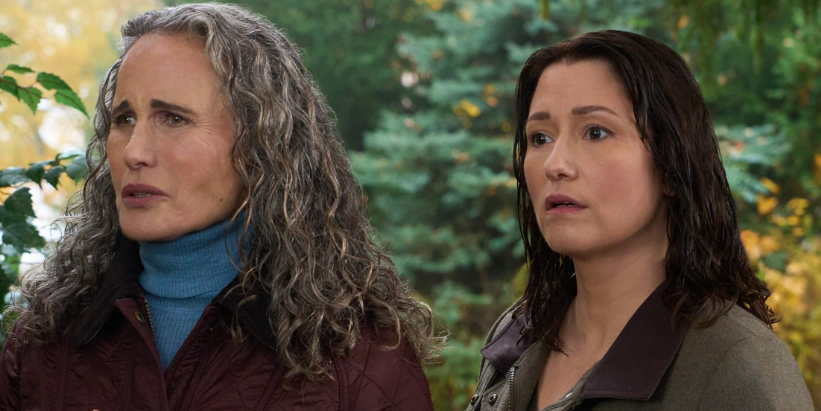

Hallmark fans, grab your tea, your tissues, and maybe a life jacket, because The Way Home has once again turned a simple TV update into a full emotional cardio workout. What began as incredible news about Hallmark renewing the beloved time-travel family drama for Season 4 eventually became something bigger, more bittersweet, and far more meaningful: the fourth season would also be the final chapter of the Landry family’s story.
That is the kind of announcement that makes viewers cheer for more episodes, then immediately stare dramatically out the window like they, too, have just discovered a mysterious pond in the backyard. For a series built on family secrets, grief, second chances, romance, and a body of water with a much more complicated schedule than Google Calendar, the news felt perfectly on-brand. The Way Home has never been just another Hallmark Channel drama. It has been a puzzle box wrapped in a family reunion, sprinkled with romance, and powered by the eternal question: “Should someone really jump into that pond again?” The answer, apparently, is always yes.
What Was the Incredible Hallmark News About The Way Home?
The major TV news was that Hallmark renewed The Way Home for Season 4, giving fans another chance to follow Del Landry, Kat Landry, Alice Dhawan, Elliot Augustine, Jacob Landry, and the rest of Port Haven’s emotionally overloaded residents. Hallmark announced the renewal in March 2025, just ahead of the Season 3 finale, which was a smart move because the show had left viewers with enough questions to power a small lighthouse.
Then came the update that changed the tone. Hallmark later confirmed that Season 4 would be the final season of The Way Home. Instead of leaving fans stranded in narrative limbo, the network promised a satisfying close, returning cast members, and long-awaited answers. Season 4 premiered on Hallmark Channel on Sunday, April 19, 2026, with episodes streaming the next day on Hallmark+. The series finale, titled “Ahead by a Century,” aired on June 21, 2026.
So, yes, the news was incredible. It was also emotional. It gave fans more time with the Landrys while gently warning them to start preparing goodbye snacks. Preferably something soft, because finale feelings are not crunchy.
Why The Way Home Became One of Hallmark’s Most Talked-About Shows
Hallmark has long been associated with comfort viewing: cozy towns, second-chance love, holiday lights, and people who somehow own bakeries without ever seeming stressed about rent. The Way Home kept the warmth but added something bolder. It mixed family drama with time travel, generational trauma, mystery, teen coming-of-age storytelling, and romance that does not always arrive neatly wrapped in a red bow.
The show centers on three generations of Landry women: Del, played by Andie MacDowell; Kat, played by Chyler Leigh; and Alice, played by Sadie Laflamme-Snow. After Kat’s life falls apart, she returns to Port Haven with Alice and reconnects with Del, her estranged mother. At first, the family tension feels familiar: old wounds, unfinished conversations, and the kind of silence that can make a farmhouse kitchen feel colder than January. Then Alice discovers that the pond on the Landry property can send people through time.
Suddenly, this is not just a story about mothers and daughters trying to heal. It is a story about whether the past can be understood, whether grief can be softened, and whether changing perspective can be as powerful as changing history. The pond may be magical, but the real hook is emotional. Viewers did not tune in only to see where the characters would land. They tuned in to see whether the Landrys could finally find their way back to one another.
The Cast Returning Made the News Even Better
A big reason the Hallmark announcement landed so well was the confirmation that the core cast would return. Andie MacDowell’s Del has been the emotional backbone of the show, carrying decades of grief, pride, regret, and quiet resilience. Chyler Leigh’s Kat brought the urgency of a daughter trying to understand both her mother and herself. Sadie Laflamme-Snow’s Alice gave the series its youthful spark, musical heart, and time-travel curiosity. Evan Williams’ Elliot Augustine became one of the show’s most important emotional anchors, especially as his own family history became more central.
That ensemble chemistry is essential because The Way Home asks its actors to do a lot. They are not simply playing people in a family drama. They are playing characters who meet different versions of loved ones, carry secrets across decades, and react to revelations that would make most people lie down on the nearest porch swing and refuse to move. The cast sells the impossible by grounding it in recognizable emotion.
That is why Season 4 mattered so much. Fans did not just want another batch of episodes. They wanted time with characters who had become part of their weekly routine. They wanted Del to find peace, Kat to find clarity, Alice to step into her future, Elliot to receive answers, and Jacob to exist somewhere other than heartbreak central. Hallmark’s promise of a final chapter gave those hopes a real destination.
How Season 4 Turned Renewal News Into Final-Season Closure
Season 4 arrived with several major emotional threads. Alice was nearing high school graduation, which naturally made the show think deeply about growing up, leaving home, and choosing a future. Kat and Elliot were facing questions about their relationship and what “next” could look like after years of waiting, secrets, and interruptions from multiple centuries. Del, after so much loss, had to confront what life might look like when the house grew quieter again.
The final season also expanded Elliot’s story. For much of the series, Elliot carried the weight of knowing too much and being able to control too little. Season 4 pushed him into the mystery of his mother, Tessa, and whether her absence was abandonment or something stranger connected to the pond. That plot gave the show a fresh emotional engine while tying Elliot more deeply into the Landry family’s supernatural history.
Meanwhile, Jacob’s return continued to complicate the present. A missing child coming home as an adult is not exactly a “let’s all have pancakes and move on” situation. His story raised questions about belonging, memory, loyalty, and how a person rebuilds a life when time itself has rearranged the furniture.
The Pond Is More Than a Time-Travel Trick
Let’s be honest: the pond is one of the most memorable TV devices in recent Hallmark history. In another show, it might have become a gimmick. In The Way Home, it became a metaphor. The pond sends characters into the past, but it rarely gives them exactly what they want. It offers knowledge, not easy fixes. It creates reunion, but also heartbreak. It lets characters see people they lost, but not always keep them.
That is what makes the show emotionally sticky. Time travel in The Way Home is not mainly about changing history. It is about understanding it. Kat does not simply visit old timelines for adventure. Alice does not leap into the past because she is bored and the Wi-Fi is down. Their journeys force them to see family members as whole people, not just as parents, grandparents, or legends shaped by grief.
This is especially important for Del. Across the series, Del’s pain often appeared as toughness. She could seem guarded, stubborn, and emotionally unreachable. But the more the show revealed about her losses, the more viewers understood that her strength came at a cost. Season 4 gave her space to soften, reflect, and finally face parts of her history that had remained frozen for years.
Why Fans Reacted So Strongly
The emotional response to Hallmark’s news was not surprising. The Way Home built the kind of fan base that studies details, rewatches scenes, compares timelines, and treats every pond ripple like it might contain a legal document. This is not passive viewing. This is “pause the episode, rewind, and explain the family tree to your confused friend” viewing.
Fans were thrilled by the renewal because Season 3 left major mysteries open. They were saddened by the final-season confirmation because the show had become one of Hallmark’s most distinctive dramas. At the same time, many viewers appreciated that the series was being given a planned ending. In television, a complete ending is not guaranteed. Plenty of shows disappear with unresolved cliffhangers, leaving fans to invent closure in group chats and mildly angry Reddit threads. The Way Home avoided that fate.
Hallmark’s final-season decision also helped protect the story’s structure. A mystery drama cannot stretch forever without risking emotional exhaustion. The pond is powerful, but even magical water has limits. By ending with Season 4, the series had room to answer questions, honor its characters, and leave viewers with a sense that the journey had meaning.
What the Finale Represented for the Landry Family
The series finale, “Ahead by a Century,” leaned into what The Way Home has always done best: connecting endings with beginnings. The last episode brought emotional reunions, final leaps, romantic resolution, family healing, and reminders that the past is never fully gone. For a show obsessed with time, its ending was less about closing a door than understanding why the door mattered.
Kat and Alice’s final movement toward the pond captured the spirit of the series. They had spent years learning that home is not only a place. It is a relationship to memory, family, truth, and choice. Del’s journey toward closure with Colton added another deeply emotional layer, while Jacob’s path helped connect the Landry legacy across generations.
The finale did not reduce the show’s mysteries to a dry checklist. Instead, it gave fans emotional answers. That distinction matters. A series like this does not only need to explain who went where and when. It needs to explain what those journeys meant. The Way Home understood that a timeline can be solved, but a family must be healed.
Why This News Matters for Hallmark’s TV Brand
Hallmark’s handling of The Way Home shows how much the network’s drama strategy has evolved. The series still carries Hallmark’s signature warmth, but it is also more serialized, complex, and mythology-driven than many viewers might expect. It has romance, yes, but romance is only one thread. It also has grief, mystery, parent-child conflict, historical storytelling, and a surprising willingness to let characters sit with pain.
That combination helped The Way Home stand out in a crowded TV landscape. Viewers can find time travel elsewhere. They can find family drama elsewhere. But this show blended those ingredients into something unusually accessible. It was emotionally rich without becoming cold or cynical. It invited theory-building without requiring a graduate degree in quantum physics. It could make you cry, then charm you with a small-town moment five minutes later. That is a delicate balance, and the show mostly managed it with confidence.
For Hallmark, the series proved that audiences are willing to follow more ambitious storytelling when the emotional foundation is strong. The network did not have to abandon its identity to make something fresh. It simply widened the doorway. Or, in this case, dug a mysterious pond behind it.
Viewing Experience: Why The Way Home Feels Personal
Watching The Way Home is a little like opening an old family photo album and discovering one picture is moving, one relative is hiding a secret, and one lake in the background is apparently a time machine. The show works because it turns big supernatural ideas into familiar emotional experiences. Most people cannot jump into a pond and meet their teenage grandmother, but many people know what it feels like to misunderstand a parent, miss someone who is gone, or wish they had asked a better question when they had the chance.
One of the most relatable experiences connected to the series is the way it changes how viewers think about family stories. Every family has legends: the uncle who left town, the grandmother who never talked about her first love, the parent who became strict after a loss nobody fully understood. The Way Home dramatizes the idea that behind every hard personality is often a hidden chapter. Del becomes easier to understand when the audience sees the shape of her grief. Kat becomes more sympathetic when viewers see how long she has carried confusion and guilt. Alice becomes more than a teenager caught in adult drama; she becomes a bridge between generations.
The show also creates a very specific kind of weekly ritual. Fans do not simply watch and move on. They speculate. They text theories. They argue over timelines. They wonder whether a tiny detail in a scene from Season 1 suddenly matters in Season 4. That kind of viewing experience is rare for a warm family drama, and it is part of why the Hallmark news hit so hard. People were not just losing a show. They were losing a weekly appointment with mystery, memory, and emotional detective work.
There is also comfort in the series’ message that healing does not always arrive in a straight line. Sometimes it circles back. Sometimes it arrives late. Sometimes it requires looking at the same painful moment from a new angle. That is why the time-travel element feels emotionally honest, even when the mechanics are fantastical. Real life often works that way too. We revisit old conversations in our minds. We reinterpret childhood memories as adults. We understand our parents differently after becoming older ourselves. The Way Home gives that process a literal shape.
For many viewers, the experience of watching the final season may have felt like saying goodbye to a place they had never visited but somehow knew. Port Haven, the Landry farm, the kitchen conversations, the pond, the music, the secrets, and the reunions all created a sense of emotional geography. The show reminded fans that home is not always simple. Sometimes it is messy, haunted, confusing, and full of people who need several decades and one supernatural water feature to finally say what they mean. But when the truth rises to the surface, it can still be beautiful.
Conclusion: Hallmark’s Big News Gave Fans the Ending They Needed
Hallmark’s incredible TV news about The Way Home was more than a renewal announcement. It became the promise of a final journey, one that allowed the Landry family’s story to end with intention rather than uncertainty. Season 4 gave fans one more emotional trip through Port Haven, one more round of family secrets, one more chance to follow the pond where it wanted to lead, and one last opportunity to see characters choose love, truth, and healing.
In the end, The Way Home succeeded because it understood something simple and powerful: the past does not stay in the past just because we tell it to behave. It follows us, shapes us, and sometimes asks to be understood before we can move forward. Hallmark gave viewers a show that made time travel feel intimate, family drama feel adventurous, and a pond feel like one of television’s most emotionally suspicious bodies of water. That is no small achievement.
For fans, the goodbye may be bittersweet, but the journey was worth every leap.