
Halloween pumpkins are the undisputed celebrities of fall. Apples have cider, candy has a whole month of bad decision-making, but pumpkins? Pumpkins get the porch, the spotlight, the photos, and the tiny electric candle that makes the whole neighborhood whisper, “Okay, that one looks cool.” Whether you love carving elaborate jack-o’-lanterns, painting pumpkins with kids, or buying one every October simply because it feels emotionally necessary, Halloween pumpkins are more than seasonal decor. They are history, tradition, craft project, snack potential, and front-step personality all rolled into one gloriously orange package.
What makes them so enduring is their range. A Halloween pumpkin can be spooky, funny, elegant, or downright chaotic. One house has a toothy monster face. Another has a chic stack of white pumpkins next to mums. A third has a lopsided jack-o’-lantern that looks like it has seen things. All are valid. Better yet, pumpkins connect modern Halloween fun with older customs that stretch back centuries, while still giving us practical benefits: seeds to roast, flesh to cook, and compost when the party is over.
This guide covers everything that makes Halloween pumpkins worth obsessing over: where the tradition comes from, how to choose the right pumpkin, carving and decorating ideas, safety tips, storage advice, and smart ways to use or recycle your pumpkin after October 31. In other words, this is your pumpkin playbook, minus the hayride traffic.
Why Halloween Pumpkins Matter So Much
From old-world folklore to the American front porch
The jack-o’-lantern tradition did not begin with pumpkins. Early versions were carved from turnips and other root vegetables in Ireland and the British Isles, tied to folktales about “Stingy Jack” and customs meant to ward off wandering spirits. When immigrants brought those traditions to North America, pumpkins became the natural replacement. They were larger, easier to hollow out, easier to carve, and, frankly, a lot less rude to your wrists.
That switch helped turn the pumpkin into a Halloween icon in the United States. Over time, the carved pumpkin stopped being just a lantern and became a seasonal symbol of home, harvest, mischief, and creativity. Today, Halloween pumpkins sit right at the intersection of folklore and fun. They can look antique and eerie or playful and modern. Few decorations have managed that kind of career longevity.
Why pumpkins won the Halloween popularity contest
Pumpkins are practical, and Halloween loves practical things dressed as drama. Their thick shells hold shape well, their hollow centers are perfect for carving, and their bright orange color screams fall even before you cut the first triangle eye. Most classic jack-o’-lantern pumpkins are bred to be visually appealing and easy to work with, which explains why they dominate pumpkin patches and grocery store displays every autumn.
There is also an emotional reason pumpkins endure. They are interactive. You do not just buy a pumpkin and stare at it like a museum artifact. You pick it up, inspect the stem, plan a face, scoop out the insides, argue over whether the smile should be crooked, and then light it up. Halloween pumpkins invite participation, and that makes them memorable.
How to Choose the Best Halloween Pumpkin
Know your pumpkin type
Not every pumpkin is destined for the same job. If you want a classic jack-o’-lantern, look for a carving pumpkin with a broad, sturdy shape and enough interior space to scoop cleanly. These are usually larger, lighter in weight for their size, and easier to cut. If you want to cook, go for smaller pie pumpkins or sugar pumpkins. They have denser, sweeter flesh and better flavor than the big porch models, which tend to be watery and stringy in the kitchen.
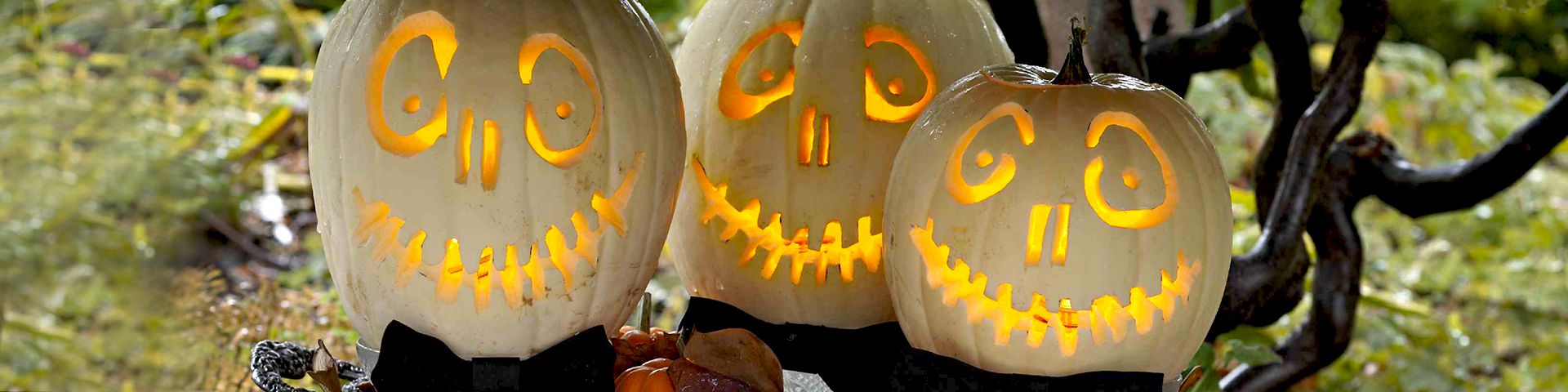
White pumpkins, often called ghost pumpkins, are popular for stylish displays and can also be edible, depending on the variety. Mini pumpkins are great for tablescapes, place settings, and decorating with children. Giant pumpkins are excellent if your decorating strategy is “subtlety is for other people.”
What freshness looks like
A good Halloween pumpkin should feel firm, heavy enough to seem healthy, and free from soft spots, deep cuts, or mold. The shell should be hard, and the stem should look sturdy and attached, not shriveled or ready to resign. Avoid pumpkins with damage near the base, since that is where rot loves to start its shift.
If you are shopping early, freshness matters even more. A strong, mature pumpkin holds up better on display and gives you more flexibility about when to carve. Think of it as hiring the right lead actor before opening night.
Pumpkin Carving and Decorating Ideas That Actually Work
Classic carving never goes out of style
There is a reason the triangle-eye jack-o’-lantern keeps coming back. It is simple, recognizable, and charmingly spooky. A traditional carved face works on nearly any porch style, from full haunted-house energy to tidy suburban “we light cinnamon candles on purpose” vibes. If you want to level up, try silhouettes, layered teeth, moon-and-bat scenes, or stacked pumpkins with different expressions.
Sketching a design before cutting helps more than people admit. So does thinking about lighting. Small cutouts can disappear at night, while bold shapes read better from the sidewalk. Your pumpkin may be art, but it is also a public performance piece for trick-or-treaters walking by in dinosaur costumes.
Decorating without carving
Not every Halloween pumpkin needs surgery. Painted pumpkins last longer and are especially useful for households with small children. You can use matte black paint for a modern look, metallic paint for something glamorous, or goofy faces with stickers and markers for a family-friendly setup. Glitter is an option too, though you may still be finding it in January.
Other non-carved ideas include glued-on felt shapes, ribbon, fabric bows, temporary tattoos, floral accents, or drilled dot patterns that glow beautifully when lit from inside. Decorated pumpkins are perfect when you want the Halloween look without the carved-pumpkin countdown to mush.
Halloween Pumpkin Safety: Less Drama, Fewer Bandages
Halloween is supposed to be spooky, not medically eventful. Carving pumpkins safely matters because hand injuries around Halloween are common enough to keep safety experts busy repeating the same advice every year. The basics are simple and worth following.
Adults should handle the actual cutting. Children can help by drawing faces with markers, scooping seeds, or decorating the outside. When carving, use tools designed for pumpkin work or other appropriate carving tools rather than forcing a giant kitchen knife through thick pumpkin skin like you are starring in an unnecessarily stressful cooking show. Work in a clean, dry, well-lit area, and keep hands and tools dry to reduce slips.
For lighting, battery-operated candles, glow sticks, or LED lights are the smartest choice. They reduce fire risk and help the pumpkin last longer because they do not heat the flesh from the inside. Real candles may look old-school and atmospheric, but so does calling the fire department, and that is not the mood most people are going for.
How to Make Halloween Pumpkins Last Longer
Timing matters
If you want your jack-o’-lantern to look decent on Halloween night, do not carve it too early. Whole pumpkins generally last much longer than carved ones. Once carved, many pumpkins begin to soften, slump, or mold within about a week, sometimes sooner in warm weather. Waiting until closer to Halloween gives you the best odds of keeping that masterpiece upright and not accidentally transforming it into a biological experiment.
Cooler is better
Pumpkins prefer cool conditions. Heat speeds up breakdown, and freezing temperatures can damage the flesh too. Keep your pumpkin out of strong direct sun when possible, and bring it inside or to a cooler protected area if the weather turns extreme. A shaded porch beats a blazing afternoon stoop every time.
Clean cuts, dry interior, smarter display
After carving, remove as much pulp as possible and let the inside dry before adding lights. Less moisture usually means slower rot. A stable, dry display area also helps. If your pumpkin is sitting in standing water, baking in sun, or absorbing heat from a flame, it is basically being asked to fail.
Another smart move is deciding whether your pumpkin is a weekend star or a month-long employee. Uncarved pumpkins can hold for weeks if they start in good shape, but carved pumpkins are best treated like fresh flowers: beautiful, temporary, and not built for a long-term contract.
Can You Eat Halloween Pumpkins?
Yes, but with an important asterisk. Carving pumpkins are technically edible, yet they are not the best choice for flavor or texture. If your goal is soup, puree, muffins, or pie, smaller pie pumpkins are better. They are sweeter, denser, and more pleasant to cook with. Big carving pumpkins can taste bland and watery, which is a little insulting after all that porch time.
If you scoop out seeds from a clean pumpkin, roast them. They are one of the easiest seasonal snacks around and give your pumpkin a useful second act. Pumpkin flesh can also go into soups, breads, pasta fillings, curries, and desserts, especially if you started with a pie pumpkin.
One safety note matters here: homemade pumpkin puree is better frozen than home-canned as a mash or butter. Pureed pumpkin is too thick and low-acid for safe home canning by the old mash-and-jar method. Fresh puree can be refrigerated for a short time, but for longer storage, freezing is the safer bet.
What to Do with Halloween Pumpkins After the Holiday
When Halloween ends, your pumpkin still has options. If it is unpainted and not treated with wax, glitter, or chemicals, composting is one of the best outcomes. Many communities host pumpkin recycling or “pumpkin smash” events that turn old jack-o’-lanterns into compost instead of landfill waste. That is good for the environment and a satisfying ending for something that started life as a decorative extrovert.
You can also compost at home by breaking the pumpkin into smaller pieces and mixing it with dry materials such as leaves or cardboard. If the pumpkin is still sound and food-safe, cook it. If it is already collapsing into goo, admire its commitment to decomposition and send it to compost with dignity.
Why Halloween Pumpkins Still Feel Magical
Part of the magic is visual, of course. A glowing pumpkin on a dark porch works every time. But the bigger reason Halloween pumpkins endure is that they combine tradition and play in a way few seasonal symbols do. They are old-fashioned without feeling stale, creative without being complicated, and festive without requiring a giant budget. A single pumpkin can make a front step feel like Halloween has officially arrived.
They are also wonderfully flexible. You can go creepy, cute, classy, silly, vintage, rustic, or over-the-top theatrical. A pumpkin can match a haunted graveyard display or sit next to a plaid blanket and still make sense. That kind of range deserves respect.
So yes, Halloween pumpkins are decorative. They are also historical, practical, edible, compostable, and weirdly emotional. Every year we drag them home, clean off a patch of porch, and ask them to carry the entire mood of the season. And honestly? They deliver.
Experiences With Halloween Pumpkins: The Part Everyone Remembers
Ask people about Halloween pumpkins and they usually do not start with history. They start with memories. They remember standing in a pumpkin patch trying to choose the “perfect one,” only to fall in love with a slightly crooked pumpkin that looked like it had personality. They remember carrying it home like a trophy, setting it on the kitchen table, and suddenly realizing they had purchased a 20-pound commitment.
There is also the ritual of carving night. Newspapers or grocery bags get spread across the table in a burst of optimism. Someone brings out markers for sketching faces. Someone else insists they are going to make a masterpiece worthy of a design award and then, twenty minutes later, is negotiating with a jagged mouth hole that absolutely did not go according to plan. The smell of fresh pumpkin fills the room, and the slippery pile of seeds and pulp becomes part science project, part comedy routine. Nobody looks graceful elbow-deep in pumpkin guts, and that is part of the charm.
For families, Halloween pumpkins often become one of those yearly traditions children measure time by. One year the kid is too small to do more than poke at the seeds with a spoon. A few years later they are drawing elaborate faces, naming every pumpkin, and campaigning aggressively for “one more.” Teenagers may act too cool for it until the lights go down and the finished jack-o’-lanterns start glowing. Then suddenly everybody has opinions about which pumpkin looks the funniest, the creepiest, or the most like Uncle Dave.
There is something especially memorable about seeing a carved pumpkin lit for the first time. In daylight, it is craft. In the dark, it becomes atmosphere. The porch changes. The house feels festive. Even a clumsy carving gains charisma once the face lights up against the night. It is one of the simplest transformations Halloween offers, and it still feels satisfying every single year.
Of course, the experience is not always elegant. Sometimes the stem snaps off on the way to the car. Sometimes a pumpkin begins rotting faster than expected and develops a suspicious expression that seems even more haunted by accident. Sometimes the grand carving idea turns out to require the hand skills of a surgeon and the patience of a monk. But those mishaps are part of the story too. People laugh about the pumpkin that collapsed before Halloween, the one the squirrels attacked, or the one that somehow looked less like a ghost and more like a confused potato.
That is why Halloween pumpkins stick with people. They are not just objects you buy; they are experiences you make. They invite mess, effort, creativity, and a little bit of imperfection. They gather people around a table, give neighborhoods a glow, and mark the season in a way that feels tactile and real. Long after the candy is gone and the costumes are packed away, many people still remember the pumpkin on the porch, the face they carved, and the little burst of pride when it finally lit up.
SEO Tags