
Ask Americans where their money goes, and the answer usually arrives with a sigh, a laugh, and possibly a receipt long enough to wallpaper a hallway. The truth is simple: most household budgets are not built around luxury yachts, diamond-encrusted phone cases, or spontaneous trips to Paris. They are built around rent, groceries, car payments, insurance, health care, utilities, and the occasional coffee that somehow costs the same as a small houseplant.
Understanding how Americans spend their money is not just a personal finance topic; it is a window into the American economy. Consumer spending drives a huge share of U.S. economic activity, and household budgets show what people value, what they cannot avoid, and what they quietly hope will go on sale next week. Based on recent U.S. spending data, the average American consumer unit spent about $78,535 in 2024. That number includes essentials, comforts, savings-related deductions, and the little “how did I spend that much?” purchases that sneak into every month.
This article breaks down where the money goes, why spending patterns look the way they do, and what those choices reveal about life in the United States today.
The Big Picture: Americans Spend Most on Needs, Not Wants
The biggest myth about American spending is that households are broke because everyone is buying designer sneakers, giant TVs, and takeout seven nights a week. Sure, impulse buys exist. But the largest categories are far less glamorous: housing, transportation, food, insurance, pensions, and health care.
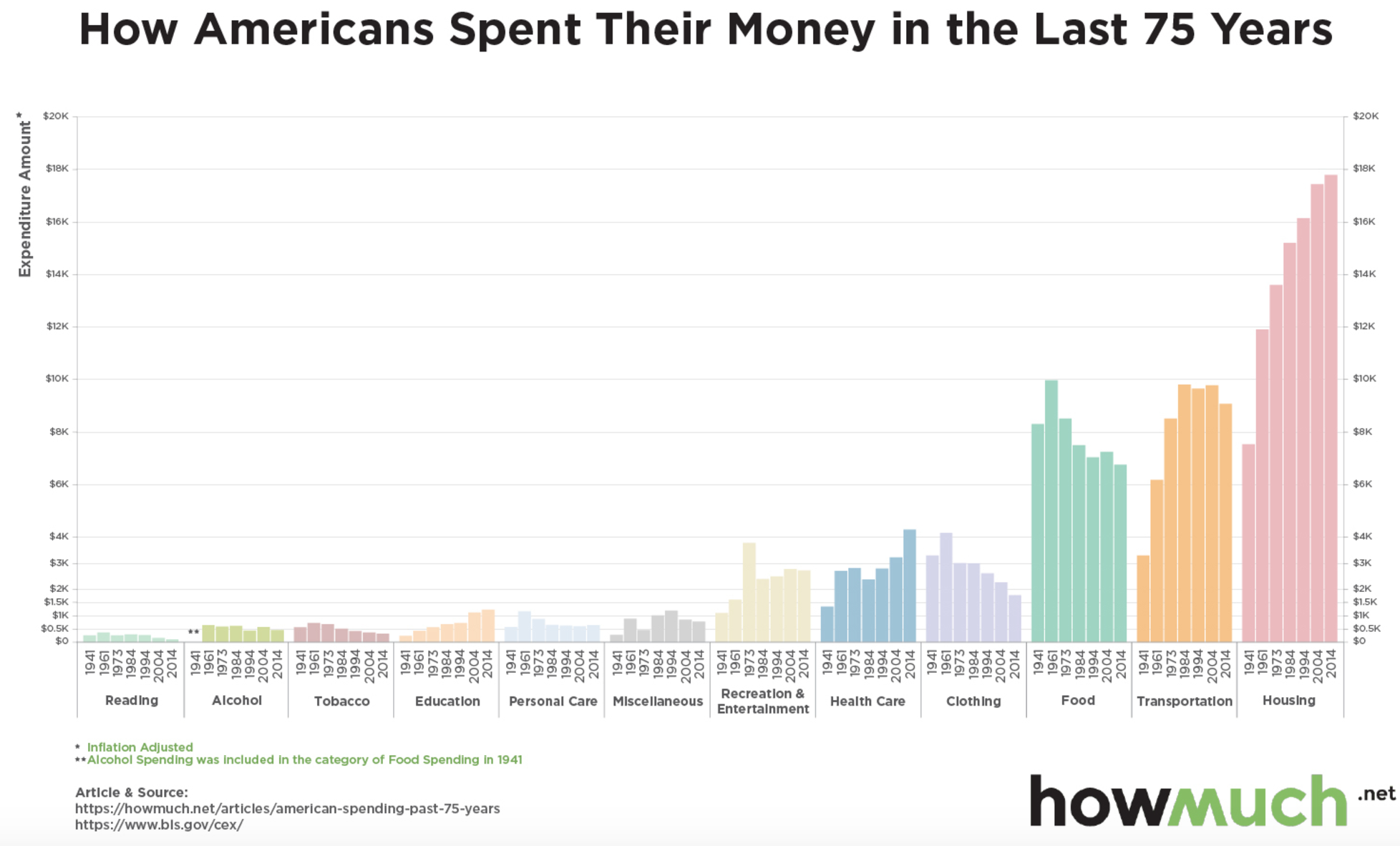
In 2024, housing alone accounted for about one-third of average annual household spending. Transportation took another large slice, followed by food and personal insurance or pensions. By the time a household pays for a roof, a way to get around, groceries, health coverage, and basic bills, the budget has already done most of its heavy lifting. The fun stuff has to squeeze into the leftover space like one more sweater in an already-packed suitcase.
That is why conversations about American spending often turn into conversations about affordability. When rent, mortgage payments, vehicle costs, insurance premiums, medical bills, and groceries rise at the same time, households may feel financially squeezed even if their income also increases.
Housing: The Budget Champion Nobody Invited
Housing is the heavyweight champion of American spending. Whether a household rents an apartment, pays a mortgage, covers property taxes, or handles maintenance, shelter is usually the largest monthly expense. In 2024, the average consumer unit spent more than $26,000 on housing, making it the single biggest category in the household budget.
Renters Feel the Pressure First
Renters often experience housing costs as a monthly deadline with no snooze button. Rent, utilities, renter’s insurance, application fees, parking charges, and pet fees can turn a “reasonable” apartment into a financial obstacle course. In many cities, renters also compete for limited housing supply, which keeps prices elevated even when wages improve.
For younger adults, housing costs can delay major life steps such as moving out, saving for a home, starting a family, or building an emergency fund. The phrase “adulting is expensive” may sound like a joke, but rent usually delivers the punchline.
Homeowners Spend Differently, But Not Always Less
Homeownership can build wealth, but it is not a magical escape from housing costs. Homeowners face mortgage payments, property taxes, homeowners insurance, repairs, maintenance, utilities, and the mysterious law of nature that says the water heater waits until the worst possible moment to fail.
In recent years, higher home prices and elevated mortgage rates have made buying a home harder for many families. Even households that already own homes may feel pressure from rising insurance costs, repair expenses, and property taxes. In other words, owning a home may be the American dream, but the dream still sends bills.
Transportation: Cars, Gas, Insurance, and the Cost of Getting There
Transportation is another major spending category. Americans spent more than $13,000 on average in 2024 on transportation-related costs. This includes vehicle purchases, gasoline, maintenance, repairs, public transportation, and vehicle insurance.
The U.S. is a car-heavy country. In many communities, driving is not a lifestyle choice; it is the only practical way to get to work, school, grocery stores, medical appointments, and family obligations. That means transportation costs behave like essentials, even when they feel painfully expensive.
Car Ownership Comes With a Long Receipt
A car payment is only the opening act. Drivers also pay for fuel, insurance, registration, repairs, tires, oil changes, parking, tolls, and the occasional “what is that weird sound?” mechanic visit. Vehicle insurance has become especially noticeable in household budgets, with recent data showing sharp increases in average spending on auto insurance.
For households with multiple drivers, transportation can rival housing as a financial burden. A two-car family may not feel luxurious at all; it may simply be trying to get two adults to two jobs in a region where buses are rare and sidewalks are decorative.
Food: Groceries, Restaurants, and the Great Egg Price Drama
Food is one of the most visible parts of American spending because people interact with it constantly. A rent increase hurts once a month. Grocery prices stare at shoppers from every shelf.
In 2024, the average consumer unit spent more than $10,000 on food. Most of that went to food at home, meaning groceries, while a sizable portion went to food away from home, including restaurants, takeout, coffee shops, and workplace lunches.
Groceries Are Where Inflation Feels Personal
Food inflation changes behavior quickly. Shoppers switch brands, buy in bulk, use coupons, compare unit prices, and develop strong opinions about the price of chicken. Many Americans have become more strategic: store brands instead of national brands, meal planning instead of daily improvisation, and frozen vegetables instead of letting fresh produce transform into science experiments in the fridge.
Protein prices, dairy costs, packaged foods, and fresh produce can shift household decisions from week to week. Even small increases matter because groceries are repeat purchases. Nobody buys eggs once and says, “Great, handled that for the decade.”
Dining Out Is Both Convenience and Comfort
Americans still spend heavily on restaurants and takeout, but the reasons vary. For some, dining out is a treat. For others, it is a time-saving tool. A working parent grabbing dinner after a long shift may not be chasing luxury; they may simply be trying to feed everyone before bedtime without turning the kitchen into a disaster zone.
Still, restaurant spending is one of the first places many households cut when money gets tight. Cooking at home, packing lunch, and reducing delivery-app orders can free up cash quickly. The catch is that saving money often requires extra time, planning, and energythree things many households are also short on.
Health Care: The Expense Nobody Wants to Test
Health care is one of the most complicated parts of American household spending. Families may pay insurance premiums, deductibles, copays, prescriptions, dental bills, vision care, therapy costs, medical devices, and surprise charges that arrive with the emotional warmth of a parking ticket.
Average household health care spending reached more than $6,000 in 2024, while national health expenditures climbed into the trillions. For many families, the scary part is not just what they spend every year; it is the uncertainty. One emergency room visit, one surgery, or one prescription change can reshape a budget overnight.
Insurance Helps, But It Does Not Make Care Free
Employer-sponsored insurance remains common, but employees often contribute thousands of dollars annually toward family coverage. Even insured households may delay care because they worry about deductibles or bills. That makes health care different from many other expenses: people may not know the final price until after they receive the service.
In practical terms, Americans budget for health care with a mix of planning and crossing their fingers. That is not exactly a financial strategy, but it is common enough to deserve its own spreadsheet tab.
Insurance, Pensions, and Social Security: The Quiet Budget Category
Personal insurance and pensions accounted for nearly $10,000 in average annual expenditures in 2024. This category includes life insurance, retirement contributions, pensions, and Social Security deductions.
This spending does not always feel like spending because some of it is automatically deducted from paychecks. But it matters. Retirement contributions and Social Security taxes shape long-term financial security. They also reduce take-home pay, which affects how much money households have available for groceries, rent, entertainment, and savings.
For financially stable households, retirement contributions are a foundation. For tighter budgets, saving for retirement can feel like trying to pack an umbrella while standing in the rain. People know it is important, but immediate expenses often shout louder than future needs.
Entertainment, Apparel, and Personal Care: The Human Side of Spending
Entertainment spending averaged more than $3,600 in 2024. That includes hobbies, pets, streaming services, events, sports, toys, and other leisure activities. Apparel and services accounted for about $2,000, while personal care products and services came in under $1,000 on average.
These categories are sometimes dismissed as “extras,” but that is too simplistic. People are not machines designed only to pay rent and eat oatmeal. Entertainment, clothing, grooming, hobbies, and small treats contribute to quality of life.
Streaming, Subscriptions, and the $9.99 Problem
Modern spending has a subscription problem. One streaming service seems harmless. Then comes music, cloud storage, fitness apps, delivery memberships, gaming subscriptions, learning platforms, and software tools. Suddenly, the budget has developed a monthly leak wearing a friendly “cancel anytime” badge.
Many Americans now audit subscriptions the way previous generations clipped coupons. The goal is not to eliminate joy; it is to stop paying for services nobody remembers signing up for.
Debt: How Americans Stretch Their Budgets
Debt plays a major role in how Americans spend. Mortgages, auto loans, student loans, credit cards, personal loans, and medical debt all influence monthly cash flow. Recent household debt data shows that total U.S. household debt remains very high, with mortgages making up the largest share, followed by auto loans, student loans, and credit card balances.
Credit cards are especially important because they sit at the intersection of convenience and risk. Used carefully, they offer rewards, fraud protection, and short-term flexibility. Used under pressure, they can turn grocery runs, car repairs, and medical bills into high-interest balances that linger for months or years.
Debt is not always a sign of bad choices. It often reflects the cost of education, housing, transportation, or emergencies. But when wages do not keep pace with costs, debt can become the bridge between income and reality.
Income Differences: Not Every American Budget Looks the Same
Average numbers are useful, but they can hide major differences. High-income households spend much more in total, but lower-income households often spend a larger share of their income on essentials. In 2024, annual expenditures ranged widely across income groups, from about $35,000 in the lowest income quintile to more than $150,000 in the highest.
This gap changes the meaning of “saving money.” For a high-income family, cutting back may mean fewer vacations or delaying a home renovation. For a lower-income household, cutting back may mean choosing between a utility bill, a prescription, or enough groceries until payday.
Location Changes Everything
A salary that feels comfortable in one city may feel stretched in another. Housing, transportation, taxes, insurance, and food prices vary dramatically by region. A household in rural Ohio, suburban Texas, Manhattan, San Francisco, or Miami may technically be “American,” but their budgets live in different universes.
That is why personal finance advice must be flexible. Telling everyone to spend 30 percent of income on housing sounds tidy, but many households live in markets where that target is difficult or impossible.
What American Spending Says About Priorities
American spending shows a country balancing comfort, mobility, health, work, family, and uncertainty. Households spend on cars because transportation is necessary. They spend on food because everyone insists on eating daily. They spend on health care because bodies do not come with lifetime warranties. They spend on entertainment because joy has value, especially when life is expensive.
The most important trend is not that Americans spend too much on small pleasures. It is that essential expenses take up a large share of income. When fixed costs rise, households have fewer choices. A family can cancel a streaming service, but it cannot easily cancel rent, insurance, gasoline, or medication.
Practical Lessons From How Americans Spend Their Money
The first lesson is to focus on the big categories. Skipping one latte will not solve a budget dominated by rent, car payments, and medical bills. Small expenses matter, but large recurring costs matter more. Housing, transportation, insurance, and food deserve the most attention because they create the biggest opportunities for savings.
The second lesson is that convenience has a price. Delivery fees, subscriptions, prepared foods, and last-minute purchases often grow quietly. Convenience can be worth it, especially for busy households, but it should be chosen intentionally rather than accidentally.
The third lesson is to build flexibility. Emergency savings, even a modest amount, can prevent a surprise expense from becoming credit card debt. A budget that includes irregular costscar repairs, school fees, gifts, medical visits, home maintenanceis more realistic than one pretending every month is perfectly predictable.
Experiences Related to How Americans Spend Their Money
To understand American spending in real life, imagine a typical weekday morning. A worker wakes up in an apartment or home that consumes the largest part of the budget before the day even begins. The lights switch on, the thermostat adjusts, coffee brews, and the refrigerator opens. Money is already moving through rent or mortgage payments, electricity, water, groceries, and household supplies.
Then comes transportation. In a city with strong public transit, the cost may be a monthly pass. In much of the country, it is a car. That means a loan or lease payment, insurance, gas, maintenance, and maybe parking. The car is not just a possession; it is the ticket to work, school pickup, doctor appointments, and grocery runs. When gas prices rise or insurance renewals jump, the household feels it immediately.
At lunch, the spending choice becomes personal. A packed lunch is cheaper, but it requires planning. Buying lunch saves time but can easily cost $12 to $18 in many places. Add a coffee, a snack, and a delivery fee once or twice a week, and the “little” choices start acting like a recurring bill. This is where many Americans experience budget guiltnot because one sandwich ruins their finances, but because modern life constantly offers small conveniences at medium-sized prices.
After work, families face another layer of spending. Parents may pay for child care, sports, school supplies, tutoring, or medical copays. A single adult may be paying student loans, rent, gym fees, subscriptions, and debt from a past emergency. Older adults may spend less on commuting but more on health care, prescriptions, home repairs, or helping relatives. Every life stage has its own budget personality.
Weekends reveal the emotional side of spending. Americans still want birthdays, holidays, date nights, hobbies, vacations, home projects, and a little breathing room. People do not want budgets that feel like punishment. They want a financial life where bills are paid, savings grow, and there is still room for pizza, movies, sports, pets, road trips, and gifts. That balance is harder when essential costs climb faster than paychecks.
One common experience is the “budget reset.” Many households reach a point where they review bank statements and discover forgotten subscriptions, expensive delivery habits, high insurance premiums, or grocery waste. The reset often starts with practical changes: cooking more at home, comparing insurance quotes, using cash-back apps carefully, canceling unused services, shopping with a list, and setting automatic transfers to savings. None of these moves is glamorous, but together they can make money feel less chaotic.
Another experience is learning that financial success is not only about discipline. It is also about structure. A household living near good public transit may spend less on cars. A family with employer-paid health coverage may avoid huge premium costs. A homeowner with a low fixed mortgage may have more breathing room than a renter facing annual increases. Personal choices matter, but so do wages, location, family needs, health, and timing.
The most realistic lesson from American spending is this: money is not just math. It is housing security, time, health, transportation, comfort, identity, and stress management. A good budget does not shame people for spending. It helps them see where money goes, protect what matters, and make better trade-offs without removing every ounce of joy from life.
Conclusion
So, how do Americans spend their money? Mostly on the basics: housing, transportation, food, insurance, pensions, and health care. The stereotype of reckless spending misses the bigger story. Many households are not struggling because they bought one fancy coffee; they are navigating an economy where essential costs are high, debt is common, and financial security requires constant adjustment.
At the same time, American spending is not only about survival. It reflects values: independence, mobility, family, comfort, convenience, health, and enjoyment. People spend to live, work, connect, recover, celebrate, and prepare for the future. The smartest approach is not to eliminate spending, but to understand it. When households know where the money goes, they can make clearer decisionsand maybe even keep the coffee without letting the budget spill everywhere.