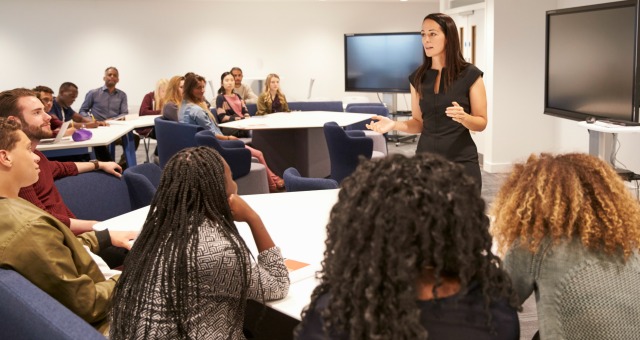

Some people walk into a discussion and instantly make the room feel smarter, calmer, and more productive. Others walk in and somehow turn a 30-minute conversation into a live reenactment of a traffic jam. The difference is not magic, charisma, or a suspiciously expensive notebook. It is facilitation skill.
Good discussion facilitation is the art of helping people think together. It is not dominating the room, performing wisdom, or delivering a TED Talk nobody requested. A strong facilitator creates structure without strangling the conversation, encourages participation without forcing awkward confessions, and keeps the group moving without flattening useful disagreement.
So how good are your discussion facilitation skills? A fair answer starts with this: if people leave your discussions feeling heard, clear on next steps, and slightly more hopeful about humanity, you are probably doing something right. If they leave confused, steamrolled, or wondering why Gary spoke for 19 straight minutes about a “quick point,” there is room to grow.
This article breaks down what effective facilitators actually do, the habits that weaken group discussion, and the practical moves that turn an average meeting leader into a genuinely skilled discussion guide. Whether you lead team meetings, workshops, classroom conversations, brainstorming sessions, or community discussions, the same core principles apply.
Why Discussion Facilitation Skills Matter More Than People Think
Most groups do not fail because members are unintelligent. They fail because the conversation is poorly guided. Without structure, a discussion can drift, get hijacked by the loudest voice, spiral into side quests, or end with a heroic amount of talking and absolutely no decision.
That is why discussion facilitation skills matter. They help teams surface better ideas, examine assumptions, reduce confusion, and move toward decisions people can actually support. Good facilitation also improves inclusion. When participation is more balanced, the group gains access to quieter perspectives, minority viewpoints, and details that would otherwise stay buried under the rubble of louder personalities.
In other words, facilitation is not a “soft” extra. It is one of the core skills behind productive meetings, healthy team dynamics, effective problem-solving, and psychologically safer conversations. If discussion is the engine, facilitation is the steering wheel. And yes, occasionally the brakes.
What Great Facilitators Actually Do
1. They prepare before anyone enters the room
Strong facilitators do not just show up and “see where the conversation goes.” That is not facilitation. That is gambling with a calendar invite.
Preparation starts with clarity. What is the purpose of the discussion? Is the group generating ideas, making a decision, sharing perspectives, solving a problem, or processing a difficult issue? Each goal requires a different structure. A brainstorming session needs openness and idea volume. A decision meeting needs criteria, boundaries, and a clear endpoint. A sensitive discussion needs emotional steadiness, ground rules, and enough time for reflection.
Skilled facilitators also think ahead about timing, agenda flow, who needs to be in the room, what background information participants need, and how input will be invited. They do not treat an agenda like decorative wallpaper. They use it as a guide rail.
2. They establish norms that make participation feel safer
If your group has never talked about how it will talk, do not be surprised when the discussion turns messy. Effective facilitators make norms visible. That might mean agreeing to one person speaking at a time, listening without interruption, challenging ideas rather than people, keeping comments concise, or making space for voices that have not spoken yet.
These norms are especially important when the topic is complex, emotional, or controversial. In those moments, structure is not restrictive. It is merciful. It helps people disagree without combusting.
The best part? Clear norms also give facilitators something neutral to point back to. Instead of saying, “Bob, you are being a steamroller again,” you can say, “Let’s return to our agreement to keep airtime balanced.” Same message. Far fewer fireworks.
3. They ask open-ended questions that unlock thinking
Average facilitators ask questions that invite short answers. Strong facilitators ask questions that open mental doors.
Instead of asking, “Do we agree?” ask, “What concerns or alternatives should we surface before we move on?” Instead of “Any thoughts?” ask, “What patterns are you noticing?” Instead of “Who wants to start?” ask, “What is one perspective we have not heard yet?”
Open-ended questions improve group discussion because they encourage reflection, analysis, and nuance. They also reduce the pressure to be immediately correct. A good facilitator knows that the right question can rescue a flat room faster than a motivational speech ever could.
4. They listen for meaning, not just for pauses
Active listening is a cornerstone of discussion facilitation. That means paying attention to content, emotion, and group dynamics at the same time. Yes, it is a bit like juggling while reading social cues and keeping one eye on the clock.
Strong facilitators paraphrase what they hear, summarize themes, clarify confusing comments, and notice what is happening beneath the surface. Is the group circling the same issue? Is one concern being ignored? Is tension rising? Is silence signaling thoughtfulness, discomfort, or total existential checkout?
Listening well helps facilitators respond with intention instead of reflex. It also helps participants feel respected, which increases trust and keeps the discussion moving.
5. They manage airtime without becoming controlling
One of the clearest signs of strong facilitation skills is balanced participation. That does not mean forcing everyone to speak in identical amounts like a conversational tax audit. It means making sure the discussion is not dominated by a few voices while others disappear into polite silence.
Great facilitators invite quieter members in with low-pressure prompts like, “I’d love to hear from someone who hasn’t jumped in yet,” or, “Taylor, what are you seeing from your angle?” They also redirect dominant speakers gracefully: “I want to pause there and bring in a few other voices,” or, “Let’s capture that point and hear some additional perspectives.”
This is not about punishing enthusiasm. It is about creating inclusive meetings where the conversation belongs to the group, not just the boldest extrovert with a functioning microphone.
6. They stay neutral about process, even when content gets messy
Facilitators do not have to be robots, but they do need emotional steadiness. In heated discussions, a facilitator’s job is to manage the process fairly, protect participation, and keep the conversation constructive. That often means slowing things down, naming tension without dramatizing it, and bringing the group back to purpose.
Neutrality does not mean indifference. It means not becoming reactive, defensive, or overly attached to one person’s argument. In inclusive facilitation, neutrality also has nuance. A skilled facilitator may need to prevent harmful narratives from swallowing the room while still making space for rigorous conversation. That takes judgment, not autopilot.
7. They summarize and move the group toward action
Some discussions feel productive because everyone talked a lot. Others are productive because something actually happened. Great facilitators know the difference.
They periodically summarize key ideas, identify points of agreement or disagreement, and clarify what happens next. Before ending, they answer the questions many people are quietly carrying: What did we decide? What is still unresolved? Who owns the next step? When do we revisit this?
A discussion without a summary is like a movie with no ending. People may have had an experience, but they are not entirely sure what it meant.
How to Tell If Your Facilitation Skills Are Strong
Here is a practical self-check. Your discussion facilitation skills are probably in good shape if most of these are true:
- You can explain the purpose of the conversation in one or two clear sentences.
- You prepare an agenda or flow instead of improvising the whole session.
- You ask more open-ended questions than yes-or-no questions.
- You notice who is not speaking, not just who is.
- You can redirect off-topic comments without making people defensive.
- You summarize discussions accurately and concisely.
- You can hold space for disagreement without rushing to shut it down.
- You encourage participation in more than one format, such as speaking, chat, writing, or small groups.
- You keep track of both content and group energy.
- You close discussions with clear next steps or takeaways.
If only a few of those sound familiar, do not panic. Facilitation is a learnable skill, not a personality type handed out at birth.
Common Discussion Facilitation Mistakes
Mistake 1: Talking too much
If you are doing most of the talking, you are probably leading a presentation, not facilitating a discussion. A facilitator is a guide, not the main attraction.
Mistake 2: Confusing politeness with inclusion
A room can look polite and still be exclusionary. If only the same few people speak every time, participation is not balanced, even if everyone is smiling.
Mistake 3: Rushing silence
Silence is not always failure. Sometimes it is thinking. Sometimes it is courage loading. Skilled facilitators do not leap in the second the room gets quiet.
Mistake 4: Ending without synthesis
When a discussion ends without recap or action items, people leave with different versions of reality. That is how follow-up emails multiply in the wild.
Mistake 5: Letting conflict become personal
Disagreement can be productive. Personal attacks are not. Good facilitators distinguish between task conflict, which can sharpen thinking, and relationship conflict, which usually burns time and trust.
Specific Examples of Strong Facilitation in Action
Example 1: The brainstorming meeting
A manager opens by saying, “Our goal today is to generate options, not pick a winner yet.” She gives the group three prompt questions, asks everyone to write ideas silently for two minutes, and then uses a round-robin to surface input. Result: more voices, better idea range, less immediate dogpiling.
Example 2: The difficult team conversation
A project is behind schedule and frustration is high. The facilitator sets discussion guidelines, names the goal clearly, and asks each person to describe what they need from the team going forward. When blame starts creeping in, he redirects to behaviors, process, and solutions. Result: tension is acknowledged without turning the meeting into a courtroom drama.
Example 3: The virtual discussion
In a remote meeting, the facilitator shares the agenda in advance, uses chat for quick reactions, invites written input from people who prefer not to jump in verbally, and pauses after key questions instead of filling the silence. She ends with a recap slide and ownership list. Result: the virtual format supports participation instead of flattening it.
How to Improve Your Discussion Facilitation Skills Quickly
If you want to get better fast, start with a short improvement loop:
- Plan one better question. Before your next meeting, rewrite at least one vague question into an open-ended one.
- Track airtime. Notice who speaks first, longest, and least. Patterns will reveal themselves quickly.
- Practice summarizing. Every 10 to 15 minutes, pause and say, “Here is what I’m hearing.”
- Name the process. Tell the group what you are doing: brainstorming, narrowing, prioritizing, or deciding.
- Ask for feedback. After a discussion, ask one trusted participant, “What helped the group think well, and what got in the way?”
Improvement in facilitation rarely comes from reading one brilliant article and becoming a discussion wizard by Tuesday. It comes from repetition, reflection, and a willingness to notice your own habits. The good news is that even small adjustments create visible results.
The Real Test of Facilitation Skill
The real test is not whether people say, “Wow, what a facilitator.” Honestly, if they say that, something unusual has happened. The real test is whether the group thinks more clearly because you were there.
Can people contribute without fighting for oxygen? Can disagreement happen without the room cracking in half? Can a messy topic become more understandable by the end? Can the conversation move from opinion overload to useful action?
If yes, your discussion facilitation skills are doing exactly what they should do. They are making the group better at being a group.
Experience and Lessons From Real Discussion Rooms
Experience has a sneaky way of teaching facilitation lessons that no checklist fully captures. On paper, leading a discussion sounds straightforward: set an agenda, ask a few smart questions, keep people on track, wrap up with action items, and enjoy your well-earned coffee. In reality, people arrive with moods, histories, assumptions, competing priorities, unfinished thoughts, and sometimes a heroic commitment to talking in circles. That is where real facilitation skill gets forged.
One of the most common experiences facilitators describe is discovering that the room you planned for is not always the room that shows up. You may prepare for a calm strategy discussion and get a simmering conflict about trust. You may expect a lively brainstorming session and get silence so complete you can hear laptop fans. At first, that can feel like failure. Over time, you realize that great facilitation is not about forcing the room back into your plan. It is about reading what is happening and responding without losing the purpose.
Another recurring lesson is that participation is more delicate than it looks. In many discussions, one or two people will speak with the confidence of a person narrating a documentary, while others hold back even when they have valuable insight. Experienced facilitators learn that inclusion does not happen automatically just because everyone received the calendar invite. It happens when the process is designed to support contribution. A simple round-robin, a pause for written reflection, or a direct but respectful invitation can completely change the quality of a conversation.
Difficult moments also teach unforgettable lessons. A participant becomes defensive. Someone interrupts repeatedly. A comment lands badly and the room stiffens. These are the moments that separate performative facilitation from the real thing. Experience teaches you to slow down, breathe, name what is happening with calm language, and guide the group back to respectful engagement. Not every hard moment can be made comfortable, but many can be made constructive.
Virtual discussions add another layer of experience. Online, it is easier for people to hide, multitask, or speak over one another in ways that make everyone look frozen and confused. Facilitators who work remotely learn to rely more on structure, chat, visual cues, and explicit turn-taking. They also learn that written participation can unlock voices that stay quiet in live conversation.
Perhaps the biggest lesson experience teaches is humility. The best facilitators are rarely the flashiest people in the room. They are the ones paying close attention, adjusting in real time, protecting the process, and helping others do their best thinking. Their skill shows up not as spotlight energy but as conversational craftsmanship. The room feels clearer, fairer, and more useful because of what they did. That is the kind of facilitation people remember, even if they cannot always explain why it worked so well.
Conclusion
So, how good are your discussion facilitation skills? Better question: how well do you help people think together? If you prepare with purpose, create clear norms, ask open-ended questions, listen actively, manage airtime fairly, and close with clarity, you are already practicing the habits that make discussions more productive and more human.
And if you are not there yet, welcome to the club. Facilitation is one of those skills that improves every time you notice what helped, what hurt, and what the room needed next. Keep learning, keep adjusting, and keep an eye on Gary.