
Candles make a room feel cozy, elegant, and slightly more put-together than it actually is. Then one tiny bump happens, and suddenly your carpet looks like it hosted a wax museum accident. The good news? Candle wax on carpet is not a decorating decision you have to live with forever. With the right method, a little patience, and a firm refusal to panic-clean, you can remove wax from carpet without turning the stain into a bigger drama.
The trick is understanding what candle wax does. When it is warm, it melts into carpet fibers. When it cools, it hardens and clings like it has signed a lease. That means the best way to clean candle wax from carpet is not to scrub it while it is soft. Scrubbing usually pushes the wax deeper, spreads the mess, and gives your carpet a whole new personality. Instead, you want to harden the wax, lift away the bulk, gently reheat what remains, and then treat any leftover stain.
This guide explains how to get candle wax out of carpet in 4 easy steps using common household items such as ice, a dull knife, paper towels, a white cloth, and a warm iron or hair dryer. You will also learn what to do with colored candle dye, how to avoid damaging synthetic carpet fibers, and when it is smarter to call a professional cleaner instead of auditioning for a home-improvement reality show.
Before You Start: Gather the Right Supplies
Wax removal works best when you use gentle tools and controlled heat. You do not need a science lab, a hazmat suit, or twelve mysterious bottles from under the sink. In fact, simple is better.
You Will Need
- Ice cubes
- A resealable plastic bag
- A dull butter knife, spoon, or old credit card
- A vacuum with a hose or upholstery attachment
- Plain white paper towels, brown paper, or a clean white cotton cloth
- A warm iron with the steam setting turned off
- A hair dryer, if you prefer not to use an iron
- Clear dish soap
- Warm water
- Rubbing alcohol, only for leftover dye stains
- A dry white towel for blotting
Notice the word “white” appearing more than once. That is not a design choice. Colored towels, printed napkins, or patterned cloths can transfer dye to the carpet when heat or moisture is involved. If your carpet already has candle wax on it, it does not need bonus artwork.
Step 1: Let the Wax Harden, Then Freeze It
The first step in removing candle wax from carpet is to let the wax cool completely. If the spill just happened, resist the urge to wipe it. Warm wax is sneaky. It looks easy to scoop up, but wiping can drive it deeper into the pile and spread it across a larger area.
Once the wax has cooled, put several ice cubes inside a resealable plastic bag. Seal the bag tightly so water does not leak into the carpet. Place the ice bag directly over the wax for about 10 to 20 minutes. The goal is to make the wax brittle enough to crack and lift away from the fibers.
This freezing method is especially helpful for thicker spills, such as a candle that tipped over and formed a small wax puddle. It also works well on area rugs, but always be careful with delicate, antique, wool, silk, or hand-dyed rugs. If the rug is valuable or the fiber type is unknown, test gently or contact a professional cleaner.
Why Freezing Works
Candle wax is easier to remove when it is solid. Cold temperatures cause the wax to shrink and harden, making it less sticky. Instead of smearing, the wax breaks into pieces. Think of it like trying to remove chewing gum from fabric: cold first, scraping second, cleaning third. Wax follows a similar logic.
Do not place bare ice directly on the carpet. Melting ice can wet the carpet backing, and moisture is not helpful here. A sealed plastic bag keeps the process controlled and prevents water from mixing with wax residue.
Step 2: Scrape and Vacuum the Hardened Wax
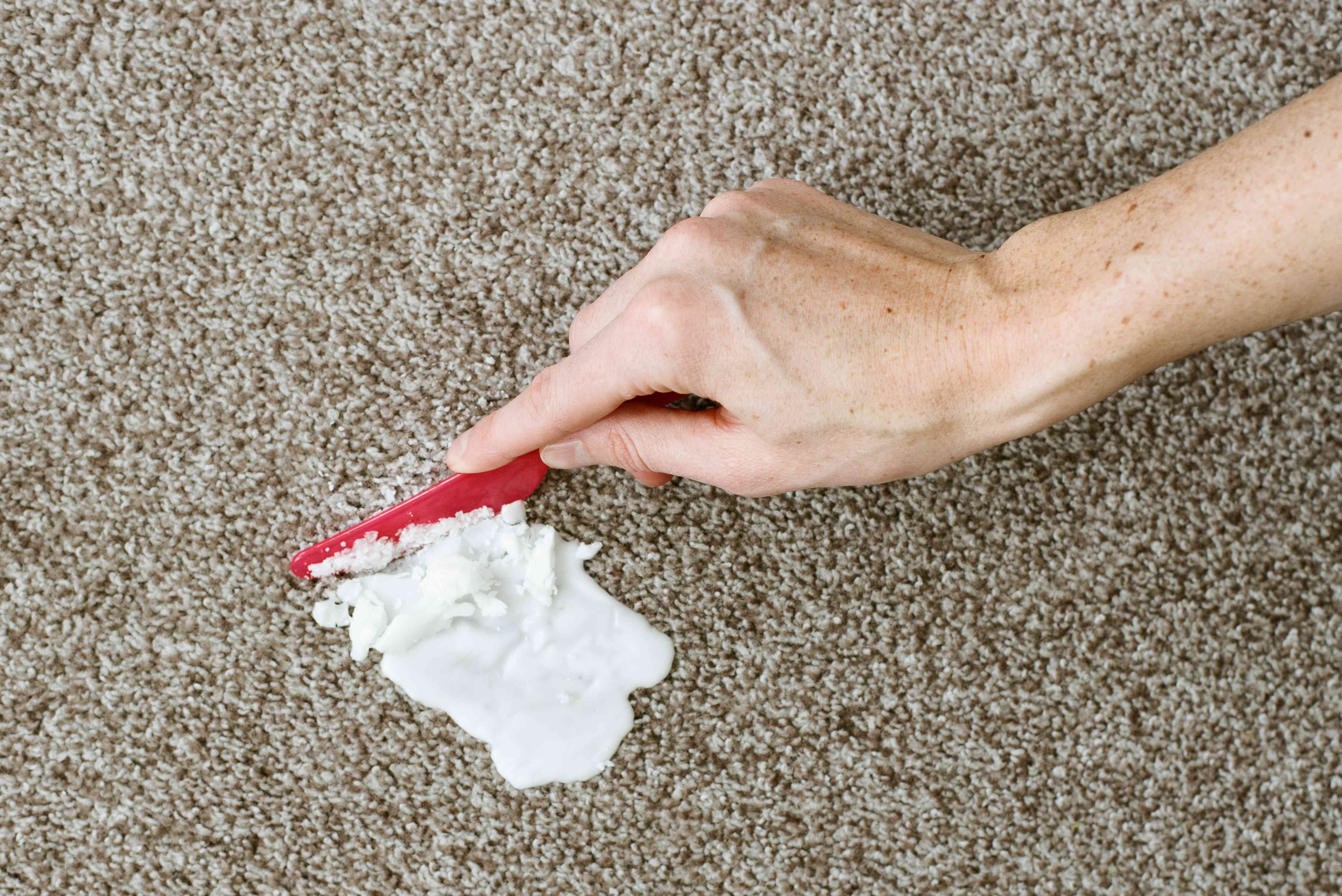
After the wax is firm, use a dull butter knife, spoon, or old credit card to gently scrape it away. Work slowly from the outside of the wax spot toward the center. Use light pressure and short strokes. The goal is to lift the wax, not shave your carpet like a sheep before county fair season.
As pieces come loose, pick them up by hand or vacuum them away using a hose attachment. Avoid using the main vacuum head directly over large wax chunks because bits can lodge in the brush roll. A hose or upholstery attachment gives you more control.
If some wax remains stuck between carpet fibers, repeat the ice-bag step for a few more minutes and scrape again. Removing as much hardened wax as possible before adding heat makes the next step easier and safer.
Scraping Tips for Different Carpet Types
For low-pile carpet, a dull knife or old credit card usually works well because the fibers are short and easy to access. For plush or shag carpet, use extra care. Long fibers can trap wax deeper in the pile, so lift the fibers gently and scrape only the wax you can see. A fine-tooth comb can sometimes help separate wax from longer fibers, but do not yank. Carpet fibers are not spaghetti, even if the mess makes you hungry for comfort food.
If your carpet is looped, such as Berber, avoid aggressive scraping. Pulling too hard can snag the loops and create visible damage. Use the dull edge of a spoon or card instead of a knife, and keep your movements gentle.
Step 3: Use Heat to Transfer the Remaining Wax
After scraping, you may still see a thin waxy film or small spots clinging to the carpet. This is where controlled heat helps. Place a clean white cotton cloth, plain white paper towels, or brown paper over the remaining wax. Set an iron to low or low-medium heat and turn off the steam. Press the iron on top of the cloth for a few seconds at a time.
The heat softens the wax, and the cloth or paper absorbs it. Lift the cloth and check your progress. Move to a clean section each time so you do not transfer wax back onto the carpet. Repeat until no more wax lifts onto the cloth.
This step is often the most satisfying part of the process because the wax seems to disappear into the towel. However, do not get overexcited and crank the iron to maximum heat. Too much heat can melt or scorch synthetic carpet fibers, especially nylon, polyester, olefin, or triexta. Your mission is wax removal, not carpet fondue.
Important Iron Safety Rules
- Never let the iron touch the carpet directly.
- Always use a cloth, paper towel, or brown paper as a barrier.
- Use low heat first and increase slightly only if needed.
- Do not use steam, because moisture can spread residue.
- Keep the iron moving or press briefly, checking often.
If you do not want to use an iron, a hair dryer can also work. Place a paper towel or white cloth over the wax, then warm the area with the dryer on low or medium heat. Blot as the wax softens. This method can take longer, but it offers more temperature control and may feel safer on delicate carpet.
Step 4: Treat Any Remaining Stain and Blot Dry
Once the wax is gone, inspect the carpet. If the candle was white or unscented, you may be finished after a quick vacuum. But colored candles can leave dye behind, and scented candles may leave a faint oily residue. This final step helps clean what wax removal leaves behind.
Mix a few drops of clear dish soap with one cup of warm water. Dip a clean white cloth into the solution, wring it out well, and blot the stained area. Do not soak the carpet. Work from the outside of the stain toward the center so the mark does not spread. Then blot with a second cloth dampened with plain water to remove soap residue.
Finally, press a dry white towel over the area to absorb moisture. Let the carpet air-dry completely, then vacuum to lift the fibers. If the carpet feels sticky after drying, you may have used too much soap. Blot again with plain water and dry thoroughly.
What If Colored Candle Dye Remains?
Colored wax can be stubborn because dye behaves differently from wax. If a pink, red, blue, green, or purple mark remains after the wax is gone, lightly dab the area with rubbing alcohol on a clean white cloth. Use a small amount, and always test first in a hidden area such as behind furniture or inside a closet. Blot gently, then rinse with a damp cloth and dry.
Avoid scrubbing alcohol into the carpet. Too much rubbing alcohol may affect carpet backing, adhesives, or dyes. If the stain is large, dark, or located on an expensive rug, professional cleaning is the safer route.
Common Mistakes to Avoid When Removing Candle Wax from Carpet
Most candle wax carpet disasters get worse because of one thing: impatience. The wax spill looks urgent, so the natural reaction is to attack it immediately. Unfortunately, wax rewards calm people. Here are the most common mistakes to skip.
Do Not Rub Hot Wax
Rubbing hot wax spreads it and pushes it deeper into the fibers. Let it harden first. This feels wrong in the moment, but it is the right move.
Do Not Use a Sharp Knife
A sharp knife can cut carpet fibers, especially looped carpets. Use a dull knife, spoon, or old credit card instead.
Do Not Use High Heat
High heat may damage synthetic carpet. Use a warm iron, not a scorching one. If you smell burning or see fibers flattening, stop immediately.
Do Not Pour Cleaning Products Directly on the Stain
More cleaner does not mean better cleaning. Too much liquid can soak the carpet backing and leave residue that attracts dirt. Apply solutions to a cloth first, then blot.
Do Not Skip the Test Spot
Before using rubbing alcohol, vinegar, dish soap, or any carpet cleaner, test in a hidden area. Carpets vary by fiber, dye, backing, and age. A two-minute test can prevent a permanent reminder of your cleaning enthusiasm.
How to Remove Wax from Area Rugs
Area rugs need a gentler approach than wall-to-wall carpet, especially if they are wool, silk, vintage, handmade, or naturally dyed. Start with the same ice-bag method, then scrape gently. For the heat-transfer step, use the lowest possible heat and a thick white cotton towel as a barrier.
If the rug label says dry clean only, or if the colors bleed when tested with a damp white cloth, stop and call a rug-cleaning specialist. A beautiful rug deserves better than experimental chemistry in the living room.
How to Prevent Candle Wax Spills in the Future
Once your carpet is clean, prevention becomes much more attractive. Place candles on stable, heat-safe trays with raised edges. Keep candles away from table edges, pets, kids, curtains, and enthusiastic hand talkers. Trim candle wicks to reduce uneven burning and wax pooling. Avoid moving lit candles from one room to another, no matter how cinematic it feels.
If you love the candle glow but not the cleanup risk, consider flameless LED candles in carpeted rooms. They create atmosphere without wax, smoke, or the possibility of redecorating your rug by accident.
When to Call a Professional Carpet Cleaner
DIY wax removal works for many small household spills, but some situations call for professional help. Contact a carpet cleaner if the wax stain is large, deeply embedded, heavily colored, or on an expensive rug. You should also get help if the carpet fibers look melted, scorched, or distorted after a heat attempt.
Professional cleaners have tools and spot-treatment products designed for carpet fibers. They can often remove residue and dye more safely than repeated home treatments. If you have already tried several methods and the stain is still there, stop before the carpet begins keeping a diary of your mistakes.
Real-Life Experience: What Actually Happens When You Clean Candle Wax from Carpet
Here is the part many cleaning guides skip: candle wax removal is not always a perfect little four-step dance. Sometimes it is more like a negotiation. The carpet wants to keep the wax. You want your carpet back. Everyone has feelings.
In a typical real-life situation, the spill happens during something nice: a dinner, a movie night, a holiday gathering, or one of those evenings when you light a candle and pretend your home is a boutique hotel. Then someone bumps a side table, the candle tilts, and wax lands on the carpet. The first instinct is usually panic. Someone grabs a napkin. Someone else says, “Use hot water!” A third person suddenly becomes a cleaning expert despite never replacing the vacuum filter. This is the moment to pause.
From experience, the best results come from doing less at first. Let the wax harden. It feels strange to wait while the stain sits there looking smug, but it prevents the wax from spreading. Once the wax is cold and brittle, scraping becomes surprisingly effective. Large chunks often pop off more easily than expected, especially from low-pile carpet. The small residue is the annoying part, but it is manageable.
The heat-transfer step is where patience matters most. People often press the iron too long because they want the wax gone immediately. A better approach is short contact, check, move the towel, repeat. It may take several passes. Each time, the paper towel or cloth picks up a little more wax. If you use the same spot on the towel repeatedly, you can accidentally redeposit wax. Rotating to a clean section makes a big difference.
Another real-world lesson: colored candles are the troublemakers. White wax often comes out cleanly, but red and dark-colored candles may leave a faint tint even after the wax is gone. That does not mean the process failed. It means you removed the wax and now you are dealing with dye. Treat the dye separately and gently. A tiny amount of rubbing alcohol on a white cloth can help, but testing first is essential.
Thick carpets also require more time. Wax can hide below the visible surface, so after the first cleanup, run your fingers lightly through the fibers. If you feel stiffness, repeat the heat-transfer method. After drying, vacuum slowly in several directions. This helps restore texture and lift any tiny remaining particles.
One practical tip is to keep the cleaning area small. Do not wet or heat a huge circle around the wax spot. Work only where the wax actually is. Expanding the cleaning zone can create a water ring or make the carpet look uneven after drying. Small, controlled movements almost always produce a cleaner result.
Finally, the biggest lesson is that candle wax on carpet looks worse than it usually is. At first glance, it seems permanent, dramatic, and possibly expensive. But if you freeze, scrape, heat-transfer, and blot carefully, the carpet often recovers beautifully. The process rewards calm hands, clean white towels, and the ability to ignore anyone shouting “just scrub it!” from across the room.
Conclusion
Learning how to get candle wax out of carpet in 4 easy steps can save you stress, money, and a long-term relationship with an ugly stain. The method is simple: freeze the wax, scrape away the hardened pieces, use gentle heat to transfer the remaining residue, and blot any leftover stain with a mild cleaning solution. The key is to avoid rubbing, avoid high heat, and avoid soaking the carpet with too much cleaner.
Whether the spill came from a holiday candle, a romantic dinner, a power outage, or a scented candle named something dramatic like “Midnight Cashmere Forest,” the cleanup process stays the same. Move slowly, test first, and treat the carpet like something you want to keep. With patience and the right technique, candle wax does not have to become a permanent feature of your floor.
Note: This article is written for general home-cleaning guidance. Always check your carpet or rug care label before applying heat, soap, vinegar, rubbing alcohol, or any spot cleaner. For delicate rugs, valuable carpets, large stains, or stubborn dye marks, professional carpet cleaning is the safest option.