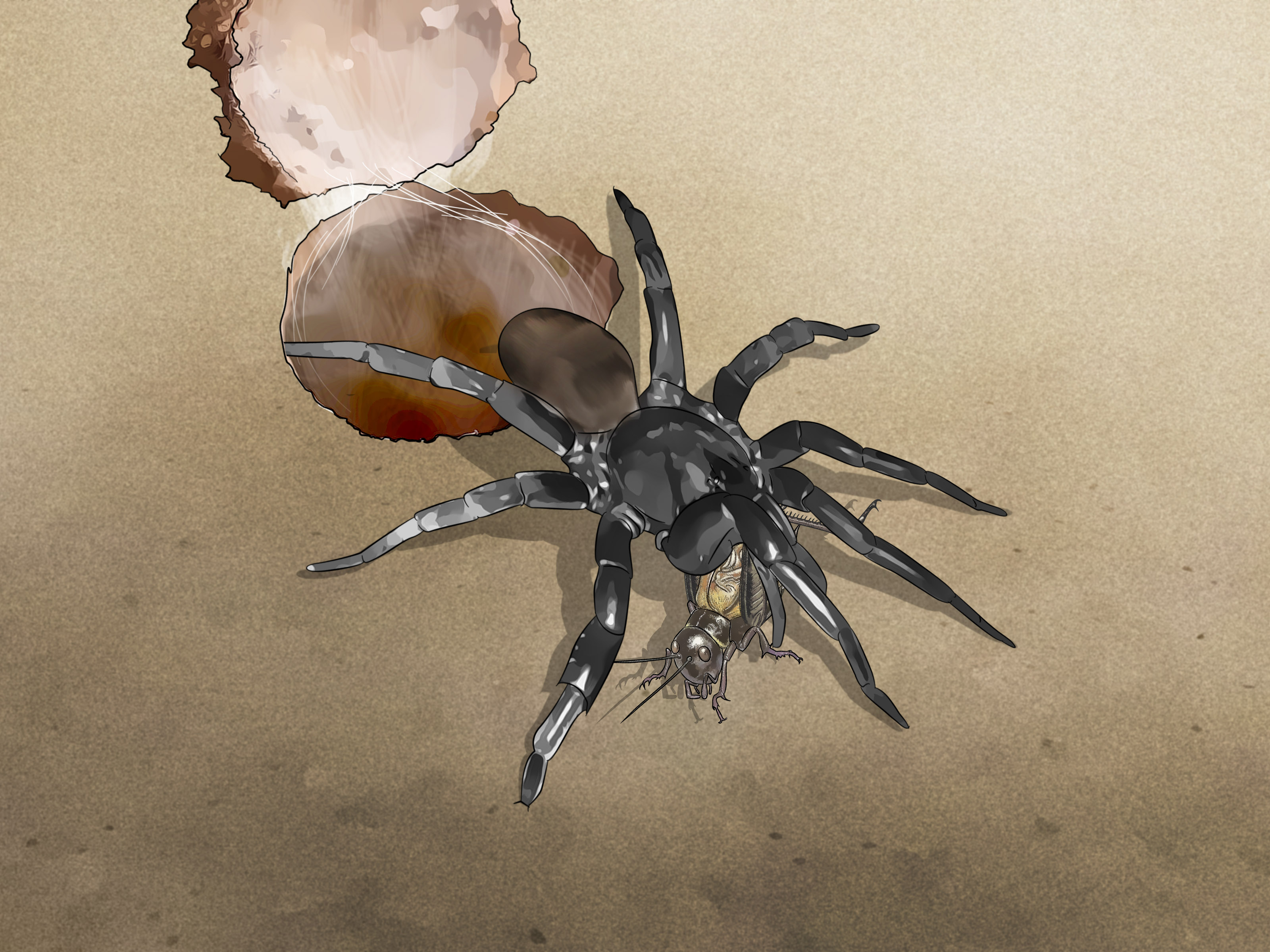

At first glance, a trapdoor spider can look like a tiny armored tank that took a wrong turn in your flower bed. It is chunky, usually dark, and built more for digging than for winning any “longest legs in the spider world” contest. But the real giveaway is not always the spider itself. Often, the clue is the hidden burrow: a small, silk-lined tunnel in the soil, sometimes sealed with a camouflaged lid that looks suspiciously like the ground wearing a clever disguise.
Learning how to identify a trapdoor spider is useful for gardeners, hikers, curious homeowners, and anyone who has ever looked at a mysterious hole in the yard and thought, “Do I want to know what lives there?” The good news is that trapdoor spiders are generally shy, reclusive hunters. They are not interested in chasing people, invading your cereal cabinet, or becoming the villain in your personal nature documentary.
This guide breaks trapdoor spider identification into nine practical steps. You will learn what they look like, where they live, how their burrows work, how to tell them apart from similar spiders, and what to do if you find one. No panic, no spider gossip, and no dramatic screaming required.
What Is a Trapdoor Spider?
A trapdoor spider is not just one single species. The name refers to several groups of burrowing spiders, many of which belong to the infraorder Mygalomorphae. That is the same broad spider group that includes tarantulas, which explains the sturdy body, strong legs, and old-world “I was here before your lawn mower” vibe.
Many trapdoor spiders build burrows in soil and line them with silk. Some species create a hinged, camouflaged door made from silk, soil, moss, leaf fragments, or tiny bits of plant material. Others may have a simple open burrow with no obvious door at all. That is why identification works best when you look at several clues together: body shape, habitat, burrow style, behavior, and location.
How to Identify a Trapdoor Spider in 9 Steps
Step 1: Look for a stout, compact body
The first clue is the spider’s overall shape. Trapdoor spiders usually have a heavy, sturdy build. Their bodies are not delicate or wispy like cellar spiders, and they do not have the long, athletic legs of many wandering house spiders. Instead, they look compact, muscular, and close to the ground.
The body has two main sections: the cephalothorax at the front and the abdomen at the back. The cephalothorax often looks shiny, firm, and dark brown to black. The abdomen is usually rounded and may appear duller, softer, or slightly textured. Many trapdoor spiders look like smaller, smoother relatives of tarantulas, though they are usually less hairy and more secretive.
Size varies by species and sex. Some may be around half an inch long, while larger females in certain U.S. groups can approach one to two inches in body length. Males may look slimmer, especially when they are out wandering for mates. If the spider looks like a compact burrowing machine rather than a web-hanging acrobat, you are on the right track.
Step 2: Notice the dark, earthy colors
Trapdoor spiders are usually dressed in the official uniform of underground living: brown, black, reddish-brown, or dark gray. Their colors help them blend into soil, bark, leaf litter, and shaded ground. They are not typically bright, flashy spiders. If a spider could say, “Please do not notice me,” it would probably wear trapdoor-spider colors.
The front body section may appear glossy, almost polished. The abdomen can be smoother, darker, or more matte. Some species show subtle markings, but many are plain enough that casual observers simply describe them as “big brown spider” or “black spider in a hole.”
Color alone is not enough for identification because many spiders are brown or black. However, when dark coloration appears along with a stout body, thick legs, and a burrow in the ground, the trapdoor spider possibility becomes much stronger.
Step 3: Check the legs: short, strong, and built for digging
Trapdoor spiders have legs that look strong rather than spindly. Their legs are often relatively short compared with the body, especially when compared to wolf spiders, fishing spiders, or cellar spiders. This body plan makes sense because trapdoor spiders spend much of their lives digging, maintaining, and defending burrows.
The front legs may appear especially strong. Some species have spines or digging adaptations near the mouthparts and legs that help them excavate soil. They are not designed for making large aerial webs. They are designed for life at ground level, where the job description includes digging, waiting, lunging, and pretending to be a clump of dirt.
If you see a spider sprinting freely across a wall with long, graceful legs, it is probably not a trapdoor spider. If you see a sturdy spider close to the ground or near a small hole in soil, keep observing from a respectful distance.
Step 4: Look for downward-moving fangs
Trapdoor spiders belong to the mygalomorph group, which means their fangs move more up-and-down than side-to-side. This is one feature they share with tarantulas. In practical terms, you probably should not try to inspect the fangs closely unless you are an arachnologist with proper equipment and a calm spider in a safe viewing container.
Still, fang orientation matters because it separates trapdoor spiders from many common araneomorph spiders, whose jaws work more like pincers moving toward each other sideways. A trapdoor spider may appear to have prominent, forward-facing mouthparts, giving the front of the body a strong, blunt look.
For everyday identification, do not handle the spider to check this feature. Instead, use it as supporting knowledge. A spider with a tarantula-like body, strong front end, burrowing habits, and a secretive lifestyle may well be a trapdoor spider or a close mygalomorph relative.
Step 5: Search for the burrow, not just the spider
The burrow is often the best clue. Trapdoor spiders are famous for living in silk-lined tunnels in soil, embankments, garden beds, slopes, woodland edges, and dry open ground. Some burrows are only a few inches deep, while others can extend much farther depending on the species and soil conditions.
A classic trapdoor burrow has a small round entrance, sometimes covered by a hinged lid. The door may be made from silk mixed with soil and plant debris. It can be so perfectly camouflaged that you might stare right at it and see only “ordinary dirt.” Nature, apparently, has a stealth mode.
Look for small circular patches in the soil, especially on banks, hillsides, dry garden areas, or undisturbed ground. The entrance may be about the width of a pencil eraser to the size of a coin, though larger species can make wider openings. Around the entrance, there may be silk, tiny soil pellets, or a neat rim. If the burrow has a lid, the edge may lift slightly like a miniature hatch.
Step 6: Observe the spider’s behavior
Trapdoor spiders are ambush predators. They do not spin big sticky webs to catch flying insects. Instead, many wait near the entrance of their burrow and sense vibrations from passing prey. When an insect wanders close enough, the spider rushes out, grabs it, and retreats. It is basically the arachnid version of a surprise snack window.
Because they rely on stealth, trapdoor spiders are usually shy. Females often stay in or near their burrows for most of their lives. Males are more likely to be seen wandering, especially during mating season. A male may show up on a patio, driveway, pool edge, garage floor, or sidewalk and cause temporary confusion among humans who were not emotionally prepared for a glossy little tank with legs.
If the spider quickly retreats into a hole or stays near a burrow entrance, that behavior supports trapdoor spider identification. If it builds a sheet web, orb web, or tangled cobweb in a corner, it is probably something else.
Step 7: Consider where you found it
Location matters. In the United States, trapdoor spiders and related mygalomorphs occur in many regions, especially warmer areas, parts of the Southeast, the Southwest, California, and other suitable habitats. The genus Ummidia, one of the better-known U.S. trapdoor spider groups, is reported across parts of the eastern and southern United States and into the Southwest and Neotropics.
Trapdoor spiders prefer places where they can dig stable burrows. You may find them in dry exposed ground, sandy soil, clay banks, forest edges, garden beds, slopes, or near rocks and roots. They are less likely to be permanent indoor residents. When found inside, it is often a wandering male that accidentally took the wrong hallway during mate-search season.
Time of day also helps. Trapdoor spiders are generally more active at night. During the day, they often remain hidden underground. If you discover a burrow in daylight, the spider may be tucked deep inside like a tiny landlord who refuses surprise inspections.
Step 8: Compare it with similar spiders
Several spiders can be mistaken for trapdoor spiders. A careful comparison can prevent unnecessary fear and bad identifications.
Trapdoor spider vs. tarantula
Tarantulas are usually larger and hairier. Trapdoor spiders may look tarantula-like but are often smaller, smoother, and more closely tied to narrow burrows with hidden entrances. Both are mygalomorphs, so the family resemblance is real.
Trapdoor spider vs. wolf spider
Wolf spiders are active hunters with longer legs and often visible eye shine at night. They do not build trapdoor burrows. Female wolf spiders may carry egg sacs or spiderlings, which trapdoor spiders do not do in the same obvious backpack style.
Trapdoor spider vs. brown recluse
Brown recluse spiders are smaller, flatter, and typically have a violin-shaped marking on the cephalothorax. They do not build silk-lined trapdoor burrows. Many brown spiders are wrongly accused of being brown recluses, so use caution before making that identification.
Trapdoor spider vs. purseweb spider
Purseweb spiders are also mygalomorphs, but they build silk tubes, often against tree trunks or in concealed places. Trapdoor spiders are more associated with ground burrows and hidden soil entrances.
The main idea is simple: do not identify by color alone. Brown and black are extremely popular colors in the spider fashion industry. Use body shape, burrow type, behavior, and habitat together.
Step 9: Confirm safely and avoid handling
If you want to confirm a trapdoor spider, take a clear photo from above and from the side if possible. Include an object for scale, such as a coin placed nearby, not touching the spider. Photograph the burrow entrance too. These details help naturalists, extension offices, or citizen-science communities provide a more accurate identification.
Do not poke the spider, dig up the burrow, or pick it up with your hands. Trapdoor spiders are not considered aggressive toward people, but any spider with strong fangs can bite if trapped or pressed. A bite may be painful, even if it is not typically considered medically serious. If someone is bitten and develops concerning symptoms, contact a medical professional or local poison control center.
The best approach is peaceful observation. If the spider is outside, leave it alone. If it wandered indoors, gently guide it into a container using a piece of stiff paper, then release it outside near sheltered ground. Congratulations: you have completed a tiny wildlife rescue, and no one had to use a flamethrower.
Are Trapdoor Spiders Dangerous?
Trapdoor spiders may look intimidating, but they are generally timid and not considered dangerous to humans in the way medically significant spiders can be. They use venom to subdue insects and other small prey, not to start drama with homeowners.
Most encounters happen because a person uncovers a burrow while gardening, sees a male wandering across a surface, or notices a spider near a patio or pool. The spider’s first choice is usually escape. If handled roughly or pinned against skin, it may bite defensively. The safest solution is simple: admire from a distance and give the spider space.
Why Trapdoor Spiders Matter
Trapdoor spiders play a useful role in local ecosystems. They feed on insects and other small arthropods, helping balance populations in soil and garden habitats. Their burrows also show how much life exists beneath our feet, quietly working away while humans worry about lawn stripes and patio furniture.
Some trapdoor spider populations may be vulnerable because females do not travel far from their burrows. When land is heavily disturbed by development, grading, paving, or repeated soil disruption, local populations may struggle to recover. Finding one is a reminder that even a small patch of ground can hold a surprisingly complex world.
Common Signs You Have Found a Trapdoor Spider Burrow
A trapdoor spider burrow may look like a tiny round door in the soil. The lid can be thick and cork-like or thin and wafer-like, depending on the species. It may be covered with soil, moss, bark fragments, or leaf bits. Some burrows have no obvious lid but still have a silk-lined entrance.
Good places to check include undisturbed soil banks, dry garden beds, trail edges, slopes, and areas near rocks or roots. Look carefully after rain, when the soil surface may reveal edges and textures more clearly. Do not destroy the burrow just to satisfy curiosity. A photograph and a flashlight are usually enough.
What to Do If You Find One in Your Yard
If the spider is outside, the best action is usually no action. Trapdoor spiders are beneficial predators and rarely cause problems. Avoid flooding the burrow or spraying pesticides. Pesticides can harm other helpful insects and may not solve the issue anyway, because trapdoor spiders are hidden underground much of the time.
If you are worried about children or pets, mark the area temporarily and explain that the spider should not be touched. Most trapdoor spiders will remain hidden and avoid contact. If a spider is indoors, relocate it gently. Seal gaps around doors, windows, and ground-level cracks to reduce future accidental visitors.
Extra Field Experiences: Practical Lessons From Identifying Trapdoor Spiders
One of the most useful experiences when learning how to identify a trapdoor spider is realizing that the spider is often the second thing you find. The first thing is usually the habitat. A neat little hole in a sloped garden bed, a round patch of camouflaged soil, or a tiny lid that lifts like a secret entrance may tell you more than a quick glimpse of the spider. Many beginners focus only on the animal, but experienced observers learn to read the ground like a detective novel written in dirt.
For example, imagine checking a dry garden border after watering plants. Near the base of a shrub, you notice a small circular mark that looks different from the surrounding soil. It is not an ant mound, because there is no pile of grains around it. It is not a worm hole, because the entrance looks lined and tidy. When touched gently with a grass stem, the edge moves slightly, almost like a lid. That is the kind of moment when trapdoor spider identification becomes exciting. The spider may never show itself, but the architecture gives it away.
Another helpful experience is observing at night. Trapdoor spiders are often more active after dark, especially when temperatures are mild and the ground is not too dry. A flashlight held low across the soil can reveal tiny shadows around burrow rims. You may see the spider waiting just inside the entrance, front legs positioned near the door. Move slowly and avoid shining the light too harshly for too long. The spider may retreat instantly, proving that it has better home security than many apartments.
Gardeners sometimes discover trapdoor spiders while moving pots, clearing leaves, or digging in compact soil. The surprise can be intense because the spider looks sturdy and serious, like it has a tiny mortgage and no patience for nonsense. But most of these encounters are harmless. The spider is not invading; you have simply uncovered its roof. If possible, replace disturbed soil gently and leave the area alone.
A common mistake is assuming every large brown spider near the ground is a trapdoor spider. Wolf spiders, fishing spiders, and even large house spiders can cause confusion. The difference is context. A wolf spider is often seen roaming openly. A fishing spider may rest on walls, tree trunks, or near water. A trapdoor spider is strongly connected to a burrow, especially females. When in doubt, photograph the spider and the surrounding area. A blurry close-up of eight legs is less useful than a clear image showing body shape, scale, and habitat.
Another field lesson: do not expect every trapdoor spider to have a perfect “storybook” door. Some species make obvious lids; others build burrows that are open, thinly covered, or difficult to recognize. Soil type, age of the spider, recent rain, and local species all affect what the burrow looks like. A missing door does not automatically rule out a trapdoor spider.
Finally, patience matters. Trapdoor spiders are masters of stillness. They can remain hidden for long periods, waiting for vibrations from passing prey. If you want to identify one, slow down. Look for the shape, the soil, the silk, the behavior, and the habitat. The reward is not just naming a spider; it is noticing a secret piece of nature that most people walk past without ever seeing.
Conclusion
Identifying a trapdoor spider is less about one dramatic feature and more about connecting clues. Look for a compact, sturdy spider with dark earthy coloring, strong legs, and a close relationship with soil. Then examine the habitat: silk-lined burrows, camouflaged doors, dry or sloped ground, and nighttime ambush behavior all point toward trapdoor spider identification.
These spiders may look a little intimidating, but they are usually shy, beneficial predators that prefer quiet underground living. If you find one, observe respectfully, take photos if needed, and let it continue its tiny career as a hidden insect-control specialist. In the grand neighborhood of nature, the trapdoor spider is not the monster under the floor. It is the quiet tenant under the mulch.