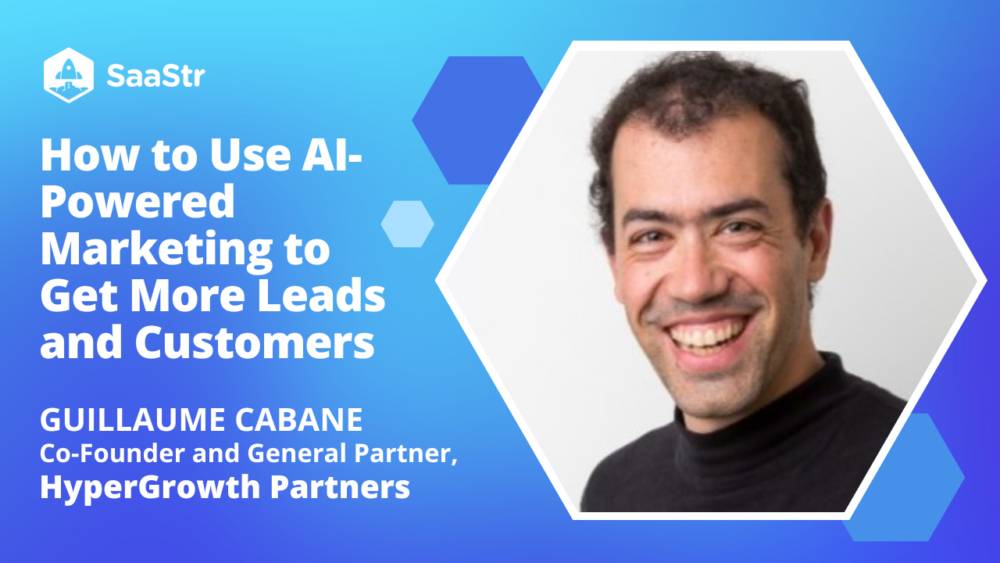
How to Use AI-Powered Marketing to Get More Leads and Customers with Guillaume Cabane of HyperGrowth Partners (Video + Pod)

If your marketing team has spent the last year saying, “We should probably do something with AI,” congratulations: you are officially part of the world’s largest support group. The good news is that AI-powered marketing is no longer just a shiny toy for LinkedIn hot takes and painfully confident conference slides. Used well, it can help you find better leads, create more relevant campaigns, improve conversion rates, and lower customer acquisition costs without turning your brand into a robotic sales goblin.
That is the big theme in Guillaume Cabane’s video and podcast conversation: AI is changing the economics of growth. Cabane, known for helping scale B2B SaaS companies and now advising startups through HyperGrowth Partners, argues that AI is not just another tool in the stack. It changes how outbound works, how SEO gets built, and how paid media gets optimized. In plain English, that means smaller teams can do smarter work, faster, and often at a lower cost.
But here is the catch. AI does not magically create pipeline because you asked a chatbot to “make me more customers.” If only. The winners are the companies that combine AI with strong positioning, clean data, useful content, and a real understanding of buyer intent. The losers are the ones sending 6,000 generic emails written by an algorithm that sounds like a sales intern who drank too much cold brew.
Why Guillaume Cabane’s Take Matters
Cabane’s perspective stands out because it sits at the intersection of marketing, sales, and growth engineering. His core idea is simple: when AI reduces the labor needed to research accounts, personalize messaging, generate content, and optimize campaigns, it also changes which channels are economical. Tactics that once required large teams and large budgets suddenly become accessible to leaner companies.
That matters because many marketers still think in the old model. SEO is treated like a slow blog machine. Outbound is treated like an SDR volume contest. Paid media is treated like a spreadsheet wrestling match. Cabane’s view flips that. AI-powered marketing works best when each channel becomes more intelligent, more adaptive, and more tightly connected to real revenue outcomes.
What AI-Powered Marketing Actually Means
Let’s clean up the buzzword soup. AI-powered marketing is not one thing. It is a system made up of several practical capabilities:
- Using AI to research accounts, segments, and buyer intent faster.
- Using AI to draft personalized messaging at scale.
- Using AI to create, refresh, and organize content for search and conversion.
- Using AI inside ad platforms to improve targeting, bidding, and creative relevance.
- Using AI to score leads, route them, and prioritize follow-up.
- Using AI to analyze performance patterns that humans would miss or take forever to find.
The important part is that AI should improve decision quality, not just output quantity. More content is not the goal. More qualified conversations are. More clicks are not the goal. More customers are. If your AI workflow only produces “more stuff,” you built a machine for noise, not growth.
Channel One: Use AI for Smarter Outbound, Not Spammy Outbound
This is where Cabane’s advice gets especially useful. Traditional outbound used to depend on humans doing manual research, writing emails, building lists, and following up. Then the market overcorrected into mass automation, and inboxes everywhere became graveyards of “just bumping this up” messages no one asked for.
AI gives outbound a chance to become smart again.
Start with targeting and intent
Before sending anything, use AI to define your total addressable market more precisely. Instead of building a giant list based on vague firmographics, enrich accounts with better signals: hiring activity, product usage clues, technology stack, location, funding stage, review themes, website language, and category fit. This helps you stop chasing everyone with a pulse and start focusing on people with a reason to care.
For example, if you sell compliance software, AI can help identify which prospects recently expanded into regulated markets, updated policy pages, or posted job openings tied to governance or security. That is infinitely better than emailing every company with more than 50 employees and hoping destiny takes the wheel.
Personalize at the insight level
Here is where many teams mess it up. They use AI to personalize surface details like first name, job title, or company name. That is not personalization. That is mail merge wearing a fake mustache.
Real AI-powered personalization uses context. It notices that a company launched a partner program, changed its pricing page, published new case studies for a new vertical, or started hiring enterprise reps. Your outreach should connect to that movement. The goal is not to sound clever. The goal is to sound relevant.
A good outbound message says, “I noticed something important about your business, and I have a point of view about what it means.” A bad one says, “I saw you work at Company Name and thought we’d be a great fit.” That line should come with a small apology card.
Keep a human in the loop
AI can draft first passes, suggest hooks, and assemble data. Humans should still review high-value campaigns, enterprise sequences, and account-based messages. The best setup is not human versus machine. It is machine for speed, human for judgment.
Channel Two: Use AI for SEO That Earns Attention and Leads
Cabane’s SEO point is not “publish infinite slop and pray.” It is closer to this: AI makes it easier to build useful, structured, scalable content systems, but only if quality control stays high. That distinction is everything.
Search has changed. Buyers use search differently, AI summaries change discovery patterns, and brands compete in an environment flooded with average content. That means AI-generated text alone is not a strategy. It is wallpaper.
Build topic systems, not random articles
If you want more leads from SEO, organize content around buyer problems and purchase intent. Create clusters that answer awareness questions, comparison questions, workflow questions, and solution questions. AI can help map the cluster, identify missing pages, and draft outlines quickly. Your team then adds expertise, examples, screenshots, quotes, product nuance, and original perspective.
In other words, let AI help with structure. Let humans add substance.
Use programmatic SEO carefully
One of Cabane’s recurring themes is that AI can power programmatic page creation when the content has real value. This works best when pages are built from unique data, useful templates, integrations, calculators, comparisons, or decision support content. It works worst when you crank out thin pages that differ only by swapping a keyword and changing the city name like a bored magician.
If your page helps a buyer make a decision faster, you are on the right track. If it looks like it was produced by a content blender, Google and humans will both notice.
Turn one idea into multiple formats
AI-powered SEO should not stop at a blog post. Turn the same topic into a short video script, podcast talking points, an email newsletter, paid ad angles, a sales enablement one-pager, and social clips. The article attracts search intent. The video builds trust. The podcast deepens authority. The email drives return visits. Suddenly one strong topic becomes a lead-generation asset, not a lonely post abandoned after publishing.
Channel Three: Use AI in Paid Media to Improve Lead Quality
Cabane also argues that paid media has shifted. The old habit of over-segmenting campaigns and trying to manually outsmart ad platforms is less effective than it used to be. Today, AI inside platforms can do more of the heavy lifting on targeting, bidding, and creative matching.
That does not mean you surrender and light a candle for the algorithm. It means you feed the machine better inputs.
Optimize for qualified leads, not cheap leads
This is the difference between a healthy pipeline and a very expensive form submission collection hobby. If you optimize paid campaigns only for volume, the system will find the easiest conversions, not the best ones. You want your CRM data flowing back into the ad platform so the AI learns which leads became sales-qualified opportunities, demos, or closed-won customers.
That is where AI-powered marketing gets interesting. Instead of asking, “How do I get more leads for less?” you start asking, “How do I get more of the leads that actually turn into revenue?” That is a much better question and a much less painful board slide.
Give AI room to test creative
AI can rapidly test combinations of headlines, descriptions, visuals, and landing page matches. Your job is to set the strategy: offer, audience, proof points, and conversion path. The machine can then explore variants much faster than a human team manually rotating every asset.
Still, the best-performing ads usually have a strong human idea behind them. Nobody remembers an ad because the bidding logic was elegant. They remember it because the message was sharp, timely, and believable.
The Real Engine: Data, Workflow, and Trust
If AI-powered marketing is a race car, data is the fuel. Bad data turns the whole thing into a lawn mower with ambition.
Your systems should connect audience data, campaign data, website behavior, CRM stages, and offline outcomes wherever possible. If your email platform does not know what sales knows, and your ad platform does not know what the CRM knows, AI cannot personalize intelligently. It can only guess. And in marketing, “guessing at scale” is usually an expensive personality trait.
Trust also matters more now, not less. As AI makes content easier to produce, buyers become more selective about what feels useful, credible, and human. That affects SEO, email, ads, and brand messaging. It also affects compliance. Marketers should avoid exaggerated AI claims, sloppy automation, fake urgency, and anything that smells like deception in a blazer.
Practical guardrails matter:
- Keep your email lists clean and permission-based.
- Authenticate your sending domain and watch deliverability.
- Review AI-generated claims for accuracy before publishing.
- Set brand and compliance rules for prompts, offers, and ad copy.
- Measure pipeline quality, not just surface metrics.
A Simple 30-Day AI Marketing Plan to Get More Leads
Week 1: Fix the foundation
Audit your data, define your ideal customer profile, connect your CRM stages, and decide which conversion event actually matters. Not “ebook download.” Not “someone blinked at the homepage.” Choose the event closest to revenue.
Week 2: Upgrade one outbound workflow
Use AI to enrich accounts, identify intent signals, and draft personalized outreach based on actual business context. Start with one segment and one offer. Keep the campaign small enough to learn from quickly.
Week 3: Refresh one SEO cluster
Pick a topic already related to your product. Use AI to improve outlines, identify content gaps, update pages, and create support assets like FAQs, comparison sections, and downloadable resources. Add expert insights and real examples before publishing.
Week 4: Retrain paid campaigns around lead quality
Import higher-value conversion signals, simplify unnecessary campaign micromanagement, and test new creative angles generated with AI but reviewed by humans. Then compare not just CPL, but pipeline contribution and close rate.
Mistakes to Avoid
- Using AI to publish more content without improving originality or usefulness.
- Automating outbound before fixing your targeting.
- Letting ad platforms optimize for junk conversions.
- Ignoring email deliverability while scaling sends.
- Confusing fast production with strong marketing.
- Trusting AI output without human review.
The Big Takeaway from Guillaume Cabane’s Video + Pod
Cabane’s real message is not that AI replaces marketers. It is that AI changes what good marketers spend time on. The repetitive work gets compressed. The strategic work becomes more valuable. Teams that win will be the ones that design better systems, choose better signals, publish more useful content, and connect every channel back to customer quality.
So yes, use AI to move faster. Use it to research, segment, draft, score, test, and optimize. But do not outsource your taste, your positioning, or your judgment. Buyers still want relevance. They still want trust. They still want proof that you understand their problem. AI can help you deliver that at scale, but only if you build the machine around real human insight.
That is the sweet spot: AI-powered marketing that feels smarter, not louder. And in a market drowning in generic content and generic outreach, smarter usually wins.
Experience Notes: What Teams Actually Go Through When They Adopt AI-Powered Marketing
Here is what usually happens in the real world when a company starts following the kind of AI-powered playbook Guillaume Cabane talks about in the video and podcast. At first, the team is wildly optimistic. Everyone sees the demos, watches a few workflows, and assumes pipeline is about to explode by next Tuesday. The first week feels magical. Emails get drafted in seconds. ad copy appears instantly. Content outlines multiply like rabbits. Dashboards suddenly look busier, and the whole thing feels like marketing discovered caffeine for the first time.
Then reality shows up wearing sensible shoes.
The team realizes pretty quickly that AI amplifies whatever system already exists. If the ICP is fuzzy, AI creates faster confusion. If CRM stages are messy, AI optimizes toward the wrong goal. If the brand voice is bland, AI produces larger volumes of blandness with frightening efficiency. This is usually the moment when smart teams stop treating AI like a magic wand and start treating it like infrastructure.
The best operators make three adjustments. First, they narrow the use case. Instead of trying to “AI all the marketing,” they pick one revenue problem. Maybe it is outbound personalization for a specific segment. Maybe it is refreshing high-intent SEO pages. Maybe it is improving paid lead quality by feeding back better conversion signals. That focus matters because early wins create internal trust.
Second, they build review layers. Not bureaucratic review, just smart review. Someone checks facts, tone, and positioning. Someone looks for hallucinated claims. Someone asks the painfully useful question: “Would an actual buyer care about this?” That little checkpoint saves companies from publishing robotic nonsense and calling it innovation.
Third, they learn that human creativity becomes more important, not less. Once every competitor has access to similar tools, the real advantage shifts to angle, insight, proof, and taste. The companies getting better leads are not the ones producing the most AI output. They are the ones who know what to say, who to say it to, and when to show up.
There is also a cultural shift. Teams start collaborating differently. Marketing talks more often with sales because lead quality matters more than raw lead count. Content teams work more closely with product marketing because pages need stronger expertise. Paid teams lean harder into CRM and analytics because the algorithm needs better signals. AI quietly forces alignment because disconnected teams produce disconnected results.
And that may be the most practical lesson of all. AI-powered marketing is not really about replacing humans with software. It is about removing low-value friction so people can spend more time on strategy, messaging, and customer understanding. When that happens, you do not just get more leads. You get better leads, stronger conversations, and a customer acquisition engine that feels less like guesswork and more like a system.