
Orange zest is the tiny kitchen trick that makes food taste as if it suddenly got a passport, a brighter personality, and a better haircut. It is fragrant, sunny, slightly floral, and packed with the natural citrus oils hiding in the orange peel. The best part? You do not need a fancy citrus zester to get it.
If your recipe calls for orange zest and your utensil drawer contains everything except the one tool you need, relax. A box grater, vegetable peeler, paring knife, or even a careful cheese grater can help you zest an orange without a zester. The key is simple: remove only the bright orange outer peel and avoid the bitter white pith underneath. The orange part brings sparkle. The pith brings regret.
This guide walks you through how to zest an orange without a zester in 10 easy steps, plus practical tips for flavor, safety, storage, substitutions, and real kitchen experiences that can save your dessert, marinade, cocktail, or Tuesday afternoon baking experiment.
What Is Orange Zest?
Orange zest is the thin, colorful outer layer of an orange peel. It contains essential oils that give oranges their bold aroma and concentrated citrus flavor. Unlike orange juice, zest adds brightness without extra liquid or acidity, which is why it works so well in cakes, cookies, glazes, sauces, salads, marinades, compound butter, tea, cocktails, and roasted vegetables.
Think of orange zest as citrus seasoning. A teaspoon can make chocolate taste deeper, chicken taste fresher, and frosting taste like it belongs in a bakery window. It is small, but it does not whisper.
Can You Zest an Orange Without a Zester?
Yes, absolutely. A dedicated zester or Microplane grater makes fine zest quickly, but it is not the only option. Many home cooks use common kitchen tools to get excellent results. You can zest an orange without a zester using:
- A box grater
- A vegetable peeler
- A sharp paring knife
- A fine cheese grater
- A chef’s knife for mincing peel strips
The tool matters less than the technique. Use light pressure, rotate the orange often, and stop as soon as you see white. That white layer is the pith, and it tastes bitter enough to ruin the cheerful mood of an otherwise innocent muffin.
How to Zest an Orange Without a Zester: 10 Steps
Step 1: Choose the Right Orange
Start with a fresh, firm orange that feels heavy for its size. A smooth-skinned orange is easier to zest finely, while a slightly textured peel can still work well for strips. Navel oranges are a popular choice because they are easy to find and have fragrant peel. Valencia oranges are also excellent, especially when you want both zest and juice.
Avoid oranges with mold, soft spots, deep bruises, or dry, shriveled peel. Since zest comes directly from the skin, the surface quality matters. If the peel looks tired, the flavor probably is too.
Step 2: Wash the Orange Thoroughly
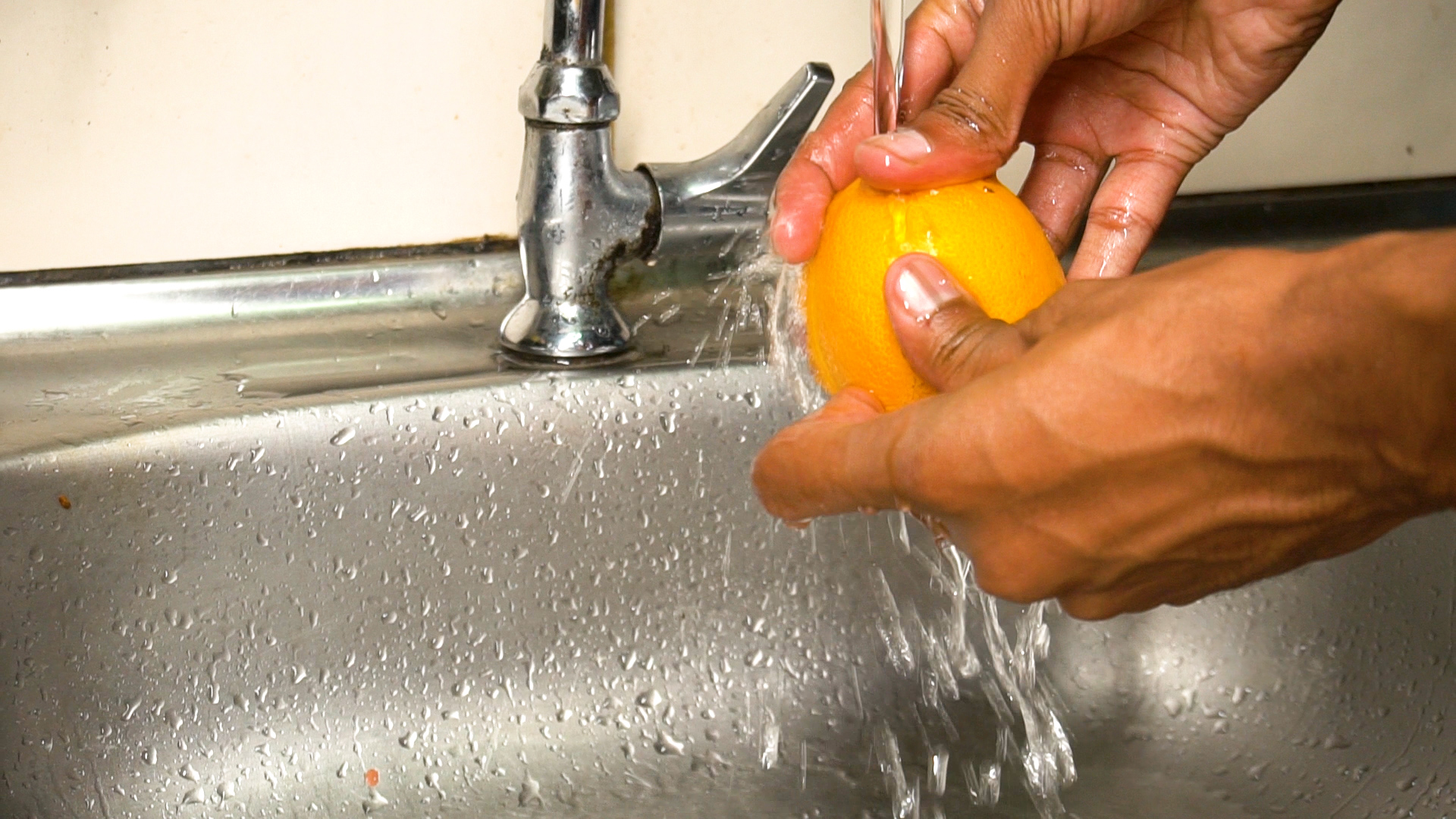
Before zesting, rinse the orange under cool running water and gently rub the peel with your hands. For a firmer scrub, use a clean produce brush. This helps remove dirt and surface residue before your knife or grater touches the peel.
Do not use dish soap, bleach, or household cleaners. Orange peel is porous, and those products are not meant to become secret ingredients. After rinsing, dry the orange with a clean kitchen towel or paper towel. A dry orange is easier to grip and safer to handle.
Step 3: Set Up a Clean Work Area
Place a cutting board on a stable surface. If it slips, put a damp towel underneath it. Gather your chosen tool: a box grater, vegetable peeler, paring knife, or fine grater. Keep a small bowl nearby for collecting zest.
This sounds basic, but zest is tiny and enthusiastic. It likes to scatter. Having a bowl ready prevents your orange zest from decorating the counter, the floor, and possibly your sleeve.
Step 4: Use a Box Grater for Fine Orange Zest
If you have a box grater, use the smallest holes. Hold the grater firmly on the cutting board. Gently rub the orange against the fine grating surface with short strokes. Rotate the orange after each pass so you remove only the orange outer skin.
Do not press hard. Heavy pressure digs into the pith and makes the zest taste bitter. The goal is fluffy, bright orange shavings, not grated sadness. When the peel turns pale in one area, move to another section.
Step 5: Use a Vegetable Peeler for Orange Peel Strips
A vegetable peeler is one of the best tools for zesting an orange without a zester. Hold the orange in one hand and the peeler in the other. Use light pressure to remove thin strips of orange peel.
Try to keep the strips shallow. If a strip has white pith attached, lay it flat on the cutting board and carefully scrape or slice away the white part with a paring knife. Once you have clean orange peel strips, you can mince them finely for recipes or leave them long for garnishes, syrups, cocktails, tea, and infusions.
Step 6: Use a Paring Knife When You Have No Grater
If you do not have a grater or peeler, a sharp paring knife can still do the job. Carefully slice off very thin pieces of the orange peel, following the curve of the fruit. Work slowly and keep your fingers out of the knife’s path.
After removing the peel, place the strips on the cutting board orange-side down. Trim away any thick white pith. Then slice the peel into thin matchsticks and mince until it resembles zest. This method takes longer, but it gives you excellent control.
Step 7: Mince the Peel for a Finer Texture
When using a vegetable peeler or knife, the zest will be in strips rather than fine flakes. To make it recipe-ready, gather the strips into a small pile and chop them with a sharp chef’s knife. Rock the knife back and forth until the pieces are as fine as you need.
For cakes, cookies, muffins, and frostings, mince the peel very finely so it blends into the batter. For stews, marinades, and cocktails, slightly larger pieces are often fine because they release flavor during cooking or steeping.
Step 8: Measure the Orange Zest Correctly
One medium orange usually gives about 1 to 2 tablespoons of zest, depending on its size and how thoroughly you zest it. If a recipe calls for “zest of one orange,” that usually means the zest from the entire outer peel, avoiding the pith.
If your zest is made from strips and minced by hand, it may be denser than fluffy grated zest. In that case, use a slightly lighter hand when measuring. A packed tablespoon of minced peel can taste stronger than a loose tablespoon of fine grated zest.
Step 9: Add Orange Zest at the Right Time
Orange zest can be added at different points depending on the recipe. For baked goods, mix it into sugar first and rub it with your fingers. This releases the citrus oils and spreads the flavor through the batter. For sauces, marinades, and dressings, whisk zest in with the other aromatics.
For soups, roasted vegetables, pasta, or cooked meat, add zest near the end of cooking when possible. Heat can soften the flavor, so a final sprinkle keeps the aroma lively. Orange zest is basically the confetti of cooking, and confetti works best when people can still see it.
Step 10: Store Leftover Orange Zest
Fresh orange zest tastes best right away, but you can store extra. Place it in an airtight container and refrigerate it for a few days. For longer storage, freeze it in a small freezer-safe bag or container. Spread it thin so you can pinch off what you need later.
You can also dry orange zest by spreading it in a thin layer and letting it fully dehydrate, then storing it in an airtight jar. Dried zest is less bright than fresh zest, but it is useful for tea blends, spice rubs, sugar mixtures, and emergency baking moments.
Best Tools to Use Instead of a Zester
Box Grater
A box grater is the closest substitute for a zester. Use the smallest holes and very gentle pressure. This gives you fine zest that works well in desserts, glazes, and batters.
Vegetable Peeler
A vegetable peeler is ideal for wide strips of zest. It is great for cocktails, syrups, marmalade-style recipes, and dishes where the peel will be removed later.
Paring Knife
A paring knife gives maximum control but requires patience. Use it when you need strips or when no other tool is available.
Fine Cheese Grater
A fine cheese grater can work if the holes are small enough. Clean it well before and after use so your orange zest does not taste faintly like Parmesan. Citrus-cheese confusion is not the culinary fusion we need.
Common Mistakes to Avoid When Zesting an Orange
Removing Too Much Pith
The most common mistake is cutting too deeply. The white pith under the orange peel is bitter. A little bit will not destroy a dish, but too much can make sweet recipes taste harsh.
Zesting Before Washing
Always wash the orange before zesting. Even if you are not eating the fruit’s outer peel directly in large pieces, zest still comes from the surface.
Using a Dull Knife
A dull knife makes zesting harder and more dangerous. If using a paring knife, make sure it is sharp enough to remove thin slices cleanly.
Pressing Too Hard on a Grater
Hard pressure does not make better zest. It makes bitter zest. Use light strokes and rotate the fruit often.
Throwing Away the Rest of the Orange
After zesting, use the orange for juice, slices, smoothies, salads, marinades, or snacks. Zest first, juice second. A juiced orange is floppy and much harder to zest.
How to Use Orange Zest in Recipes
Orange zest can brighten both sweet and savory dishes. In baking, it pairs beautifully with chocolate, vanilla, cinnamon, cranberry, almond, and honey. Add it to muffins, pound cake, sugar cookies, biscotti, pancakes, scones, quick breads, and buttercream frosting.
In savory cooking, orange zest works well with chicken, pork, salmon, shrimp, carrots, beets, fennel, sweet potatoes, rice, couscous, and salad dressings. Mix it with garlic, olive oil, herbs, salt, and pepper for a quick marinade. Stir it into softened butter with parsley for a citrus compound butter that makes vegetables taste restaurant-level with almost no effort.
For drinks, orange zest can be used in tea, hot cider, cocktails, mocktails, simple syrup, and infused water. Long strips from a vegetable peeler make elegant garnishes. Twist the strip over the drink to release the oils, then drop it in like you absolutely know what you are doing.
Orange Zest Substitutes
If you do not have fresh orange zest, you have a few options. Dried orange peel can work, though it is more concentrated and less fragrant. Use about one-third of the amount if substituting dried peel for fresh zest.
Lemon zest or lime zest can replace orange zest in some recipes, but the flavor will be sharper and less sweet. Orange extract can also work in baking, but use it carefully because it is strong. A tiny amount goes a long way. Orange juice may add flavor, but it also adds liquid, so it is not always a direct substitute.
How Much Orange Zest Should You Use?
For most recipes, 1 teaspoon of orange zest adds gentle citrus flavor, while 1 tablespoon gives a stronger orange presence. In baked goods, zest from one orange is usually enough for a standard cake, loaf, or batch of cookies. For marinades and sauces, start small and taste as you go.
Orange zest should lift a dish, not tackle it to the ground. If all you taste is peel, you have crossed from “bright and aromatic” into “orange candle with a fork.”
Extra Kitchen Experience: What I Learned Zesting Oranges Without a Zester
The first thing you learn when zesting an orange without a zester is that confidence is useful, but patience is better. A box grater can do the job beautifully, but only if you treat the orange gently. The first time many home cooks try it, they push too hard because grating cheese has trained them to attack. Orange peel does not need that kind of energy. Light strokes are enough. When the orange part disappears and the pale layer shows through, move on. That tiny pause saves the flavor.
The vegetable peeler method is the most forgiving for beginners. It gives you wide strips that are easy to inspect. If you see pith, you can trim it away. This method is especially helpful when making orange syrup, mulled drinks, cranberry sauce, or braised dishes because the strips can be removed later. It also makes you feel fancy. One long curl of orange peel on a cutting board has a way of making a normal kitchen feel like a small cooking show, minus the camera crew and unrealistic cleanup time.
A paring knife works best when you slow down. It is not the method to use while answering texts, supervising toast, or debating whether cookies count as breakfast. Keep the blade shallow and cut thin pieces. If the strips look uneven, that is fine. Once minced, they will blend into most recipes. In fact, hand-minced orange zest can be wonderful in rustic bakes like cranberry orange bread, oatmeal cookies, and spice cake because the slightly varied texture gives little bursts of citrus.
Another practical lesson is to zest before juicing. A whole orange is firm and easy to hold. A juiced orange half is slippery, floppy, and dramatic. It collapses under pressure and makes the whole process feel like trying to grate a wet balloon. If your recipe needs both zest and juice, zest first every time.
Freshness also matters. Fresh orange zest has a lively aroma that dried peel cannot fully match. When you zest an orange, pause for a second and smell it. That fragrance is the reason chefs love citrus peel. It can wake up heavy flavors, balance sweetness, and make simple recipes taste intentional. Pancake batter with orange zest feels special. A basic vinaigrette with orange zest tastes brighter. Chocolate ganache with a little orange zest suddenly has opinions and a social calendar.
For storage, freezing is the easiest habit to build. If you are eating an orange and do not need zest right away, zest it before peeling or juicing, then freeze the zest in a tiny container. Future you will be delighted. Frozen zest can go straight into batters, sauces, marinades, and hot drinks. It may not look as fluffy as fresh zest, but the flavor is still useful.
The biggest experience-based tip is this: do not overthink it. Zesting an orange without a zester is not a perfection contest. The goal is to capture the fragrant orange peel while leaving the bitter pith behind. Whether you use a box grater, vegetable peeler, or knife, you can get excellent results with a clean orange, a steady hand, and a little respect for sharp tools. Also, maybe keep a towel nearby. Orange zest has a talent for traveling.
Conclusion
Learning how to zest an orange without a zester is a simple kitchen skill that pays off in big flavor. With a box grater, vegetable peeler, paring knife, or fine grater, you can create bright, aromatic orange zest for desserts, drinks, sauces, marinades, and savory meals. The secret is to wash the orange first, remove only the colorful outer peel, avoid the bitter white pith, and use the zest while it is fresh whenever possible.
You do not need a drawer full of specialty gadgets to cook well. Sometimes all you need is an orange, a common kitchen tool, and the willingness to stop grating before things get bitter. That is also decent life advice.
Note: This article is intended for general cooking guidance. Always wash produce before zesting and use caution when working with graters, peelers, and knives.