
Editor’s note: This article explores “replacing my eye with theirs” as a symbolic, artistic, and digital-photo conceptnot as a literal physical act. No eyeballs were harmed in the making of this imagination. The animals, however, may have judged the lighting.
When a Self-Portrait Grows Fur, Feathers, Scales, and Attitude
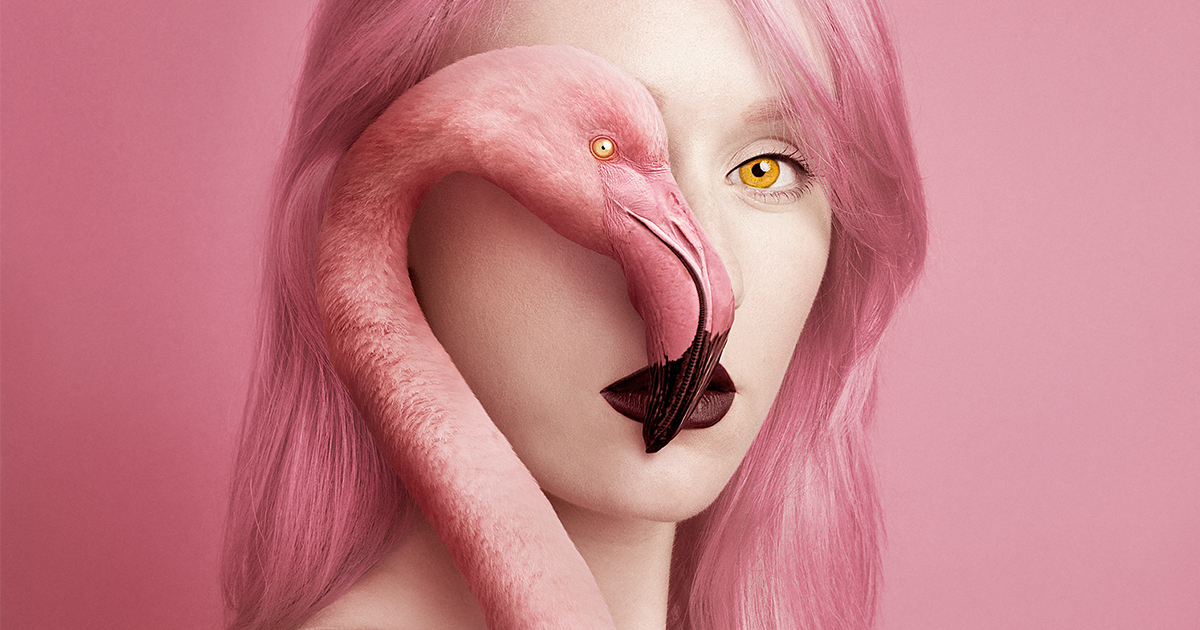
There is a particular kind of magic that happens when a human face stops being only human. A cheekbone lines up with a beak. A pupil matches the shine of a cat’s stare. A lock of hair suddenly looks suspiciously like plumage. Then, with one carefully placed animal eye, the portrait becomes something stranger, deeper, and far more interesting than a normal selfie. It becomes a conversation between species.
The idea behind I Become One With Animals By Replacing My Eye With Theirs sounds wonderfully dramatic, like the title of a fantasy novel found in a mysterious forest library. But at its heart, it is a visual metaphor. By blending a human eye with an animal’s eye, the image asks a surprisingly serious question: what would it mean to see the world through another creature’s perception?
Surreal self-portraiture has always enjoyed playing hide-and-seek with identity. Artists use masks, mirrors, costumes, shadows, and impossible edits to ask who we are when our familiar features are rearranged. In this concept, the eye becomes the bridge. It is the most emotional part of the face, the tiny wet cinema where fear, curiosity, humor, hunger, and “please refill my bowl” all play in high definition.
The Eye as a Doorway, Not Just a Detail
In ordinary portraits, the eyes pull us in. In an animal-human hybrid portrait, the eye does something more mischievous: it pulls us sideways. We are not simply looking at a person. We are looking at a person becoming a fox, a swan, a rabbit, a fish, a snake, or a cat with extremely strong opinions about gravity.
This is why the concept works so well for digital art and fine-art photography. Replacing one eye with an animal’s eye instantly changes the emotional temperature of the image. A cat eye introduces mystery and independence. A bird eye adds alertness and distance. A deer eye softens the face with vulnerability. A reptile eye makes everything feel ancient, patient, and possibly aware of secrets humans forgot around the time we invented office chairs.
The best versions of this idea do not simply paste an animal onto a face. They create harmony. Makeup, hair, skin tone, lighting, costume, and background all cooperate to make the animal presence feel intentional. The portrait becomes half camouflage and half confession. The person is still there, but the animal is no longer decoration. It is a second identity looking out from the same frame.
Why Animal Eyes Feel So Powerful
Animal eyes carry stories before we add any words. Humans read them instinctively because we have lived beside animals for thousands of yearsas companions, threats, symbols, food sources, spiritual figures, and occasionally as roommates who knock cups off tables while maintaining direct eye contact.
Cats: The Velvet Detectives of Low Light
A cat-inspired eye can make a portrait feel quiet, elegant, and slightly dangerous in the way only a creature weighing ten pounds can feel dangerous while sitting in a laundry basket. Cats are built for low-light hunting. Their eyes have a reflective layer called the tapetum lucidum, which helps bounce light back through the retina and improves vision in dim conditions. That same structure creates the famous glow when light hits a cat’s eyes at night.
In art, that glow becomes symbolic. A cat eye suggests that the subject sees what others miss. It hints at patience, independence, and the private theater of night. A human face with a feline eye does not just look “cute.” It looks like it has been awake since 3 a.m. gathering intelligence from the hallway.
Birds: Color, Height, and the Drama of Distance
Birds often see color differently from humans. Many species can perceive ultraviolet light, and their color vision can be richer and more complex than ours. That scientific fact gives bird-inspired portraits a wonderful artistic advantage: they can represent a world beyond ordinary human perception.
A bird eye can make the face look observant, proud, or untouchable. Think of a hawk’s stare: sharp, direct, almost editorial. It seems to say, “I have reviewed your life choices from 300 feet above, and I have notes.” A swan eye, by contrast, can bring elegance and melancholy. A parrot eye can add wit, brightness, and social energy. In each case, the animal eye changes the entire personality of the portrait.
Fish and Reptiles: Ancient Calm With a Side of Weird
Fish and reptiles create a different mood. Their eyes often feel less emotionally familiar to us, which makes them excellent for surreal art. A fish eye can create a floating, dreamlike effect, as if the subject belongs partly to water and partly to memory. A snake or lizard eye introduces pattern, texture, and a sense of prehistoric stillness.
These portraits work because they do not try to make the subject “pretty” in a conventional way. They make the subject fascinating. The goal is not glamour; it is transformation. And transformation is almost always more interesting than a perfectly smooth face pretending it has never experienced bad Wi-Fi.
Seeing Like an Animal: The Science Behind the Fantasy
The phrase “through an animal’s eyes” is more than poetic. Animals really do experience the visual world differently. Some see better in darkness. Some detect ultraviolet patterns on flowers. Some notice motion faster than humans can. Some, like mantis shrimp, perceive polarized light in ways that make human vision look like the free trial version of reality.
Humans have strong visual acuity, meaning we are good at resolving fine detail. That helps us read text, recognize faces, and notice when someone has cut bangs and is pretending everything is fine. But many animals outperform us in other categories. Dogs and cats may not see the same range of colors humans do, yet their eyes are adapted for motion and dim light. Birds may see ultraviolet signals. Insects may respond rapidly to movement. Mantis shrimp have famously complex visual systems that include ultraviolet and polarized light detection.
This is what makes animal-eye portraiture so rich. It is not only about how animals look. It is about how animals perceive. A good image can make viewers imagine a different sensory universe: the rabbit’s horizon-level alertness, the owl’s night-bound precision, the horse’s wide field of awareness, the fish’s liquid world, the beetle’s compound geometry.
The Emotional Meaning of Becoming One With Animals
At first glance, replacing one human eye with an animal eye may seem like a clever visual trick. But the deeper meaning is emotional. The image says: I am not separate from nature. I am not above it. I am part of the same living fabric, even if I pay taxes and occasionally argue with software updates.
Modern life often trains people to see animals as background characters: pets in the house, birds outside the window, wildlife in documentaries, insects to avoid during picnics. Art like this pushes back. It places the animal at the center of human identity. The animal is not a prop. It is a partner in the portrait.
That shift matters. When viewers see a human and animal sharing one gaze, the boundary between “us” and “them” becomes softer. The image invites empathy. It suggests that animals are not mysterious machines running on instinct alone. They are sensing, reacting, adapting beings with their own worldsworlds we can respect even when we cannot fully enter them.
Why This Concept Is Perfect for SEO and Visual Storytelling
From a web-publishing perspective, I Become One With Animals By Replacing My Eye With Theirs is the kind of title that makes readers stop scrolling. It is strange, specific, and visual. It triggers curiosity immediately. Did someone actually do that? Is it photography? Is it digital art? Is it a wildlife story? Is it a confession from someone who spent too long alone with Photoshop and a lizard?
That curiosity is powerful. Search engines reward useful, engaging content, but human readers still decide whether a page is worth their time. A strong title opens the door; the article must then deliver substance. The best approach is to combine art analysis, animal vision facts, emotional interpretation, and practical storytelling.
Keywords such as animal eye art, surreal self-portrait photography, digital animal portrait, human animal connection, and animal vision can appear naturally because they belong to the subject. There is no need to stuff them into every paragraph like raisins into a suspicious cookie. Good SEO writing should feel like a guided walk, not a hostage note assembled from keywords.
How the Image Becomes Believable
The secret to a convincing animal-eye portrait is visual agreement. The human and animal elements must share enough color, light, and texture that the viewer accepts the transformation for a moment. The makeup may echo the animal’s markings. The hair may mimic fur or feathers. The background may match the creature’s natural environment. The pose may borrow the animal’s attitude.
For example, a rabbit-inspired portrait might use soft whites, pale pinks, and gentle posture to create a feeling of alert innocence. A snake-inspired portrait might rely on slick shadows, gold-green tones, and a direct stare. A fish-inspired image could use cool blue lighting, glossy skin highlights, and flowing hair to suggest water. These choices help the animal eye feel like it belongs.
When done well, the image does not scream, “Look, an edit!” It whispers, “Maybe this person has always been part swan, and frankly, the evidence is convincing.”
The Humor Hidden Inside the Surreal
One reason this concept is so memorable is that it balances beauty with absurdity. There is genuine elegance in a human-animal hybrid portrait, but there is also something delightfully odd about it. The human brain enjoys the puzzle. We recognize the face, then we notice the animal, then we realize both are sharing one visual identity. It is uncanny, but not frightening. Strange, but not cold.
And yes, it is also funny. A person merged with a fish may look mystical, but part of us still imagines the behind-the-scenes moment: adjusting hair, checking lighting, asking whether the goldfish is giving enough emotional range. A cat portrait may look powerful, but every cat owner knows the animal probably demanded payment in snacks and then sat on the equipment case.
This humor keeps the art approachable. It prevents the concept from becoming too heavy. The viewer can appreciate the symbolism while also enjoying the delicious weirdness of a portrait that says, “I am one with nature, and nature has excellent eyeliner.”
500-Word Experience Section: What It Feels Like to Become One With Animals
The first time I imagined becoming one with an animal by replacing my eye with theirs, I thought it would feel like wearing a mask. Instead, it felt more like removing one. A human face is full of habits. We know our expressions too well: the polite smile, the tired stare, the “I am listening” look used when someone explains a phone plan for twelve uninterrupted minutes. But an animal eye interrupts all that performance. It brings another kind of honesty.
With a cat eye, I felt quieter. Not shynever accuse a cat of being shy when “strategically unavailable” is right therebut more selective. The world seemed to shrink into movement, shadow, warmth, and intention. A door was no longer a door. It was a possibility. A cardboard box was no longer recycling. It was architecture. A beam of sunlight was not just lighting. It was an appointment.
With a bird eye, the experience changed completely. I felt lifted out of the room. Details became patterns. People became shapes moving through a larger map. The emotional focus shifted from intimacy to distance. A bird’s gaze does not beg to be understood. It observes, evaluates, and remains ready to leave. Wearing that eye, even symbolically, made me think about freedom not as escape but as perspective.
The fish eye was stranger. It made everything feel slow and suspended, as if sound had become soft around the edges. A fish does not look at the world from the same emotional theater as a person or a dog. Its gaze feels ancient and unreadable. In the portrait, that unreadability became peaceful. I was not trying to explain myself. I was simply present, floating inside the frame like a thought that had forgotten language.
The reptile eye was the most humbling. It did not feel cute, charming, or eager to please. It felt patient in a way humans rarely manage. A reptile gaze seems to come from a time before small talk. It made the portrait feel less like a costume and more like a fossil waking up. I found myself wondering how much of human life is just noise layered over instinct: eat, rest, watch, move when necessary, avoid unnecessary drama unless someone touches the thermostat.
What surprised me most was how each animal eye changed not only the image but the story I told myself about the image. The same face could become tender, wild, comic, elegant, suspicious, lonely, or fearless depending on the creature paired with it. That is the real power of the concept. It does not erase the human self. It expands it. It says that identity is not a locked room. It is a habitat.
By the end of the experience, “becoming one with animals” no longer sounded like fantasy. It sounded like attention. To borrow an animal’s eye is to admit that our way of seeing is only one version of the world. Somewhere beyond our ordinary sight are ultraviolet flowers, low-light hallways, polarized oceans, wide horizons, and tiny movements we never notice. The animal eye reminds us that reality is bigger than human perception. And that, honestly, is a pretty good reason to keep looking.
Conclusion: The Wild Beauty of a Shared Gaze
I Become One With Animals By Replacing My Eye With Theirs is more than a surreal title. It is a doorway into art, empathy, biology, and imagination. By combining human self-portraiture with animal vision, the concept transforms a face into a meeting place. It reminds us that every creature carries a different world inside its gaze.
The beauty of this idea is not in pretending to literally become an animal. It is in recognizing that humans are already connected to animals through emotion, evolution, curiosity, and shared vulnerability. We look at them, and sometimesthrough artthey look back through us.
In a digital world crowded with polished selfies, animal-eye portraiture feels refreshingly alive. It is weird in the best possible way. It invites us to laugh, stare, think, and maybe treat the animal kingdom with a little more wonder. After all, if a single borrowed eye can change an entire portrait, imagine what a little borrowed perspective can do for the way we live.