I Create Inappropriate Comics That You’d Never Show Your Grandma (30 Pics)

Note: This feature discusses adult-oriented comedy, sexual innuendo, body humor, and other themes intended for mature readers.
Some comics arrive wearing sensible shoes and carrying a casserole. The RedDot comics kick open the door, make an indecent pun, and ask whether anyone has seen the good snacks. Created by artist Kim Winder, this unapologetically adult webcomic turns awkward thoughts, relationship mishaps, bodily realities, childhood memories, and taboo subjects into compact visual punchlines.
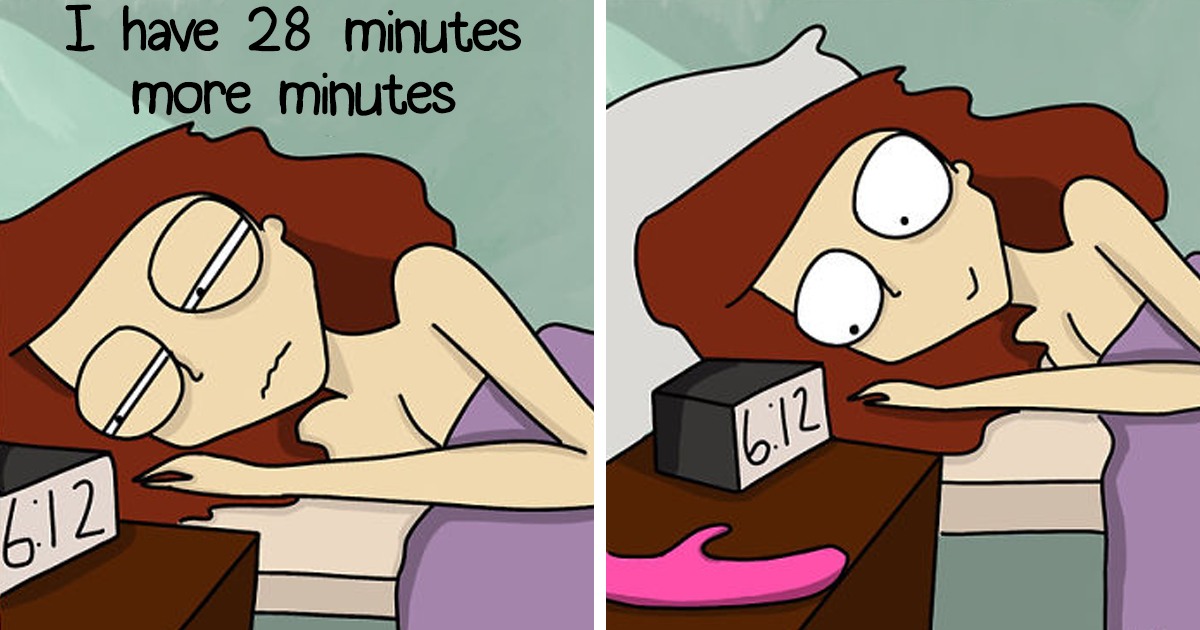
The collection titled I Create Inappropriate Comics That You’d Never Show Your Grandma brings together 30 examples of that approach. The drawings are playful, expressive, and easy to read, but the ideas refuse to behave. One strip may begin with an innocent everyday situation, while the next swerves into suggestive wordplay, dark humor, or a punchline that makes readers laugh and immediately check who is looking over their shoulder.
That tension is the attraction. These are not inappropriate comics merely because they mention sex or embarrassment. They work because they recognize the private jokes, intrusive thoughts, and social discomforts that many adults experience but rarely announce at brunch.
Meet Kim Winder, the Artist Behind The RedDot
Kim Winder launched The RedDot in 2018 after making a New Year’s resolution to draw consistently and post her work online for accountability. She had doodled for years, but the daily-comic commitment gave those ideas a regular format and a public audience. Winder has also described an early fondness for Gary Larson’s The Far Side, whose strange logic and abrupt visual punchlines helped introduce generations of readers to the pleasure of a cartoon that takes one sharp turn and then leaves the scene.
The RedDot developed into a recognizable mix of relatable humor, adult comedy, cynicism, fantasy references, relationships, mental health observations, and sex-positive jokes. Winder’s stated creative rule is refreshingly simple: if an idea feels funny or emotionally necessary to draw, it is worth exploring. That freedom explains why the series can move from nostalgia to dating, from self-esteem to death, and from ordinary household problems to jokes that would make a family group chat suddenly go silent.
Her work also reflects one of the great advantages of webcomics. An independent cartoonist does not need to wait for a newspaper syndicate, magazine editor, or traditional publisher to approve every joke. Social platforms let creators publish directly, test ideas in real time, and find readers who appreciate a specific voice. The result can feel less polished by committee and more like receiving a hilarious, unfiltered message from a friend at 1:17 a.m.
Why These 30 Inappropriate Comics Work
They Start With Something Familiar
The strongest adult humor often begins in ordinary life. Dating is awkward. Clothing is uncomfortable. Bodies ignore schedules. Childhood memories become strange when revisited as adults. Partners misunderstand each other. People attempt to appear confident while their inner monologue is conducting a small electrical fire.
The RedDot uses those recognizable moments as the foundation of the joke. Readers understand the setup quickly because they have lived some version of it. Once the scene feels safe and familiar, the comic introduces an unexpected interpretation. That sudden shift is what gives the punchline its snap.
They Use Innuendo Without Depending on It
Suggestive comedy can become repetitive when the entire joke is simply, “That sounded dirty.” Winder’s better strips use innuendo as a tool rather than a substitute for writing. A phrase, object, facial expression, or visual arrangement may carry two meanings, and the humor comes from the collision between the innocent reading and the adult one.
This makes the joke participatory. The artist does not always need to explain the naughty interpretation because the reader supplies it. That tiny act of recognition creates the delightful feeling of being implicated. The comic did not drag your mind into the gutter; it merely placed a tasteful sign nearby and watched you sprint there.
They Treat Women’s Experiences as Comedy Material
Adult comics have not always handled women’s bodies, desires, clothing, and relationships with much honesty. The RedDot frequently reverses that tradition by making female experience the point of view rather than the decoration. Topics such as attraction, sexual confidence, uncomfortable shapewear, self-image, and the gap between romantic expectations and reality become sources of humor without pretending that women are mysterious creatures from an undiscovered moon.
The sex-positive angle matters because it allows desire to be funny without automatically becoming shameful. The joke may be bold, but it is often bold in the service of recognition: yes, adults think about these things; yes, women have private jokes and appetites; and yes, a comic can acknowledge that without turning into a lecture delivered by someone holding a clipboard.
They Balance Cute Art With Chaotic Ideas
Visual contrast gives many of the strips extra energy. Friendly character designs and clean digital colors create an approachable surface, while the dialogue or reveal introduces something considerably less polite. That gap between appearance and content acts like a second punchline.
A grimly realistic drawing might make an adult joke feel heavy. A deliberately cute style gives the same idea buoyancy. The characters can be scandalous, petty, gloomy, or gloriously foolish, yet the page still feels inviting. It is the artistic equivalent of serving a dangerous cocktail in a glass with a tiny umbrella.
The Main Flavors in This Adult Webcomic Collection
Across the 30-picture selection, readers encounter several recurring comic flavors. Relationship humor exposes the difference between what partners say and what they are obviously thinking. Body humor turns inconvenient physical realities into shared jokes. Nostalgic references take supposedly innocent childhood memories and run them through an adult brain. Dark comedy introduces death, loneliness, or existential dread, then releases the tension with absurdity. Fantasy and pop-culture parody borrow familiar imagery and give it an indecent renovation.
There is also a strong current of self-deprecation. The characters are rarely presented as flawless rebels delivering wisdom from a mountaintop. They are messy adults trying to navigate attraction, insecurity, boredom, and social expectations while maintaining the appearance that they have read the instruction manual. This makes the comics feel less like mockery directed at strangers and more like a group confession with better timing.
The variety prevents the gallery from becoming thirty versions of the same joke. Even when several strips rely on suggestive ideas, the setup changes: language, visual metaphor, domestic life, dating behavior, personal insecurity, or an unexpected character may provide the comic engine. Readers keep swiping because the next panel could lead almost anywhere, including several places where Grandma has wisely chosen not to follow.
The Psychology Behind a Good Dirty Joke
Humor researchers often discuss incongruity: the mind expects one outcome, receives another, and experiences pleasure when it resolves the mismatch. Comics are especially effective at this because the artist controls information panel by panel. A setup establishes one interpretation, a pause gives the reader time to commit to it, and the final image reveals a second meaning.
Adult humor adds another layer by playing with social boundaries. People learn that certain subjects are private, delicate, or unsuitable in particular settings. A joke briefly crosses that boundary inside a safe fictional space. When the audience understands that the violation is playful rather than threatening, laughter can release the tension.
Context remains essential. The same joke can feel hilarious among willing adult readers and painfully misplaced during a formal work presentation titled “Quarterly Compliance Update.” The RedDot succeeds because its audience knows the bargain. The title, presentation, and established voice all signal that these comics are intentionally irreverent. Nobody opens the gallery expecting a gentle meditation on decorative birdhouses.
Funny, Offensive, or Both? Where Adult Comics Draw the Line
“Inappropriate” is not a universal measurement. One reader may happily share a sexual pun but dislike dark humor. Another may enjoy morbid jokes yet recoil from relationship comedy that feels too personal. Taste is shaped by age, culture, experience, values, and the social setting in which the joke appears.
For creators, the useful question is not whether anyone could be offended; almost any memorable joke can irritate someone. A better question is what the joke is doing. Is it exposing hypocrisy, normalizing an experience, releasing embarrassment, or creating an absurd surprise? Or is it simply humiliating a vulnerable target? Provocative comedy tends to age better when the punchline has a clear idea behind it and when the creator understands the difference between breaking a taboo and lazily recycling a stereotype.
Content labels also help. Marking a gallery as mature or not safe for work does not weaken the joke. It gives readers control over when and where they engage with it. That is considerate comedy: mischievous enough to cause trouble, organized enough to schedule the trouble after office hours.
How a Short Webcomic Delivers a Big Punchline
Setup, Misdirection, Reveal
A successful comic strip often operates like a tiny machine. The first panel establishes a situation. The next panel reinforces an assumption or increases tension. The final panel changes the meaning of everything that came before it. In a one-panel cartoon, the drawing and caption perform those jobs simultaneously.
The process looks simple only after it works. Cartoonists may generate many weak ideas before discovering one clean premise. Editing is crucial because every extra sentence delays the impact. Facial expressions, eye direction, character placement, and empty space can all influence timing. Even the swipe between images on a social platform can function like a dramatic pause.
A Distinct Voice Matters More Than Perfect Drawing
Webcomic readers often return for personality rather than technical perfection. A consistent visual language helps, but the deeper attraction is viewpoint. The RedDot has a recognizable willingness to say the impolite part aloud, especially when that impolite thought reveals something relatable about adulthood.
That voice turns individual jokes into a larger creative identity. Readers do not merely ask, “Is this drawing beautiful?” They ask, “What wonderfully unhinged conclusion is this artist about to reach?” In a crowded online landscape, that expectation is valuable. Style gets attention; perspective earns loyalty.
A Creator’s-Eye Experience: What Making Boundary-Pushing Comics Can Teach You
Creating an inappropriate comic begins long before the drawing. Usually, it starts with a moment that creates friction: a phrase that accidentally sounds suggestive, a date that becomes painfully awkward, a memory that changes meaning with age, or a social rule that suddenly appears ridiculous. The creator notices the moment and stores it. Most people let it pass. A cartoonist quietly asks, “How much worse could this become in three panels?”
The first lesson is that embarrassment is useful material. An uncomfortable experience may feel uniquely humiliating while it is happening, but turning it into a comic reveals how widely shared it is. Readers respond because they recognize themselves. The incident stops being a private failure and becomes a communal joke. That transformation can feel surprisingly generous: the artist volunteers to look ridiculous first, allowing everyone else to relax.
The second lesson is that boldness requires editing. A raw thought is not automatically a finished joke. The most explicit version is not necessarily the funniest, and shock alone has a short shelf life. A creator experiments with wording, removes unnecessary explanation, changes the reaction shot, and searches for the precise moment when surprise becomes laughter. Sometimes the best solution is to imply more and show less. The reader’s imagination is an unpaid special-effects department with an unlimited budget.
Publishing adds a different kind of tension. Before posting, the comic exists in a private space where the creator controls the interpretation. Once it is online, thousands of readers bring their own experiences to it. Some understand the intended tone immediately. Some miss the joke. Some improve it in the comments. Others write a four-paragraph objection while accidentally demonstrating the exact behavior being mocked.
That feedback teaches resilience. A creator learns to separate useful criticism from simple taste differences. “The setup is confusing” may help improve the next strip. “My grandmother would hate this” is less actionable, particularly when the title already provided a detailed warning about grandmothers.
Consistency is another hidden part of the experience. A funny idea may arrive in seconds, but building a body of work requires repetition: sketching, lettering, coloring, exporting, captioning, posting, and beginning again. The glamorous life of an online cartoonist includes many hours spent adjusting speech bubbles by six pixels. Creative freedom still needs a calendar.
Finally, making adult comics teaches the value of a specific audience. Trying to please everyone produces cautious work with no pulse. A stronger approach is to create for readers who understand the voice while labeling mature material clearly enough that others can avoid it. The goal is not universal approval. It is recognitionthe moment when a reader laughs, sends the strip to a friend, and adds, “This is absolutely us.”
That is why collections like these 30 RedDot comics endure beyond the initial naughty surprise. Beneath the innuendo is a record of adult life: desire colliding with insecurity, nostalgia colliding with experience, and polite behavior colliding with the thoughts people actually have. The artwork gives those collisions a shape, a rhythm, and a punchline.
Conclusion: A Little Impropriety Goes a Long Way
I Create Inappropriate Comics That You’d Never Show Your Grandma (30 Pics) is funny because it understands that adulthood is not a graceful progression toward wisdom. It is a long series of strange bodily events, mixed signals, questionable decisions, accidental double meanings, and determined attempts to look normal in public.
Kim Winder’s RedDot comics turn those experiences into quick visual stories with an unmistakable voice. The collection blends relatable webcomics, adult humor, dark comedy, sex-positive observations, and sharp visual timing without pretending that every reader will approve. Approval is not really the mission. Recognition is.
So enjoy the gallery responsibly. Share it with the friend who laughs at the wrong moment, the partner who already knows too much about you, or the group chat that abandoned dignity years ago. Grandma, meanwhile, can continue believing you are reading an article about watercolor landscapes.
Editorial research note: This feature was synthesized from creator interviews and profiles, webcomic archives, cartooning commentary, and established humor research published across 10–15 relevant sources.