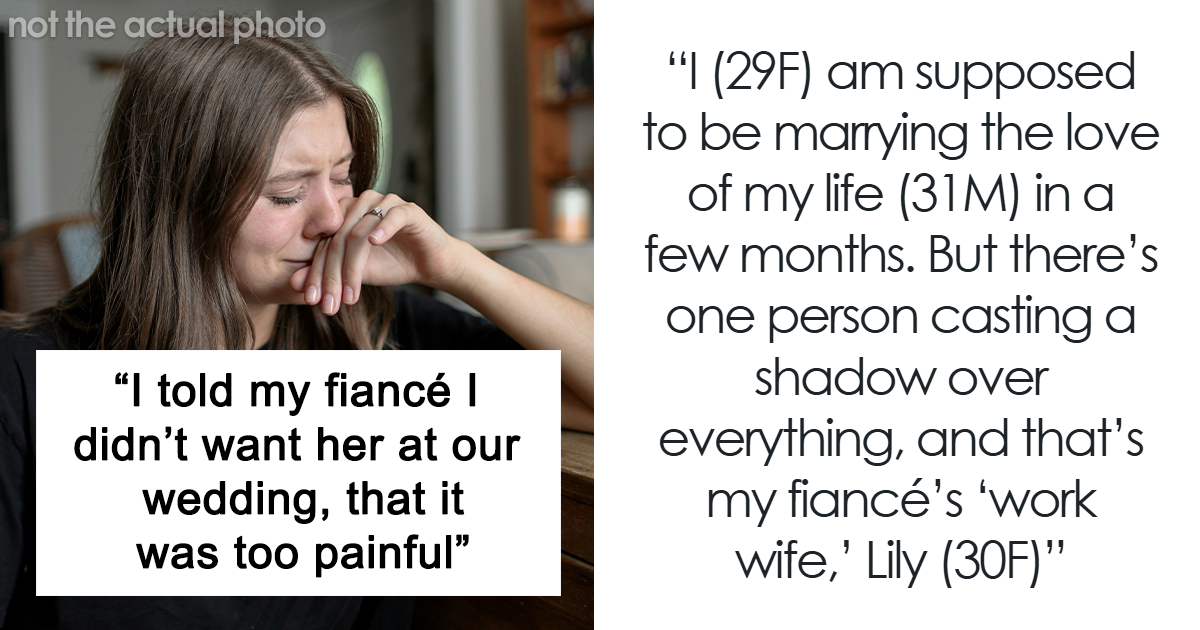
“I Wanted To Scream”: Bride Is Sick Of Fiancé’s “Work Wife” Interfering With Their Relationship

Wedding planning is already a full-contact sport. There are budgets, guest lists, seating charts, family opinions, and at least one person who believes the entire event will collapse if the napkins are not “elevated sage.” But for one bride-to-be, the biggest source of stress was not the cake, the venue, or the floral quote that looked suspiciously like a car payment. It was her fiancé’s so-called “work wife.”
The phrase sounds cute at first, like a sitcom punchline. A work wife or work husband is usually a close coworker who understands deadlines, office politics, and the exact emotional trauma of a broken printer. In healthy form, workplace friendships can be supportive, energizing, and harmless. Many employees say coworker relationships make their jobs more satisfying, and close professional bonds can help people feel respected and understood at work.
But the situation changes when a coworker starts acting less like a colleague and more like an alternate romantic partner with a badge, a Slack account, and strong opinions about someone else’s wedding. That is where this bride’s frustration becomes relatable. Her problem was not simply that her fiancé had a female friend at work. It was that this friend seemed to be inserting herself into the couple’s private life, crossing boundaries, and leaving the bride feeling like a guest star in her own relationship.
When A “Work Wife” Stops Being A Joke
A work spouse is often described as a close, platonic workplace bond built on trust, support, and frequent communication. In many offices, this relationship develops naturally. People spend long hours together, share stressful projects, vent about management, and sometimes know each other’s lunch order better than their own relatives do. That does not automatically mean anything inappropriate is happening.
The trouble begins when the emotional energy meant for a romantic partner starts flowing toward the coworker instead. Relationship experts often point out that emotional affairs can begin as ordinary friendships. The red flags are secrecy, excessive communication, intimate sharing, comparison, defensiveness, and prioritizing the outside person over the committed relationship.
In the bride’s story, the “work wife” was not just a friendly coworker waving from the office holiday party. She reportedly texted often, showed up in emotionally loaded moments, offered unwanted opinions about the wedding, and behaved as if she had a special claim on the groom’s attention. That is not “team synergy.” That is a boundary issue wearing business casual.
The Real Problem Wasn’t JealousyIt Was Dismissal
Many people hear a story like this and immediately ask, “Is the bride just jealous?” That is the wrong starting point. Jealousy can be irrational, yes, but it can also be a signal that something in the relationship feels unsafe or unclear. The real question is not whether the bride felt jealous. The question is whether her fiancé cared enough to understand why.
Healthy couples do not have to agree instantly on every concern. They do, however, need to take each other seriously. The American Psychological Association emphasizes communication as a core part of healthy relationships, and couples who check in regularly are better positioned to manage tension before it becomes resentment. The Gottman Institute also highlights trust and commitment as daily choices, not just romantic slogans engraved on a champagne flute.
When one partner says, “This relationship makes me uncomfortable,” the loving response is curiosity, not mockery. A fiancé who dismisses the concern as insecurity may unintentionally make the situation worse. The bride is no longer only upset about the coworker. She is now upset that her future husband is protecting the coworker’s feelings more carefully than hers.
Why Wedding Planning Makes Boundaries Even More Important
Wedding planning has a magical ability to turn small cracks into very visible canyons. Couples suddenly have to make hundreds of decisions under financial pressure, family expectations, and social scrutiny. Even strong relationships can feel strained when everyone from Aunt Linda to the venue coordinator has an opinion.
That is why boundaries matter so much before marriage. A wedding is not only a party; it is a preview of how a couple handles outside influence. If a coworker can override the bride’s comfort during the engagement, what happens later with holidays, children, money, or major life decisions?
Experts in wedding planning often recommend that couples focus on priorities, keep communication open, and choose a support system that reduces stress instead of adding drama. In this case, the “work wife” was not functioning as support. She was becoming another decision-maker in a relationship where she had not earned a vote.
Signs A Work Friendship Has Crossed The Line
Not every close coworker bond is dangerous. Plenty of people have workplace best friends who never threaten their romantic relationships. The distinction comes down to transparency, respect, and emotional boundaries.
1. The coworker knows intimate details before the partner does
If someone shares private relationship frustrations, wedding arguments, or emotional vulnerabilities with a coworker before discussing them with their partner, the intimacy balance may be shifting in the wrong direction. A partner should not feel like they are receiving the edited press release while the coworker gets the director’s cut.
2. Communication becomes constant or secretive
Late-night texts, hidden notifications, deleted messages, or defensive reactions can signal a problem. The issue is not that coworkers communicate. Adults with jobs do that. The issue is when communication becomes personal, private, and protected from the person who should be the primary partner.
3. The coworker disrespects the romantic partner
A healthy friend supports the relationship. An unhealthy one competes with it. Snide remarks, possessive jokes, public flirting, or “he should marry me instead” comments are not harmless humor. They are tiny emotional grenades with glitter on them.
4. The partner defends the coworker instead of addressing the concern
If every conversation ends with “You’re overreacting,” nothing gets solved. A committed partner should be able to say, “I may not see it the same way, but I care that this hurts you.” That sentence alone can save a lot of emotional furniture from being mentally thrown across the room.
5. The relationship creates comparison
When a fiancé begins comparing his partner unfavorably to a coworker, or when the coworker presents herself as the person who “really gets him,” the dynamic becomes risky. Romantic relationships need outside friendships, but they also need a protected inner circle.
What The Fiancé Should Have Done
The fiancé did not need to quit his job, block his coworker, and communicate only through smoke signals. That would be dramatic, impractical, and probably terrible for his performance review. But he did need to act like a man preparing for marriage.
First, he should have acknowledged his bride’s discomfort without making her feel foolish. A simple statement such as, “I understand why that bothered you, and I want us to feel secure before the wedding,” would have changed the emotional temperature immediately.
Second, he should have clarified boundaries with the coworker. That might include no flirty jokes, no late-night personal texting, no wedding commentary unless invited, and no behavior that positions her as a rival to the bride. Boundaries are not punishments. They are guardrails that keep everyone from driving into a ditch while insisting the road is fine.
Third, he should have made his loyalty visible. In committed relationships, loyalty is not only about avoiding cheating. It is also about making sure your partner does not feel publicly humiliated or privately replaced.
What The Bride Could Reasonably Ask For
The bride has a right to ask for clear, respectful limits. She can say that she is not comfortable with romantic nicknames like “work wife,” personal texts late at night, private emotional venting about their relationship, or the coworker interfering in wedding decisions.
A strong boundary sounds specific, calm, and enforceable. For example: “I am not asking you to stop having coworkers or friends. I am asking that our relationship and wedding decisions stay between us, and that any friendship with her stays professional and respectful.”
That kind of request is not controlling. It does not tell the fiancé he can never speak to another woman. It tells him what his partner needs in order to feel respected. Cleveland Clinic guidance on boundaries emphasizes direct communication, “I” statements, and clear expectations. In other words, do not hint, stew, or wait for someone to read your mind like a romance novel hero with Wi-Fi.
Is Uninviting The “Work Wife” Too Extreme?
Uninviting someone from a wedding is never a tiny move. It is not like switching the salad dressing. It sends a message. But context matters.
If the coworker has repeatedly disrespected the bride, made inappropriate comments, or created emotional tension in the relationship, the bride may be justified in not wanting that energy at her wedding. A wedding guest should be there to celebrate the couple, not audition for a dramatic third-act twist.
However, the bigger issue is not the invitation. It is the fiancé’s reaction. If he is more concerned about upsetting his coworker than reassuring his bride, that reveals a serious priority problem. The guest list is a symptom. The relationship dynamic is the diagnosis.
The Emotional Affair Question
Was this an emotional affair? No outsider can diagnose the full truth from one story. But the pattern raises concerns. Emotional affairs often involve secrecy, high emotional disclosure, constant communication, and a sense that the outside person has become a substitute partner. Physical cheating is not the only way trust can be damaged.
In many relationships, the most painful betrayal is not a kiss. It is realizing your partner gave someone else the tenderness, attention, and loyalty you had been begging for. That is why “nothing happened” does not always feel reassuring. Sometimes “nothing happened” still came with months of emotional neglect, private jokes, and public embarrassment.
How Couples Can Fix This Before The Wedding
If a couple faces this situation before marriage, the engagement period is the time to slow down and talk honestly. A wedding should not be used as a deadline that forces people to ignore warning signs. It should be a milestone reached with clarity.
The couple should discuss what counts as respectful workplace friendship, what kinds of communication feel inappropriate, and how they will handle outside relationships after marriage. They may also benefit from premarital counseling, especially if the fiancé continues to minimize the issue or the bride feels unable to trust his judgment.
Premarital counseling is not only for couples on the brink. It can help partners practice communication, conflict resolution, and expectation-setting before problems become lifelong reruns. Think of it as relationship maintenance, not relationship failure.
Experiences And Lessons From Similar Relationship Drama
Stories about “work wives” and “work husbands” tend to explode online because they touch a nerve. Many people have watched a partner become emotionally attached to someone at work while insisting it is harmless. Others have been the coworker friend and did not realize how their closeness looked from the outside. The lesson is not that men and women cannot be friends, or that every workplace bond is suspicious. The lesson is that committed relationships need transparency.
One common experience is the slow creep. At first, the coworker is just “funny.” Then they are texting memes. Then they are the first person to hear about a bad day. Then they are giving opinions about the partner, the wedding, the home, the arguments, and the future. By the time the romantic partner objects, the attached partner says, “But it has always been like this.” That is exactly the problem. Boundaries often erode gradually, not all at once.
Another familiar pattern is the “cool partner” trap. The bride or girlfriend tries not to seem insecure, so she laughs at the work wife jokes. She welcomes the coworker. She says she is fine. Meanwhile, she is collecting tiny moments of discomfort like emotional paper cuts. Eventually, one comment or one late-night text sends her over the edge, and everyone acts shocked. But she did not explode over one incident. She reacted to the pileup.
Some people also learn the hard way that the label itself matters. Calling someone a “work wife” may be meant as humor, but words shape expectations. “Work best friend” sounds supportive. “Work wife” suggests a special status that mirrors marriage. For an engaged person, that can feel disrespectful even if there is no physical affair. A partner should not have to compete with a nickname.
The healthiest couples handle this by creating shared rules before there is a crisis. They talk about texting hours, emotional privacy, social media posts, joking flirtation, and what information stays inside the relationship. They do not wait until someone is crying in the kitchen while the other person insists, “You’re being dramatic.” By then, the conversation has already become harder than it needed to be.
There is also an important lesson for the coworker. If you are truly a friend to someone in a committed relationship, you should want that relationship to succeed. That means respecting their partner, not making possessive jokes, not inserting yourself into private decisions, and not enjoying the feeling of being chosen over someone else. If your friendship depends on the partner feeling threatened, it is not as innocent as you think.
For the bride in this story, the strongest move is not screaming, even though the title makes that urge completely understandable. The strongest move is clarity. She can pause the wedding planning conversation and ask her fiancé direct questions: Do you understand why this hurts me? Are you willing to set boundaries? Will you prioritize our marriage over a workplace dynamic? His answers will tell her more than any comment section ever could.
Because at the end of the day, the problem is not that he has a coworker. The problem is whether he is ready to be a husband. Marriage requires emotional leadership, loyalty, and the ability to protect the relationship from unnecessary outside chaos. If he can do that, this conflict may become a turning point. If he cannot, the bride may need to ask herself whether the wedding is being planned faster than the relationship is maturing.
Conclusion
The “work wife” drama is messy because it sits in a gray area between friendship and betrayal. A close coworker bond can be perfectly healthy when it is transparent, respectful, and clearly secondary to the romantic relationship. But when that bond starts interfering with wedding plans, emotional security, and a partner’s sense of priority, it is no longer harmless office banter.
This bride’s frustration is not just about jealousy. It is about respect, loyalty, and the uncomfortable feeling of being pushed aside during one of the most important seasons of her life. Before walking down the aisle, she and her fiancé need more than a seating chart. They need a serious conversation about boundaries, trust, and what marriage will actually mean when outside relationships test it.
Note: This article is original, written in standard American English, and synthesized from reputable relationship, workplace, and wedding-planning guidance without copying source text.