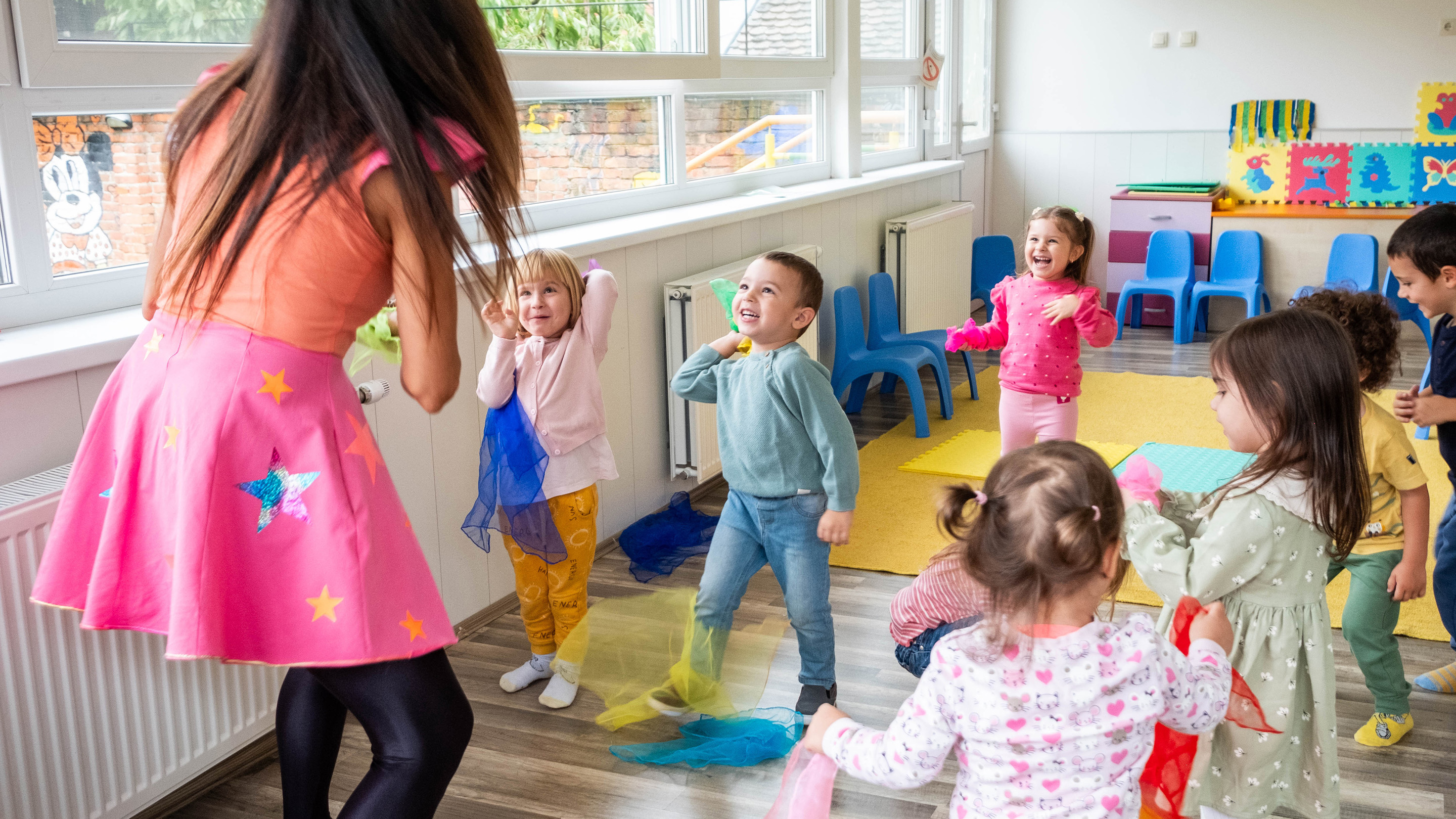

Increasing preschool engagement is not about convincing four-year-olds to sit still like tiny office employees waiting for a quarterly report. Preschoolers are built to move, wonder, negotiate, sing, touch, test, repeat, and occasionally ask why a worm does not wear shoes. Engagement happens when teachers, families, and learning environments work with that natural curiosity instead of wrestling it into a chair.
In high-quality early childhood classrooms, engagement looks delightfully busy. Children build towers, act out stories, sort buttons, paint with serious concentration, talk through conflicts, listen to books, ask questions, and return to unfinished ideas. The room may not be silent, but it has purpose. That is the sweet spot: active, joyful, intentional learning.
Research-based early childhood practice consistently points to the same big idea: young children learn best through warm relationships, meaningful play, predictable routines, rich language, hands-on exploration, and strong family partnerships. Preschool engagement is not one trick. It is a whole ecosystem. Think less “magic worksheet” and more “well-tended garden,” except the flowers sometimes spill glue.
What Preschool Engagement Really Means
Preschool engagement is the degree to which young children are emotionally, socially, physically, and cognitively involved in learning. A child who is engaged is not merely “behaving.” They are participating, thinking, connecting, and trying. Sometimes that participation is loud. Sometimes it is quiet. Sometimes it looks like a child staring at a caterpillar for seven minutes as if it holds the secrets of the universe. In preschool, that counts.
True engagement includes several layers. Emotional engagement means children feel safe, welcomed, and confident enough to try. Behavioral engagement means they join routines, activities, and classroom expectations. Cognitive engagement means they think deeply, solve problems, ask questions, and make connections. Social engagement means they interact with peers and adults in ways that build language, cooperation, and belonging.
The mistake many programs make is treating engagement as entertainment. A flashy activity may grab attention for five minutes, but meaningful engagement lasts because the child sees purpose, choice, relationship, and success. The goal is not to keep children constantly dazzled. Even preschoolers deserve more than educational fireworks. The goal is to build learning experiences that invite them in and keep them coming back.
Start With Relationships: The Engagement Engine
Before children engage with letters, numbers, science tools, or storybooks, they engage with people. Warm teacher-child relationships are the foundation of preschool learning. A child who trusts the adult in the room is more likely to explore, take risks, communicate needs, and recover from frustration.
One of the most effective relationship-building strategies is responsive interaction. When a child points, comments, asks, or shows interest, the adult responds warmly and adds language or support. If a child says, “Big truck,” the teacher might answer, “Yes, that dump truck is carrying heavy rocks. Where do you think it should unload them?” This simple back-and-forth turns a passing comment into language development, problem-solving, and connection.
Teachers can increase engagement by greeting children by name, noticing their interests, using calm voices, sitting at their level, and joining play without taking over. The adult does not need to become the CEO of the block area. Instead, the teacher can become a thoughtful play partner: asking questions, extending ideas, adding vocabulary, and helping children negotiate roles.
Use Play as Serious Learning
Play is not the opposite of learning. In preschool, play is often the delivery truck that brings learning to the front door. Through play, children practice language, math, self-regulation, creativity, planning, motor skills, and social problem-solving. A dramatic play restaurant can involve writing menus, counting pretend money, taking turns, using polite language, sorting food items, and handling the emotional crisis of someone ordering soup from a pizza place.
Play-based learning works best when it is both child-centered and teacher-supported. Children need open-ended materials and freedom to explore, but teachers also need clear learning goals. For example, if the goal is early math, a teacher might add measuring cups to the sensory table, shape cards to the block area, or counting prompts during cleanup. The play remains playful, but the learning becomes visible.
Examples of Engagement Through Play
A block center can become a city planning lab. Children compare sizes, test balance, use spatial language, and collaborate. A pretend veterinary clinic can build empathy, vocabulary, writing, and turn-taking. A nature table with leaves, rocks, magnifiers, and clipboards can encourage observation, classification, drawing, and scientific questioning. None of these require children to sit through a lecture titled “Introduction to Applied Preschool Engineering.” Thankfully.
Create Predictable Routines Without Making the Day Boring
Preschoolers engage more easily when they know what is happening now and what comes next. Predictable routines reduce anxiety, prevent challenging behavior, and help children use their energy for learning instead of guessing whether snack time has vanished into the unknown.
Visual schedules are especially powerful. Pictures showing arrival, circle time, centers, outdoor play, lunch, rest, and dismissal help children understand the rhythm of the day. Teachers can review the schedule in the morning and refer to it during transitions. A simple “first/then” board can also support children who struggle to move from one activity to another: “First clean up blocks, then playground.”
Transitions deserve special attention because they are often engagement danger zones. When children wait too long, receive unclear directions, or move all at once, the classroom can quickly become a parade with no marching band leader. Songs, countdowns, helper jobs, movement prompts, and small-group transitions can keep children connected and calm.
Offer Choice, Voice, and Ownership
Children are more engaged when they feel some ownership over their learning. This does not mean preschoolers should vote on whether the class pays taxes or installs a chocolate fountain. It means teachers can offer age-appropriate choices that build independence and motivation.
Choice can be simple: “Do you want to write with a marker or a crayon?” “Would you like to build with blocks or work at the art table?” “Should our class read the bear book or the garden book first?” These small decisions tell children, “Your ideas matter here.”
Voice also matters. Teachers can document children’s questions and use them to plan investigations. If several children become fascinated by rain puddles, the class can explore water, weather, boots, evaporation, floating objects, and rainy-day stories. Engagement rises when learning begins with something children already care about.
Make Learning Active and Hands-On
Preschoolers are not designed for long passive instruction. Their bodies are part of their thinking. When children jump while counting, clap syllables, build letters with play dough, sort real objects, act out stories, or use their fingers to trace shapes, learning becomes concrete.
Hands-on activities also support different learning styles and developmental levels. A child who is not ready to write numbers on paper may still compare quantities using toy animals. A child who struggles to sit during story time may retell the story with puppets. Engagement improves when teachers provide multiple ways to participate.
Active Learning Ideas That Work
Turn counting into a movement game. Ask children to hop five times, tiptoe three times, or place six buttons in a cup. Use scavenger hunts for colors, letters, shapes, or textures. Invite children to make patterns with shells, blocks, or snack pieces. Let them act out vocabulary words such as “stretch,” “wiggle,” “balance,” or “enormous.” The more senses involved, the more memorable the experience becomes.
Build Language Into Everything
Language is one of the strongest tools for preschool engagement. Children need songs, stories, conversations, new vocabulary, peer talk, and adult modeling throughout the day. The best language teaching does not happen only during circle time. It happens while tying shoes, washing hands, building bridges, comparing apples, and discussing why glitter has somehow reached the hallway.
Teachers can expand language by narrating actions, asking open-ended questions, introducing rich words, and giving children time to answer. Instead of asking only yes-or-no questions, try prompts like “What do you notice?” “How did you make that?” “What could happen next?” and “How can we solve this problem?”
Books are another engagement powerhouse. Interactive read-alouds invite children to predict, repeat phrases, discuss pictures, act out scenes, and connect the story to their lives. Re-reading favorite books is not boring for preschoolers. It builds confidence, comprehension, vocabulary, and joyful familiarity. Adults may be tired of the same dragon book by Thursday. Children are not. The dragon still has work to do.
Support Social-Emotional Skills
Children cannot fully engage when they are overwhelmed, excluded, confused, or constantly in conflict. Social-emotional learning helps preschoolers recognize feelings, manage impulses, build friendships, solve problems, and participate in group life.
Teachers can support these skills through feeling charts, calm-down spaces, puppet scenarios, friendship lessons, and direct coaching. For example, when two children want the same truck, the teacher can guide them through words and solutions: “You both want the truck. Let’s think. Can one child use it for two minutes and then trade? Can we find another truck? Can you build a road together?”
The key is teaching skills before problems explode. Preschoolers need practice with sharing, waiting, asking for help, joining play, and expressing frustration. These are not “extra” lessons. They are engagement lessons because a child who can navigate classroom relationships can stay involved in learning longer.
Design the Classroom Environment for Engagement
The physical environment quietly teaches children what to do. A crowded, confusing classroom can create wandering and conflict. A well-organized room invites purposeful activity. Materials should be accessible, labeled, and arranged in clear learning centers. Children should know where things belong and how to use them.
Engaging preschool classrooms usually include areas for blocks, dramatic play, art, books, writing, sensory exploration, science, math, music, and quiet breaks. Materials should rotate based on children’s interests and learning goals. Too few materials can cause conflict; too many can create chaos. The goal is not to own every toy ever manufactured. The goal is thoughtful abundance.
Labels with pictures and words support independence and early literacy. Cozy reading corners encourage calm engagement. Displaying children’s work at their eye level tells them the classroom belongs to them. Natural materials, mirrors, family photos, and culturally relevant items can make the space feel more personal and meaningful.
Partner With Families, Not Just Inform Them
Family engagement is a major part of increasing preschool engagement. Families know children’s strengths, fears, routines, languages, interests, and cultural backgrounds. When teachers treat families as partners, children benefit from stronger connections between home and school.
Effective family engagement is two-way. It is not only newsletters, reminders, and “please bring more wipes” messages. Teachers can ask families what their child loves, what helps at home, what words are used in the home language, and what goals matter most. Programs can offer flexible communication options such as text updates, translated materials, short conferences, family activity nights, and simple take-home learning ideas.
For multilingual families, engagement improves when communication respects language preferences and cultural strengths. A child’s home language is an asset, not a problem to erase. Teachers can invite families to share songs, stories, greetings, recipes, or traditions. This helps children see their identities reflected in the classroom and gives peers a richer view of the world.
Use Observation to Adjust Engagement Strategies
Increasing preschool engagement requires observation. Teachers should notice which children participate, which avoid certain centers, which activities create conflict, and which routines cause confusion. The best engagement plans are not based on guesswork. They are based on careful watching, listening, and adjusting.
If children avoid the writing center, maybe the materials feel too difficult or uninteresting. Add envelopes, stickers, clipboards, restaurant pads, name cards, or “delivery tickets” for the block area. If circle time falls apart after eight minutes, shorten it and add movement. If cleanup becomes dramatic enough to deserve background music, add visual cues, helper roles, and a cleanup song.
Assessment in preschool should support learning, not turn children into data points wearing sneakers. Observation notes, photos, work samples, and family input can help teachers understand what children know and what support they need next.
Technology Should Support Engagement, Not Replace It
Technology can be useful in preschool when it is limited, intentional, interactive, and connected to real learning. A short video of a butterfly emerging from a chrysalis can support a science investigation. A digital photo slideshow can help children recall a class project. Audio recordings can let children hear stories in multiple languages.
However, screens should not replace conversation, outdoor play, hands-on exploration, books, art, music, or social interaction. Preschool engagement grows through relationships and active experience. A tablet may hold attention, but attention is not always the same as deep learning. The question should always be: “Does this tool help children create, connect, talk, move, investigate, or reflect?” If not, the unplugged option may be better.
Practical Strategies for Increasing Preschool Engagement
1. Begin With a Warm Welcome
A positive arrival routine sets the tone for the day. Greet each child by name, offer a choice of greeting, and provide a simple activity right away. Children who enter the room knowing they are seen and valued are more ready to engage.
2. Keep Whole-Group Time Short and Lively
Circle time should match preschool attention spans. Use songs, movement, visuals, props, and participation. If children are rolling backward like sleepy tumbleweeds, the lesson is too long.
3. Connect Activities to Children’s Interests
If children love dinosaurs, use dinosaurs for counting, measuring, storytelling, movement, sorting, and vocabulary. Interest is the doorway; learning walks through it.
4. Provide Open-Ended Materials
Blocks, scarves, boxes, clay, loose parts, magnifiers, water tools, and dramatic play props encourage creativity and problem-solving. Open-ended materials keep engagement alive because there is no single correct answer.
5. Teach Expectations Clearly
Children engage better when expectations are visible, simple, and practiced. Use picture rules, model behaviors, role-play routines, and praise specific actions: “You put the marker cap back on so it will not dry out.”
6. Add Movement Throughout the Day
Movement breaks are not wasted time. They help children reset attention and regulate energy. Stretch like cats, stomp like elephants, float like bubbles, or march to the next activity.
7. Celebrate Effort, Curiosity, and Persistence
Instead of praising only finished products, notice strategies: “You tried three ways to make that tower stand.” This builds motivation and resilience.
Common Engagement Challenges and Smart Fixes
Challenge: Children lose interest quickly. Fix it by shortening teacher talk, adding choices, using real objects, and making participation active.
Challenge: One or two children dominate activities. Fix it with small groups, turn-taking tools, assigned roles, and teacher-supported peer conversation.
Challenge: Children avoid certain centers. Fix it by refreshing materials, connecting the center to current interests, and modeling how to play there.
Challenge: Transitions create chaos. Fix it with visual schedules, songs, countdowns, small-group movement, and clear first/then language.
Challenge: Families seem disconnected. Fix it by using two-way communication, flexible options, home languages, family strengths, and simple invitations that do not require parents to rearrange their entire lives.
Experiences Related to Increasing Preschool Engagement
In real preschool classrooms, increasing engagement often starts with tiny changes that create surprisingly large results. One common experience is the transformation of circle time. A teacher may begin the year with a 20-minute morning meeting because it looks neat on a lesson plan. By minute nine, one child is inspecting the carpet, another is whispering about snack, and three more have spiritually left the building. After observing this pattern, the teacher shortens circle time to ten minutes, adds a movement song, uses name cards, and lets children place weather symbols on a chart. Suddenly, children are participating because the routine matches their developmental needs.
Another experience involves the child who “does not like writing.” Often, that child does not dislike communication; they dislike being asked to write in a way that feels disconnected or too difficult. When the writing center becomes a post office, a pizza order station, or a construction sign shop, engagement changes. Children who resisted tracing letters may start making “menus,” “tickets,” or “do not knock down my tower” signs. The writing becomes useful, playful, and socially meaningful.
Teachers also learn that family input can unlock engagement. A child who appears quiet at school may be an expert storyteller at home. A quick conversation with the family may reveal that the child loves trains, cooking with a grandparent, or singing in another language. When the teacher adds train books, recipe cards, or a familiar song to the classroom, the child may begin participating more confidently. Engagement grows when children recognize pieces of themselves in the learning environment.
Outdoor play offers another practical lesson. Some children who struggle indoors become deeply focused outside. They collect leaves, build with sticks, watch insects, invent obstacle courses, and negotiate complex games. A teacher who observes this can bring outdoor interests back inside through nature journals, measurement activities, storytelling, and science investigations. The outdoor world becomes a bridge to literacy, math, and social learning.
Transitions are also full of learning experiences. Many teachers discover that children are not “misbehaving” during transitions; they are confused, overstimulated, or waiting too long. Adding a cleanup song, assigning jobs, showing a visual timer, or moving children in small groups can completely change the atmosphere. The classroom feels calmer, and children remain connected to the flow of the day.
The most important experience is this: engagement improves when adults stop asking, “How do I control this group?” and start asking, “What does this group need in order to participate?” That question changes everything. It leads teachers toward better routines, richer play, warmer relationships, stronger family partnerships, and more joyful learning. Preschool engagement is not about perfection. It is about noticing, adjusting, and creating a classroom where children want to belong, explore, and try again tomorrow.
Conclusion
Increasing preschool engagement is both an art and a science. The science tells us that young children thrive through relationships, play, language, routines, movement, social-emotional support, and family partnerships. The art is how teachers bring those elements to life with warmth, creativity, humor, and flexibility.
An engaged preschool classroom is not silent, stiff, or perfectly tidy. It is alive with questions, stories, experiments, friendships, mistakes, repairs, and discoveries. Children are not simply completing activities; they are building the habits of learning. They are practicing curiosity, persistence, communication, empathy, and confidence. That is the real goal of preschool engagement: not just keeping children busy, but helping them become eager, capable learners.
When teachers design environments with intention, listen to children’s interests, partner with families, and use play as a powerful teaching tool, engagement becomes more than a classroom strategy. It becomes the heartbeat of early learning. And yes, there may still be glitter on the floor. That is how you know big things are happening.