
Buying a toy can feel strangely high-stakes. One minute, you are looking for a birthday gift; the next, you are comparing age labels, battery doors, tiny accessories, app permissions and whether a 4-foot dragon will survive a determined toddler’s “volcano experiment.” That is why the Good Housekeeping toy testing process is more involved than simply opening a box, pressing a button and declaring something “fun.”
At the Good Housekeeping Institute, toy recommendations are shaped through a mix of expert inspection, controlled evaluation and real-world play testing with children and families. The goal is not to crown the loudest, flashiest or most aggressively purple toy in the store. Instead, testers look at whether a toy is well made, age-appropriate, enjoyable, easy to use, durable and genuinely worth bringing into a home already populated by 47 mystery LEGO pieces.
This behind-the-scenes approach matters because a toy’s first impression and its long-term usefulness are rarely the same thing. A box may promise “hours of fun,” but children are excellent truth-tellers. If a toy is confusing, flimsy, repetitive or requires an adult with an engineering degree to assemble it, kids tend to reveal that quickly. Good Housekeeping’s toy testing process is designed to catch those details before a recommendation reaches shoppers.
What Makes Toy Testing More Than a Quick Review?
A strong toy review is not based on one person’s opinion after five cheerful minutes at a desk. It combines several perspectives: product analysts who inspect construction and usability, editors who evaluate play value and consumer testers who see what happens when a toy enters the unpredictable wilderness known as a family home.
That combination is important because toys live hard lives. They are dropped, dragged, chewed, stepped on, brought to the beach, recruited into imaginary rescue missions and occasionally used as microphones during living-room concerts. A toy that looks perfect under studio lighting may behave very differently after a week in the hands of children who have no interest in preserving its resale value.
Good Housekeeping uses an evaluation model that considers several practical factors:
- Quality of materials and construction
- Ease of assembly and setup
- Safety concerns and age suitability
- Durability during normal play
- Innovation and entertainment value
- Skill-building potential
- Real feedback from children and parents
- Overall value for the price
That list may not sound glamorous, but it is exactly what separates a toy that earns a permanent spot in the playroom from one that becomes a decorative obstacle near the recycling bin.
Step One: The In-Lab Toy Evaluation
Before toys are sent home to kid testers, Good Housekeeping experts examine them in the Institute’s testing environment. This is the first major filter in the Good Housekeeping toy testing process. Analysts and editors get hands-on with the product to assess how it is built, how it works and whether anything immediately raises concerns.
Unboxing Like a Parent, Inspecting Like a Detective
First comes the unboxing experience. That might sound minor until you have wrestled with a toy secured by 19 plastic ties, six twist wires and enough cardboard tabs to construct a small bridge. Testers consider how easy a product is to remove from packaging, set up and understand. A toy should not require a 42-page manual, two screwdrivers and a motivational speech before a child can use it.
Instructions matter, especially for toys with multiple pieces, apps, batteries, remote controls or building steps. The team looks for clear directions, sensible organization and components that fit together as intended. When a product claims that a child can assemble it independently, testing helps reveal whether that promise is realistic or whether an adult will inevitably hear, “Can you fix this?” before lunch.
Checking Construction, Features and Usability
Product analysts assess the quality of the materials, the sturdiness of moving parts and the way a toy performs during ordinary use. A ride-on toy may be evaluated for stability and ease of steering. A craft kit may be assessed for the clarity of instructions, mess level and whether it contains enough materials to complete the advertised project. A building set may be judged on whether pieces connect securely without requiring superhuman finger strength.
Electronic toys receive special attention, too. Testers may look at battery access, sound levels, charging procedures, controls and whether the technology actually improves play. A glowing robot that only repeats three phrases is not necessarily more impressive than a cardboard box with a child inside pretending to be a space captain. Sometimes the cardboard box is winning by a mile.
Looking for Toy Safety Red Flags
Safety is a central part of toy testing. Good Housekeeping reviewers examine toys for potential concerns such as small removable pieces, long cords or strings, sharp edges, unstable parts, poorly secured magnets, difficult-to-access battery compartments and age-inappropriate accessories. They also pay close attention to manufacturer age recommendations, particularly for toys intended for children under 3.
This is especially important because young children explore with their hands and mouths, not with a risk-management spreadsheet. Small parts, marbles, balloons, high-powered magnets and button batteries can present serious hazards when used improperly or when toys are given to children below the recommended age range.
It is important to understand that editorial toy testing is not the same as federal certification testing. Good Housekeeping can identify practical safety concerns and help shoppers make more informed choices, while manufacturers remain responsible for meeting applicable U.S. product-safety requirements. Those rules can involve testing for hazards related to small parts, accessible edges, toxic substances, flammability, batteries, projectiles, sound and other product-specific risks.
Step Two: Matching Toys With the Right Kids
A toy cannot be fairly judged by handing it to a random child and hoping for magic. A preschooler may find a complicated strategy game boring, while an older child may lose interest in a toy meant for toddlers within approximately three seconds. Good Housekeeping addresses this by matching toys with children based on age and interests.
Parents complete screening surveys that help identify what their children enjoy, dislike and are developmentally ready to use. This matching process improves the quality of feedback because it gives each toy a genuine opportunity to succeed with its intended audience.
For example, a child who loves imaginative play may be a strong fit for a dollhouse, costume set or pretend kitchen. A child who enjoys puzzles and building might be better suited to a STEM kit, marble run or construction set. The point is not to make every child love every toy. The point is to find out whether the toy delivers a satisfying experience for the kids it was designed to serve.
Step Three: At-Home Play Testing Reveals the Real Story
After the lab review, toys that move forward in the process are sent into real homes. This is where the kids’ play testing phase becomes especially valuable. Families use toys in ordinary settings rather than in a perfectly staged showroom where every battery is fresh and nobody has spilled apple juice nearby.
Children are encouraged to play naturally. That means toys may travel outdoors, get shared with siblings, be used during playdates or become part of elaborate storylines involving dinosaurs, superheroes and a stuffed bunny named “Mayor Fluff.” Real-world testing shows how a toy handles normal family life.
Parents and, when appropriate, children provide detailed feedback after the testing period. They may report how much the child enjoyed the toy, how long the child played with it, whether setup was frustrating, whether it broke or held up well and whether they would recommend it to another family.
This feedback helps testers identify patterns. Perhaps a toy is popular across different age groups. Maybe children love it at first but abandon it after one afternoon. Maybe parents praise its creativity but complain that storing 800 small pieces requires a separate mortgage. Those insights are difficult to capture in a quick demonstration, but they are crucial for useful toy reviews.
Step Four: Watching Children Play in Person
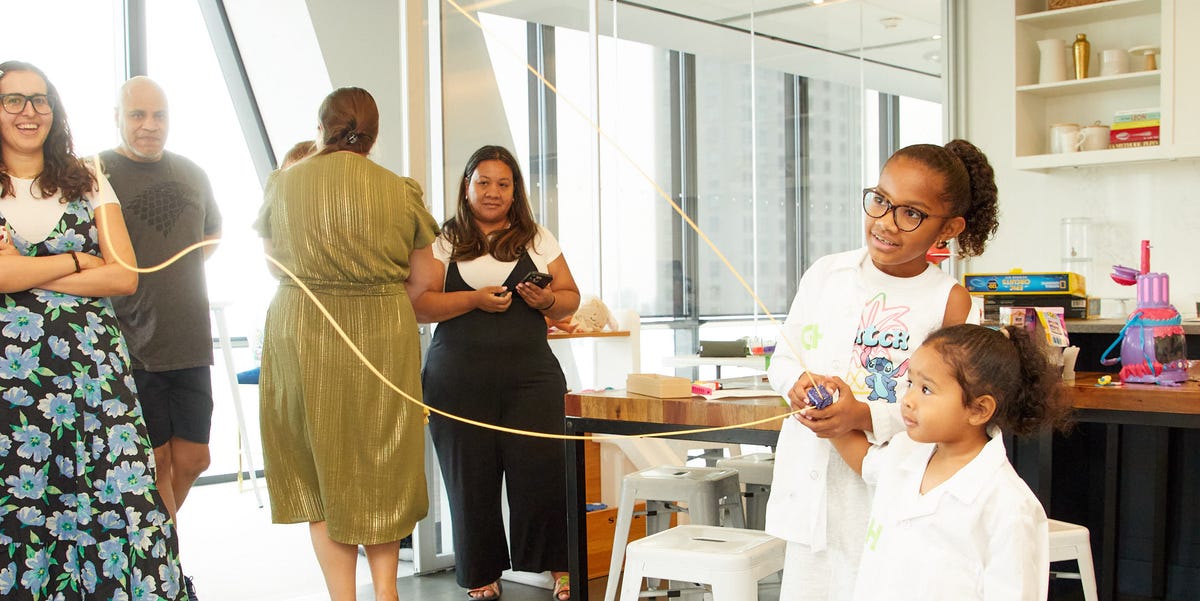
Good Housekeeping also brings select groups of children into its labs for side-by-side toy play sessions. Observing children in person gives testers a different kind of information: what kids are naturally drawn to when several toys are available at once.
This is a surprisingly revealing test. Children do not care about brand slogans, celebrity endorsements or whether the package says “award-winning.” They gravitate toward what captures their attention. Testers can observe whether children understand how a toy works without extensive adult instruction, whether they return to it repeatedly and whether it encourages independent or cooperative play.
Sometimes the toy adults expect to dominate the room is ignored while a simple building set becomes the star of the show. That is not a failure of the children. It is a reminder that play value cannot always be predicted from a product photo.
How Good Housekeeping Evaluates Play Value
A toy does not need to teach calculus before snack time to have developmental value. But Good Housekeeping considers whether a toy can support useful skills while still being fun. The best toys often make learning feel accidental, which is the ideal kind of learning from a child’s point of view.
Creativity and Imagination
Open-ended toys tend to create more opportunities for imaginative play. Blocks can become towers, airports, castles or snack shops. Figures can become heroes, villains, teachers, veterinarians or astronauts. Art materials can become a masterpiece, a mess or both at once.
These experiences can support storytelling, self-expression and problem-solving. They also give children room to direct their own play instead of following one narrow sequence of buttons and sound effects.
Fine and Gross Motor Skills
Many toys help children practice coordination without announcing it in a dramatic voice. Puzzles, shape sorters, building toys, craft supplies and pretend tools can encourage fine motor development. Balls, scooters, push toys, ride-ons and outdoor games can support movement, balance and physical confidence.
A well-designed toy should offer a reasonable challenge. If it is too easy, children may lose interest. If it is too difficult, it may become a tiny plastic monument to frustration. Good toy testing helps identify that sweet spot.
Social and Emotional Play
Board games, cooperative activities, pretend play sets and role-play toys can help children practice turn-taking, communication and flexible thinking. A toy does not have to solve every social problem in the world, but it can create opportunities for children to negotiate rules, share materials and build stories together.
That is one reason simple toys often perform so well. They leave enough room for children and caregivers to join the experience rather than just watching a device perform for them.
The Difference Between Toy Testing and Toy Safety Compliance
It is easy to assume that every toy on a store shelf has already been tested in every possible way by every imaginable expert. Reality is more layered. In the United States, children’s toys are subject to federal safety requirements, and many toy categories must meet standards tied to issues such as small parts, lead, phthalates, accessible edges, projectiles, magnets, battery-operated components and sound-producing features.
Good Housekeeping’s evaluation adds another layer: editorial, consumer-focused testing. Its team looks at the experience of owning and using the toy. Does it feel well made? Is it intuitive? Does it entertain children? Does it survive actual play? Does it seem appropriate for the stated age? Is it worth the money?
In other words, legal compliance asks whether a product meets required safety rules. Consumer testing asks whether it is a smart choice for a real family. Both matter. One helps protect children from hazards; the other helps protect adults from spending $79.99 on something that becomes invisible after Tuesday.
What Parents Can Learn From the Process
You do not need a product-testing lab in your garage to borrow some of Good Housekeeping’s approach. When choosing a toy, use a practical checklist before buying:
- Check the manufacturer’s age recommendation and warning labels.
- Think about the child’s actual abilities, not just their birthday number.
- Look for small parts, loose magnets, long cords and battery access concerns.
- Consider how much adult setup the toy requires.
- Ask whether the toy supports repeated play or only one short activity.
- Read reviews for comments about durability, confusing instructions and missing pieces.
- Consider storage before purchasing a toy with 300 accessories.
- For connected toys, review privacy settings, permissions and parental controls.
That final point is increasingly important. Toys that connect to apps, microphones, cameras or online accounts may introduce privacy considerations alongside entertainment value. Parents should know what information a connected toy collects, whether it requires an account and whether a child can access online features without adult supervision.
Why Real-World Testing Makes Better Toy Recommendations
The most useful toy reviews acknowledge that children are not identical. One child may spend two hours building an elaborate train station, while another would rather use the box as a hat. Good Housekeeping’s process helps account for that variety by combining expert review with feedback from many families and in-person observations.
This method also prevents a toy from being judged solely by novelty. A toy can be technically impressive and still fail to hold a child’s attention. It can also be inexpensive and simple yet inspire years of imaginative play. The best toy testing process does not confuse more features with more fun.
Ultimately, a good toy recommendation is about fit. The right toy is safe for the child’s age, durable enough for normal play, understandable without endless adult rescue missions and engaging enough to earn more than one spin around the living room.
Experience Lens: What Real Toy Testing Teaches Families
One of the most useful lessons from a process like Good Housekeeping’s toy testing is that the “best” toy is rarely the one with the biggest box, loudest commercial or most dramatic unboxing video. Real experience tends to unfold in quieter moments: when a child returns to a toy on a rainy afternoon, when siblings figure out how to play together without arguing for at least seven minutes, or when a parent notices that a toy is still being used weeks after the birthday wrapping paper is gone.
Consider the difference between a toy that creates one impressive moment and a toy that creates many small ones. A complicated robot may earn a huge reaction when it first lights up and announces itself in three languages. But if its only purpose is pressing a button to watch the same routine, the excitement can disappear quickly. A plain set of magnetic tiles, wooden blocks or animal figures may look less dramatic at first, yet children can invent a new use for them again and again. Today they are a zoo. Tomorrow they are a bakery. Next week they are apparently a “secret lava hospital,” which sounds alarming but is probably fine.
Real-world toy testing also reveals the invisible labor behind play. Parents notice whether batteries drain quickly, whether tiny pieces disappear under furniture, whether cleanup takes longer than the game and whether instructions make sense. These details may not be glamorous, but they shape whether a toy becomes a family favorite or a holiday-season regret. A game that takes 20 minutes to set up may be wonderful on a calm Saturday, but it may not survive a school-night schedule. A craft kit can be creative and memorable, but families may appreciate knowing in advance that it requires table protection, adult help and the emotional strength to accept glitter as a permanent household resident.
Another important experience is watching children use toys differently from the way adults expect. A child may ignore the official rules of a game and invent new ones. A play kitchen may become a veterinarian clinic. A truck may become a spaceship. This is not “using the toy wrong.” It is often a sign that the toy leaves room for imagination. Flexible play can be more valuable than a toy that only performs one predetermined activity.
Testing with children also makes it clear that age labels are not personality labels. Two children of the same age may respond completely differently to the same toy. One may be ready for a detailed science kit, while another may prefer pretend play or active outdoor games. The most successful purchases consider a child’s interests, coordination, patience, sensory preferences and confidence level alongside the number printed on the package.
Finally, the strongest toy experiences usually include people. A child may enjoy building alone, but a toy often becomes more meaningful when a parent, grandparent, sibling or friend joins in. A board game creates conversation. A dollhouse creates stories. A building set creates collaboration, negotiation and occasional debates over whether a purple brick can reasonably be part of a fire station. It absolutely can.
That is why real toy testing matters. It does not just ask whether a toy works. It asks whether the toy belongs in the unpredictable, noisy, creative and wonderfully imperfect rhythm of family life. The answer is often found not in the packaging, but in the play that happens after it is opened.
Final Thoughts on Good Housekeeping’s Toy Testing Process
The Good Housekeeping toy testing process combines expert review, practical safety awareness, at-home family feedback and direct observation of children at play. By looking beyond a toy’s packaging and marketing claims, the Institute can evaluate the details that matter most: construction, usability, durability, age appropriateness, play value and long-term interest.
For parents and gift-givers, the bigger takeaway is simple: choose toys that fit the child, not just the trend. The best toys are safe, understandable, durable and flexible enough to support curiosity, connection and repeat play. They do not need to flash, sing or arrive in a box large enough to qualify as a studio apartment. They simply need to give children something worth doing with their hands, minds and imaginations.