
Note: This article is based on publicly reported information from reputable U.S. entertainment, news, and official sources available as of May 10, 2026.
For a show supposedly “irrelevant,” South Park sure has a funny way of making federal agencies trip over their own messaging. The long-running animated series found itself back in the political spotlight after the Department of Homeland Security used imagery from the show to promote Immigration and Customs Enforcement recruitment. That might have been just another edgy government social media postexcept the White House had recently dismissed the series as stale, desperate, and not culturally important.
So when DHS borrowed the cartoon’s ICE imagery to push a recruitment message, South Park did what South Park does best: it turned the contradiction into a punchline sharp enough to cut through a press release. The show’s official account responded with the now-famous jab, “Wait, so we ARE relevant?” followed by a very South Park-style insult that was not exactly suitable for a family newsletter.
The moment quickly became more than a social media spat. It became a perfect example of how satire, politics, branding, immigration enforcement, and online culture now collide in real time. One side called the show irrelevant. Another part of the same administration used it for attention. And the cartoon boys from Coloradometaphorically speakinglooked at the contradiction and said, “You killed your own argument, dude.”
What Happened Between South Park, ICE, and the White House?
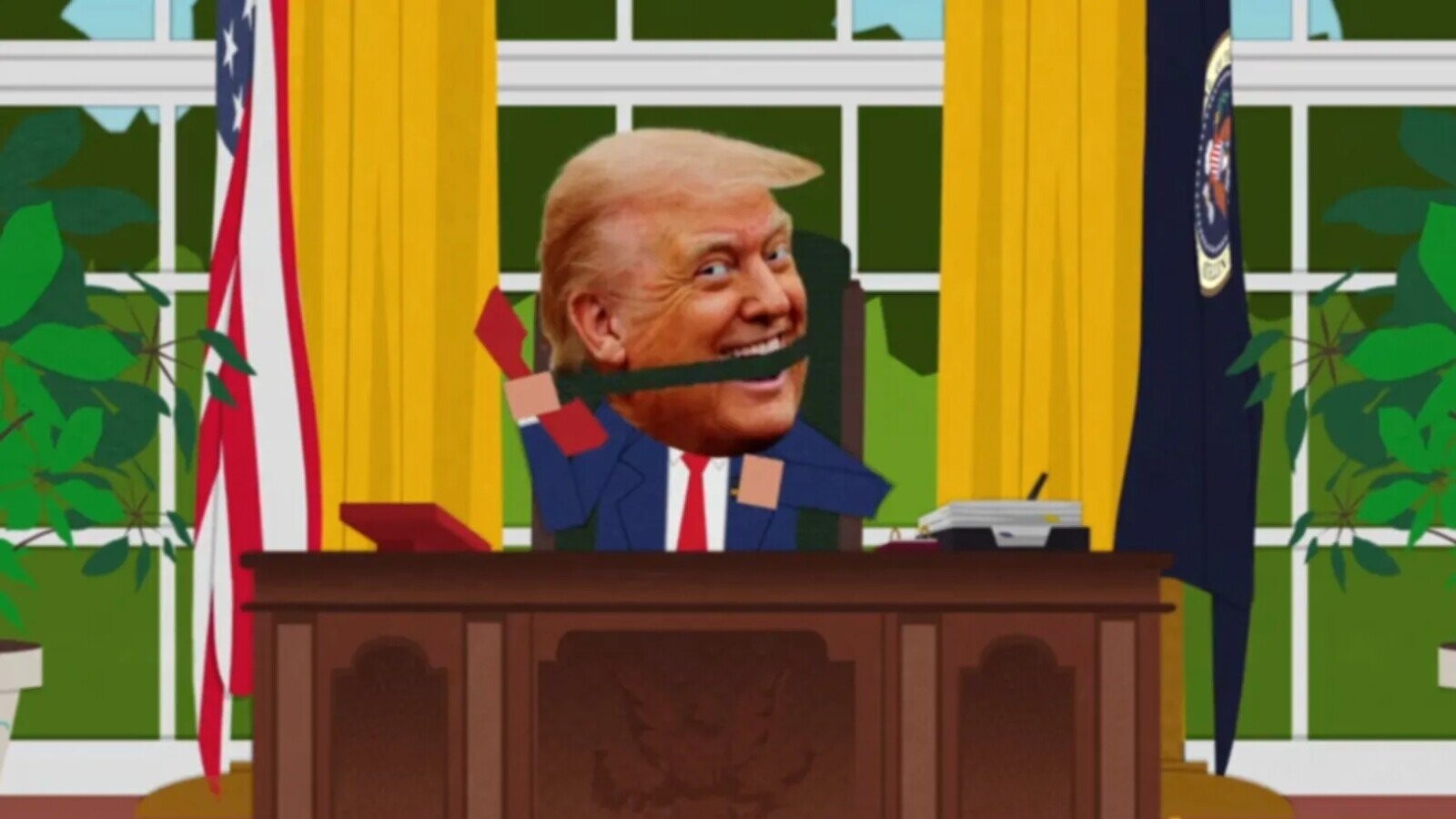
The controversy began after South Park returned for Season 27 with a premiere that mocked President Donald Trump, Paramount, political pressure on media companies, and the increasingly strange relationship between entertainment and power. The episode, titled Sermon on the ‘Mount, portrayed Trump in an intentionally outrageous and vulgar storyline involving Satan, lawsuits, and media intimidation.
The White House response was swift and dismissive. A spokesperson argued that South Park had not been relevant for more than 20 years and described the show as a fourth-rate program clinging to attention. In ordinary political communications, that would be a clean enough line: insult the critic, minimize its importance, and move on.
But then came the twist. DHS used a still from a South Park teaser showing ICE agents to promote recruitment for the agency. The post included a call to visit JOIN.ICE.GOV and highlighted recruitment incentives such as a signing bonus, student loan repayment options, and retirement benefits. In other words, the same broader administration that had dismissed the show as irrelevant was suddenly using the show’s image to get eyeballs.
That is where South Park pounced. The show’s response“Wait, so we ARE relevant?”was short, sarcastic, and devastatingly efficient. It did not need a 12-paragraph statement. It did not need a panel discussion. It simply pointed at the contradiction and let the internet do the rest.
Why the Clapback Worked So Well
The best clapbacks usually work because they expose something obvious that everyone can understand. This one worked because it was not complicated. If a show is supposedly irrelevant, why would a federal agency use its imagery in a recruitment post? If the show is desperate for attention, why is the government borrowing its cultural currency?
That contradiction gave South Park the perfect setup. The show did not need to defend its ratings, its legacy, or its influence. DHS had accidentally done that for it. The government agency’s post essentially admitted that South Park still had enough cultural recognition to help sell a message.
It also helped that South Park has spent nearly three decades building a brand around irreverence. The show is famous for attacking sacred cows on the left, right, and everywhere in between. When a political figure or institution reacts angrily, the reaction often becomes part of the joke. The louder the outrage, the more oxygen the satire gets.
The “Irrelevant” Claim Ran Into a Ratings Problem
Calling South Park irrelevant was always a risky move. The show is not just an old cartoon hanging around like a dusty DVD box set in a college dorm. It remains one of the most recognizable adult animated comedies in American television history, and Season 27 arrived with major attention.
The premiere drew millions of viewers across Comedy Central and Paramount+, with reports noting that it became one of the show’s strongest season openers in decades. The second episode, Got a Nut, performed even better across platforms, helped by the public debate around Trump, ICE, DHS, Kristi Noem, and the show’s willingness to keep poking the bear with a flaming stick.
That matters because political spin often depends on perception. “Nobody cares” is a useful line only if people actually do not care. But when millions watch, media outlets cover it, government officials respond, and federal agencies use the show in recruitment messaging, the “irrelevant” label starts to look less like analysis and more like wishful thinking.
How Season 27 Turned Political Pressure Into Comedy
Season 27 did not simply mock a single politician. It mocked an ecosystem: lawsuits, corporate settlements, government messaging, media mergers, streaming deals, public outrage, and the strange spectacle of public officials debating cartoons as if Cartman were chairing a Senate committee.
The premiere targeted Trump and Paramount at a moment when the entertainment company was under intense scrutiny. Paramount had recently reached a major deal involving South Park creators Trey Parker and Matt Stone, securing new episodes and streaming rights. Around the same period, Paramount’s broader corporate world was under the microscope because of political and regulatory questions surrounding its business decisions.
That context gave the show extra bite. South Park was not merely making jokes about a president. It was joking about the machinery around power: who gets sued, who settles, who stays silent, who profits, and who pretends none of it is connected. Subtle? Absolutely not. Effective? Clearly.
ICE, Recruitment, and the Risk of Borrowed Satire
Government agencies have increasingly tried to use pop culture language online. Sometimes it works. Sometimes it looks like a dad using teenage slang at a school dance. The DHS post fell into the riskiest possible category: it borrowed from satire without fully controlling the meaning of the satire.
In South Park, ICE was not being portrayed as a heroic recruitment brand. The show’s treatment of immigration enforcement was exaggerated, critical, and intentionally uncomfortable. Using that imagery to promote ICE recruitment created a strange loop: the agency turned a parody of enforcement into promotional material for enforcement.
That is the danger of repurposing satire. Satire is not a neutral meme bank. It carries a point of view, even when that point of view is wrapped in absurdity, vulgarity, and a talking towel. When an institution borrows satire for branding, it risks becoming part of the joke rather than controlling the joke.
Kristi Noem, Mr. Mackey, and the “Got a Nut” Episode
The ICE controversy also connected to the second episode of Season 27, Got a Nut. The episode featured Mr. Mackey losing his job and joining ICE, a storyline that allowed the show to satirize enforcement culture, economic desperation, and political performance. It also included an exaggerated portrayal of Homeland Security Secretary Kristi Noem.
The episode leaned into dark humor, including references to Noem’s widely discussed story about killing her dog, Cricket, which appeared in her memoir. South Park amplified that detail into an absurd running gag, because the show has never encountered a controversial anecdote it could not turn into a cartoon cannonball.
Critics of the episode argued that the jokes were crude, personal, and excessive. Supporters argued that the entire point of South Park is to make powerful people uncomfortable. Both reactions are familiar. The show often operates in the space where viewers laugh, wince, and then wonder whether they should admit they laughed.
Why South Park Still Matters in Political Comedy
Part of South Park’s staying power comes from speed. Parker and Stone have long been known for producing episodes close to air, allowing the show to respond quickly to current events. That production style makes the series feel more like a weekly political cartoon than a traditional scripted comedy.
Another reason it still matters is that South Park does not seek approval from the people it mocks. It is not polite satire. It is not optimized for committee consensus. It is messy, offensive, pointed, childish, and occasionally brilliantoften in the same scene. That makes it uniquely suited for an era when politics itself can feel like a parody that forgot to add jokes.
The ICE clapback showed that the show’s cultural power is not only in its episodes. Its social media presence can extend the joke beyond the screen and into the news cycle. A single post turned DHS’s recruitment message into a debate about relevance, hypocrisy, and political communication.
The Bigger Lesson: Don’t Call Something Irrelevant Before Using It
The simplest lesson from the controversy is also the funniest: do not call a cultural object irrelevant and then use that cultural object to promote your message. That is like telling everyone a restaurant is disgusting while eating fries from the bag in the parking lot.
Political teams often try to have it both ways. They want to dismiss critics as powerless while also responding to them aggressively. They want to say a show does not matter while using its attention-grabbing imagery. They want the benefits of pop culture without the risk of being mocked by pop culture.
South Park exposed that tension with one line. “Wait, so we ARE relevant?” was not just a joke. It was a media literacy lesson with a profanity chaser.
Public Reaction: Why the Internet Ate It Up
The internet loves contradictions, especially when they are easy to screenshot. This one had everything: a famous comedy show, a federal agency, immigration politics, Trump, a White House insult, and a response too rude for most headlines to print fully.
Fans of the show celebrated the comeback as classic South Park. Critics of the Trump administration saw it as an example of political hypocrisy. Supporters of the administration argued that DHS successfully used the controversy to draw more attention to ICE recruitment. In a strange way, both sides had a point. The post did draw attention. It also handed South Park a perfect joke.
That is the modern media cycle in miniature. A government post becomes entertainment news. A cartoon response becomes political commentary. A recruitment push becomes a meme. Everyone claims victory, and the algorithm quietly collects the advertising revenue.
What This Says About Satire in the Trump Era
Satire during the Trump era faces a unique challenge: reality often arrives already wearing a clown nose. To make a joke land, comedians must exaggerate a world that is already exaggerated. South Park responds by going bigger, uglier, stranger, and more profane.
That approach is not for everyone. Some viewers find it refreshing. Others find it exhausting. But the ICE exchange proved that the show still has a talent for finding the weak spot in political messaging. It does not always persuade, but it does puncture.
In this case, the weak spot was consistency. If the administration’s position was that South Park had no relevance, DHS should not have needed its imagery. If DHS believed the imagery was useful, then the White House’s dismissal looked silly. The contradiction did not require deep ideological analysis. It required only a quote post and a smirk.
Experiences and Reflections Related to the Topic
Anyone who has worked in media, marketing, or content strategy can recognize the mistake at the center of this controversy. Brands and institutions often want the energy of youth culture, meme culture, and entertainment culture without accepting the unpredictability that comes with it. They see a viral image and think, “Great, we can use that.” They do not always stop to ask, “What does this image actually mean?”
That is how organizations wander into avoidable embarrassment. A meme is not just a picture. A joke is not just a joke. A scene from South Park is not a blank promotional poster waiting for a government agency to slap a recruitment URL on it. It comes with context, tone, and baggagepossibly several suitcases of baggage, one of them on fire.
For content creators, the episode is a useful reminder that relevance is not always polite. A piece of content can be controversial, divisive, vulgar, and still deeply relevant. In fact, controversy can be part of why it becomes relevant. The question is not whether everyone likes the content. The question is whether people are talking about it, reacting to it, sharing it, and using it to frame larger debates.
For public agencies, the lesson is even clearer: consistency matters. If one branch of a political operation dismisses a show as irrelevant, another branch should think twice before using that show as a promotional tool. Otherwise, the message becomes tangled. The public may not remember every detail of the policy, but it will remember the contradiction.
There is also a broader experience many audiences share: watching institutions try to sound internet-native and missing the tone by a mile. People can tell when a post is organic and when it feels like a committee-approved attempt to “go viral.” That does not mean institutions can never use humor or cultural references. It means they need to understand the joke before stepping into it.
South Park has survived because it understands its own voice. It is rude. It is fast. It is suspicious of authority. It does not ask whether a joke is convenient for a press office. That makes it difficult for powerful institutions to co-opt. The moment they try, the show can simply yank the rug out from under them.
For viewers, this controversy also shows why satire still has value in a noisy political environment. Satire can clarify contradictions faster than a policy memo. It can reveal hypocrisy in a sentence. It can turn a complicated media situation into something emotionally legible: “You said this thing did not matter, and now you are using it because it matters.” That is the whole story, and it fits in a tweet.
In the end, the South Park versus ICE moment was not just about a cartoon. It was about control. Political institutions want to control narratives. Satirists want to disrupt them. Audiences want something that feels honest, even if that honesty arrives dressed as a vulgar joke from an animated town where common sense goes to be mugged.
The funny part is that the White House tried to bury the show with the word “irrelevant.” DHS accidentally dug it back up, dusted it off, and put it in a recruitment ad. Then South Park waved from the grave and asked the obvious question. That is not irrelevance. That is cultural judo.
Conclusion
The clash between South Park, ICE, DHS, and the White House is a case study in modern political communication. A show dismissed as irrelevant became useful enough for a federal agency to borrow. A recruitment message became a viral contradiction. A one-line response from a cartoon series turned into a broader debate about satire, power, immigration, and cultural influence.
South Park may be crude, chaotic, and proudly offensive, but the ICE clapback proved that it still knows how to land a punch. The show did not need to prove its relevance with a speech. It let the administration’s own mixed signals do the heavy lifting. In classic South Park fashion, the joke was rude, simple, and painfully effective.